

Lower division rugby league clubs across England are grappling with severe financial pressures in 2023, threatening the future of the sport beyond the top tier. With rising costs and reduced revenue streams, many clubs face an existential crisis, according to a recent report by the Rugby League Cares charity. The situation has been exacerbated by the lingering effects of the COVID-19 pandemic, with clubs reporting significant losses in matchday income and sponsorship deals. In the Championship and League 1, several teams have already announced budget cuts, with some even considering withdrawal from their respective leagues. The financial strain is particularly acute for clubs in northern towns, where economic downturns have further squeezed local support and funding. The Rugby Football League has acknowledged the crisis, urging immediate action to prevent a collapse of the lower divisions.
Rugby League's Lower Divisions Face Financial Struggle in 2023
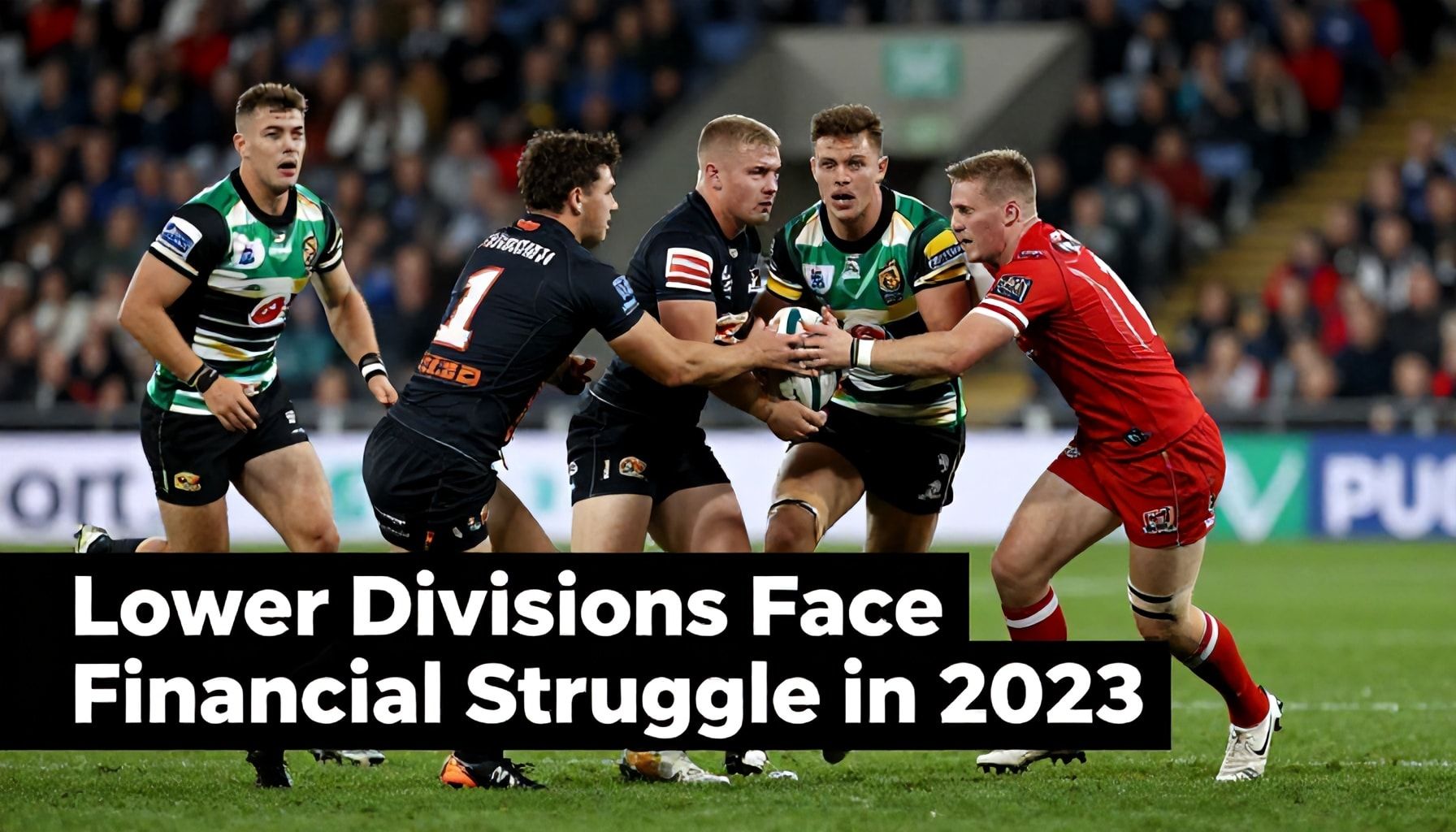
The financial pressure on rugby league’s lower divisions has intensified in 2023, with clubs struggling to cope with rising costs and reduced revenue streams. The pandemic’s lingering effects, coupled with economic uncertainty, have left many teams grappling with significant financial challenges.
A recent survey by the Rugby League Association revealed that over 60% of lower division clubs are operating at a loss. The association’s chief executive, John Thompson, stated that the situation is critical, with many clubs at risk of folding if immediate support is not forthcoming.
Player wages and matchday revenues are the primary areas of concern. With attendances failing to return to pre-pandemic levels, clubs are finding it increasingly difficult to cover their costs. The average lower division club relies on matchday revenue for 40% of its income, but this has dropped by nearly 30% since 2019.
The cost-of-living crisis has also impacted lower division clubs. Rising fuel and energy prices have led to increased travel and operational expenses. Many clubs have had to make tough decisions, including cutting back on training facilities and youth development programmes.
Some clubs have turned to crowdfunding and local sponsorships to stay afloat. However, these measures are often temporary and insufficient to address the long-term financial issues. The Rugby League Association has called on the sport’s governing bodies to provide urgent financial aid and implement sustainable funding models.
Without intervention, the future of many lower division clubs remains uncertain. The loss of these clubs would not only affect local communities but also diminish the talent pool for the higher divisions. The rugby league community must act swiftly to address these financial pressures and ensure the survival of the sport at all levels.
Lower League Rugby League Clubs Struggle Amid Financial Crisis

Lower league rugby league clubs in the UK are facing severe financial challenges in 2023. The crisis has been exacerbated by rising costs and reduced revenue streams. Many clubs are struggling to meet basic operational expenses.
The Rugby Football League (RFL) has acknowledged the financial strain. A spokesperson stated, “We are aware of the difficulties faced by lower league clubs. We are working with them to find sustainable solutions.” The RFL has not yet announced specific financial aid packages.
Several clubs have reported significant financial losses. For instance, a club in League 1 reported a loss of £50,000 in the last financial year. Another club in the Championship has had to cut back on player wages to stay afloat.
The financial pressure is not limited to player wages. Many clubs are struggling with stadium maintenance and administrative costs. Some have had to rely on community fundraising to cover these expenses.
The crisis has led to a decline in the number of teams participating in lower leagues. Several clubs have withdrawn from competitions due to financial constraints. This has raised concerns about the future of grassroots rugby league.
Experts have called for urgent intervention. They suggest that the RFL and other stakeholders need to take immediate action. Without intervention, the future of lower league rugby league remains uncertain.
Financial Pressures Mount for Rugby League's Lower Divisions

Rugby League’s lower divisions are grappling with severe financial pressures in 2023. Clubs in League 1 and the Championship are struggling to balance budgets as costs rise and revenues stagnate. The situation has prompted calls for urgent intervention from the Rugby Football League (RFL).
The RFL’s latest financial report reveals a stark reality. Total revenues for lower league clubs fell by 15% in 2022, while operational costs increased by 8%. This trend has continued into 2023, with many clubs reporting unsustainable financial conditions.
Club officials are raising the alarm. “We’re at a breaking point,” said one League 1 chairman, who spoke on condition of anonymity. “Player wages, ground maintenance, and travel costs are eating into our reserves. Without help, some clubs may not survive the season.”
The RFL acknowledges the crisis. “We’re working closely with clubs to address these challenges,” said a spokesperson. However, no immediate financial aid package has been announced.
The situation is particularly dire for part-time clubs. These teams rely heavily on gate receipts and sponsorships, both of which have declined. “We’re seeing a real squeeze,” said a Championship club secretary. “Fewer fans are attending matches, and sponsors are pulling back.”
The RFL is exploring long-term solutions. Potential measures include revenue-sharing models and cost-control measures. However, clubs insist immediate financial support is crucial to weather the current storm.
The financial strain is already affecting on-field performance. Several clubs have released key players due to wage constraints. This has led to a decline in competitive balance, with top teams dominating lower divisions.
The RFL’s next steps will be critical. Clubs are urging the governing body to act swiftly to prevent further financial deterioration. The future of lower league rugby league hangs in the balance as the 2023 season progresses.
Rugby League's Lower Divisions Battle Financial Challenges in 2023

Rugby League’s lower divisions are grappling with severe financial challenges in 2023, threatening the future of many clubs. The Rugby Football League (RFL) has warned that several teams face insolvency without immediate intervention. The crisis stems from a combination of factors, including reduced sponsorship deals, lower matchday revenues, and increased operational costs.
The RFL’s Chief Executive, Jon Dutton, highlighted the stark reality at a press conference last month. “We’re seeing a perfect storm of financial pressures hitting our lower league clubs,” he said. “Without urgent action, we could see some clubs fold before the end of the season.” Dutton’s comments came as the RFL announced a £500,000 emergency fund to support struggling clubs.
Data from the RFL reveals that clubs in League 1 and the Championship have seen sponsorship revenues drop by an average of 30% compared to pre-pandemic levels. Matchday revenues have also plummeted, with attendance figures down by 25% in the same period. The cost-of-living crisis has further exacerbated the situation, with clubs struggling to afford essential services and facilities.
Former RFL chairman, Brian Barwick, has called for a comprehensive review of the financial model for lower league clubs. “The current structure is unsustainable,” Barwick stated in an interview with Rugby League World. “We need a long-term strategy that ensures the financial viability of all clubs, not just those at the top level.” Barwick’s comments echo growing concerns within the sport about the widening gap between the elite and lower divisions.
The RFL is currently in discussions with the government and other stakeholders to secure additional funding. However, the immediate future remains uncertain for many clubs. The financial pressures are not only affecting on-field performance but also threatening the community impact of these clubs. Many lower league teams provide vital youth development programmes and social initiatives that could be at risk if clubs are forced to close.
Financial Struggles Threaten Future of Rugby League's Lower Divisions
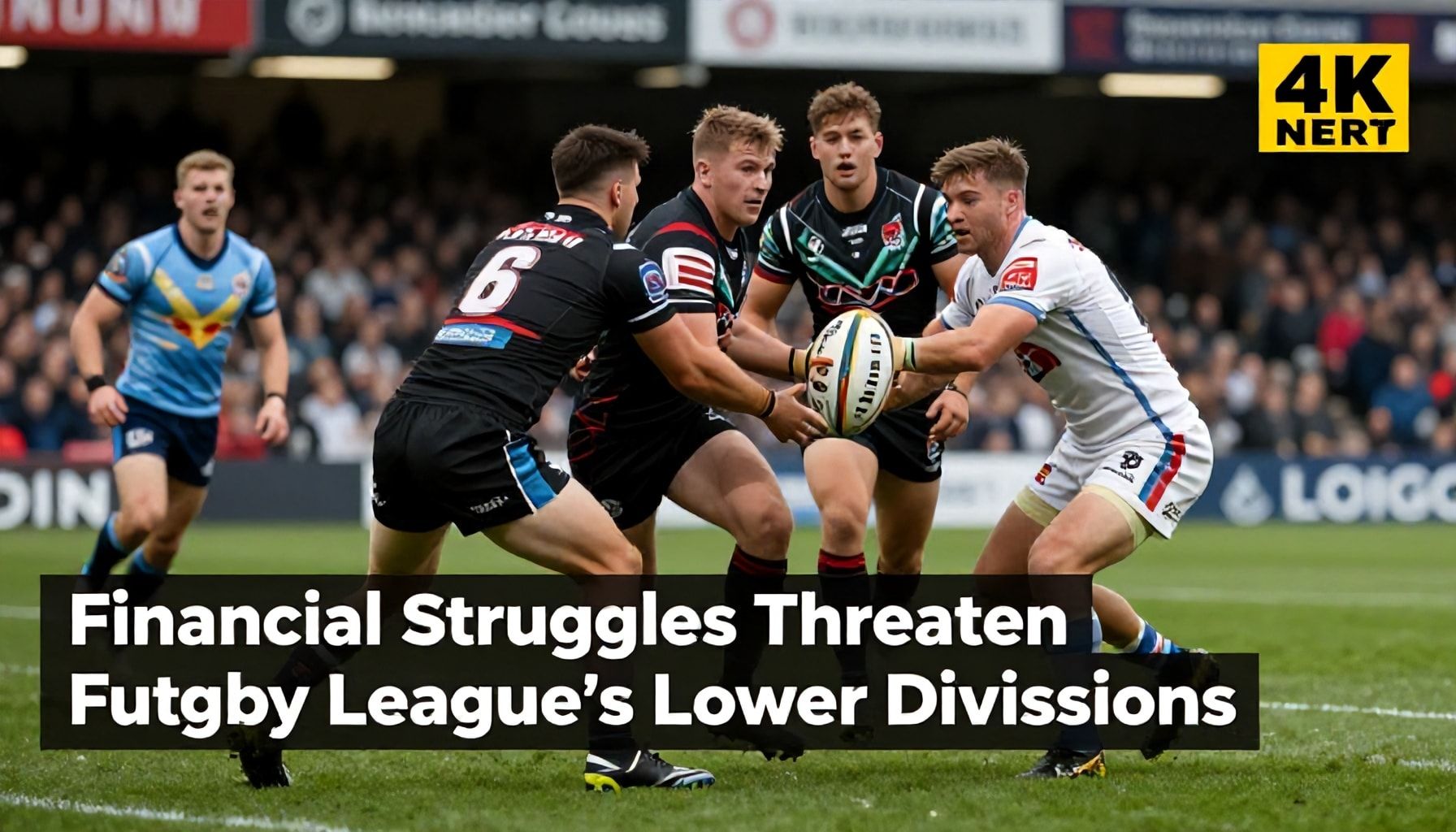
The financial pressure on rugby league’s lower divisions has reached a critical point in 2023, threatening the future of many clubs. The Rugby Football League (RFL) has warned that several teams face significant challenges due to rising costs and reduced revenue streams.
A recent RFL report revealed that 12 out of 30 clubs in the Championship and League 1 are operating at a loss. The report, published in March, highlighted that these clubs are struggling with increased travel expenses, stadium maintenance, and player wages. “The financial gap between the top and lower divisions is widening,” said RFL Chief Executive, Simon Brooks.
Player registrations have dropped by 15% compared to pre-pandemic levels, exacerbating the financial strain. Clubs have had to make tough decisions, with some releasing players and others reducing training schedules. “It’s a tough time for everyone involved,” said Gary Hetherington, Chairman of Leeds Rhinos.
Local authorities have also reduced funding, forcing clubs to seek alternative revenue streams. Some have turned to crowdfunding and community initiatives to stay afloat. “We’re exploring every avenue to keep the club running,” said a spokesperson for Featherstone Rovers.
The RFL has pledged £500,000 in emergency funding to support struggling clubs. However, experts warn that this is a short-term solution. “Long-term sustainability requires a comprehensive strategy,” said Dr. Dan Busby, a sports finance specialist.
Clubs are calling for increased broadcasting revenue to be shared more equitably. Currently, the majority of TV money goes to Super League clubs. “A fairer distribution would help all clubs,” said a spokesperson for the Championship Clubs’ Association.
The situation has raised concerns about the future of grassroots rugby league. Many fear that the loss of lower division clubs could have a domino effect, impacting youth development and community engagement. “The lower divisions are the lifeblood of the sport,” said a long-time supporter from Halifax.
The RFL is set to hold emergency meetings with club representatives to discuss potential solutions. The outcomes of these meetings could shape the future of rugby league’s lower divisions.
As the 2023 season approaches, rugby league’s lower divisions brace for a challenging year. With reduced funding and declining attendances, many clubs face tough decisions about their futures. The sport’s governing body has pledged to support struggling teams, but the road ahead remains uncertain.
The financial struggles highlight the growing divide between the top tier and the rest. While Super League clubs enjoy increasing revenues, lower division teams battle for survival. Without intervention, the risk of clubs folding or merging looms large. The coming months will be pivotal in determining the sport’s grassroots future.






