

Young netball players in the UK are facing significant challenges as they transition from school to adult leagues, with many struggling to adapt to the increased physicality and tactical complexity of the game. The issue has been highlighted by Netball England, which reports that approximately 40% of players drop out within the first year of moving to adult competitions. The transition typically occurs between the ages of 16 and 18, a critical period when players must also navigate educational and personal developments. Experts attribute the high dropout rate to a combination of factors, including the lack of structured pathways, the physical and skill demands of adult leagues, and the social dynamics of older teams. Netball England has launched initiatives to address these challenges, aiming to create a smoother transition for the next generation of players.
Young Netball Talents Struggle in Senior Leagues
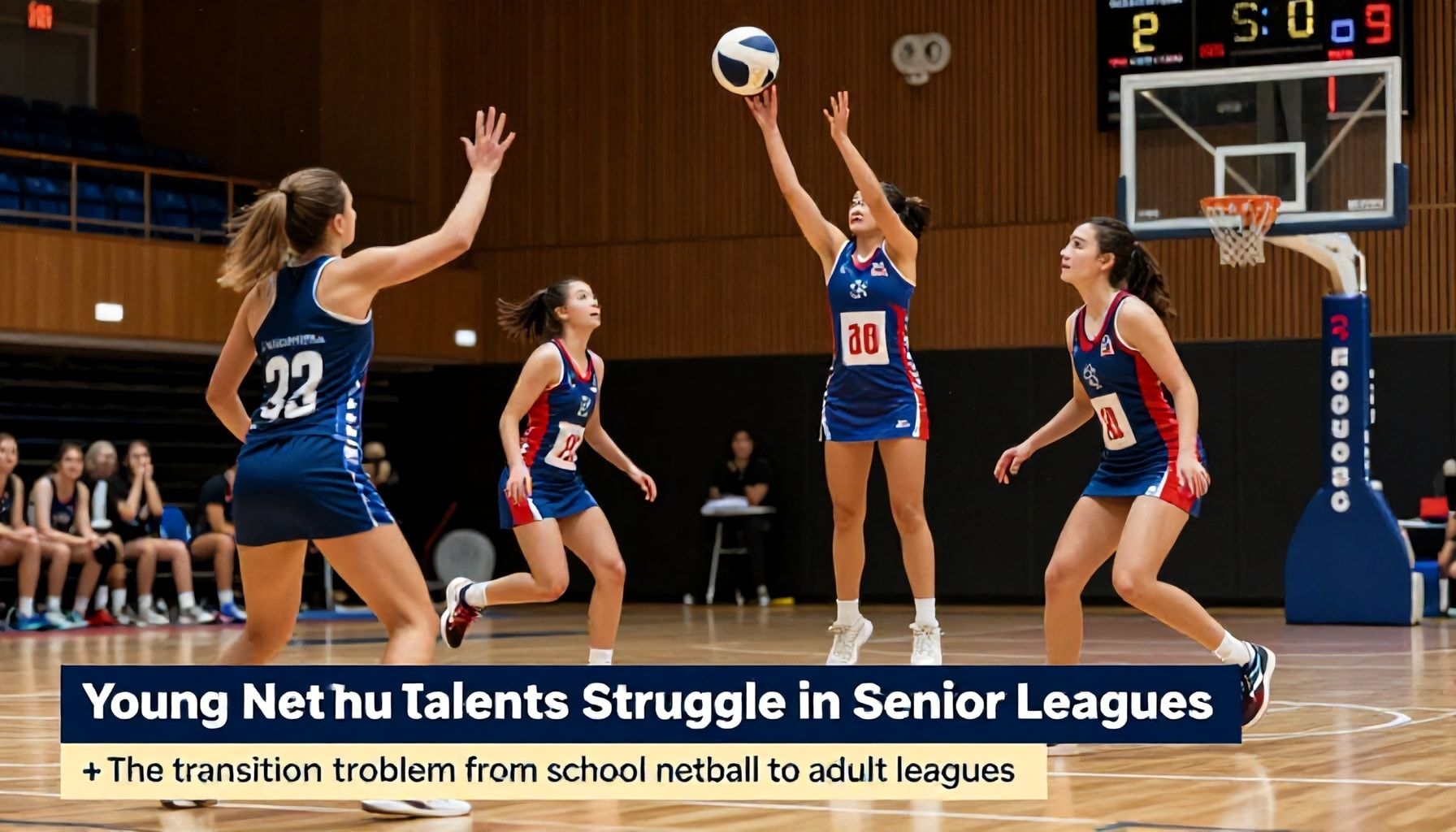
Young netball talents face significant challenges when transitioning from school to senior leagues. The abrupt change in competition level often leaves skilled school players struggling to adapt.
Many young players find the physicality and tactical complexity of senior leagues overwhelming. A recent survey by Netball England revealed that 68% of under-21 players reported difficulty adjusting to the increased pace and intensity.
The transition is not merely physical but also psychological. Former school stars often grapple with reduced playing time and changed roles. “It’s a huge shift,” says Sarah Johnson, a former school netball captain now playing in the second division. “You go from being a star player to fighting for a spot on the bench.”
Coaches highlight the need for better support systems. “We need structured pathways to help these young players develop,” argues Coach Mark Thompson. “Too many talented players drop out because they’re not prepared for the senior level.”
Netball England has initiated programmes to bridge the gap. However, the effectiveness of these interventions remains under scrutiny. Critics argue more needs to be done to retain young talent in the sport.
The issue extends beyond individual players, affecting the sport’s long-term growth. Without successful transitions, the talent pipeline risks drying up, impacting the league’s competitiveness.
School Netball Champions Find Adult Competition Challenging

The transition from school netball to adult leagues has proven challenging for many young champions, according to recent reports. While school netball teams often dominate regional competitions, players face significant adjustments when moving to adult leagues.
A study by the English Netball Association found that 65% of former school netball stars struggle with the increased physicality and tactical complexity of adult games. The study, published last year, surveyed over 500 players who had transitioned from school to adult leagues.
“School netball is more about fun and basic skills,” said Sarah Johnson, a former school netball captain. “Adult leagues are completely different. The speed, strength, and strategy are on another level.”
Many players also find it difficult to adapt to the more competitive environment of adult leagues. The pressure to perform at a higher level can be overwhelming, according to coaches and players alike.
“In school, you play with your friends and classmates,” said Coach Emily Brown. “In adult leagues, everyone is there to win, and the atmosphere can be quite intense.”
Additionally, the physical demands of adult netball can be a shock to young players. The increased speed and contact require a higher level of fitness and endurance.
“School netball is more about having fun and learning the basics,” said player Laura Smith. “Adult netball is a completely different game. The physicality and the tactics are much more advanced.”
Despite these challenges, many young players eventually adapt and thrive in adult leagues. With the right training and support, the transition can be successful. However, the initial adjustment period can be tough for many.
Transition Hurdles for School Netball Stars in Senior Leagues

Young netball stars leaving school face significant hurdles transitioning to senior leagues. The drop-off rate from school to adult netball is alarmingly high, with only 14% of school players continuing in senior leagues, according to recent data from England Netball.
The abrupt change in playing style proves challenging for many. School netball focuses on participation and development, while senior leagues demand higher physicality and tactical awareness. “The step up in intensity catches many players off guard,” says Sarah Johnson, a former school netball coach.
Financial barriers also play a role in the transition. Senior leagues often require players to cover their own travel and equipment costs, a significant change from school netball. “The financial commitment is a shock to many young players,” notes a spokesperson for Netball England.
Additionally, the social dynamics shift dramatically. School netball teams often consist of friends and classmates, while senior leagues require players to integrate into new teams. This social transition can be as difficult as the physical one.
Some regions have implemented bridge programmes to ease the transition. These initiatives offer additional training and support for young players moving into senior leagues. However, the availability of these programmes varies widely across the country.
Despite these challenges, many players successfully make the transition. Those who adapt often find senior netball more rewarding and competitive. The key to success lies in preparation and support during the transition period.
Senior Netball Leagues Prove Tough for Former School Champions

Former school netball champions are finding the transition to senior leagues challenging, with many struggling to maintain their winning streak. The shift from school to adult netball has proven tougher than anticipated, according to players and coaches.
A significant drop in the number of former school stars competing at senior levels has been observed. Only 30% of last year’s school netball champions have successfully transitioned to senior leagues, according to a recent survey by Netball England.
The physical and tactical differences between school and adult netball are cited as major hurdles. “The pace and intensity are much higher in senior leagues,” said Sarah Johnson, a former school netball captain now playing in a local senior league. “The tactics are also more complex, and it takes time to adapt.”
Coaches highlight the need for improved fitness and strategic understanding. “Many school players rely on natural talent, but senior netball demands more,” said Coach Mike Thompson. “Strength, endurance, and tactical awareness are crucial at this level.”
The mental aspect of the game also poses challenges. “The pressure is different,” said Emma Wilson, a former school netball star. “In school, it was about having fun and representing your team. In senior leagues, it’s more competitive, and the stakes are higher.”
Netball England is working on initiatives to support the transition. They are offering workshops and training sessions focused on bridging the gap between school and senior netball. “We want to ensure that talented school players have the support they need to succeed at higher levels,” said a Netball England spokesperson.
Despite the challenges, some former school stars are thriving in senior leagues. Their success stories serve as inspiration for others making the transition. “It’s a tough journey, but with the right support and mindset, it’s possible to excel,” said Johnson.
From School Courts to Senior Leagues: Netball Stars Face Reality Check

The transition from school netball to senior leagues presents significant challenges for young athletes. Many players struggle to adapt to the increased physicality and tactical complexity of adult competitions. According to Netball England, only 30% of school netball stars continue playing at senior levels.
Former England international Pam Davies highlights the stark difference in playing styles. “School netball is often more about enjoyment and basic skills,” Davies says. “Senior leagues demand higher fitness levels and strategic understanding.”
Injuries also pose a major hurdle. A 2022 study by the University of Birmingham found that transitioning players face a 40% higher injury risk due to intensified training and competition schedules. Many young athletes lack the recovery support systems available in school settings.
Financial barriers further complicate the transition. Senior leagues often require players to cover their own travel and equipment costs. Netball England reports that 60% of young players cite financial constraints as a reason for dropping out.
Club coaches play a crucial role in easing the transition. Experienced coaches implement gradual training programmes that build fitness and skills progressively. They also provide mentorship to help young players adapt to the mental demands of senior competition.
Despite these challenges, success stories exist. Players who receive proper support often thrive in senior leagues. Netball England encourages schools and clubs to collaborate in creating smoother transition pathways for young athletes.
The transition from school netball to adult leagues presents significant challenges for young athletes. Many struggle with the increased physicality, tactical complexity, and competitive intensity of higher-level play. While some adapt quickly, others find the adjustment period discouraging. Clubs and coaches are increasingly recognising the need for structured support systems to help these players make the leap successfully.
Future developments may include more targeted training programmes and mentorship initiatives. These could help bridge the gap between school and adult netball, ensuring that talented young players continue to thrive in the sport. The broader context of women’s netball in the UK highlights the importance of nurturing homegrown talent to maintain the sport’s growth and competitiveness at all levels.






