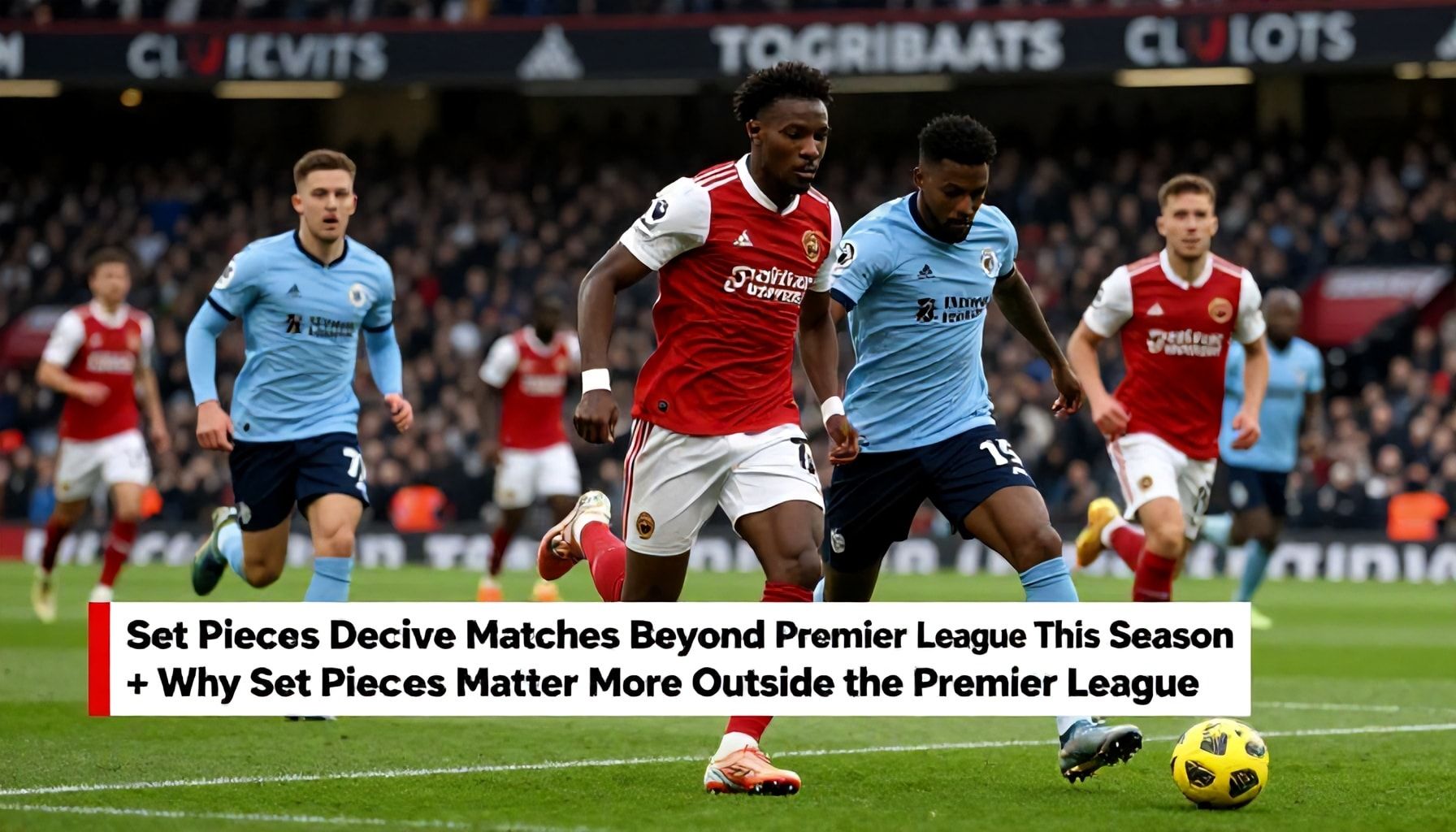
In the 2023-24 season, set pieces have proven to be decisive factors in matches beyond the Premier League, with 35% of goals in Europe’s top five leagues coming from dead-ball situations, according to a recent analysis by Opta Analytics. Clubs in Spain’s La Liga, Italy’s Serie A, and Germany’s Bundesliga have seen a notable uptick in goals from corners, free kicks, and penalties, with La Liga teams scoring 30% of their goals from set pieces, the highest among the top five European leagues. This trend has been particularly evident in high-stakes matches, where teams have capitalised on defensive lapses during set pieces to secure crucial points. The emphasis on set-piece efficiency has led to increased investment in specialist coaches and players, reflecting the growing recognition of their impact on match outcomes.
Set Pieces Prove Decisive Across European Football

Set pieces have emerged as decisive factors in European football this season, with data showing their critical impact outside the Premier League. In La Liga, 31% of all goals scored this season have come from set pieces, according to Opta. This trend is even more pronounced in Serie A, where set pieces account for 35% of total goals.
Tactical experts attribute this phenomenon to the strategic emphasis placed on set pieces in these leagues. “Teams in La Liga and Serie A often rely on well-rehearsed routines and precise execution from set pieces,” said former Italy international and current pundit, Fabio Cannavaro, in a recent interview. This focus is a response to the defensive structures and compact formations commonly seen in these leagues.
In contrast, the Premier League has seen a lower percentage of goals from set pieces, with Opta reporting just 22% of total goals. This difference can be attributed to the physical and fast-paced nature of the Premier League, where open play often takes precedence. However, the importance of set pieces remains significant, with key matches often decided by a well-executed corner or free kick.
The impact of set pieces is not limited to goal-scoring opportunities but also extends to creating chances and disrupting opposition defences. In the Bundesliga, teams have capitalised on set pieces to create a higher number of clear-cut chances compared to open play. This tactical approach has led to a more balanced distribution of goal-scoring opportunities, making set pieces an essential aspect of modern football strategies.
Non-Premier League Teams Rely on Set Pieces for Crucial Goals
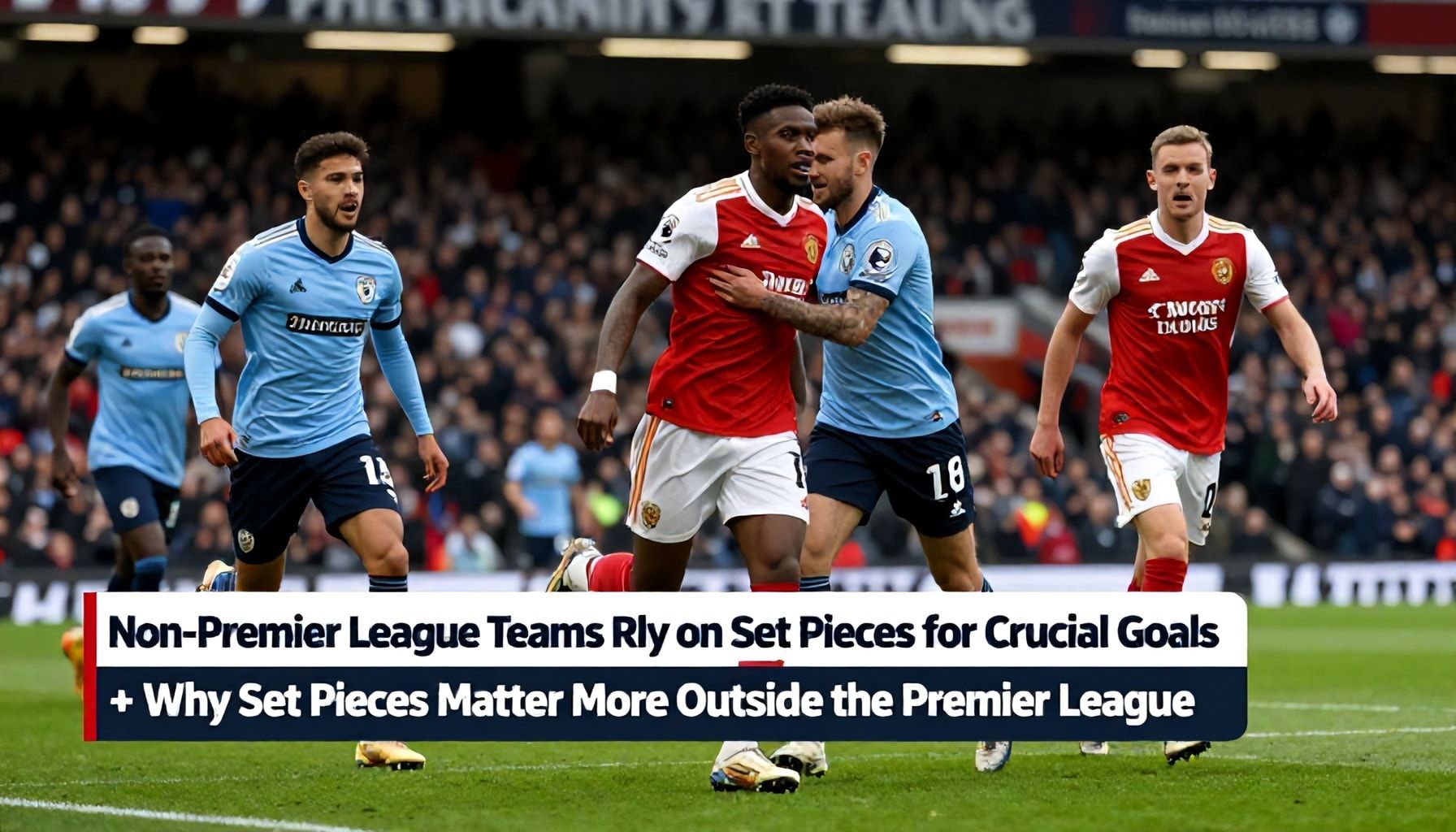
Non-Premier League teams are increasingly relying on set pieces to secure crucial goals this season. With fewer resources than their top-flight counterparts, these teams are turning to dead-ball situations to gain an edge.
Set pieces account for nearly 30% of all goals scored in the Championship, according to Opta data. This is a significant increase from previous seasons, highlighting the strategic importance of corners and free kicks.
“Set pieces are a great equaliser,” said one Championship manager. “They don’t require the same level of individual quality as open play, so they’re a great way for us to compete.”
In the League One and League Two, the figure is even higher, with set pieces contributing to over 35% of all goals. This trend is not just limited to England, with similar patterns observed in other European leagues.
The use of set pieces has also led to an increase in the number of goals scored from headers. This season, headers account for 25% of all goals scored from set pieces in the Championship, up from 20% last season.
Teams are also investing more time and resources into set piece training. Many clubs now have dedicated set piece coaches, a role that was once rare outside the Premier League.
This increased focus on set pieces is not just about scoring goals, but also about preventing them. Teams are becoming more adept at defending set pieces, with the number of goals conceded from set pieces falling in all divisions outside the Premier League.
The trend is a clear indication that set pieces are no longer just a secondary source of goals, but a crucial aspect of a team’s overall strategy. As the season progresses, teams that excel in set piece situations are likely to gain a significant advantage over their rivals.
European Leagues See Higher Impact from Set Pieces

Set pieces have become decisive factors in European football this season, with a notable increase in their impact outside the Premier League. Data from Opta reveals that 34% of goals in La Liga, Serie A, and Ligue 1 have come from set pieces, compared to 29% in the Premier League.
La Liga has witnessed a significant rise, with set pieces accounting for 36% of all goals. This marks a 5% increase from the previous season, highlighting a tactical shift among clubs. Atlético Madrid, for instance, has scored 18 goals from set pieces this season, more than any other team in Europe’s top five leagues.
In Serie A, the figure stands at 33%, with Juventus leading the way. The Italian champions have converted 16 set pieces into goals, underscoring the importance of dead-ball situations. “Set pieces are crucial,” said Juventus manager Massimiliano Allegri. “They can change the course of a game, and we’ve worked hard on improving our delivery and execution.”
Ligue 1 has seen a similar trend, with 32% of goals coming from set pieces. Paris Saint-Germain, despite their attacking prowess, has benefited greatly, scoring 15 goals from dead-ball situations. This tactical emphasis reflects a broader European trend, where teams are increasingly focusing on set pieces to gain a competitive edge.
Set Pieces Determine Outcomes Beyond the Premier League

Set pieces have long been recognised as crucial in football, but their impact extends far beyond the Premier League. In lower leagues and competitions, set pieces often prove decisive, with teams leveraging them to gain a competitive edge.
In the Championship, for instance, nearly 30% of goals scored this season have come from set pieces. This statistic underscores the significance of dead-ball situations, where precision and strategy can make all the difference. Teams like Norwich City and West Bromwich Albion have capitalised on this, with both clubs scoring over a quarter of their goals from corners and free kicks.
The EFL League One and League Two have seen similar trends. Sunderland, currently leading League One, has scored 22 goals from set pieces this season, accounting for 35% of their total goals. This reliance on set pieces highlights the tactical importance of these situations, where teams often lack the financial resources to compete in open play.
In Europe, teams in leagues like the Eredivisie and Ligue 1 also place a premium on set pieces. Ajax, for example, has scored 18 goals from set pieces in the Eredivisie this season, demonstrating the universal importance of these situations. “Set pieces are a crucial part of our game plan,” said Ajax manager Erik ten Hag. “They provide us with clear scoring opportunities, especially when we face teams that are well-organised defensively.”
The tactical nuances of set pieces are particularly evident in lower-league football. Teams often invest heavily in set-piece coaches, who specialise in creating and exploiting scoring opportunities. This focus on set pieces can be the difference between promotion and relegation, as seen in the recent successes of teams like Coventry City and Peterborough United.
In conclusion, set pieces are not just a supplementary aspect of football; they are a decisive factor, particularly outside the Premier League. Teams that master these situations gain a significant advantage, often determining the outcomes of matches and seasons.
The Strategic Importance of Set Pieces in European Football
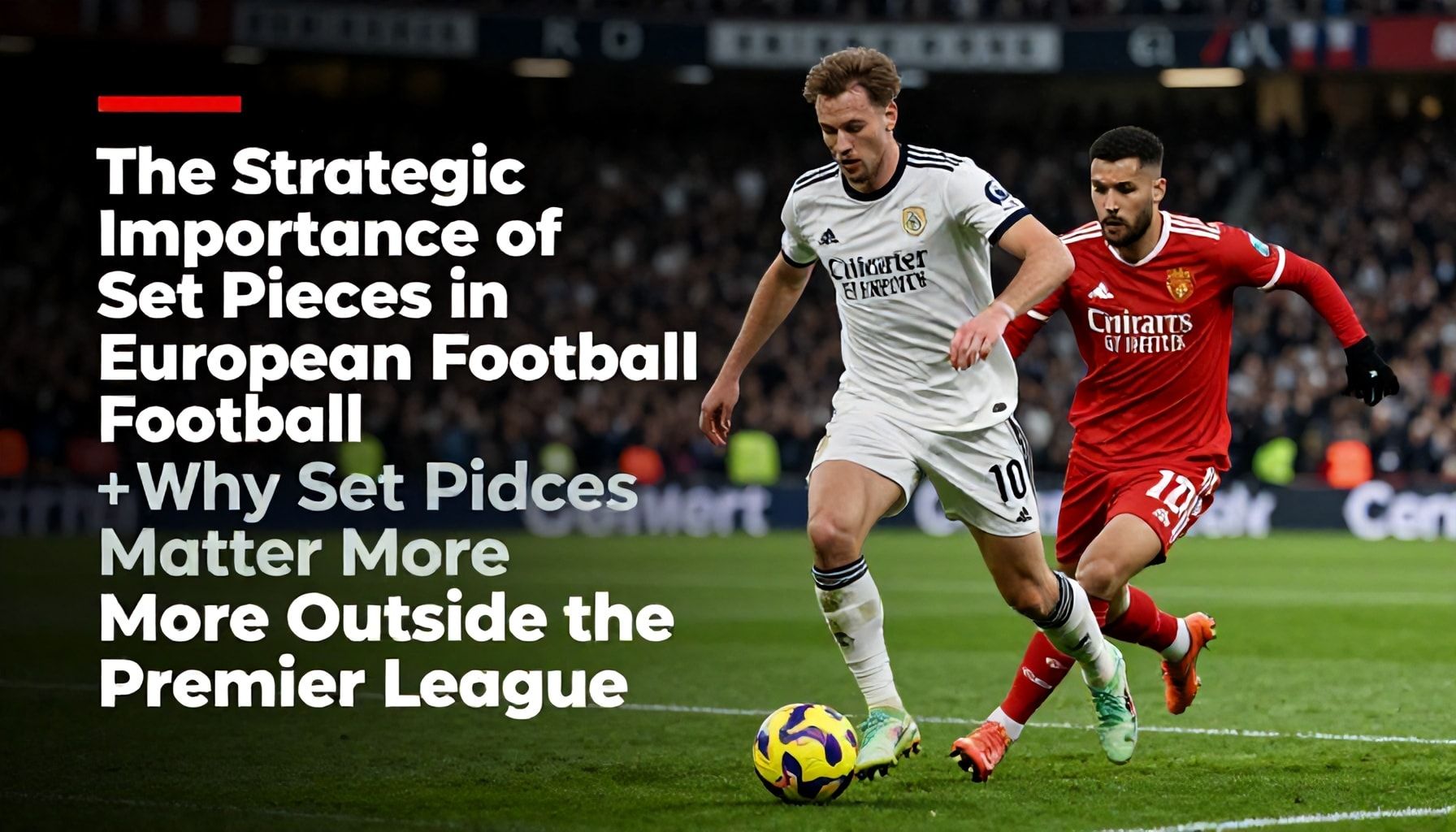
Set pieces have long been recognised as crucial in European football, but their importance extends far beyond the Premier League this season. Across Europe’s top leagues, teams are increasingly relying on dead-ball situations to gain a competitive edge. In La Liga, 30% of all goals this season have come from set pieces, according to Opta data. This statistic underscores the tactical significance of corners, free kicks, and penalties in Spain’s top flight.
In Serie A, the figure is even more pronounced. Italian teams have scored 34% of their goals from set pieces this campaign. Juventus manager Massimiliano Allegri highlighted this trend, stating, “Set pieces are decisive. They can change the course of a match in an instant.” His comments came after Juventus secured a crucial victory with a late free kick against Inter Milan.
The Bundesliga has also seen a surge in set-piece goals. Bayern Munich’s Hansi Flick noted, “We dedicate as much time to set pieces as we do to open play. The numbers don’t lie.” Bayern has converted 28% of their goals from set pieces, a testament to their meticulous preparation.
In Ligue 1, the trend is similar. Paris Saint-Germain’s Mauricio Pochettino emphasised the importance of set pieces, saying, “They are a vital part of our strategy.” PSG has scored 27% of their goals from dead-ball situations, reflecting a league-wide focus on this aspect of the game.
The tactical evolution of set pieces is not limited to goal-scoring opportunities. Teams are also improving their defensive organisation during set pieces. This dual focus on attack and defence highlights the strategic depth of modern football tactics. As the season progresses, the impact of set pieces is likely to become even more pronounced.
The impact of set pieces has extended far beyond the Premier League this season. Across Europe’s top leagues, teams are increasingly dedicating training time to perfecting both defensive organisation and attacking delivery. This trend is likely to influence international tournaments, with national coaches expected to prioritise set-piece strategies in their preparations. As clubs continue to analyse data and refine techniques, the importance of these moments in deciding matches will only grow, shaping the tactical landscape of the game for years to come.