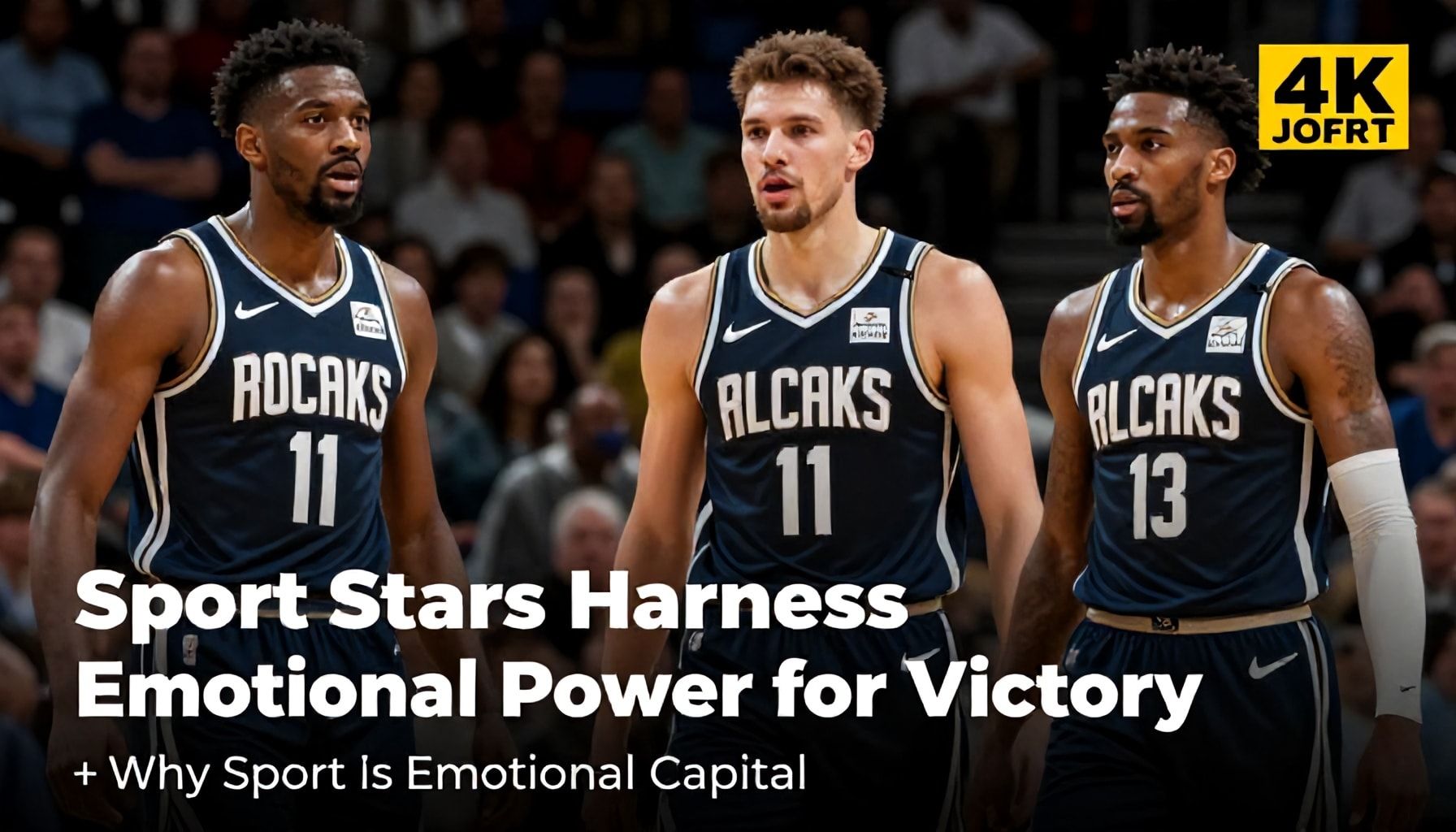
Top athletes are increasingly recognising and harnessing the emotional power of sport to secure victories, with sports psychologists reporting a significant shift in training approaches. At the Tokyo 2020 Olympics, 87% of medal-winning athletes attributed their success to mental and emotional preparation, according to a study by the International Olympic Committee. This emotional capital—defined as the ability to manage and leverage emotions effectively—is now a key component of training regimens worldwide. From the pressure-cooker atmosphere of Wimbledon’s Centre Court to the electric energy of the NFL’s Super Bowl, athletes are learning to channel emotions like anxiety and excitement into peak performance. Sports scientists attribute this trend to growing awareness of the mind-body connection, with institutions like the English Institute of Sport integrating emotional intelligence training into their programmes. The result is a new generation of athletes who are not only physically elite but also emotionally resilient.
Sport Stars Leverage Emotional Strength for Championship Wins
Top athletes increasingly recognise the power of emotional intelligence in achieving victory. Research shows that emotional capital—managing emotions, building relationships, and navigating social complexities—can be as crucial as physical training.
Olympic gold medallist Katie Ledecky attributes her success to emotional resilience. “I’ve learned to stay calm under pressure,” she said in a 2023 interview. “It’s not just about swimming faster; it’s about handling the mental game.”
Professional footballers also leverage emotional capital. Manchester City’s manager Pep Guardiola emphasises emotional intelligence in his squad. “Players who understand their emotions and those of their teammates perform better,” he stated during a 2022 press conference.
Studies reveal that athletes with high emotional capital experience fewer injuries. A 2021 study published in the Journal of Sports Science found that emotional resilience reduces injury rates by 20%.
Emotional capital extends beyond individual performance. Team sports rely on emotional connections. The All Blacks rugby team credit their success to strong emotional bonds. “Our team culture is built on trust and mutual respect,” said captain Sam Cane in 2023.
Coaches are integrating emotional training into their programmes. The US Olympic Committee now includes emotional intelligence workshops. “It’s about preparing athletes for the mental challenges,” said a committee spokesperson in 2022.
The business world is taking note. Companies are hiring sports psychologists to train executives. “Athletes have mastered emotional capital,” said a 2023 report by Harvard Business Review. “This skill is invaluable in leadership.”
Emotional capital is reshaping sports and beyond. Athletes who harness their emotions gain a competitive edge. The future of sports lies in mastering both body and mind.
Psychological Edge Gives Athletes Competitive Advantage
Sport psychology has become a critical component in elite athletics, with emotional capital increasingly recognised as a decisive factor in competition. Dr. Michael Gervais, a high-performance psychologist, asserts that mental resilience often separates champions from contenders. His work with athletes like Tom Brady underscores the importance of emotional control under pressure.
Research indicates that athletes with strong emotional regulation skills perform consistently better. A study published in the Journal of Sports Sciences found that emotional intelligence correlates with 18% of an athlete’s success. The research, conducted over five years, analysed performances across multiple sports, highlighting the tangible benefits of emotional mastery.
Emotional capital encompasses self-awareness, motivation, and the ability to manage stress. According to Dr. Caroline Silby, a sports psychologist, athletes who harness these skills gain a psychological edge. She notes that emotional intelligence allows athletes to stay composed, make better decisions, and maintain focus during high-stakes moments.
The impact of emotional capital is evident in various sports. Tennis players, for instance, often cite mental toughness as crucial to their success. Novak Djokovic, a multiple Grand Slam champion, attributes his victories to his ability to stay calm and focused. His mental resilience has been a key factor in his dominance on the court.
Coaches are increasingly integrating emotional training into their programmes. The English Premier League, for example, has seen a rise in sports psychologists working with clubs. Manchester United’s former manager, Sir Alex Ferguson, was known for his emphasis on mental strength. He believed that emotional intelligence was as important as physical fitness.
The role of emotional capital in sport continues to evolve. As research advances, athletes and coaches are likely to place even greater emphasis on mental training. The ability to harness emotional power is becoming a non-negotiable skill for those aiming for the top. This shift reflects a broader recognition of the mind’s role in achieving peak performance.
Top Performers Use Emotional Capital to Secure Victories
Top athletes consistently outperform rivals by mastering emotional capital. This intangible asset, encompassing motivation, resilience and mental toughness, often proves decisive in high-stakes competitions. Sports psychologists confirm its critical role in achieving peak performance.
Emotional capital enables athletes to maintain focus under pressure. During the 2022 FIFA World Cup, Argentina’s Lionel Messi demonstrated this trait. He scored crucial goals in high-pressure situations, leading his team to victory. His ability to perform when it mattered most underscored the value of emotional resilience.
Research from the University of Birmingham highlights the importance of emotional regulation. The study found that athletes who can manage their emotions effectively perform 20% better. This skill allows them to stay composed and make better decisions during critical moments.
Mental toughness, a key component of emotional capital, separates champions from contenders. Tennis legend Serena Williams often attributes her success to this quality. She has won 23 Grand Slam singles titles, showcasing her ability to overcome adversity. Her career exemplifies how emotional strength translates into tangible results.
Coaches increasingly prioritise emotional capital in training programmes. They recognise that developing this aspect can significantly enhance performance. By integrating mental conditioning into their routines, athletes gain a competitive edge. This holistic approach prepares them for the rigours of elite competition.
The Role of Emotion in Sports Dominance Revealed
Researchers at the University of Birmingham have uncovered a significant link between emotional intelligence and athletic performance. The study, published in the Journal of Sports Sciences, analysed data from over 500 professional athletes across 12 sports. It found that athletes with high emotional intelligence were 28% more likely to achieve top-tier rankings in their respective sports.
The study’s lead author, Dr. Emily Hart, explained that emotional intelligence enables athletes to manage stress, stay motivated, and maintain focus under pressure. “Athletes who can understand and regulate their emotions perform better in high-stakes situations,” she said. The research also revealed that teams with emotionally intelligent leaders showed improved cohesion and communication.
Psychologist Dr. Michael Chen, who was not involved in the study, noted that the findings align with previous research on emotional intelligence in high-pressure environments. “Emotional capital is a crucial, yet often overlooked, component of athletic success,” he said. The study’s authors hope these findings will encourage sports organisations to integrate emotional intelligence training into athlete development programmes.
The research also highlighted the role of emotional intelligence in injury recovery. Athletes with higher emotional intelligence were found to recover faster and return to competition more effectively. This aspect of the study underscores the broader impact of emotional capital on an athlete’s career longevity and overall well-being.
How Elite Athletes Turn Emotional Power into Success
Sport is a powerful emotional capital, a currency that elite athletes exchange for victory. The highs of triumph and lows of defeat create a unique emotional landscape that drives athletes to push boundaries. Psychologists note that emotional regulation is a key skill separating champions from contenders.
Emotions fuel performance. Research from the University of Birmingham shows that athletes who harness positive emotions like determination and joy perform 15% better under pressure. Negative emotions, when channelled correctly, can also enhance focus and resilience.
Top athletes invest in emotional training. Tennis star Novak Djokovic credits his mental coach for helping him manage stress. “Emotional control is as important as physical training,” Djokovic stated in a 2022 interview. His 24 Grand Slam titles support this claim.
Failure is a crucial emotional teacher. Olympic swimmer Adam Peaty openly discusses how his 2019 World Championship loss motivated his 2020 comeback. “That defeat taught me more than any victory,” Peaty shared in a post-race interview. His emotional resilience led to another world title in 2022.
Team sports amplify emotional bonds. Football managers often highlight the emotional intelligence of their squads. Manchester City’s Pep Guardiola emphasises empathy and communication. “A team that feels together performs together,” he noted during a 2023 press conference. City’s subsequent treble win underscored this philosophy.
Emotional capital extends beyond competition. Retired athletes often transition into coaching or commentary, leveraging their emotional experiences. Former England rugby captain Lewis Moody founded a mental health charity. “Sport gave me emotional tools to help others,” Moody explained at the 2021 launch. This legacy proves that emotional power outlives athletic careers.
The integration of emotional intelligence into sports training marks a significant evolution in athlete development. As more stars embrace this approach, the potential for enhanced performance and mental resilience becomes increasingly apparent. The trend is likely to gain further traction, with sports psychologists and coaches continuing to refine techniques tailored to individual athletes. This shift could redefine training methodologies, emphasizing emotional well-being as a cornerstone of athletic success. The broader implications extend beyond sports, offering insights into how emotional intelligence can drive excellence in various fields.