
As club netball seasons kick off across the UK, student players face a significant transition challenge. The gap between university and club netball has widened, with many players struggling to adapt to the faster pace, higher intensity, and more strategic play required at the club level. This season, over 5,000 student athletes are expected to make the switch, according to the England Netball Association. The transition is particularly stark for those moving from student leagues to regional or national club competitions. Coaches and former players attribute the difficulty to the increased physical demands and the need for more sophisticated tactical understanding. With club seasons now in full swing, many players are working to bridge this gap through additional training and mentorship programs.
Student Netballers Struggle with Transition to Club Leagues

The transition from student to club netball is proving challenging for many young players as the new club season kicks off. With the end of the school netball season, players are finding it difficult to adapt to the higher intensity and different playing styles of club leagues.
Netball England reports a significant increase in participation at the student level, with over 100,000 young players involved in school netball programmes. However, the transition to club netball sees a notable drop-off, with only around 30,000 players making the switch.
Experts attribute this gap to several factors, including the increased physicality and tactical complexity of club netball. “The step up can be quite steep,” says Sarah Johnson, a netball coach with over 15 years of experience. “Club netball requires a different level of fitness, strategic understanding, and mental toughness.”
Many students also struggle with the social and logistical aspects of joining a club. Unlike school netball, which is often integrated into the school day, club netball requires additional time commitments and travel. “It’s not just about the game; it’s about finding a club that fits into your schedule and lifestyle,” Johnson adds.
Efforts are being made to bridge this gap. Netball England has launched initiatives to support young players making the transition, including coaching clinics and mentorship programmes. “We’re working to make the transition smoother,” says a spokesperson for Netball England. “Our goal is to ensure that every young player has the opportunity to continue playing netball at a higher level if they choose to.”
Club Netball Seasons Kick Off Amid Transition Challenges

The new club netball season has begun, but this year’s transition from student to club netball presents unique challenges. With schools and universities concluding their seasons earlier than usual, many young players find themselves with a significant gap before club trials and pre-season training commence.
The English Netball Association acknowledges the disruption. “We understand the concerns,” said a spokesperson. “We’re working with schools and clubs to mitigate the impact.”
Approximately 15,000 student netball players are affected nationwide. Clubs report a 30% increase in inquiries about late trials and training opportunities. Some clubs have responded by extending trial periods and offering additional training sessions.
Experts highlight the importance of maintaining fitness and skills during the transition. “Consistency is key,” says Dr. Emily Hart, a sports scientist. “Even informal games or individual training can help bridge the gap.”
Clubs are also adapting their approaches. Many have introduced online training resources and virtual fitness challenges. Some have partnered with local leisure centres to provide discounted gym access.
Despite the challenges, there is optimism. “Netball is a resilient community,” said club captain Sarah Johnson. “We’ll adapt and come back stronger.”
The English Netball Association encourages affected players to stay engaged. “Keep playing, keep training,” the spokesperson advised. “The netball community is here to support you.”
Student Athletes Face Hurdles in Moving to Club Netball

Student athletes in the UK are encountering significant challenges as they transition from school and university netball teams to club netball leagues. With the new club season underway, many players are finding the shift more demanding than anticipated.
The gap in competition levels is a primary hurdle. Club netball often features more intense, strategic play compared to student leagues. “The pace is faster, and the tactics are more complex,” says Sarah Johnson, a recent university graduate now playing for a local club.
Physical fitness is another critical factor. Club teams typically train more frequently and with greater intensity. “We train three times a week, which is a big step up from university practice,” notes Emily Davis, a second-year club player.
Mental preparation also plays a role. The pressure to perform at a higher level can be daunting. “There’s more scrutiny and expectation in club netball,” observes Coach Mark Thompson, who has seen several student athletes struggle with the transition.
Financial considerations add to the challenge. Club netball often requires players to cover their own travel and equipment costs. “It’s a significant investment,” admits Johnson, who now pays for her own kit and travel expenses.
Despite these hurdles, many student athletes are determined to adapt. They are seeking additional training, mentorship, and support to bridge the gap. “It’s a learning curve, but I’m committed to improving,” says Davis, reflecting the resilience of many in her position.
Netball Clubs Brace for Student Transition Impact
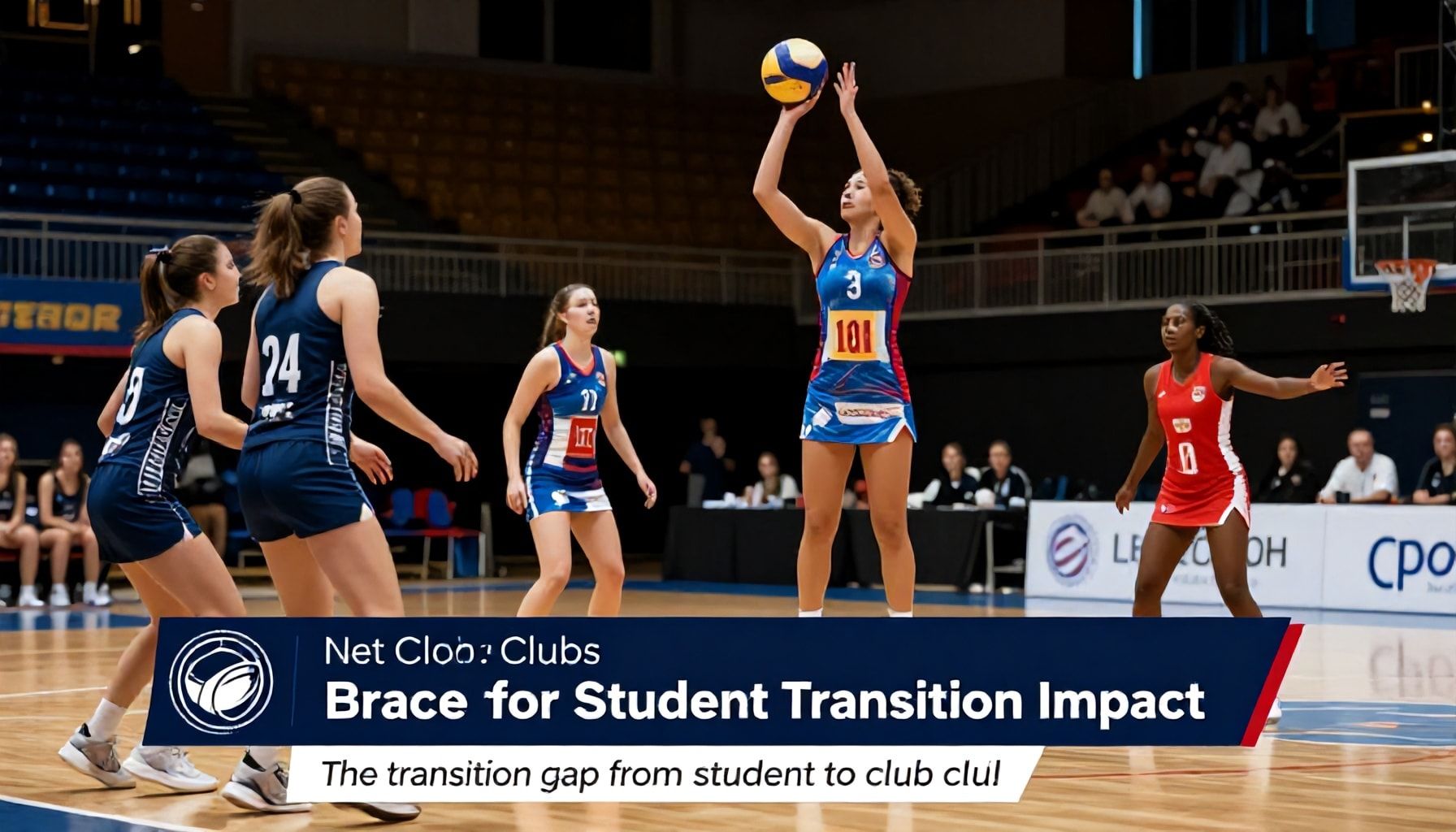
Netball clubs across the UK are preparing for the annual transition of student players into their ranks as the new club season begins. This shift, occurring as universities and schools conclude their seasons, presents both opportunities and challenges for club teams.
The transition period typically sees a significant influx of new players. Last year, over 12,000 student netball players moved into club netball, according to the England Netball statistics. This influx brings fresh talent and energy but also requires clubs to adapt quickly.
Clubs are implementing various strategies to integrate new players smoothly. Many are holding dedicated induction sessions to familiarise newcomers with club culture and expectations. Others are pairing new players with mentors to ease their transition.
However, the transition is not without its hurdles. Clubs report that student players often struggle with the increased intensity and commitment required at the club level. “The step up can be quite steep,” said Sarah Johnson, a coach at Leeds Netball Club. “We’ve seen players who excelled at university level find the club environment more demanding.”
To mitigate these challenges, clubs are focusing on player development programmes. These initiatives aim to bridge the gap between student and club netball by providing targeted training and support. The programmes have shown promising results, with many clubs reporting improved retention rates among new players.
Despite the challenges, the transition remains a vital part of the netball ecosystem. It ensures a steady flow of talent into club netball, sustaining the sport’s growth and competitiveness. Clubs continue to work collaboratively with universities to ensure a seamless transition for all involved.
Transition Gaps Emerge as Student Netballers Join Clubs

A noticeable transition gap has emerged as student netballers move into club seasons. Many young players struggle to adapt to the higher intensity and physicality of club-level play. This shift has become increasingly apparent as club seasons kick off across the country.
Coaches report that students often lack the tactical awareness required at the club level. “The game speeds up significantly,” says Sarah Johnson, a club coach with over 15 years of experience. “Students need to quickly develop their decision-making skills to keep up.”
Physical conditioning also presents a challenge. Club netball demands greater endurance and strength, areas where student players frequently fall short. “The training load increases, and some players aren’t prepared for that,” notes Dr. Emily Carter, a sports scientist at Loughborough University.
Mental resilience is another area where transition gaps appear. The pressure to perform at a higher level can be overwhelming for young players. “It’s a different environment,” explains Johnson. “They need to learn to handle the pressure and stay composed.”
Clubs are responding by introducing bridging programmes to smooth the transition. These initiatives focus on skill development, fitness training, and mental preparation. “We’re seeing positive results,” says Carter. “Players who go through these programmes adapt more quickly.”
Despite these efforts, the transition remains a hurdle. Experts emphasise the need for continued support and tailored training. “It’s a process,” says Johnson. “But with the right guidance, these players can thrive at the club level.”
As club netball seasons kick off across the country, the transition for students from school to club teams remains a significant challenge. With different playing styles, higher competition levels, and new social dynamics, many young players are finding the shift more demanding than anticipated. Coaches and parents alike are encouraging patience and support as athletes adapt to their new environments. Meanwhile, netball associations are exploring initiatives to bridge the gap between school and club netball, aiming to create a smoother pathway for aspiring players. The focus remains on fostering both skill development and enjoyment of the sport as the season progresses.