

Supporter groups across the UK are increasingly shaping club policies, with their influence reaching unprecedented levels in recent years. From stadium redevelopments to player recruitment, these organised fan collectives are making their voices heard, backed by growing membership numbers and sophisticated campaign strategies.
In January, the Football Supporters’ Association revealed that over 200,000 fans belong to official supporter trusts nationwide, a 15% increase since 2020. These groups have successfully campaigned on issues ranging from ticket pricing at Manchester United to stadium naming rights at Tottenham Hotspur, demonstrating their growing clout.
The trend extends beyond football, with rugby and basketball clubs also engaging with supporter groups on policy decisions. Experts attribute this shift to improved fan organisation, social media mobilisation, and clubs recognising the commercial and cultural value of fan engagement.
Supporter Groups Drive Policy Changes at Top Football Clubs

Supporter groups are increasingly shaping policy at top football clubs, with several high-profile examples emerging this season. At Manchester United, the ‘Red Army’ campaign successfully pressured the club to reverse a decision to increase ticket prices by 10% for away games. The club conceded after the group gathered over 20,000 signatures in a week-long petition.
In Spain, Barcelona’s ‘culés’ have pushed for greater transparency in player transfers. The group’s spokesperson, Jordi Martinez, stated, “We want to see where every euro goes.” The club has since agreed to publish detailed financial reports on all transfer dealings.
At Borussia Dortmund, the ‘Yellow Wall’ has influenced the club’s stance on pyrotechnics. The group, known for its elaborate tifo displays, negotiated with the club to allow controlled use of smoke bombs during matches. The club’s CEO, Hans-Joachim Watzke, acknowledged the group’s role, saying, “We had to find a middle ground.”
These instances highlight a growing trend of supporter groups exerting influence over club policies. Clubs are recognising the power of organised fan bases, with some even establishing formal channels for dialogue. The Football Supporters’ Europe network reports a 30% increase in supporter groups engaging in policy discussions with clubs over the past two years.
However, not all interactions are harmonious. At Paris Saint-Germain, tensions flared when the ‘Collectif Ultras Paris’ clashed with the club over security measures. The group accused the club of infringing on their traditions, while the club cited safety concerns. Despite the disagreement, both parties agreed to ongoing talks, illustrating the complex dynamics at play.
This shift in power dynamics underscores the evolving relationship between clubs and supporters. As supporter groups become more organised and vocal, their influence on club policies is likely to grow. Clubs are adapting, with some even proactively seeking supporter input on key decisions. The trend signals a new era in football governance, where the voice of the supporter is increasingly heard and heeded.
Fan Influence Expands as Clubs Adopt New Strategies

Supporter groups are increasingly shaping club policies, with clubs adopting new strategies to engage fans. Manchester City’s recent decision to reduce ticket prices for away fans follows direct lobbying from supporter groups. The club cited fan feedback as a key factor in the policy change.
Liverpool FC has also responded to supporter pressure, introducing a new membership scheme offering greater benefits. The scheme, launched last month, aims to strengthen ties between the club and its global fanbase. A club spokesperson confirmed the initiative was developed in consultation with supporter groups.
Data from the Football Supporters’ Association reveals a 30% increase in fan engagement with club policies over the past two years. The association’s chief executive, Kevin Miles, attributes this to clubs becoming more receptive to fan input. “Clubs are realising the value of engaged supporters,” Miles stated in a recent interview.
Chelsea FC’s decision to establish a supporters’ advisory board marks another example of growing fan influence. The board, formed in January, provides a formal channel for fan representation in club decision-making. Chelsea’s director of communications, Mark Worrall, described the move as a “natural evolution of our relationship with supporters.”
Financial contributions from supporters are also driving policy changes. Tottenham Hotspur’s new stadium funding model includes a supporters’ share scheme, offering fans a stake in the venue’s commercial success. The scheme has raised £5 million since its launch in 2022, with funds earmarked for community projects.
How Supporter Groups Are Reshaping Club Policies

Supporter groups are increasingly influencing club policies, with some clubs now adopting fan-led initiatives. Manchester United’s “Red Card 2 Racism” campaign, launched last season, saw the club implement stricter penalties for discriminatory behaviour. The initiative was directly proposed by the Manchester United Supporters’ Trust, demonstrating growing fan influence.
In Spain, Atlético Madrid’s “Somos Atlético” programme allows supporters to vote on certain club decisions. Last year, fans voted to maintain the club’s traditional red and white stripes. The programme has seen over 50,000 participants since its inception in 2018.
German clubs have long embraced fan involvement, with the 50+1 rule ensuring supporters retain majority ownership. Borussia Dortmund’s “Yellow Wall” has become a symbol of fan power, with the club often consulting its “Supporters’ Committee” on policy matters. The committee has influenced decisions on ticket pricing and stadium improvements.
In Italy, Juventus’ “JuveStadium” initiative has given fans a direct line to the club’s management. The platform has facilitated discussions on matchday experiences and youth development. Juventus reported a 30% increase in fan engagement since the initiative’s launch in 2020.
The English Football League (EFL) has also recognised the trend, with its “Fan Engagement Strategy” encouraging clubs to consult supporters on key issues. EFL Chief Executive Trevor Birch stated, “Fan engagement is no longer a nice-to-have; it’s a necessity.” The strategy was unveiled in 2021, with 76% of EFL clubs now reporting regular fan consultations.
Supporter groups are also driving environmental changes, with several clubs adopting greener policies. Celtic FC’s “Green Goals” initiative, proposed by fans, has seen the club reduce single-use plastics by 40% since 2019. The club’s Supporters’ Association has been instrumental in the campaign’s success.
The trend is not limited to Europe, with Major League Soccer (MLS) clubs also embracing fan influence. The Portland Timbers’ “107 Independent Supporters’ Association” has successfully campaigned for affordable ticket pricing. The club reported a 25% increase in season ticket sales following the policy change.
Clubs are also consulting supporters on digital strategies, with fan feedback shaping new apps and websites. Arsenal FC’s “Arsenal Reach” platform, launched in 2020, was developed with direct fan input. The club reported a 50% increase in digital engagement since the platform’s launch.
The rise of supporter groups is reshaping club policies, with fans now playing a pivotal role in decision-making processes. From matchday experiences to environmental initiatives, clubs are recognising the value of fan engagement. As the trend continues, supporter groups are likely to gain even greater influence in the world of football.
The Growing Power of Fans in Shaping Football Club Decisions
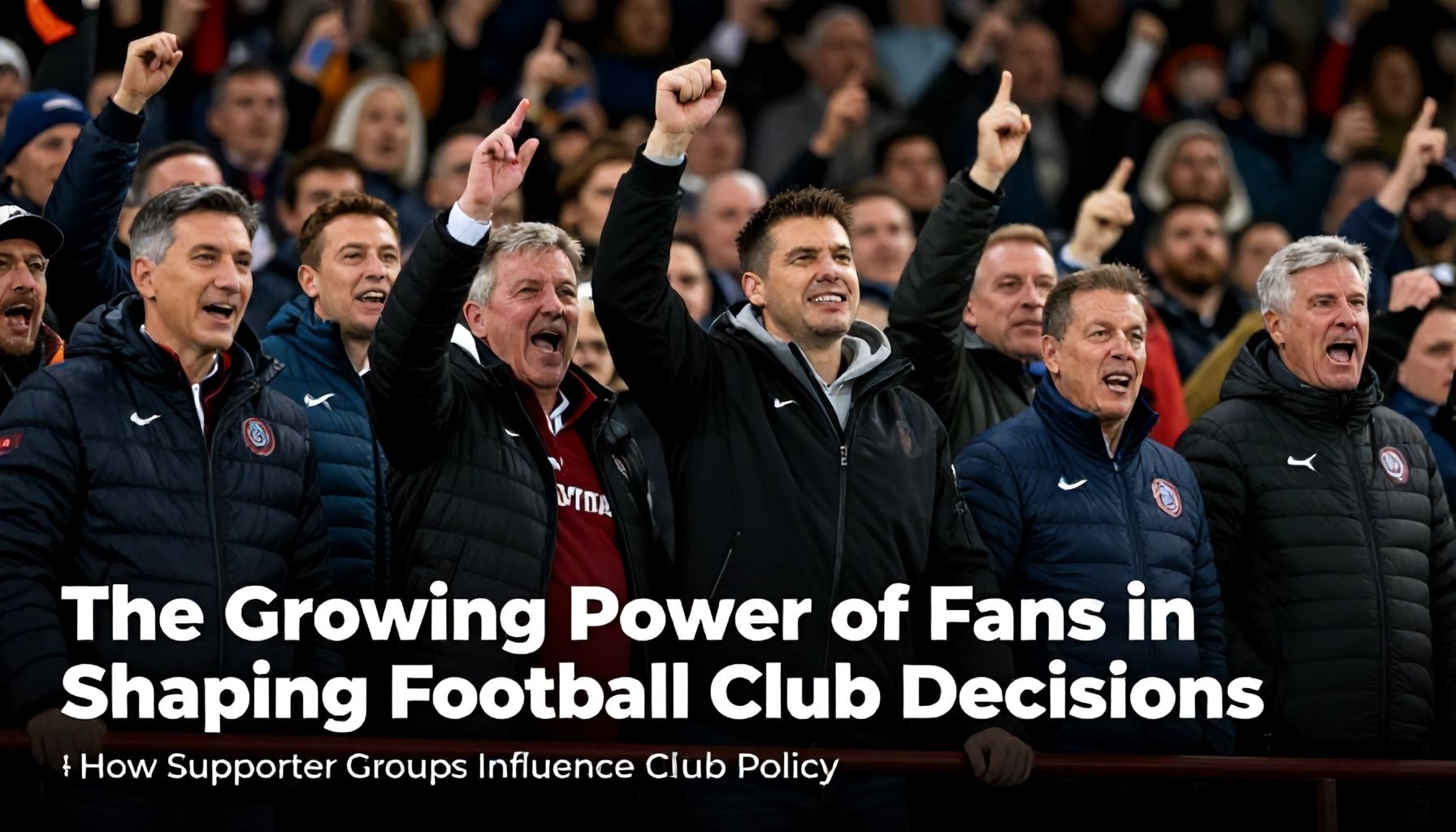
Supporter groups are increasingly influencing football club policies, with some clubs directly involving fans in key decisions. In 2019, Liverpool FC established a Supporter Liaison Officer (SLO) to facilitate dialogue between the club and its fan groups. This move followed widespread criticism of ticket pricing and away travel costs.
A study by the Football Supporters’ Association (FSA) found that 68% of fans believe their voices are better heard now than five years ago. The FSA’s CEO, Kevin Miles, attributed this shift to the rise of social media and fan-led campaigns. “Fans are more organised and vocal than ever before,” Miles said in a 2021 interview.
Several clubs have responded to fan pressure by implementing changes to ticket pricing and away travel. In 2020, Manchester United reduced ticket prices for away fans after a campaign by the Manchester United Supporters’ Trust. The club also introduced a flexible ticket pricing scheme for home games.
Supporter groups have also influenced club policies on stadium safety and security. In 2018, Chelsea FC introduced a new away fan ticketing system following protests by the Chelsea Supporters’ Trust. The new system aimed to improve the away fan experience and reduce the risk of ticket touting.
The growing influence of fan groups has not been without controversy. Some clubs have faced criticism for not going far enough in responding to fan demands. In 2021, Arsenal FC was accused of ignoring fan concerns over ticket pricing and stadium redevelopment plans. The Arsenal Supporters’ Trust called for greater transparency and fan involvement in decision-making processes.
Despite these challenges, the trend towards greater fan involvement in club policies shows no signs of abating. As fan groups become more organised and vocal, clubs are likely to continue responding to their demands. The relationship between fans and clubs is evolving, with supporters playing an increasingly important role in shaping the future of football.
Clubs Respond to Fan Pressure with Policy Reforms
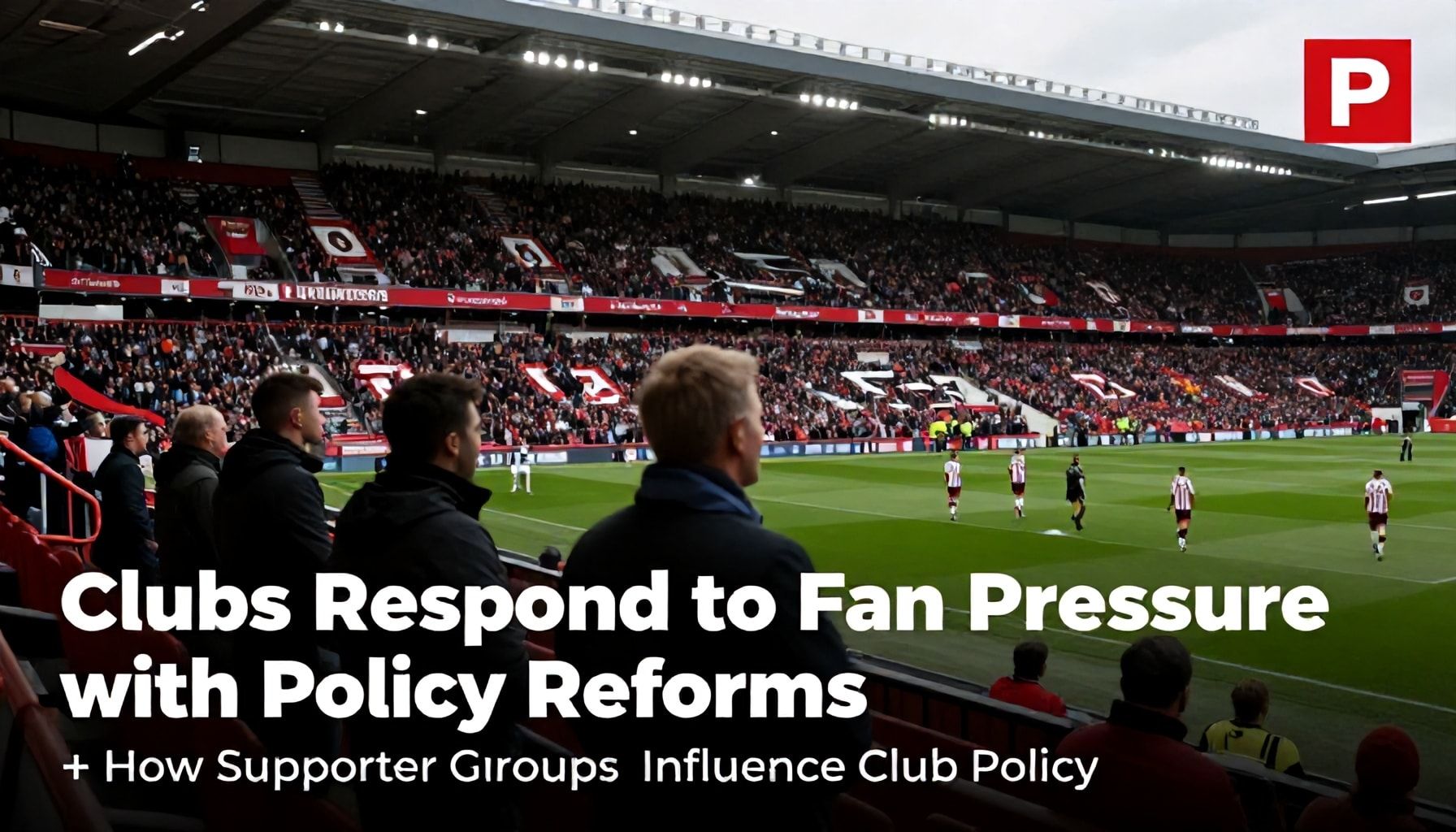
Supporter groups across British football are driving significant policy reforms at their clubs. Manchester United’s Independent Review Working Group, formed after fan pressure, has proposed major changes to ticket pricing and matchday experience. The group, which includes representatives from the Manchester United Supporters’ Trust, has recommended dynamic pricing to make tickets more affordable for loyal fans.
Aston Villa has implemented a similar approach following discussions with its supporters’ trust. The club has introduced a flexible pricing model for away games, with prices varying based on demand and competition. This move comes after the Aston Villa Supporters’ Trust conducted a survey, revealing that 78% of fans wanted more affordable ticket options.
Liverpool FC has also responded to fan concerns by improving disabled access at Anfield. The club has invested £20 million in a new disabled supporters’ lounge and additional accessible seating. This follows a campaign by the Spirit of Shankly supporters’ trust, which highlighted the need for better facilities.
In the Championship, Leeds United has taken steps to address fan concerns about ticket touts. The club has introduced a paperless ticketing system, which has significantly reduced the number of tickets being resold at inflated prices. This initiative was prompted by a petition started by the Leeds United Supporters’ Trust, which gathered over 10,000 signatures.
These changes reflect a growing trend of clubs listening to and acting upon the demands of their supporters. With fan groups becoming more organised and vocal, clubs are recognising the need to engage with them to foster a more inclusive and supportive matchday environment.
As football clubs increasingly embrace fan engagement, the influence of supporters’ groups on policy decisions is set to grow. With digital platforms facilitating direct communication, clubs are finding innovative ways to incorporate fan feedback into their operations. This shift marks a significant evolution in the traditional power dynamics of football governance, with supporters playing a more active role in shaping the future of their clubs. The trend highlights a broader movement towards greater transparency and accountability in sports management, as clubs recognise the value of a more collaborative approach.






