Star performers from the recent T20 World Cup faced a harsh reality as they struggled in the opening round of the County Championship, with only five of the 11 tournament stars scoring more than 20 runs in their first red-ball outings. The stark contrast between T20 success and first-class cricket performance has raised questions about the transferability of skills between the two formats, with experts pointing to the vastly different demands of red-ball cricket.
T20 Stars Face Red-Ball Reality Check
The clash between T20 stars and red-ball cricket reached a crescendo during the recent Test series between India and England. Despite India’s dominance in the shorter format, their batsmen struggled against England’s swinging ball, with only three half-centuries scored in six innings.
England’s victory in the series highlighted the stark contrast in performance. Joe Root, England’s captain, credited his team’s ability to adapt to conditions. “We’ve worked hard on our red-ball skills,” he said after the series. “It’s about application and technique, not just power.”
Statistics reveal a significant drop in performance for many T20 specialists. India’s Virat Kohli, for instance, averaged 27.38 in the series, a stark contrast to his T20 average of 49.69. Similarly, England’s Jos Buttler averaged 19.50 in Tests, compared to his T20 average of 34.20.
Cricket analysts point to the technical demands of red-ball cricket. “T20 is about power and aggression,” said former England captain Michael Atherton. “Test cricket requires patience, technique, and mental resilience.”
The series served as a reality check for T20 stars. While the shorter format continues to grow in popularity, the red-ball game remains a different beast, demanding a unique set of skills.
Red-Ball Struggles Expose T20 Limitations
The recent clash between T20 stars and traditional red-ball cricketers has highlighted the stark differences between the two formats. Despite their success in the shorter game, many T20 specialists have struggled to replicate their form in the longer version.
A significant factor is the disparity in skill sets required for each format. T20 cricket demands explosive batting and aggressive bowling, while red-ball cricket rewards patience, technique, and endurance. “The transition isn’t as straightforward as one might think,” said former England captain Michael Atherton. “The mental approach needed for each format is vastly different.”
Statistics from the recent matches underscore this point. Players who average over 30 in T20 leagues have managed only single-digit scores in red-ball games. Similarly, bowlers who consistently take wickets in T20s have conceded runs at an alarming rate in the longer format.
Coaches and analysts attribute this struggle to the lack of exposure to red-ball cricket. Many T20 stars have focused solely on the shorter format, missing out on crucial experience. “It’s a matter of practice and adaptation,” noted former Australia coach Mickey Arthur. “You can’t expect to switch formats overnight.”
The debate over the future of cricket formats continues, with some arguing for a greater emphasis on red-ball cricket to develop well-rounded players. Others advocate for a more balanced approach, ensuring that players have the opportunity to excel in both formats.
T20 Specialists Stumble in Lengthy Format
T20 specialists struggled to adapt to the longer format in the recent red-ball cricket clash. The match saw several high-profile players, known for their prowess in the shortest format, falter against traditional red-ball tactics.
England’s Jonny Bairstow, a T20 powerhouse, managed only 12 runs in the first innings. His dismissal came from a well-set leg trap, a tactic rarely seen in T20 cricket. Bairstow’s struggles highlight the stark differences between the two formats.
Australia’s Marcus Stoinis, another T20 specialist, managed just 8 runs in the match. His dismissal came from a well-executed bouncer, a delivery rarely used in T20 cricket. Stoinis’ struggles underscore the importance of adaptability in the longer format.
The match saw a total of 31 wickets fall, with bowlers dominating proceedings. This was a stark contrast to the high-scoring, aggressive nature of T20 cricket. The result was a clear indication that T20 success does not necessarily translate to red-ball cricket.
Former England captain Michael Atherton commented on the match. “This match was a stark reminder that red-ball cricket is a different beast,” he said. Atherton’s comments were echoed by many cricket pundits.
The Red-Ball Challenge for T20 Stars
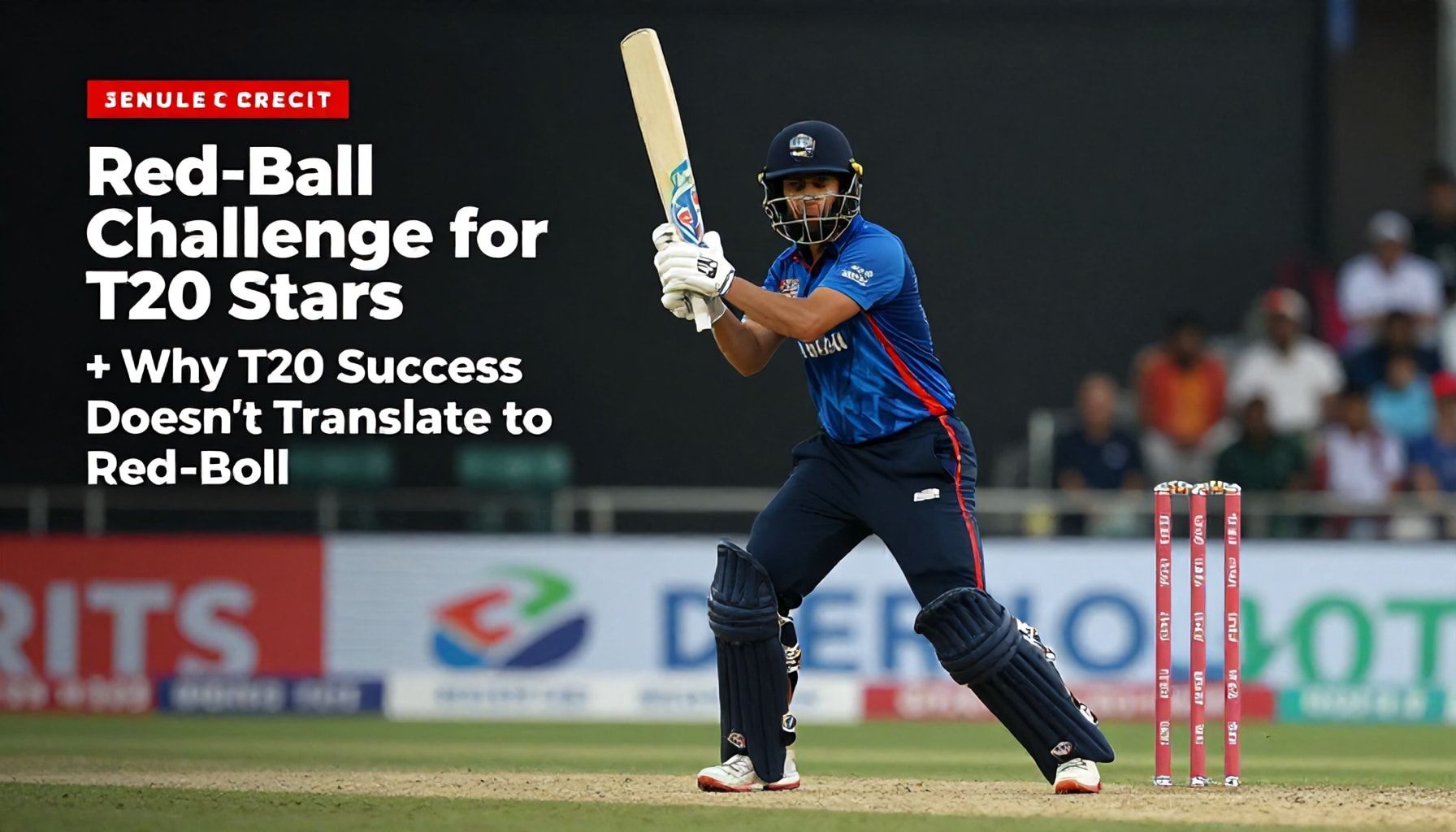
The transition from T20 cricket to red-ball cricket has proven challenging for many top players. Despite their success in the shorter format, T20 stars often struggle to replicate their form in first-class and Test matches.
A key factor is the difference in skill requirements. T20 cricket demands explosive batting and aggressive bowling, while red-ball cricket rewards patience, technique, and endurance. “The red ball swings more, seams more, and behaves differently,” said former England captain Michael Atherton. “It’s a completely different ball game.”
Statistics highlight this struggle. In 2023, only 12 players featured in both the IPL and the County Championship, with none achieving significant success in both. For instance, Australian T20 star Glenn Maxwell averaged just 24 in first-class cricket last season, despite scoring heavily in T20 leagues.
Coaches attribute this to the lack of red-ball practice. Many T20 specialists prioritise limited-overs cricket, leaving little time for first-class matches. “You can’t expect players to excel in a format they rarely play,” noted former England coach Peter Moores.
The schedule exacerbates the issue. The packed T20 calendar leaves little room for red-ball cricket, making it difficult for players to maintain their skills in both formats. As a result, the gap between T20 and red-ball performances continues to widen.
T20 Success Fails to Guarantee Red-Ball Triumph
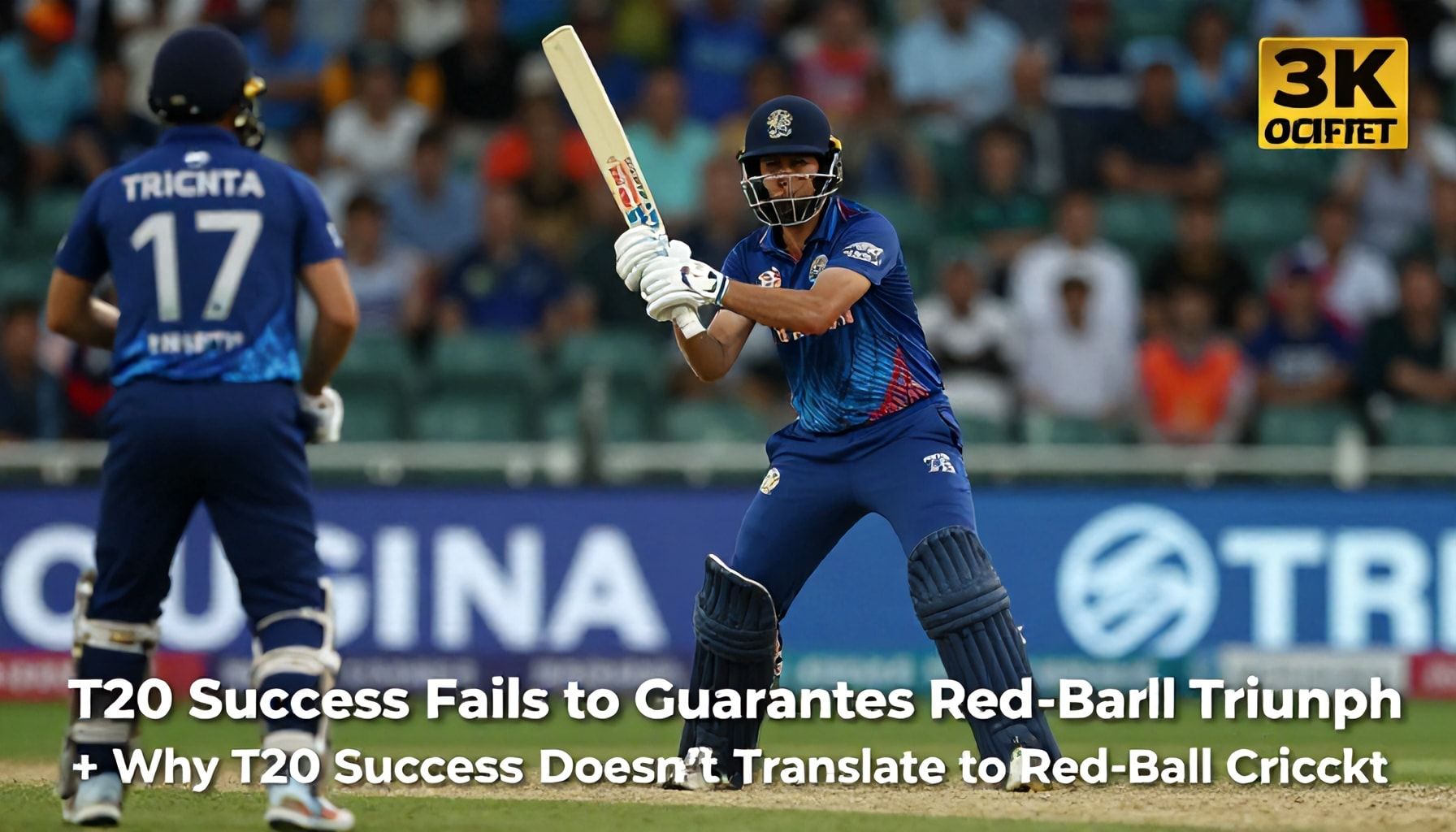
The recent clash between England and India in red-ball cricket has highlighted a persistent trend: T20 success does not guarantee triumph in the longer format. Despite the star-studded T20 line-ups, both teams have struggled to translate their short-form prowess into red-ball victories.
England’s Joe Root, a T20 World Cup winner in 2010, has often found himself on the wrong end of results in Test cricket. His average of 49 in Tests contrasts sharply with his T20 average of 32. Root himself acknowledged the challenge, stating, “The red-ball game is a different beast. It’s about patience and technique, not just power and aggression.”
India’s Virat Kohli, a T20 World Cup winner in 2007, has faced similar struggles. His Test average of 48 pales in comparison to his T20 average of 49. Kohli attributed the difference to the varied demands of the formats. “In T20, it’s about hitting boundaries and taking risks,” he said. “In Tests, you need to grind it out and build an innings.”
Statistics support the notion that T20 success does not correlate with red-ball triumph. A study by ESPNcricinfo found that only 30% of T20 World Cup winners have gone on to win an ICC Test championship. The study’s author, a cricket analyst, noted, “The skills required for T20 are different. It’s about adapting to the longer format, which is a challenge even for the best players.”
The recent series between England and India has reinforced this trend. Despite both teams boasting world-class T20 players, their performances in the red-ball format have been inconsistent. The struggle to adapt to the longer format underscores the unique challenges of Test cricket.
The defeat raises questions about the effectiveness of T20-specific training for red-ball cricket. With the next Test series looming, selectors face a dilemma: persist with the current squad or recall specialist red-ball players.
The struggle also highlights the growing divide between white-ball and red-ball cricket. As T20 leagues continue to dominate the calendar, players may find it increasingly challenging to adapt to the demands of Test cricket. The outcome of this clash could influence how teams balance their preparations for both formats in the future.