

Teenage players are abandoning grassroots football in unprecedented numbers, with participation rates plummeting by nearly 40% in the past five years, according to recent data from the Football Association (FA). The exodus, most acute among 13 to 17-year-olds, is leaving local clubs scrambling to fill empty pitches across England. The decline, attributed to a combination of academic pressures, the allure of other sports, and the rise of gaming, has raised alarm bells among football development officers who fear a long-term impact on the national talent pool. With over 10,000 fewer teenagers playing weekly, the FA is launching a nationwide initiative to reverse the trend, targeting schools and communities to reignite interest in the beautiful game.
Teenage footballers desert grassroots clubs at alarming rate

Grassroots football faces a retention crisis among teenage players. Figures from the Football Association show a 20% drop in 13-17 year-olds playing regularly over the past five years. The decline has left clubs scrambling to understand why young players are walking away.
Academics point to increased academic pressures and the lure of other sports. Dr. Sarah Johnson, a sports sociologist at Loughborough University, states, “Teenagers today face intense academic expectations. Many feel they must choose between football and studying.”
Social media and gaming also play a significant role. A survey by the Youth Sports Trust found 60% of teenagers spend more time on digital activities than physical sports. “The competition for leisure time is fierce,” notes the report.
The professionalisation of youth football has created additional challenges. Many young players feel pressured to join academies or elite development programmes. “The grassroots environment can’t compete with the perceived glamour of professional pathways,” explains former grassroots coach Mark Thompson.
Financial barriers further exacerbate the issue. Rising costs for equipment, travel, and membership fees deter many families. “Football should be accessible to all, but the costs are pushing teenagers away,” argues grassroots advocate Laura Bennett.
Clubs are now exploring innovative solutions to retain players. Some offer flexible training schedules and academic support. Others focus on creating inclusive, enjoyable environments. “We need to make football fun again,” insists grassroots coach James Wilson.
Despite these efforts, the exodus continues. Without intervention, the future of grassroots football hangs in the balance.
Grassroots football faces retention crisis among teenagers
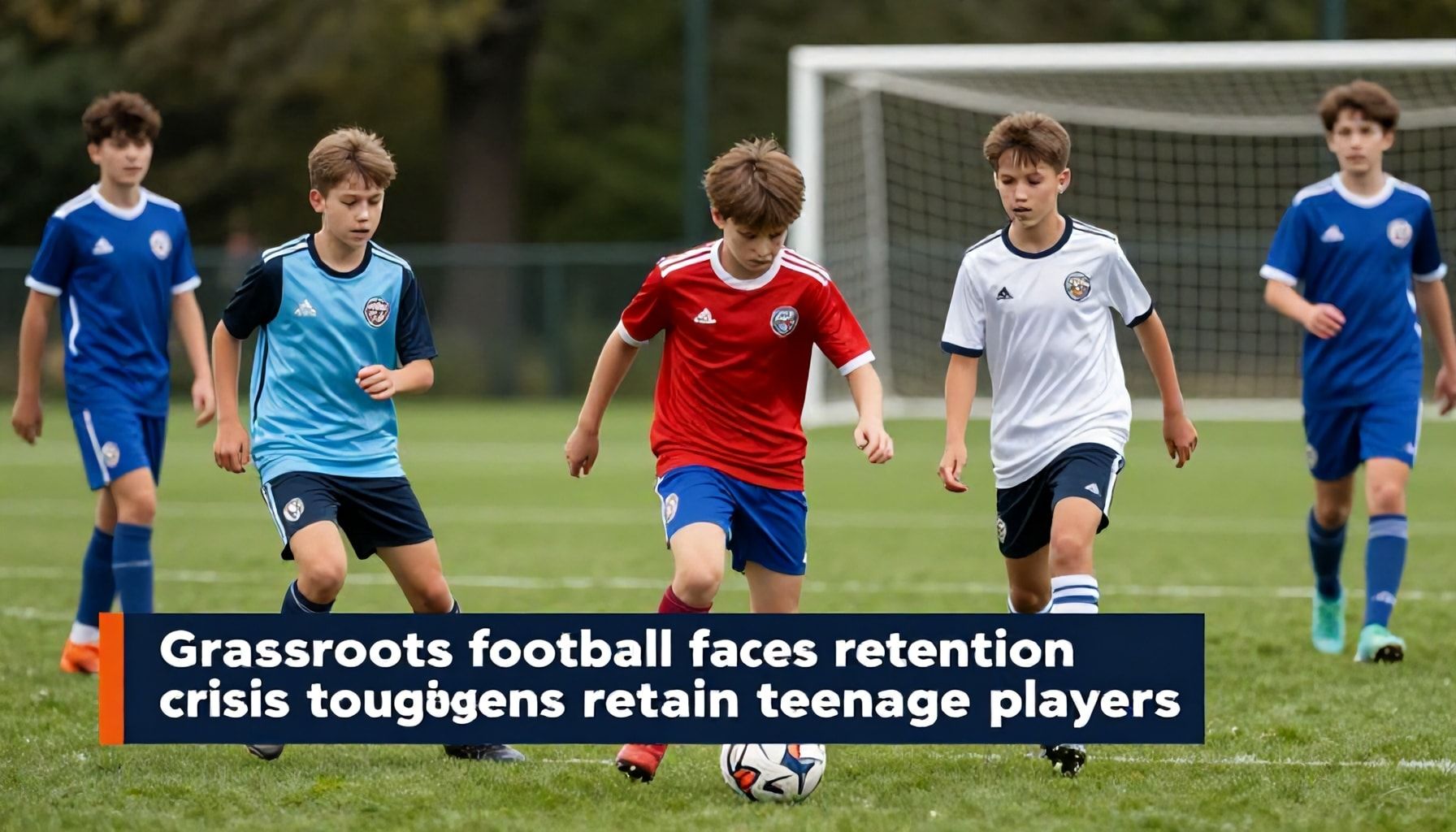
Grassroots football is facing a significant retention crisis among teenage players. The Football Association (FA) reports a 22% drop in 13 to 17-year-olds playing regular football over the past five years. This decline is attributed to a complex mix of factors, including academic pressures, lack of pitch access, and competition from other sports.
Academic commitments are a major factor. Many teenagers struggle to balance schoolwork with training and matches. A survey by the FA found that 68% of teenagers who quit cited academic pressures as a significant factor. “It’s not just about the time spent playing,” said Dr. Sarah Johnson, a sports psychologist. “The mental load of juggling school and football is immense.”
Pitch access is another critical issue. Many grassroots clubs report difficulties securing affordable, quality pitches. The FA’s facilities report highlights a shortage of 20,000 pitches nationwide. “Without proper facilities, it’s hard to retain players,” said club secretary John Smith. “Teenagers need a decent place to play.”
Competition from other sports is also a factor. Sports like rugby, basketball, and even esports are attracting teenagers away from football. The FA’s survey found that 45% of teenagers who quit cited other activities as a reason. “Football needs to adapt and offer more variety to keep teenagers engaged,” said sports analyst Mark Brown.
The FA is taking steps to address the issue. Initiatives include flexible training schedules and partnerships with schools. However, the retention crisis remains a significant challenge for grassroots football.
Teen players quit grassroots football in unprecedented numbers
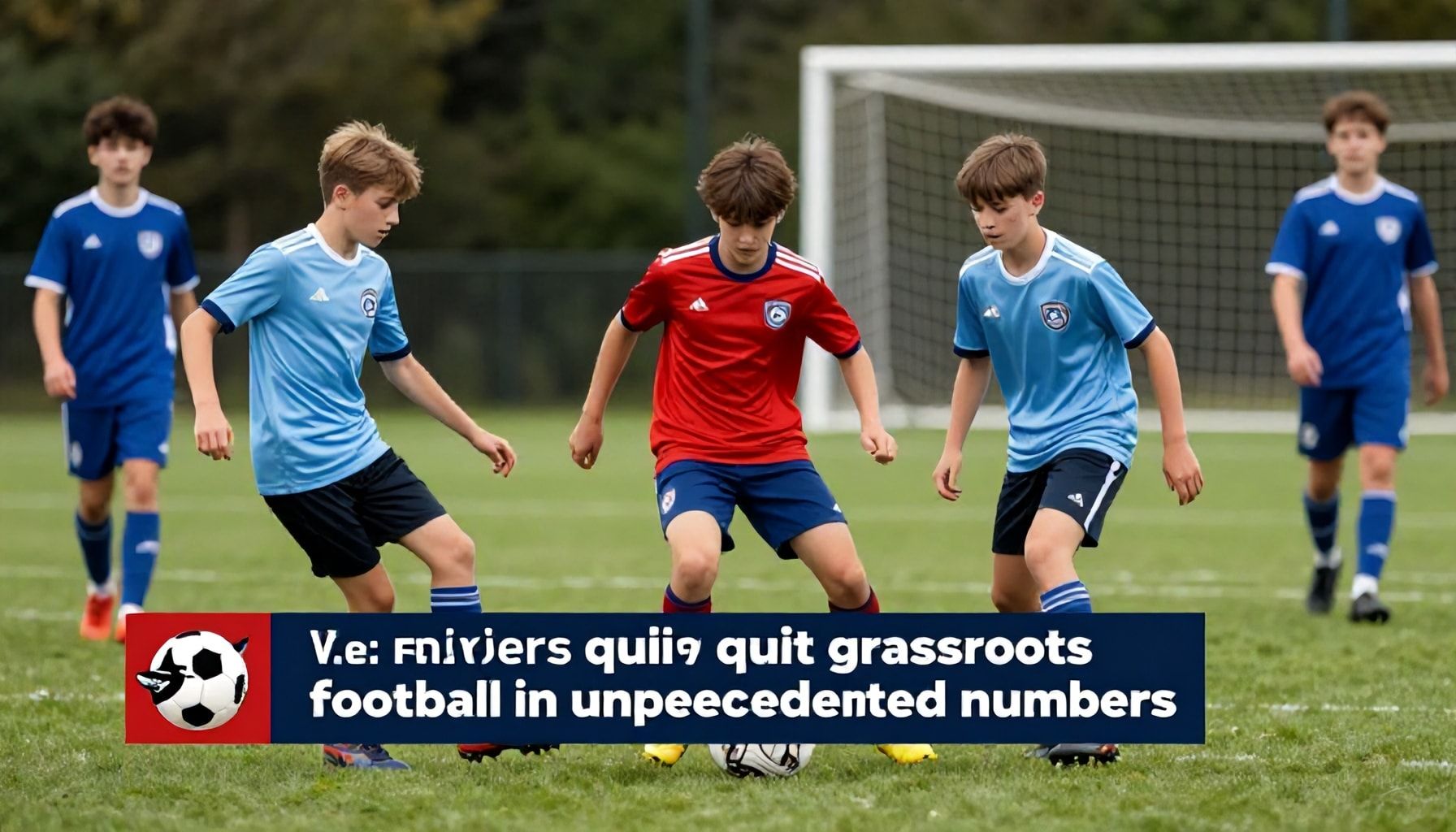
Grassroots football faces an unprecedented exodus of teenage players, with participation rates plummeting across the UK. The Football Association (FA) reports a 20% decline in 13-17-year-olds playing weekly since 2018. The trend threatens the future of the sport at the community level.
Experts point to academic pressures as a significant factor. A 2023 study by the University of Birmingham found that 65% of teenagers cited school workload as a reason for quitting. “The demands of GCSEs and A-levels leave little time for extracurricular activities,” said Dr. Emily Carter, lead researcher.
Financial barriers also play a role. The cost of kit, travel, and club fees has risen by 30% in the past decade, according to the FA. Many families can no longer afford the expenses. “Football should be accessible to all, but the costs are pricing out talented young players,” said a spokesperson for the FA.
Social media and alternative sports compete for teenagers’ attention. Esports and online gaming have surged in popularity, offering convenient entertainment. “The appeal of playing from home is hard to match,” admitted a youth coach from Manchester.
Clubs struggle to adapt to changing interests. Traditional training methods and rigid structures fail to engage modern teenagers. “We need to innovate to keep up,” said a grassroots coach from London. The future of grassroots football hinges on addressing these challenges.
Grassroots football struggles to keep teenage players engaged
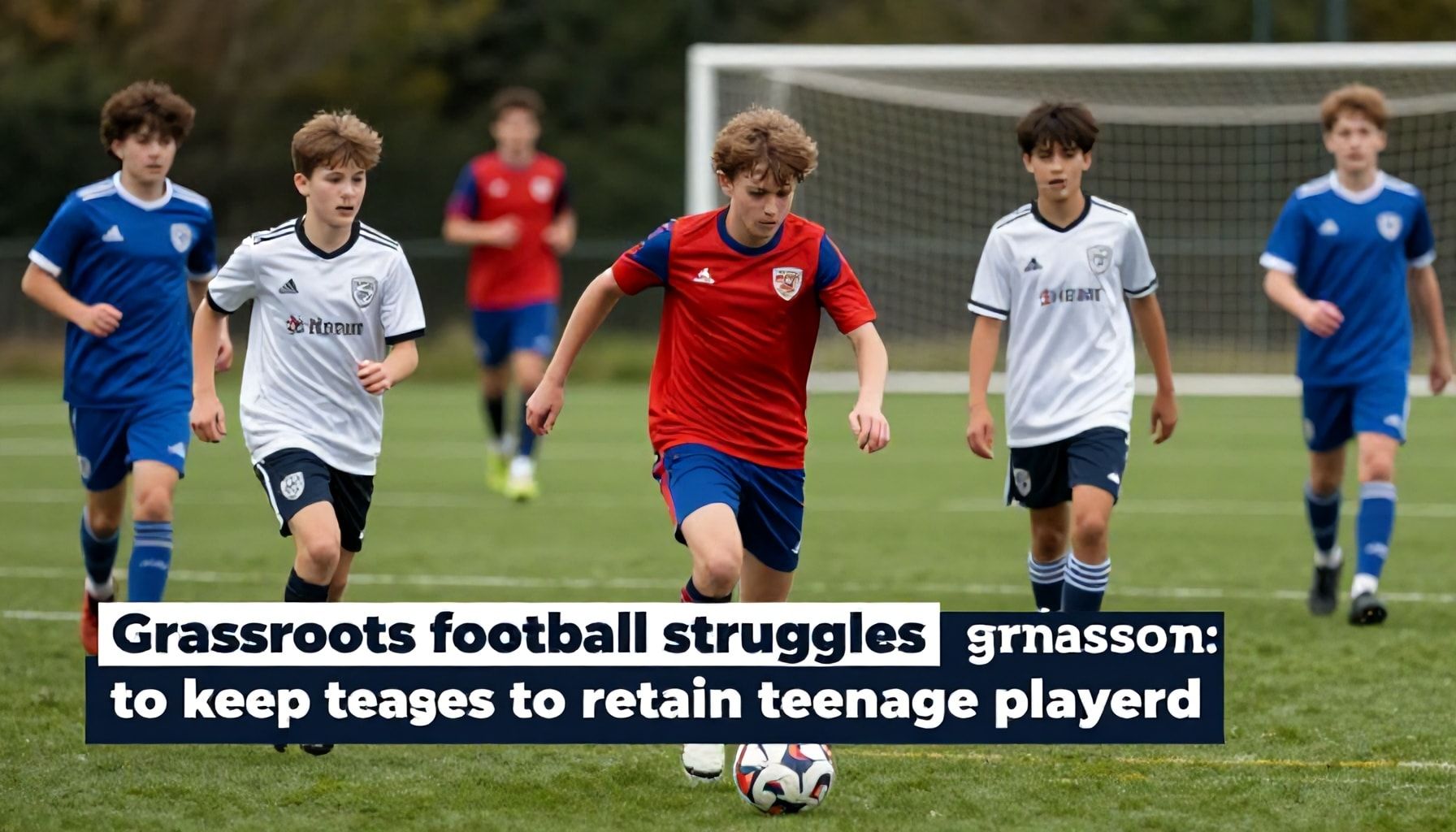
Grassroots football faces a growing challenge in retaining teenage players, with participation rates declining sharply as young athletes approach their late teens. The Football Association (FA) reports a 22% drop in 16-18-year-old players between 2019 and 2023, highlighting a critical issue for the sport’s future.
One major factor is the increasing pressure from academic commitments. Many teenagers find it difficult to balance the demands of school or college with the time required for training and matches. “It’s not just about the time on the pitch,” says Dr. Emily Carter, a sports psychologist. “The travel, the preparation, it all adds up.”
Financial barriers also play a significant role. The cost of equipment, travel, and club fees can be prohibitive for some families. A survey by the FA found that 38% of parents cited financial reasons for their child’s withdrawal from grassroots football.
The allure of other sports and activities cannot be ignored. With the rise of esports and other leisure options, football is no longer the automatic choice for many young people. “There’s more competition for their time and interest,” notes Mark Johnson, a grassroots football coach with over 15 years of experience.
Additionally, the competitive nature of grassroots football can be a deterrent. Some teenagers feel the pressure to perform is too intense, leading them to seek less stressful environments. “It’s not just about winning or losing,” says Johnson. “It’s the journey and the enjoyment that matters.”
The FA is aware of these challenges and is working on initiatives to make grassroots football more accessible and enjoyable. However, the problem persists, and finding a solution remains a priority.
Teenage footballers abandon grassroots clubs for alternative sports
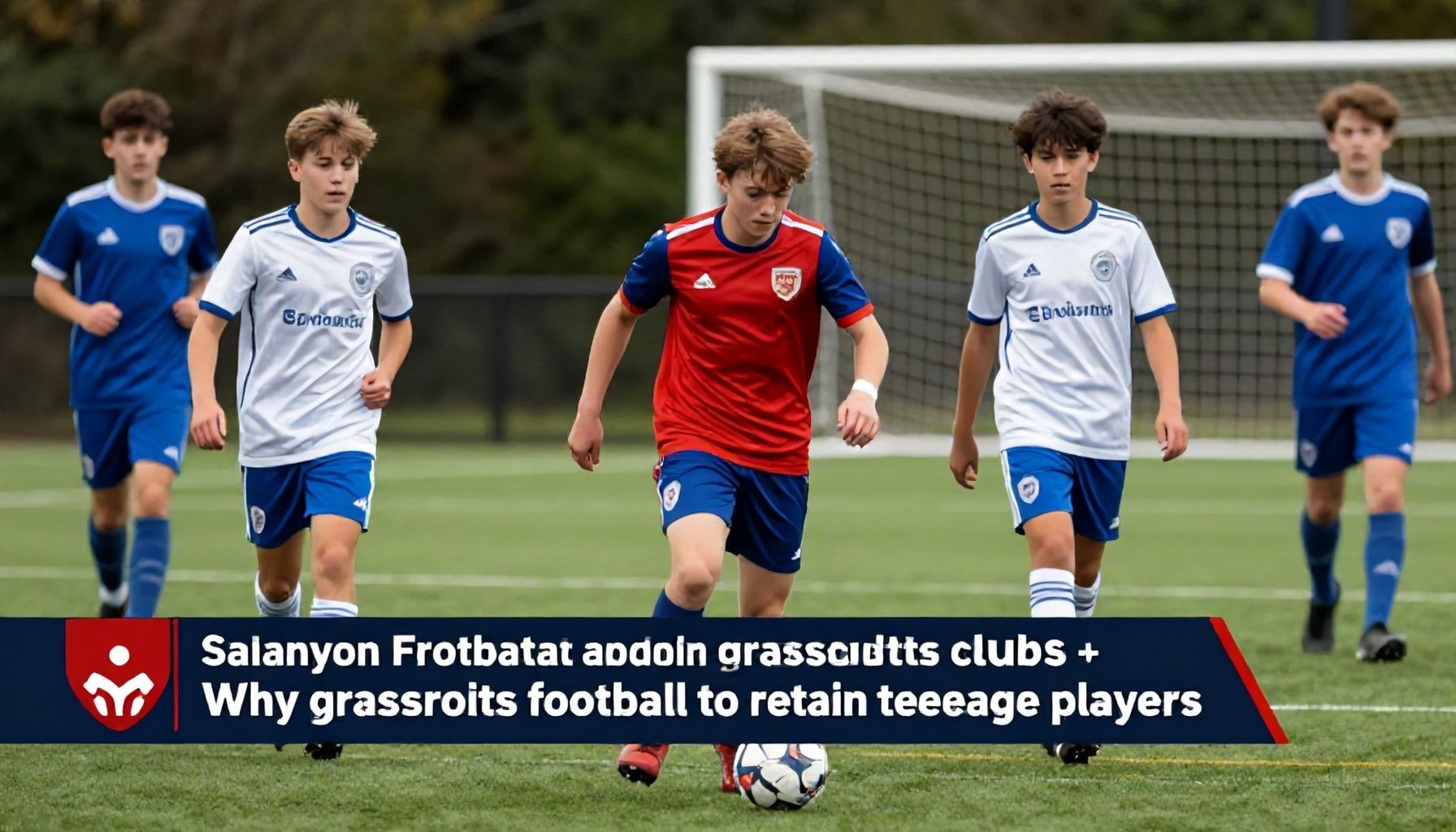
Grassroots football faces a significant challenge in retaining teenage players, with many opting for alternative sports or activities. The Football Association (FA) reports a 17% decline in 13-17-year-olds playing regular football since 2017. This trend has left many local clubs struggling to field competitive youth teams.
Academic research suggests that the pressure to specialise in one sport at a young age is a key factor. Dr. Ben Oakley, a sports sociologist at Loughborough University, states that “many teenagers feel burnt out from years of football and seek variety”. He adds that the rise of sports like rugby, basketball, and even esports offers appealing alternatives.
Time commitments also play a role. Many teenagers cite schoolwork and part-time jobs as reasons for leaving grassroots football. The FA’s 2023 survey found that 42% of teenagers who quit cited “lack of time” as a primary reason. Clubs are now exploring flexible training schedules to accommodate these demands.
Additionally, the cost of playing football has increased, with equipment, travel, and membership fees adding up. A 2022 study by the Sports Think Tank revealed that the average annual cost for a teenager playing grassroots football is £500. This financial burden is pushing some families to seek more affordable sports.
Some teenagers are also drawn to the social aspects of other sports. Rugby and basketball, for instance, are seen as more inclusive and less hierarchical. Former grassroots footballer, Jamie Carter, 16, explains, “Football can be cliquey, and I just wanted to try something different”. This shift in social dynamics is contributing to the decline in football participation.
To combat this trend, grassroots clubs are introducing new initiatives. Some are offering multi-sport programmes, while others are focusing on creating more inclusive environments. The FA has also launched campaigns to promote the benefits of grassroots football. However, the challenge remains significant, and the decline in teenage players continues to be a pressing issue for the sport.
The exodus of teenagers from grassroots football raises serious concerns about the future of the sport at the community level. With fewer young players progressing through the ranks, local clubs face dwindling resources and potential closures. The trend also threatens the talent pipeline for professional football, as many top-tier clubs rely on grassroots systems for scouting and development. Urgent action is needed to reverse this decline, with stakeholders calling for improved facilities, better coaching, and more inclusive environments to keep young players engaged. Without intervention, the long-term health of football in England could be at risk.






