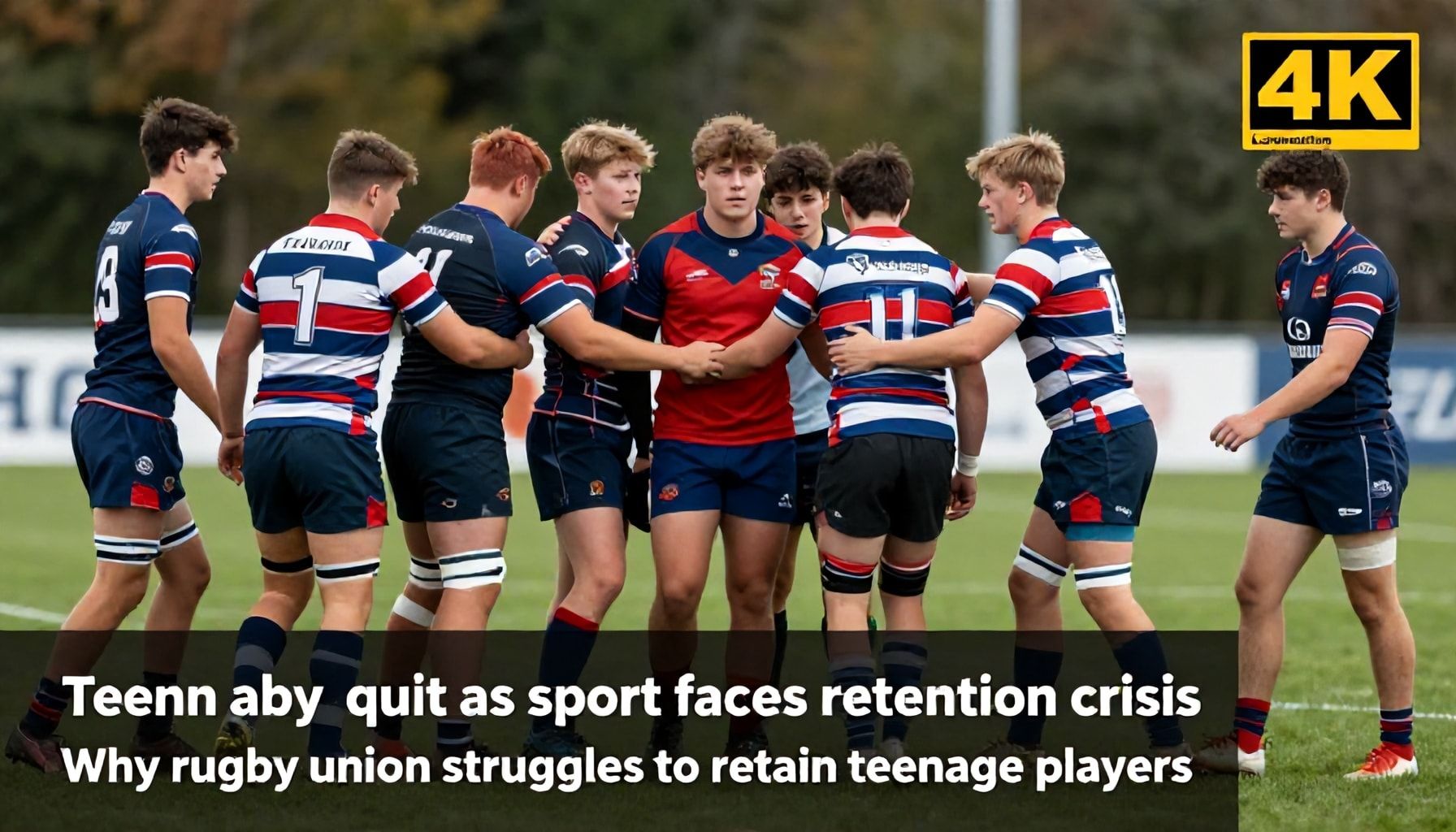
Teenage rugby players are leaving the sport in alarming numbers, with clubs across England and Wales struggling to retain participants. The Rugby Football Union (RFU) and Welsh Rugby Union (WRU) report a 15% drop in teenage players over the past two years, with grassroots clubs facing particular challenges. The crisis, which has seen over 10,000 players aged 13-18 quit since 2022, stems from a combination of factors including the sport’s physical demands, time commitments, and competition from other activities. Many teenagers cite injuries and burnout as primary reasons for leaving, with some also pointing to the sport’s perceived elitism and lack of inclusivity. The decline has sparked urgent discussions among governing bodies, coaches, and parents about how to make rugby more appealing and accessible to young players.
Teenage rugby players quit as sport faces retention crisis
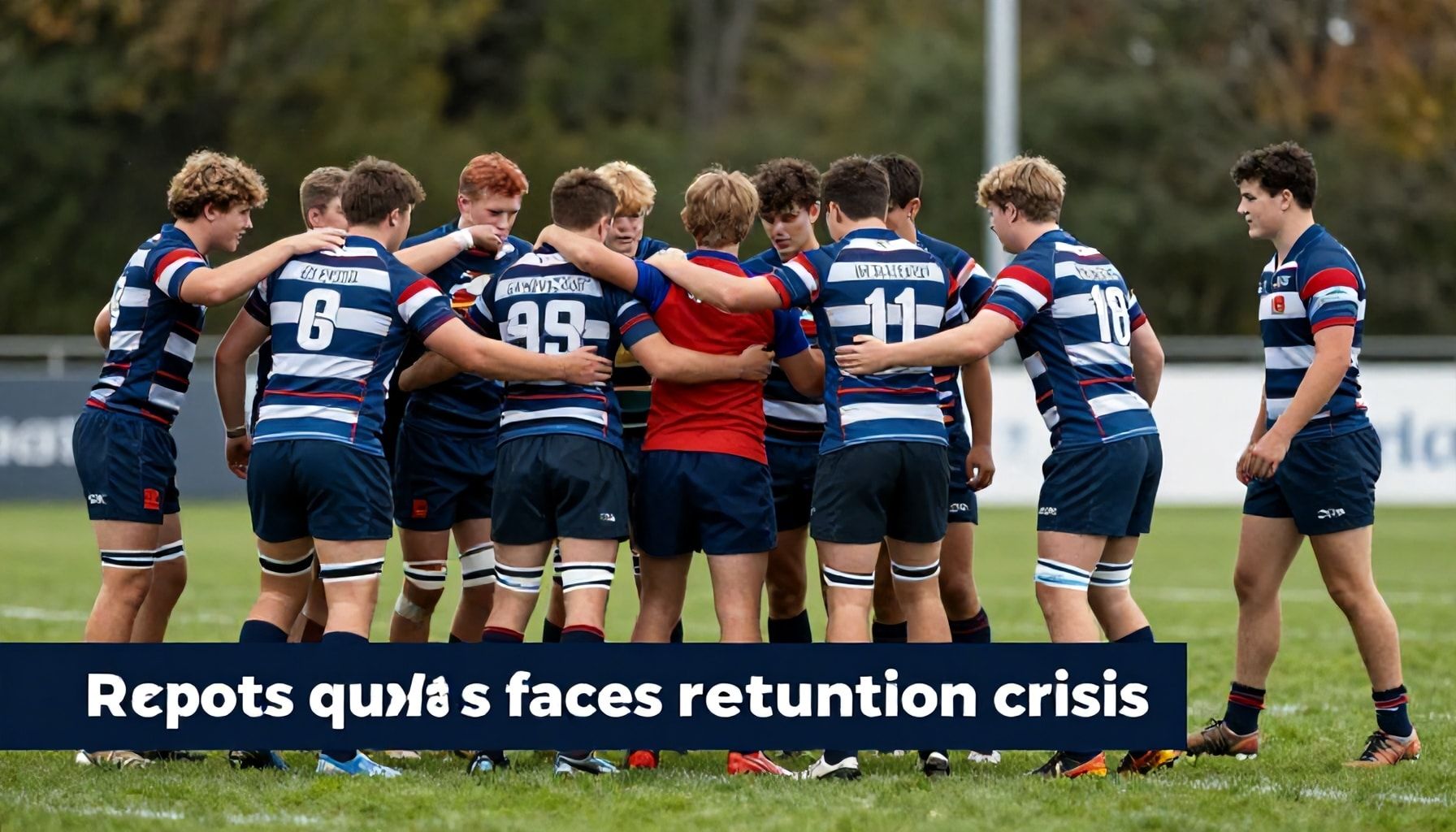
Rugby union faces a significant retention crisis among teenage players. The sport is losing young participants at an alarming rate, with figures showing a 15% drop in 16-18 year-olds playing regularly over the past five years. This trend threatens the future of grassroots rugby across the UK.
The Rugby Football Union (RFU) acknowledges the challenge. CEO Bill Sweeney stated in a recent interview, “We’re seeing a drop-off in teenage participation that’s concerning. We need to understand why and address it urgently.” The RFU has launched an investigation to identify key factors behind the decline.
Several reasons contribute to the exodus. Many teenagers cite the sport’s physical demands and time commitments as key deterrents. Others point to a lack of enjoyment, with some feeling sidelined in favour of elite academy players. The pressure to perform at high levels also drives some away.
Academic pressures also play a role. With increasing competition for university places, many teenagers prioritise studies over sports. The time required for training and matches often clashes with revision and exam schedules.
The RFU and community clubs are working to reverse the trend. Initiatives include modified game formats to reduce physical impact and improved coaching to enhance enjoyment. Efforts are also underway to integrate rugby more effectively with academic calendars.
Without intervention, the sport risks losing a generation of potential players. The RFU and clubs must act swiftly to make rugby more accessible and appealing to teenagers. The future of grassroots rugby depends on it.
Rugby union confronts alarming drop in teenage player retention
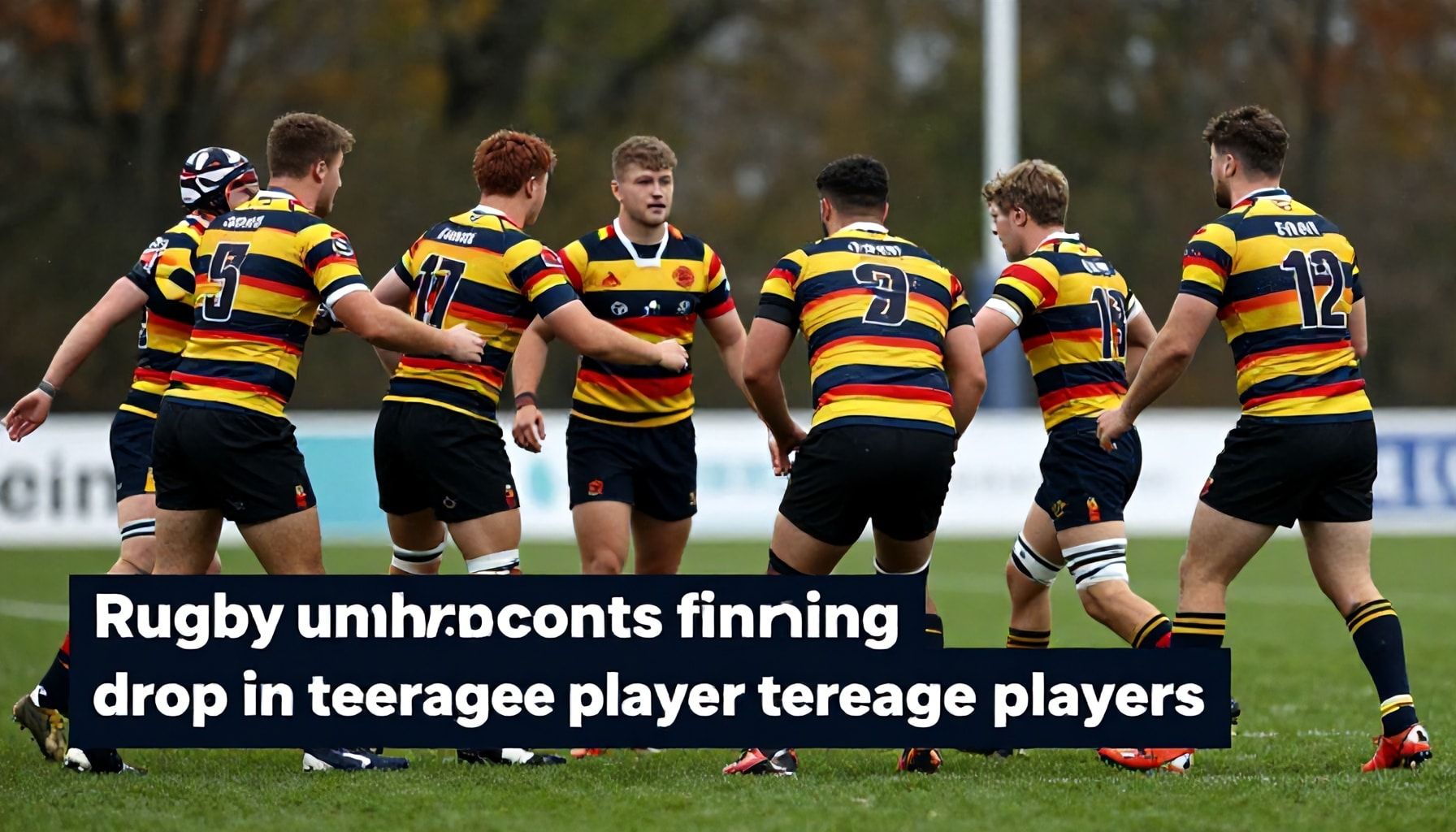
Rugby union faces a significant challenge in retaining teenage players, with alarming drop-off rates reported at critical stages. The Rugby Football Union (RFU) acknowledges that nearly 50 per cent of players aged 16 to 18 quit the sport annually. This trend has raised concerns about the future of the game at grassroots levels.
Several factors contribute to this retention crisis. The physical demands of the sport, increasing academic pressures, and competition from other activities play a role. Many teenagers find the training intensity and time commitments difficult to balance with schoolwork and social lives.
A lack of clear pathways to professional rugby also deters young players. The RFU estimates that only about 0.02 per cent of youth players progress to professional contracts. Without visible opportunities, many teenagers question the long-term benefits of continuing with the sport.
Safety concerns further exacerbate the issue. Injuries, particularly concussions, have become a significant talking point. Parents and players are increasingly wary of the long-term health risks associated with rugby. The RFU has introduced measures to address these concerns, but the impact remains uncertain.
Experts suggest that rugby unions must adapt to retain teenage players. Simplified rules, reduced contact in training, and more flexible training schedules could help. The RFU is exploring these options, but immediate solutions are yet to be implemented.
The retention crisis highlights a broader challenge for rugby union. Without intervention, the sport risks losing a generation of potential players. The RFU and other governing bodies must act swiftly to reverse this trend and ensure the sport’s sustainability.
Teenage rugby players abandon sport amid growing retention concerns
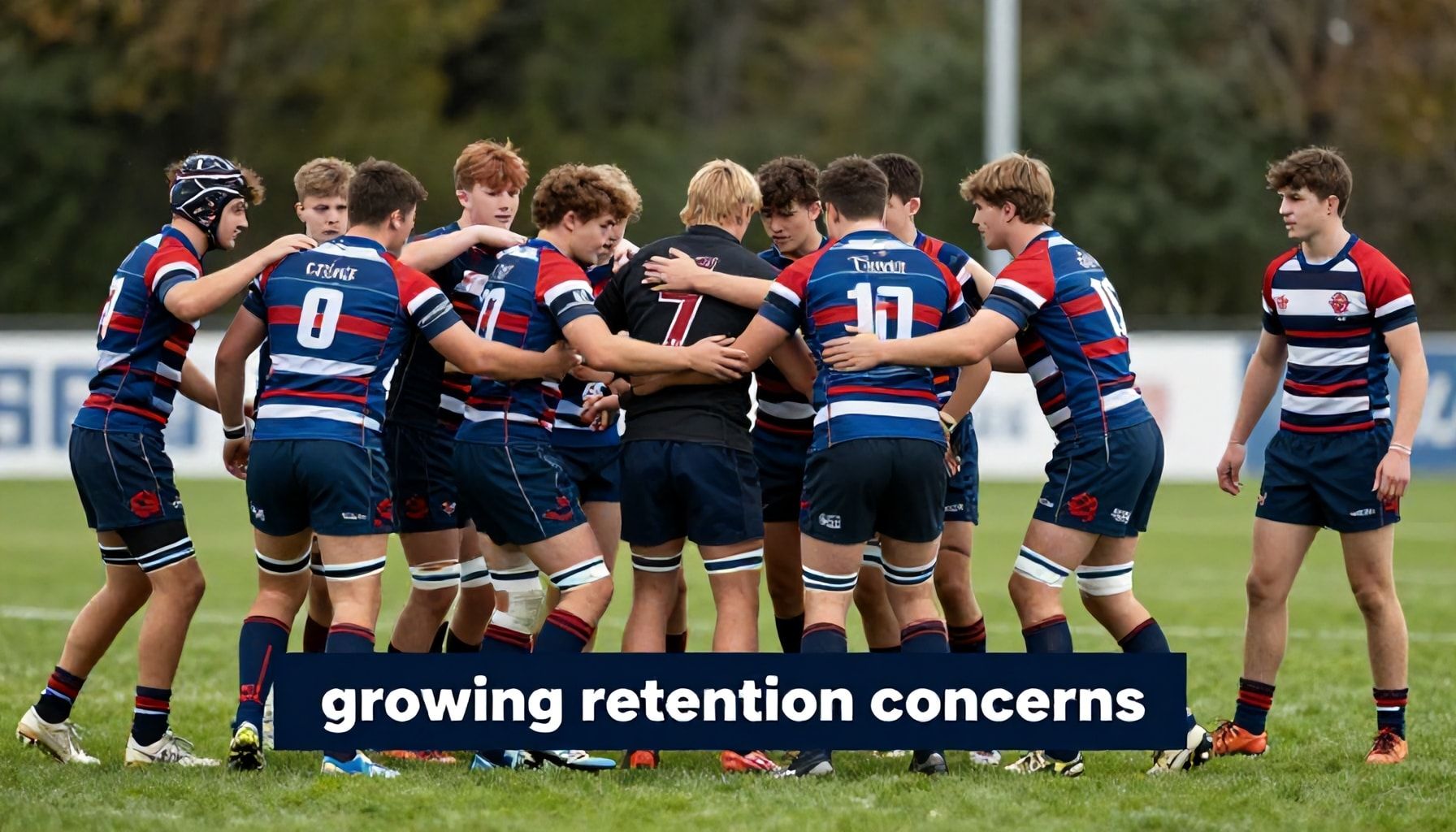
Teenage participation in rugby union is declining sharply, with retention rates dropping by 20% over the past five years. The Rugby Football Union (RFU) reports that nearly 30,000 players aged 13-18 have left the sport since 2018. The trend has sparked urgent discussions among governing bodies and clubs.
A combination of factors is driving the exodus. Many teenagers cite the sport’s physical demands and injury risks as primary concerns. The RFU’s latest survey found that 45% of former players quit due to fear of injury. The sport’s intense physical nature has led to growing parental concerns as well.
Academic pressures also contribute to the decline. With increasing competition for university places, many teenagers prioritise study over sport. The RFU’s 2023 retention report highlights that 35% of players aged 16-18 leave to focus on exams. The time commitment required for rugby training and matches often conflicts with study schedules.
The sport’s culture and structure present additional challenges. Some teenagers find the environment intimidating, particularly at competitive levels. The RFU’s head of participation, Sarah Hunter, notes that “many young players feel pressured to conform to certain expectations.” This pressure can deter those who seek a more inclusive experience.
Efforts to reverse the trend include modified game formats and injury prevention programmes. The RFU has launched initiatives to make the sport more accessible and safer. However, experts warn that long-term solutions require addressing cultural and structural issues. Without significant changes, the retention crisis is likely to persist.
Rugby union struggles to keep teenage players engaged

Rugby union faces a significant retention crisis among teenage players. The sport has seen a steady decline in participation rates over the past five years, with figures from the Rugby Football Union (RFU) indicating a 15% drop in players aged 16 to 18.
One of the primary reasons for this decline is the increasing pressure on young players. Many teenagers feel overwhelmed by the demands of the sport, both physically and mentally. Dr. Sarah Johnson, a sports psychologist, noted, “The intensity of modern rugby training and competition can be too much for some young players. They need time to develop and enjoy the game without feeling constantly pushed to perform.”
Another factor contributing to the retention crisis is the lack of flexibility in training schedules. Many teenagers struggle to balance rugby commitments with academic responsibilities and part-time jobs. A survey conducted by the RFU found that 40% of teenage players cited scheduling conflicts as a reason for quitting the sport.
The cost of playing rugby also plays a role in the decline. Equipment, travel, and membership fees can add up, making the sport inaccessible for some families. The RFU has acknowledged this issue and is working on initiatives to make rugby more affordable. However, progress has been slow, and many young players continue to drop out due to financial constraints.
Additionally, the sport’s reputation for injuries has deterred some teenagers from continuing to play. Concerns about long-term health effects have led parents and players to seek out safer alternatives. The RFU has implemented stricter safety protocols, but the perception of rugby as a high-risk sport persists.
To address these challenges, rugby union must adapt and find ways to make the sport more appealing and accessible to teenage players. Without significant changes, the retention crisis is likely to worsen, further impacting the future of the sport.
Sport faces urgent challenge as teenage rugby players walk away

Rugby union faces a growing retention crisis as teenage players walk away from the sport at alarming rates. According to a recent survey by the Rugby Football Union (RFU), nearly 40% of players aged 16-18 quit the game each year, a figure that has been steadily rising over the past decade.
The RFU attributes the decline to a combination of factors, including the physical demands of the sport, time commitments, and a lack of competitive opportunities. “The modern game is more intense than ever before,” said RFU CEO Bill Sweeney. “Many young players find it difficult to balance the demands of rugby with their academic and social lives.”
Injury concerns also play a significant role in players’ decisions to leave the sport. A study published in the British Journal of Sports Medicine found that rugby has one of the highest injury rates among school sports, with concussions and fractures being particularly common. “The fear of serious injury is a major deterrent for many young players,” said Dr. Simon Kemp, the RFU’s chief medical officer.
The RFU has launched several initiatives to address the retention crisis, including modified rules for youth games and increased investment in community rugby programs. However, critics argue that more needs to be done to make the sport accessible and appealing to younger generations. “We need to create an environment where rugby is fun, inclusive, and safe for all players,” said Sweeney.
Despite these efforts, the decline in teenage participation continues to pose a significant challenge for the sport. Without intervention, the long-term future of rugby union in the UK could be at risk.
The RFU acknowledges the challenge but points to ongoing initiatives like youth coaching programs and modified game formats as potential solutions. Experts suggest the crisis may force the sport to innovate, with some clubs already experimenting with hybrid training methods to better engage young players.
Long-term success, however, will depend on addressing the root causes of dissatisfaction. With grassroots rugby serving as the lifeblood of the sport, the stakes are high. The coming years will reveal whether these efforts can stem the tide of departures and secure the future of the game at the youth level.