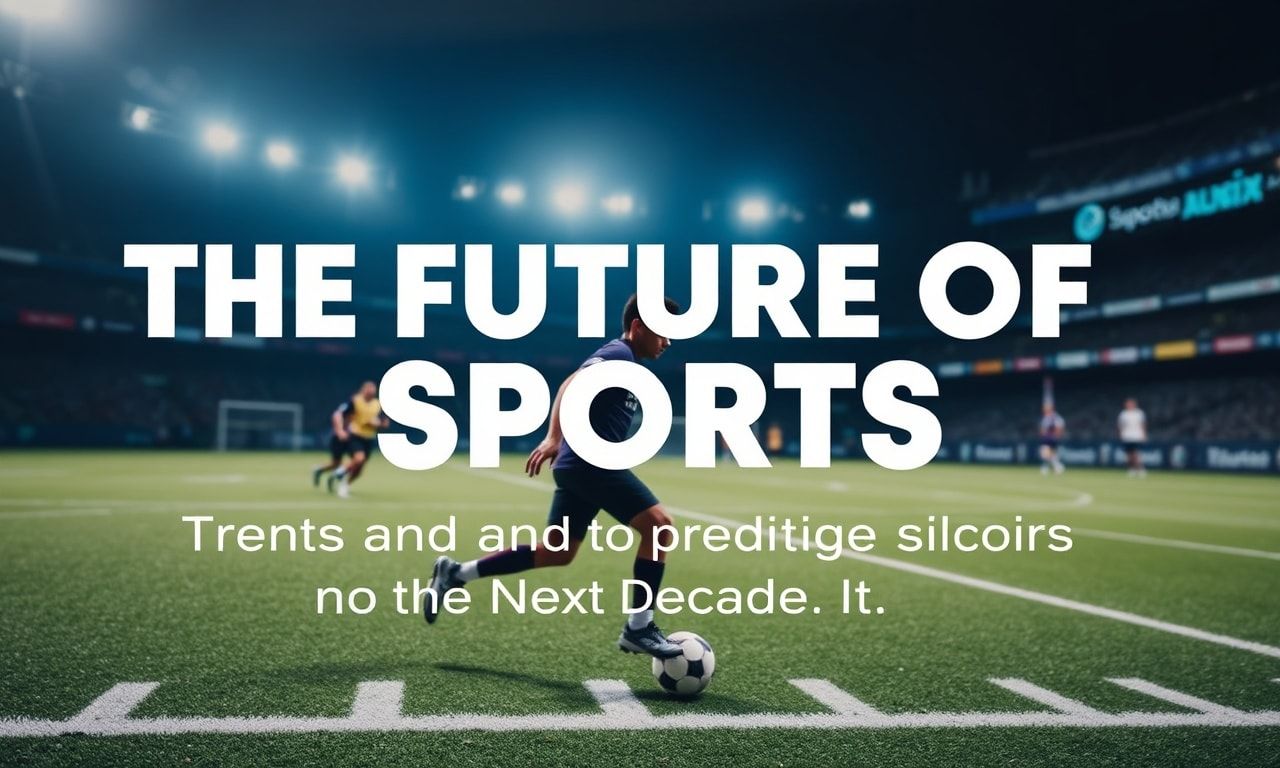
The Evolution of Sports
Sports have always been a reflection of societal changes and technological advancements. From the early days of ancient Olympics to the modern era of esports, the landscape of sports has continually evolved. As we look ahead, several trends and predictions emerge that could redefine the sports industry in the next decade. Understanding these trends can help athletes, coaches, and fans prepare for the future.
Technological Innovations in Sports
Technology is playing an increasingly pivotal role in sports. Wearable devices, such as smartwatches and fitness trackers, are becoming more sophisticated, providing real-time data on an athlete’s performance. This data can be used to optimize training regimens, prevent injuries, and enhance overall performance. Additionally, virtual reality (VR) and augmented reality (AR) are being used for immersive training experiences, allowing athletes to practice in simulated environments.
Another exciting development is the use of artificial intelligence (AI) in sports analytics. AI algorithms can analyze vast amounts of data to identify patterns and predict outcomes. This can be particularly useful in team sports, where coaches can use AI to strategize and make informed decisions. Furthermore, AI-powered tools can help in talent scouting, identifying promising athletes who might otherwise go unnoticed.
The Role of Data in Sports
Data has become an integral part of modern sports. From player statistics to game strategies, data-driven decision-making is transforming the way sports are played and managed. Advanced analytics can provide insights into player performance, helping teams to make strategic adjustments. For example, in football, data analytics can be used to optimize player positioning and tactics, leading to better on-field performance.
Moreover, data is also being used to enhance the fan experience. Interactive apps and platforms provide real-time statistics, player profiles, and game highlights, making the viewing experience more engaging. Fans can now access detailed information about their favorite teams and players, fostering a deeper connection with the sport.
The Rise of Esports
Esports, or competitive video gaming, has seen a meteoric rise in popularity over the past decade. With millions of viewers and substantial prize pools, esports is now a mainstream form of entertainment. The growth of esports has been fueled by advancements in technology, increased internet accessibility, and the rise of streaming platforms like Twitch and YouTube Gaming.
As esports continues to gain traction, traditional sports organizations are taking notice. Many sports teams and leagues are investing in esports franchises, recognizing the potential for cross-promotion and audience expansion. For instance, the NBA has launched its own esports league, the NBA 2K League, which has attracted top talent and generated significant interest.
Integrating Esports with Traditional Sports
One of the most exciting developments in the sports world is the integration of esports with traditional sports. This fusion can create new opportunities for athletes and fans alike. For example, virtual sports simulations can be used to train athletes, providing a safe and controlled environment for practicing different scenarios. Additionally, esports tournaments can be held alongside traditional sports events, attracting a broader audience and enhancing the overall experience.
Furthermore, the crossover between esports and traditional sports can lead to innovative marketing strategies. Brands can leverage the popularity of esports to reach a younger, tech-savvy audience, while traditional sports can benefit from the engagement and excitement generated by esports. This symbiotic relationship can drive growth and innovation in both sectors.
The Impact of Globalization
Globalization has had a profound impact on the sports industry. The increasing interconnectedness of the world has led to a greater exchange of ideas, talent, and resources. Athletes from different countries can now compete on a global stage, fostering cultural exchange and mutual respect. This has also led to the rise of international sports leagues and tournaments, such as the FIFA World Cup and the Olympics.
Moreover, globalization has facilitated the movement of athletes across borders. Players can now easily transfer between teams and leagues, creating a more dynamic and competitive environment. This has led to the emergence of superstar athletes who transcend national boundaries and become global icons. For example, players like Lionel Messi and Serena Williams have achieved worldwide fame and recognition, inspiring millions of fans around the world.
Challenges and Opportunities
While globalization presents numerous opportunities, it also poses challenges. The increasing competition for talent can lead to higher costs and greater pressure on athletes. Additionally, cultural differences and language barriers can sometimes hinder effective communication and collaboration. However, these challenges can be overcome through education, training, and the promotion of cultural understanding.
Another challenge is the impact of globalization on local sports cultures. As global sports leagues and tournaments gain prominence, local sports traditions may be overshadowed. It is important to strike a balance between global integration and the preservation of local sports heritage. This can be achieved through the promotion of grassroots sports programs and the celebration of local sporting events.
The Future of Sports Infrastructure
The future of sports infrastructure is set to undergo significant transformations. With the increasing demand for sports facilities, there is a growing need for innovative and sustainable solutions. Smart stadiums equipped with advanced technologies, such as IoT sensors and energy-efficient systems, are becoming more common. These stadiums can enhance the fan experience by providing real-time information, personalized services, and interactive features.
Additionally, the development of sports infrastructure is closely linked to urban planning and community development. Sports facilities can serve as hubs for social interaction and physical activity, promoting healthier lifestyles and stronger communities. For example, the development of sports parks and recreational areas can provide opportunities for people of all ages and abilities to engage in sports and physical activities.
In the Netherlands, the future of sports infrastructure is being shaped by various factors, including urbanization and demographic changes. According to woningmarkt nieuws utrecht 2026, the demand for sports facilities is expected to grow significantly in the coming years. This highlights the need for strategic planning and investment in sports infrastructure to meet the needs of a growing and diverse population.
Sustainable Sports Infrastructure
Sustainability is a key consideration in the development of future sports infrastructure. Green building practices, such as the use of renewable energy sources and eco-friendly materials, can reduce the environmental impact of sports facilities. Additionally, the integration of green spaces and natural elements can enhance the aesthetic appeal and functionality of sports infrastructure.
Furthermore, the concept of smart cities is gaining traction, with sports infrastructure playing a crucial role. Smart cities leverage technology and data to improve the quality of life for residents. Sports facilities can contribute to this vision by providing spaces for physical activity, social interaction, and community engagement. By integrating sports infrastructure with smart city initiatives, we can create more livable and sustainable urban environments.
Stay ahead of the game and protect your digital turf with our latest insights on securing your Gmail in 2026, ensuring your team’s communications are as strong as their on-field performance.