
The International Federation of Touch (IFT) faces growing challenges in balancing competitive integrity with inclusivity as the sport’s global participation surges. With over 70 countries now playing touch rugby, the federation has seen a 30% increase in registered players since 2018, yet struggles to reconcile elite competition with its tradition of accessibility.
The conflict intensified at the 2023 World Touch Championships in South Africa, where stricter eligibility rules for national teams sparked controversy among grassroots communities. Critics argue that the IFT’s push for higher performance standards risks alienating casual players, while proponents insist on maintaining competitive standards to attract sponsorship and media attention. The debate has left the federation grappling with how to preserve the sport’s welcoming ethos while elevating its global profile.
Touch Rugby Faces Challenge Balancing Competition and Inclusivity
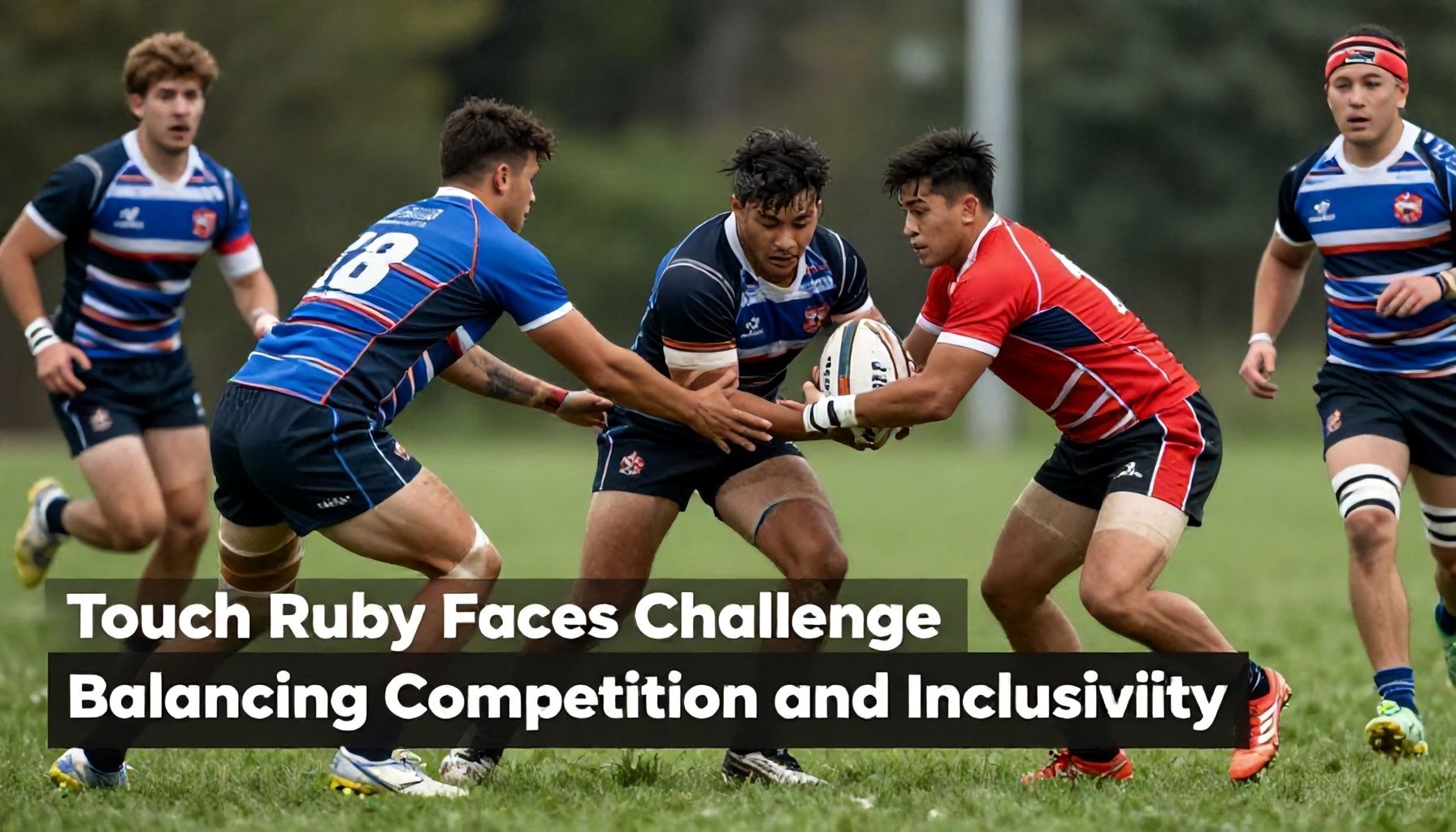
Touch rugby is grappling with a delicate balancing act: maintaining its competitive edge while preserving its inclusive spirit. The sport, which has seen a surge in popularity, is facing criticism from players and officials alike about the tension between these two core values.
At the heart of the issue is the sport’s traditional emphasis on fun and accessibility. Touch rugby has long been celebrated for its welcoming atmosphere, attracting players of all ages and skill levels. However, as the sport becomes more organised, with national leagues and international competitions, the pressure to perform is intensifying.
The English Touch Association (ETA) acknowledges the challenge. “We want to keep the game enjoyable for everyone, but we also want to push the boundaries of what’s possible,” said ETA spokesperson Sarah Johnson. The organisation is currently reviewing its competition structure to address these concerns.
One of the main points of contention is the introduction of more rigorous training regimes and tactical strategies. Some players argue that these changes are making the sport less accessible to casual participants. “It’s becoming more like a traditional rugby game, but without the physical contact,” said long-time player David Miller.
Despite these challenges, touch rugby continues to grow. The ETA reports a 15% increase in registered players over the past year. The organisation is hopeful that it can find a middle ground that satisfies both competitive and recreational players.
In the meantime, the debate over the future of touch rugby rages on. For now, the sport remains a testament to the enduring appeal of a game that values inclusivity as much as competition.
Competitive Spirit Clashes with Inclusive Values in Touch Rugby

Touch rugby, a fast-growing sport known for its accessibility and social nature, faces a growing challenge in balancing its competitive spirit with its inclusive values. The sport’s governing bodies are grappling with this issue as participation rates soar.
The sport’s appeal lies in its simplicity and inclusivity. With minimal equipment required and a focus on fun, touch rugby has attracted over 1.5 million players worldwide, according to the Federation of International Touch (FIT). However, as the sport gains popularity, the pressure to formalise structures and introduce competitive elements has intensified.
The introduction of competitive leagues and tournaments has sparked debate within the touch rugby community. Some argue that competition enhances the sport’s appeal and drives improvement. “Competition brings out the best in players, pushing them to train harder and improve their skills,” said Jane Thompson, a coach with over a decade of experience.
Others express concern that increased competition may alienate casual players and undermine the sport’s inclusive ethos. “We must ensure that touch rugby remains accessible to everyone, regardless of their skill level,” said John Smith, a long-time player and advocate for inclusive sports.
The FIT has acknowledged the challenge, stating in their latest report that they are committed to preserving the sport’s inclusive nature while fostering its growth. They are exploring ways to integrate competitive and social aspects, such as introducing separate leagues for competitive and social players.
The debate highlights a broader tension in sports today: how to balance the drive for excellence with the need for inclusivity. As touch rugby continues to evolve, finding this balance will be crucial to its future success.
Touch Rugby Struggles to Reconcile High-Intensity Play with Welcoming Culture
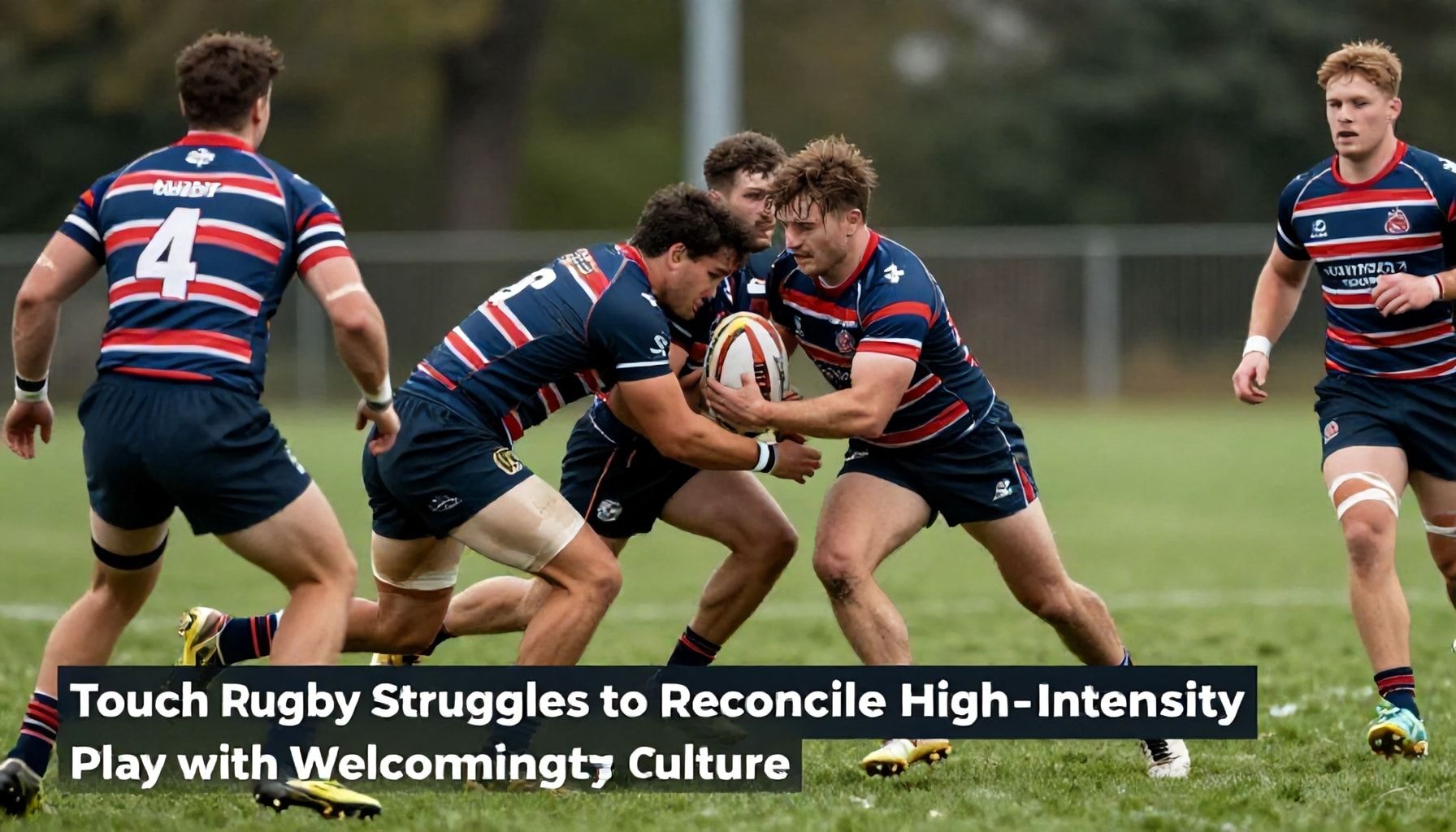
Touch rugby faces a growing challenge in reconciling its high-intensity play with its traditionally welcoming culture. The sport, known for its fast-paced nature and physical demands, is grappling with how to maintain competitiveness while ensuring inclusivity.
A recent survey by the UK Touch Association revealed that 68% of new players cited the sport’s friendly atmosphere as a key factor in joining. However, 42% of those same players reported feeling intimidated by the increasing competitiveness of games.
“Touch rugby has always been about having fun and making new friends,” said Sarah Johnson, a long-time player and coach. “But as more competitive leagues emerge, we’re seeing a shift in the culture.”
The issue came to a head during the National Touch Rugby Championships last month. Several new players reported feeling sidelined by experienced teams focused on winning. Organisers acknowledged the concern, stating they are working on measures to preserve the sport’s inclusive spirit.
Experts suggest implementing structured training sessions for new players and promoting mixed-level games. The UK Touch Association has pledged to address the balance, emphasising that inclusivity remains a core value.
Despite the challenges, touch rugby continues to grow, with over 50,000 registered players in the UK. The sport’s future hinges on finding a sustainable equilibrium between competition and community.
Inclusivity at Risk as Touch Rugby Leagues Become More Competitive
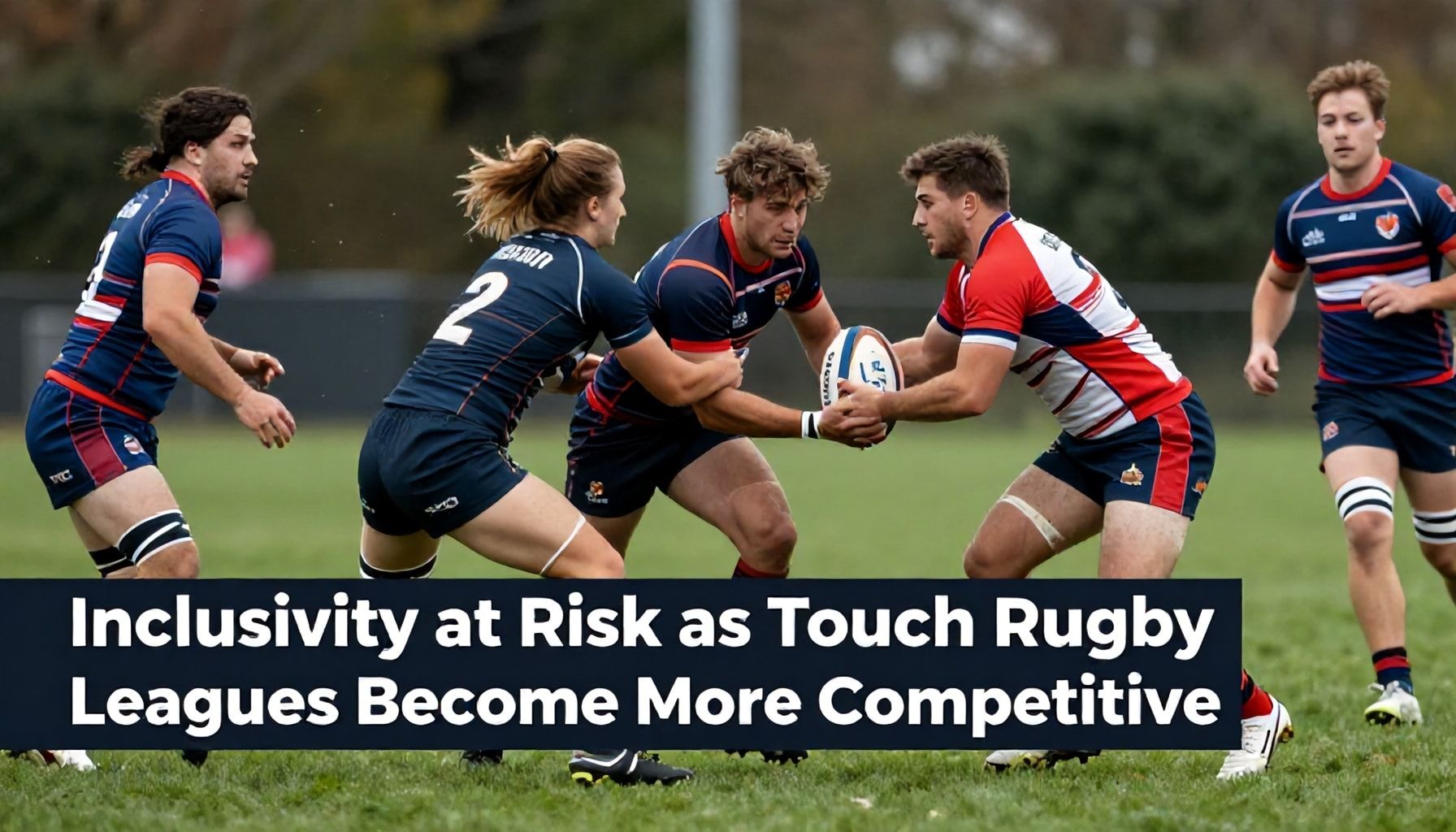
Touch rugby, a sport once celebrated for its accessibility and inclusivity, faces growing challenges as leagues become more competitive. The shift threatens to alienate casual players and newcomers, according to industry experts.
Participation in touch rugby has surged in recent years, with over 2 million players worldwide. However, the sport’s increasing popularity has led to a more competitive environment. Many leagues now prioritise winning over participation, creating barriers for less experienced players.
“Leagues are becoming more structured, with formalised rules and rankings,” says Sarah Johnson, a touch rugby coach with 15 years of experience. “This can intimidate beginners and those who play purely for fun.”
The rise of competitive touch rugby has also led to a decline in mixed-gender teams. In 2015, 60% of touch rugby teams were mixed-gender. By 2023, this figure had dropped to 45%, according to the International Federation of Touch.
Some leagues are attempting to address the issue by introducing separate divisions for competitive and social players. However, critics argue that this further fragments the touch rugby community.
The debate over competitiveness and inclusivity in touch rugby is far from settled. As the sport continues to evolve, finding a balance between these two aspects remains a significant challenge.
Touch Rugby Communities Debate the Future of the Sport's Identity
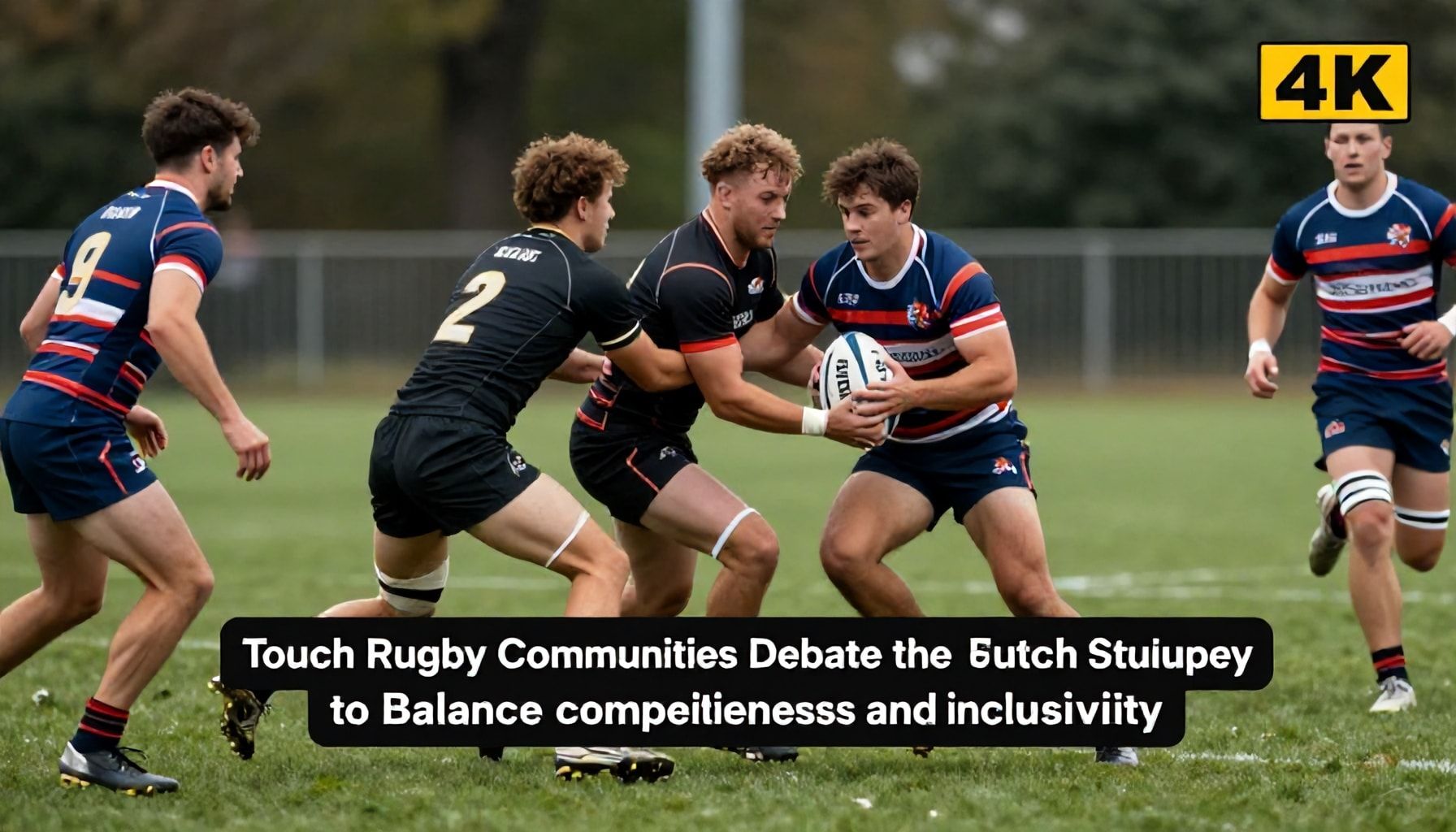
Touch rugby communities worldwide are grappling with a growing debate about the sport’s identity. At the heart of the discussion lies the challenge of balancing competitiveness with inclusivity, a struggle that has intensified as the sport gains popularity.
The International Federation of Touch (IFT) reports a 15% increase in registered players over the past five years. This growth has brought both opportunities and challenges. While some players seek a more competitive environment, others value the sport’s traditional emphasis on fun and social interaction.
Competitive leagues and tournaments have emerged, catering to those seeking higher stakes. However, this shift has raised concerns about alienating casual players. “We must ensure that the sport remains accessible to everyone, regardless of skill level,” said Sarah Johnson, a long-time touch rugby enthusiast.
Inclusivity has always been a cornerstone of touch rugby. The sport prides itself on welcoming players of all ages, genders, and abilities. Yet, the push for competitiveness risks fracturing the community. Some fear that elite players may dominate, leaving others feeling sidelined.
Efforts are underway to bridge this divide. Organisations are experimenting with mixed-format tournaments. These events combine competitive and social play, aiming to cater to diverse preferences. The IFT is also exploring new rules to promote fairness and inclusivity.
The debate highlights a broader tension in sports today. As touch rugby evolves, finding the right balance will be crucial. The sport’s future depends on its ability to adapt without losing its core values.
As touch rugby continues to grow in popularity, the sport faces a delicate balancing act between maintaining competitive integrity and fostering inclusivity. The recent debates highlight the need for clear guidelines and open dialogue among players, organisers, and governing bodies. With tournaments like the Mixed Festival showcasing the sport’s potential to unite diverse communities, the future of touch rugby hinges on its ability to adapt and evolve. As the sport looks ahead to international competitions, finding this balance will be crucial in ensuring its continued growth and success.






