

The global touch rugby community faces an identity crisis as the sport’s rapid growth outpaces its organisational structure, with no single governing body recognised worldwide. The issue came to a head last month when the International Federation of Touch (IFT) and the English Touch Association (ETA) clashed over the sport’s future direction, leaving players and clubs in limbo.
The dispute centres on the sport’s governance, with the IFT claiming to represent 65 countries and the ETA arguing for a more inclusive, democratic approach. The crisis threatens to derail touch rugby’s expansion, with over 4 million players globally and a growing presence in schools and universities. The lack of a unified body has already led to confusion over rule interpretations and tournament qualifications, with some countries struggling to field teams at international events.
Touch Rugby's Identity Crisis Stifles Global Expansion

Touch rugby’s global expansion is being stifled by an identity crisis, according to industry experts. The sport, which originated in New Zealand in the 1960s, is struggling to define its rules and image, hindering its growth.
The International Federation of Touch (IFT) has identified the lack of standardisation as a major issue. With different countries playing by varying rules, the sport struggles to maintain a consistent identity. This inconsistency makes it difficult for new players and fans to engage with the sport.
The IFT has been working to unify the rules, but progress has been slow. In 2019, the federation introduced a new set of global rules, but adoption has been patchy. Some countries have embraced the changes, while others have been resistant.
The lack of a clear identity also affects touch rugby’s marketing and development. Without a standardised image, it is challenging to promote the sport effectively. This has led to a situation where touch rugby remains largely unknown outside of its strongholds.
Experts point to the sport’s grassroots nature as both a strength and a weakness. While the community-driven approach has fostered passion and dedication, it has also led to fragmentation. Without a unified vision, touch rugby risks being overshadowed by more established sports.
The IFT continues to push for standardisation, but the path forward remains uncertain. Until the identity crisis is resolved, touch rugby’s global expansion will likely remain stifled.
Core Issues Delay Touch Rugby's Growth Potential

Touch rugby faces a significant hurdle in its global expansion: an identity crisis. The sport, often perceived as a casual variant of rugby union, struggles to define itself distinctly. This ambiguity has led to inconsistent rules and formats across regions, hindering its growth potential.
The International Federation of Touch (IFT) acknowledges the challenge. “Different countries have different interpretations of the game,” says IFT President Andrew Castle. This lack of uniformity creates confusion among players and spectators alike.
In some countries, touch rugby is played as a recreational activity, with minimal rules and emphasis on social interaction. In others, it has evolved into a highly competitive sport with structured leagues and tournaments. This divergence has made it difficult to establish a unified global identity.
The sport’s governance structure exacerbates the issue. Unlike rugby union or league, touch rugby lacks a single, universally recognised governing body. The IFT co-exists with regional federations, each with its own rules and regulations.
This fragmentation has practical implications. For instance, the number of players on each team varies. Some countries play with four, while others use five or six. Even the scoring system differs, with some regions awarding two points per try and others using a different system.
The lack of a standardised format affects the sport’s ability to attract sponsorship and media attention. Sponsors prefer investing in sports with clear, consistent rules and a broad appeal. Similarly, media outlets are more likely to cover sports with a well-defined identity and a large following.
Despite these challenges, touch rugby continues to grow. The IFT reports over 1.5 million registered players worldwide. However, to unlock its full potential, the sport must address its identity crisis and establish a unified global standard.
Touch Rugby Struggles with Identity, Limits Development

Touch rugby faces an identity crisis that threatens to stifle its growth. The sport, which originated in New Zealand in the 1960s, has struggled to define itself amidst the shadow of its full-contact counterpart. This lack of clear identity has created barriers to its development, according to industry experts.
The International Federation of Touch (IFT) acknowledges the challenge. “Touch rugby is often perceived as a training tool for rugby union or league,” says IFT President Andrew Castle. “This limits its appeal as a standalone sport.” The federation has been working to address this perception, but progress has been slow.
One of the key issues is the sport’s lack of a standardised format. Rules vary significantly between countries, making it difficult to establish a consistent global identity. The IFT has been working on standardising rules, but the process is complex and time-consuming.
Another hurdle is the lack of professional opportunities. Unlike rugby union or league, touch rugby does not offer professional contracts. This makes it difficult to attract and retain top talent. “Without professional pathways, it’s challenging to grow the sport,” says Castle.
The sport’s image also poses a problem. Touch rugby is often seen as a casual, social activity rather than a competitive sport. This perception can deter serious athletes from participating. Efforts to change this image are ongoing, but they require significant investment and time.
Despite these challenges, touch rugby continues to grow. The IFT reports a steady increase in participation, particularly in non-traditional rugby nations. However, without a clear identity, the sport’s potential remains limited. The path to resolution is unclear, but the need for action is pressing.
Identity Problems Hamper Touch Rugby's Worldwide Growth
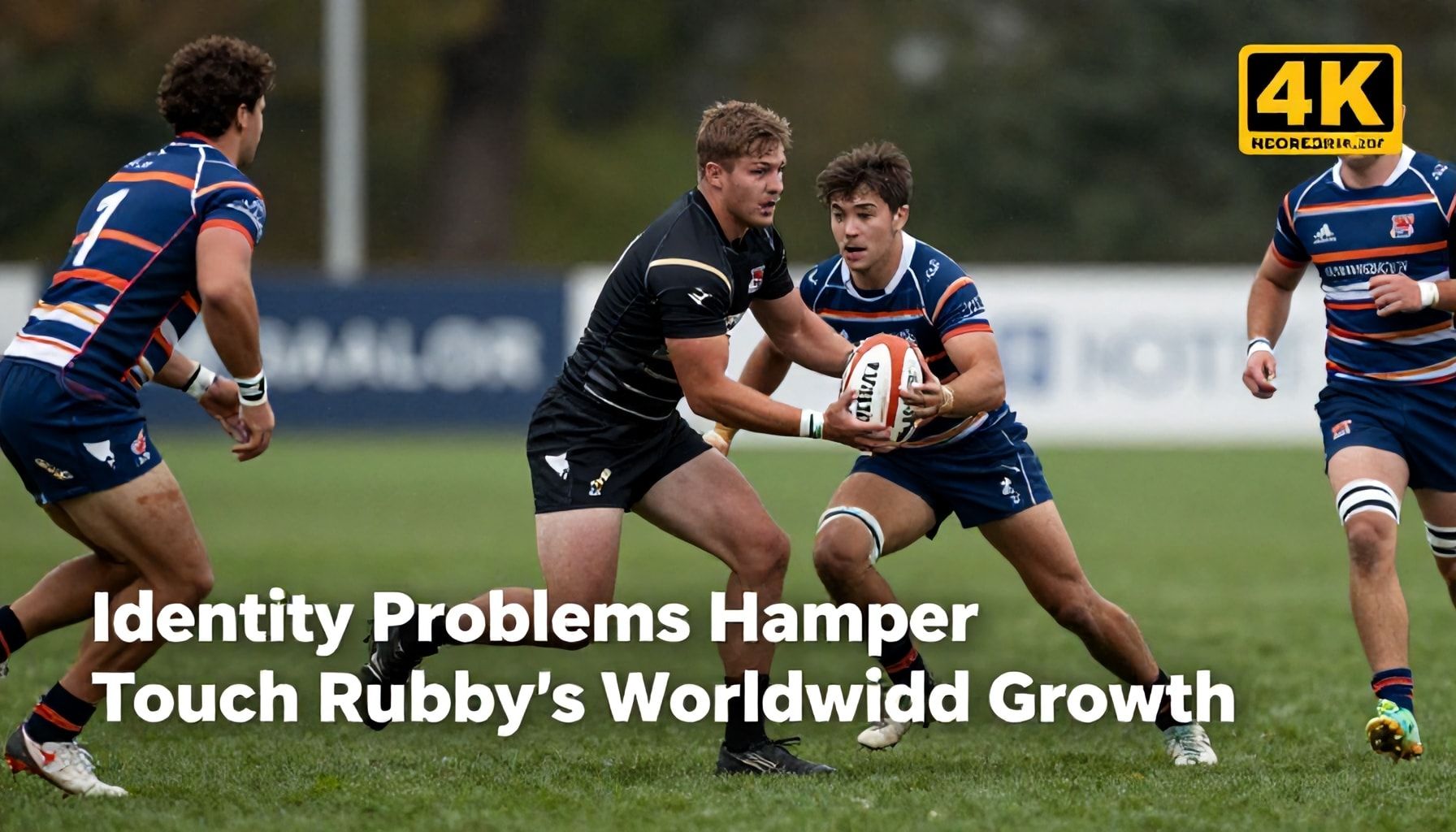
Touch rugby faces an identity crisis that threatens to hamper its global growth. The sport, which originated in New Zealand in the 1960s, struggles to define itself clearly. This confusion creates barriers to international recognition and development.
The International Federation of Touch (IFT) acknowledges the issue. “We’re working to standardise rules and promote the sport worldwide,” says IFT President Andrew Castle. However, the federation’s efforts face challenges from regional variations in rules and formats.
In Europe, for instance, touch rugby often includes full contact, differing from the non-contact version played in Australia and New Zealand. This inconsistency complicates efforts to establish a unified global competition structure.
The sport’s name also causes confusion. In some countries, it’s called “flag rugby” or “touch football,” leading to misunderstandings about its nature. The IFT aims to clarify this through consistent branding and communication.
Despite these challenges, touch rugby enjoys steady growth in certain regions. Australia boasts over 100,000 registered players, and the sport is gaining traction in Asia. However, the identity crisis persists, holding back its potential.
Experts argue that resolving these issues is crucial for touch rugby’s future. Without a clear identity, the sport risks remaining a niche activity rather than achieving mainstream success. The IFT and regional bodies continue to work towards a solution, but progress remains slow.
Touch Rugby Faces Growth Challenges Due to Identity Crisis

Touch rugby’s rapid global expansion has hit an unexpected roadblock: an identity crisis. The sport, which has grown to over 1.5 million players worldwide, is struggling to define itself. This uncertainty is hindering its development and recognition.
The International Federation of Touch (IFT) acknowledges the problem. “We’re seeing a lack of consistency in how touch rugby is played and perceived,” says IFT President Andrew Castle. This inconsistency is causing confusion among players, organisers, and potential sponsors.
At the heart of the issue is the sport’s name. Touch rugby is often confused with non-contact rugby, a variant of rugby union. The confusion extends to the sport’s rules, which vary significantly between countries. This lack of standardisation is deterring new players and sponsors.
The situation is particularly acute in the UK, where touch rugby has seen a 20% increase in participants over the past five years. Despite this growth, the sport struggles to gain mainstream recognition. “We’re often left out of discussions about rugby’s future,” says Touch Rugby England Chair Sarah Jones.
Efforts are underway to address the identity crisis. The IFT is working on a global standardisation initiative, aiming to unify rules and promote the sport’s unique characteristics. However, the process is complex and time-consuming.
Meanwhile, touch rugby continues to grow, albeit at a slower pace than expected. The sport’s advocates remain optimistic. “We believe that once we overcome this identity crisis, touch rugby will thrive,” says Castle. The road to recognition may be bumpy, but the sport’s future looks promising.
The future of touch rugby hangs in the balance as the sport grapples with its identity crisis. With no clear path forward, the sport risks stagnation, potentially losing players to more established or better-defined alternatives. The upcoming annual general meeting could prove pivotal, with stakeholders hoping for decisive action. Meanwhile, grassroots efforts continue to keep the game alive, but without resolution on the fundamental issues, touch rugby’s growth prospects remain uncertain. The sport’s ability to adapt and define its unique appeal will determine whether it can secure a sustainable future.






