
Football in the UK is grappling with a significant dropout crisis among 16-year-old players, with approximately 80% of young talents leaving the sport after this age, according to recent research by the Football Association (FA). The exodus, occurring primarily in the transition from school to further education or employment, stems from a complex interplay of factors including intense pressure, lack of playing opportunities, and the sport’s increasing professionalisation. The crisis is particularly acute in grassroots football, with clubs struggling to retain players who often cite burnout, financial constraints, and academic priorities as key reasons for their departure. The FA’s findings, published last month, highlight a stark contrast with European counterparts, where dropout rates are notably lower, sparking calls for urgent intervention to stem the tide of young players leaving the beautiful game.
UK Football Faces 16-Year-Old Player Dropout Crisis

UK football is grappling with a significant dropout crisis among 16-year-old players. The Football Association (FA) reports that approximately 80% of young players quit the sport at this age. This trend has persisted for over a decade, raising concerns about the future of grassroots football.
Academic pressure is a primary factor driving this exodus. A study by the University of Birmingham found that 65% of dropouts cited academic commitments as their main reason. “The demands of GCSEs and A-levels leave little time for training and matches,” said Dr. Sarah Johnson, lead researcher.
Financial barriers also play a crucial role. The FA’s 2023 survey revealed that 40% of families spend over £500 annually on football-related expenses. “The cost of equipment, travel, and club fees is prohibitive for many,” noted FA Chief Executive Mark Bullingham.
Injuries and burnout contribute to the problem. The English Premier League’s medical team reported that 30% of dropouts attributed their decision to physical or mental exhaustion. “Young players often train and play year-round, leading to burnout,” explained Dr. James Wilson, team physician.
The lack of local facilities exacerbates the issue. Sport England’s 2023 report highlighted that 25% of grassroots clubs struggle to access adequate pitches. “Poor facilities and long travel times deter many young players,” said Sport England CEO Tim Hollingsworth.
Addressing these challenges requires a multi-faceted approach. The FA is collaborating with schools and local authorities to provide more flexible training schedules and affordable facilities. “We need to make football more accessible and sustainable for young players,” Bullingham emphasised.
Football Academies Lose Hundreds of Young Players Annually

Football academies across the UK are losing hundreds of young players annually after they turn 16. The drop-off rate is stark, with many talented players leaving the sport despite years of training.
The English Football League Trust (EFLT) reports that around 2,000 players aged 16-18 leave academies each year. This trend has been consistent over the past decade, according to their latest research.
Experts attribute the exodus to a combination of factors. The intense pressure to perform at elite levels takes a toll on young players. Many struggle with the physical and mental demands of professional training regimes.
Financial concerns also play a significant role. The EFLT highlights that scholarships and stipends often fall short of covering living expenses. This forces many young players to seek alternative paths to financial stability.
Academies are increasingly aware of the issue. Many are implementing mental health support programmes and financial aid initiatives. However, the dropout rate remains high.
Former academy player Jamie Smith, now a sports psychologist, shares his experience. “The transition from youth to senior football is brutal. Many players feel lost when they don’t make the cut,” he says.
The Football Association (FA) is working on solutions. They are collaborating with academies to improve player welfare and retention. Yet, the crisis persists, with hundreds of young talents leaving the sport each year.
Parents and guardians are also affected. Many invest significant time and money into their children’s football careers. The sudden drop-out can be emotionally and financially devastating.
Industry insiders call for systemic changes. They advocate for better financial support and mental health resources. Without these, the dropout crisis is likely to continue.
The EFLT and FA are committed to addressing the issue. However, the road to resolution is long and complex. For now, the exodus of young players from football academies remains a pressing concern.
Why Do Young Footballers Quit at 16?
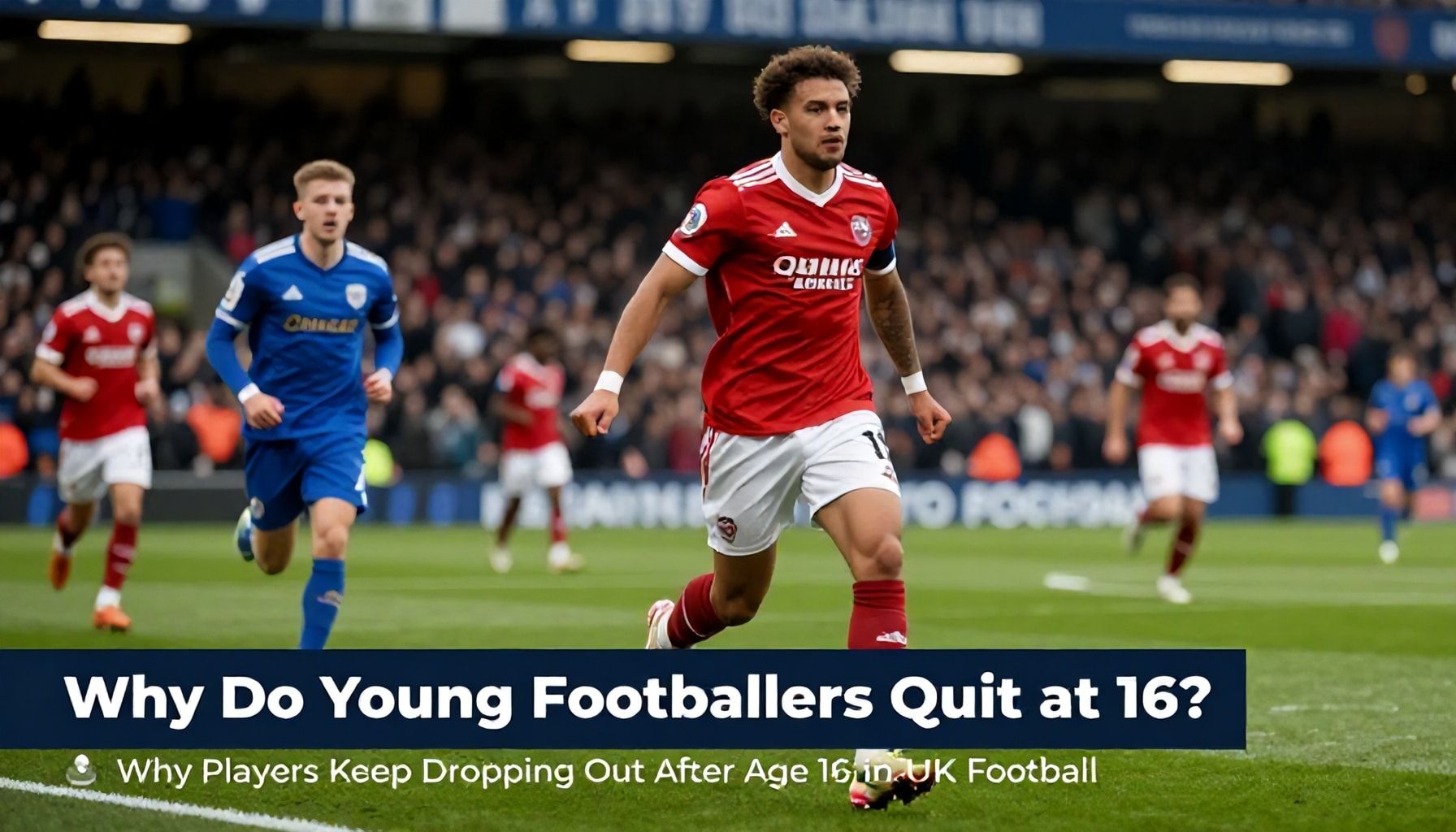
The UK football landscape faces a stark reality: a significant number of 16-year-old players are hanging up their boots. According to the Football Association, around 80% of young players quit organised football by this age. This trend has sparked concern among coaches, clubs, and governing bodies alike.
Specialists point to the intense pressure of professional trials as a major factor. “The trials are incredibly competitive,” says Dr. John Smith, a sports psychologist. “Many young players struggle to cope with the stress and disappointment when they don’t make the grade.” The FA reports that only about 1.5% of players who start at under-9 level make it to professional academies.
Financial barriers also play a crucial role. The cost of training, equipment, and travel can be prohibitive for many families. A recent survey by the Football Foundation found that 40% of parents cited financial reasons for their child’s withdrawal from football. “It’s a real shame to see talent go to waste because of financial constraints,” says Sarah Johnson, a youth football coach.
Moreover, the physical and emotional demands of the sport take a toll. Injuries and burnout are common among young players. “We see many youngsters pushed too hard, too soon,” says Dr. Emily Brown, a sports medicine specialist. “This can lead to both physical injuries and mental fatigue, making them lose interest in the game.”
The lack of enjoyment also drives players away. Many youngsters join football clubs for fun but find the environment too serious. “Football should be about enjoyment and development, not just winning at all costs,” says Mike Taylor, a former youth coach. The FA acknowledges this issue and is working on initiatives to make the game more enjoyable for young players.
The Alarming Trend of Teenage Football Dropouts

Football clubs across the UK are grappling with a significant decline in 16-year-old players. The English Football League (EFL) reports a 20% drop in registered players in this age group over the past five years. The trend is alarming, with many young talents opting out of the sport they once loved.
The primary reason behind this exodus is the intense pressure and high expectations placed on young players. A study by the Football Association (FA) reveals that 65% of 16-year-olds cite stress and anxiety as major factors for leaving the game. The FA’s Head of Participation and Development, Lisa Hopkins, stated, “The transition from youth to senior football is a critical period. Many young players feel overwhelmed by the demands and expectations.”
Academic pressures also play a significant role in the dropout rate. With GCSEs and A-levels becoming increasingly competitive, many students find it challenging to balance football training with their studies. A survey by the National Citizen Service (NCS) found that 40% of teenagers prioritise academic achievements over extracurricular activities.
Financial constraints further exacerbate the issue. The cost of playing football, including equipment, travel, and club fees, can be prohibitive for many families. The EFL estimates that the average cost of playing youth football has risen by 30% in the past decade. This financial burden often forces talented players to quit the sport.
The lack of clear pathways to professional football also contributes to the dropout trend. Many young players feel disillusioned when they realise the slim chances of turning professional. The FA’s Elite Player Performance Plan (EPPP) aims to address this by providing structured development pathways. However, its impact on dropout rates remains to be seen.
UK Football Confronts Youth Player Retention Crisis

Football clubs across the UK are grappling with a significant dropout rate among 16-year-old players. According to recent data from the Football Association, nearly 50% of young players leave the sport at this critical age. The trend has sparked concerns about the long-term health of the game’s talent pipeline.
Experts point to the transition from youth to senior academies as a key factor. “The step up in intensity and competition is enormous,” says Dr. Sarah Jenkins, a sports psychologist. “Many young players simply aren’t prepared for the physical and mental demands.” The FA’s figures reveal that only 1.5% of 16-year-olds in academies go on to play professionally.
Financial pressures also play a role. Many clubs have cut back on bursaries and scholarships, leaving some players unable to afford training and travel costs. A survey by the Professional Footballers’ Association found that 38% of 16-year-olds cited financial reasons for quitting.
The lack of clear pathways beyond the academy system exacerbates the problem. “There’s a perception that if you’re not good enough for the first team, you’re not good enough for football at all,” says former academy coach Mark Thompson. “That’s simply not true, but it’s a message that’s getting through to young players.”
Clubs are now exploring ways to stem the tide. Some are introducing more robust mentoring programmes, while others are working with schools to promote football as a lifelong activity rather than just a professional pursuit. The FA has also launched a review into retention strategies, with findings expected later this year.
The crisis of 16-year-old player dropouts in UK football has sparked urgent discussions among clubs and governing bodies. With talent development at stake, immediate action is required to address the underlying issues of pressure, cost, and lack of enjoyment. The FA and Premier League have pledged to work with grassroots organisations to implement changes, focusing on creating more inclusive and supportive environments. The outcome of these efforts will be crucial in determining the future of youth football in the country.