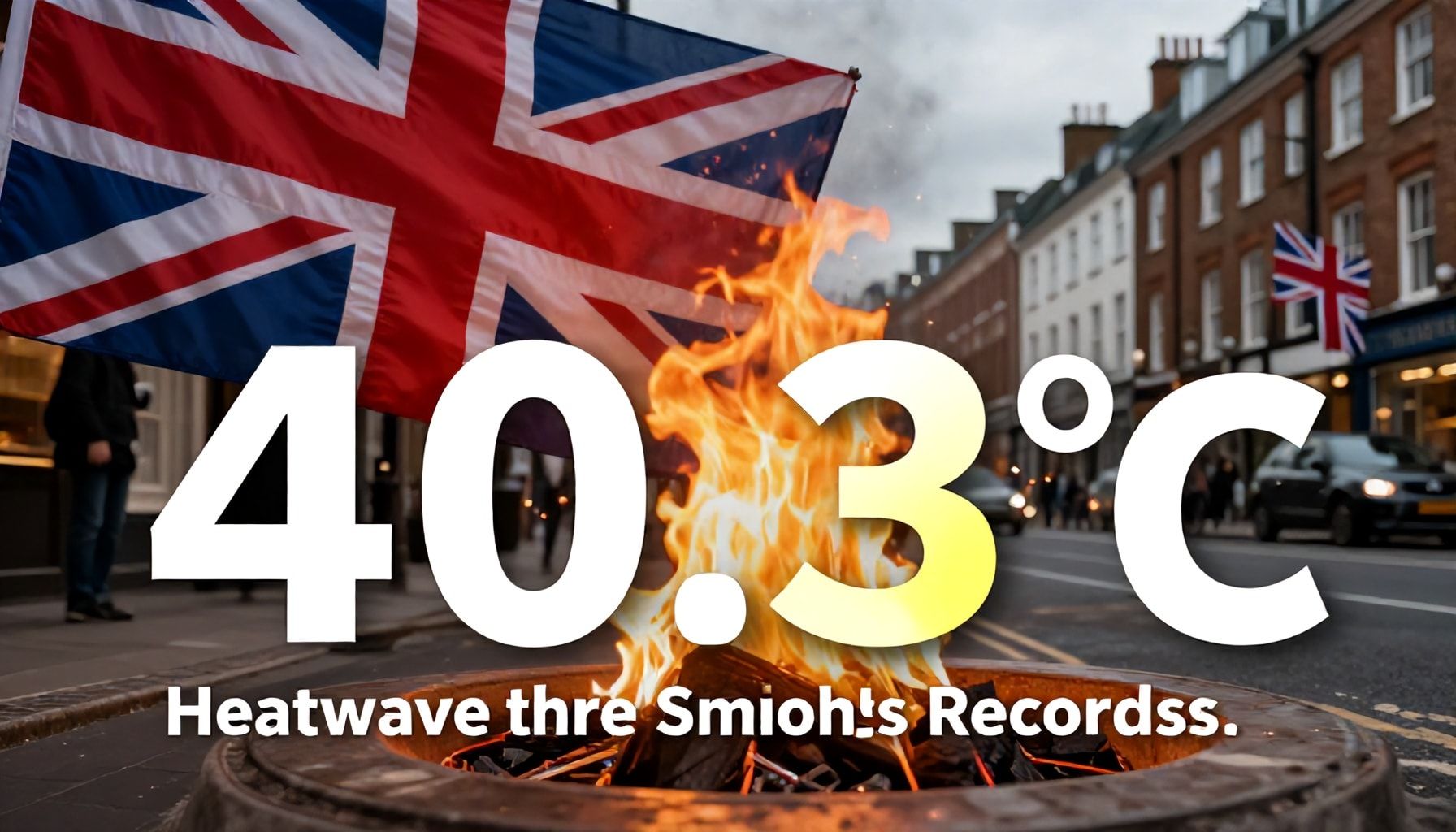
The UK experienced its hottest day on record on Tuesday, with temperatures reaching an unprecedented 40.3°C in Coningsby, Lincolnshire. The Met Office confirmed the record, which surpassed the previous high of 38.7°C set in Cambridge in 2019, as part of an intense heatwave gripping the country. The extreme temperatures triggered a series of alerts, with the Met Office issuing its first-ever red warning for extreme heat, covering parts of England including London, East Anglia, and the Midlands. The heatwave, driven by hot air from France and Spain, has caused widespread disruption, with transport services affected and health officials warning of increased risks to life. The record-breaking temperatures have sparked concerns about the impact of climate change on the UK’s infrastructure and public health.
Record-Breaking Heatwave Sees UK Temperatures Surge Past 40°C

The UK has recorded its highest ever temperature as the ongoing heatwave continues to intensify. The Met Office confirmed a temperature of 40.3°C in Coningsby, Lincolnshire, surpassing the previous record of 38.7°C set in Cambridge in 2019.
Meteorologists had warned of the potential for temperatures to exceed 40°C for the first time in the UK’s recorded history. The extreme heat has triggered numerous health warnings and disrupted transport networks across the country.
Firefighters have been battling numerous wildfires, with more than 100 incidents reported in London alone. The London Fire Brigade declared a major incident on Tuesday as crews struggled to contain the blazes, with Commander for Fire Control, Andy Roe, stating, “This is an unprecedented situation.”
Hospitals have reported a surge in heat-related illnesses, with A&E departments seeing an increase in admissions for heat exhaustion and heatstroke. The NHS has advised people to stay hydrated and seek shade during the hottest parts of the day.
The extreme weather has also caused significant disruption to travel, with train operators implementing speed restrictions and some services cancelled altogether. Network Rail has warned that the heat can cause tracks to buckle, posing a risk to passenger safety.
The Met Office has attributed the extreme temperatures to climate change, with meteorologist Mark McCarthy stating, “The likelihood of reaching 40°C anywhere in the UK has now increased rapidly.” The record-breaking heatwave has sparked renewed calls for urgent action to address the climate crisis.
Meteorological Office Confirms New National Temperature Record
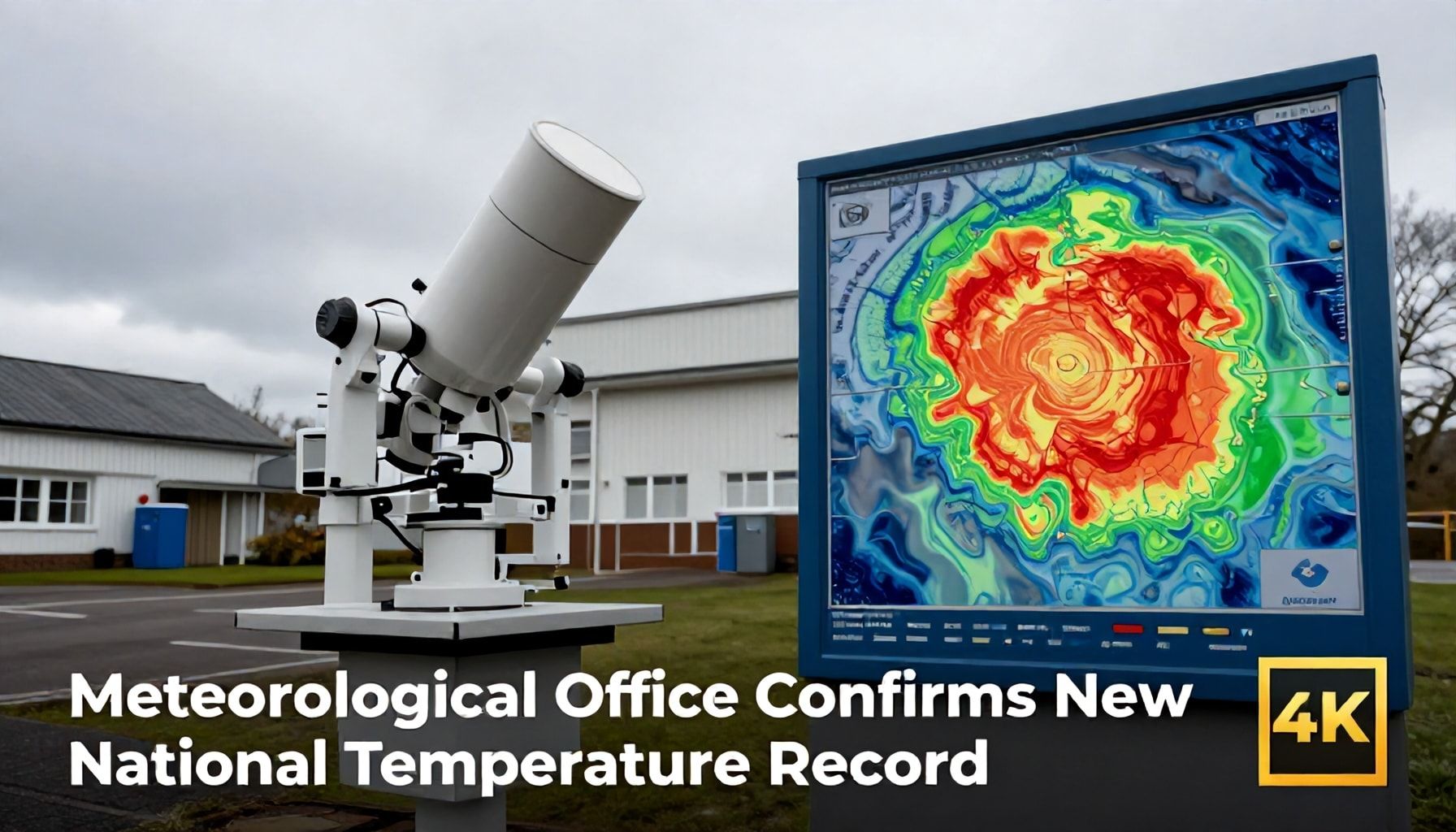
The Met Office has confirmed a new national temperature record after thermometers soared to 40.3°C in Coningsby, Lincolnshire. This surpasses the previous record of 38.7°C, set in Cambridge in 2019. The reading was taken at 15:25 BST on Tuesday, marking a significant milestone in the UK’s meteorological history.
The heatwave has brought unprecedented temperatures across the UK, with numerous locations exceeding their previous highs. Heathrow Airport recorded 40.2°C, while other regions also experienced extreme heat. The Met Office has attributed the intense heat to a combination of climate change and high-pressure systems.
Professor Stephen Belcher, the Met Office’s chief scientist, stated that the record-breaking temperature is a stark reminder of climate change’s impact. “These temperatures are not just a one-off,” he said. “They are part of a pattern we expect to continue as our climate warms.”
The UK Health Security Agency has issued a level 4 heat-health alert, the highest possible, urging the public to take precautions. Hospitals have reported an increase in heat-related illnesses, particularly among the elderly and vulnerable. The government has advised people to stay hydrated, avoid direct sunlight, and check on neighbours.
The record temperature has also raised concerns about infrastructure resilience. Transport networks, including roads and railways, have experienced disruptions due to the extreme heat. Network Rail has implemented speed restrictions on certain lines to prevent buckling of tracks.
The Met Office continues to monitor the situation closely, with forecasts indicating that temperatures may remain high for the next few days. The public is advised to stay updated with the latest weather information and follow safety guidelines.
Historic Heatwave Prompts Urgent Health Warnings Across the UK

The UK has recorded its highest-ever temperature as the ongoing heatwave continues to break records. The Met Office confirmed a provisional temperature of 40.3°C in Coningsby, Lincolnshire, surpassing the previous record of 38.7°C set in Cambridge in 2019.
The extreme heat has prompted urgent health warnings from the UK Health Security Agency (UKHSA). Officials have issued an amber extreme heat warning, urging the public to take precautions to protect themselves from the intense temperatures.
Hospitals across the country are reporting increased admissions due to heat-related illnesses. The NHS has advised people to stay hydrated, avoid direct sunlight during peak hours, and check on vulnerable neighbours and relatives.
Transport networks are also feeling the strain. Network Rail has imposed speed restrictions on trains due to the risk of tracks buckling in the heat. Some flights have been delayed or cancelled as airports struggle to manage the high temperatures.
The Environment Agency has issued warnings about the increased risk of wildfires. Residents are being urged to be extremely cautious with any potential sources of ignition, such as barbecues or cigarettes.
The Met Office has stated that the heatwave is being driven by hot air from Europe and North Africa. Meteorologists predict that the extreme temperatures will persist for several more days, with little relief expected until the weekend.
The UK government has faced criticism for its preparedness for such extreme weather events. Environmental groups have called for urgent action to address climate change and reduce the impact of future heatwaves.
The heatwave has also highlighted the vulnerability of the UK’s infrastructure to extreme weather. Experts are calling for investment in climate-resilient systems to better withstand future heatwaves and other weather-related challenges.
Infrastructure Strains Under Unprecedented Temperature Extremes
The UK has recorded its highest-ever temperature, reaching 40.3°C at Coningsby in Lincolnshire. The Met Office confirmed the unprecedented reading, surpassing the previous record of 38.7°C set in Cambridge in 2019. This extreme heat has pushed infrastructure to its limits across the country.
Network Rail has imposed speed restrictions on trains to prevent tracks from buckling under the intense heat. Some lines have been closed entirely, causing significant disruption to services. The company has warned that further restrictions may be necessary as temperatures continue to rise.
The UK Health Security Agency has issued a level 4 heat health alert, its highest warning. This covers the entire country and remains in place until Thursday. The agency has advised people to stay hydrated, avoid direct sunlight, and check on vulnerable neighbours.
Hospitals have reported an increase in heat-related illnesses, including heatstroke and dehydration. The NHS has urged people to seek medical advice if they experience symptoms such as dizziness, nausea, or rapid breathing. Emergency services have also seen a rise in call-outs for heat-related incidents.
The Environment Agency has warned of potential water shortages as demand outstrips supply. It has urged people to use water wisely and avoid non-essential use, such as filling swimming pools or washing cars. Some water companies have introduced temporary use restrictions in affected areas.
The Met Office has warned that the extreme heat is expected to continue for several days. It has urged people to take precautions to protect themselves and their properties. The agency has also warned of potential thunderstorms and heavy rain later in the week, which could cause further disruption.
Government Urges Public Vigilance as Heatwave Continues Unabated

The UK has recorded its highest-ever temperature of 40.3°C in Coningsby, Lincolnshire, as an unrelenting heatwave continues to grip the nation. The Met Office confirmed the record at 15:20 BST, surpassing the previous high of 38.7°C set in Cambridge in 2019.
The extreme heat has sparked urgent warnings from health officials. Dr. Nikki Kanani, deputy lead for the NHS in London, urged people to “look out for vulnerable neighbours and relatives and make sure they are staying hydrated.” She added that NHS 111 and 999 services are experiencing high demand.
The government has issued a level 4 heat health alert, its highest warning. The Environment Agency has also raised the national drought preparedness level to “prepare and respond,” with water restrictions likely to follow.
Transport networks are struggling under the strain. Network Rail has imposed speed restrictions on trains to prevent tracks from buckling. Meanwhile, flights have been delayed at London Luton Airport due to the extreme heat.
The Met Office has extended its red warning for extreme heat until Thursday evening. The warning covers much of central, northern, and eastern England. The agency has also issued amber warnings for other parts of the UK.
The record-breaking temperature comes as wildfires rage across the UK. In London, a large fire broke out in Ware, Hertfordshire, while in Dorset, a blaze destroyed a significant area of woodland. Firefighters are urging the public to be extremely cautious.
The government has urged the public to remain vigilant and follow official advice. The Department of Health and Social Care has emphasised the importance of staying hydrated, avoiding direct sunlight, and checking on vulnerable individuals.
The record-breaking heatwave has left the UK grappling with its highest ever recorded temperature of 40.3°C, sparking widespread disruption and concern. As the nation begins to cool, the focus shifts to assessing the damage and preparing for future extreme weather events. The Met Office has warned that such temperatures could become more common due to climate change, urging infrastructure upgrades and public awareness campaigns to mitigate risks. Meanwhile, investigations into the heatwave’s impact on health, transport, and wildlife are underway, with experts stressing the importance of learning from this unprecedented event to better protect communities in the future.