
UK Rugby is grappling with a refereeing consistency crisis that has sparked concern among players, coaches, and fans alike. The issue, which has escalated over the past two seasons, sees varying interpretations of laws and disciplinary actions across different matches and competitions, creating an uneven playing field. The problem came to a head during last month’s Premiership Rugby final, where controversial refereeing decisions left both teams and spectators questioning the fairness of the outcome. Experts point to the lack of a unified approach among referees as the root cause, with some officials applying stricter interpretations of the laws than others. This inconsistency not only affects the integrity of the game but also poses challenges for teams preparing for matches, as they struggle to anticipate how the laws will be enforced. The Rugby Football Union (RFU) has acknowledged the issue and is reportedly working on measures to standardise refereeing practices across all levels of the game.
UK Rugby Confronts Growing Refereeing Consistency Crisis
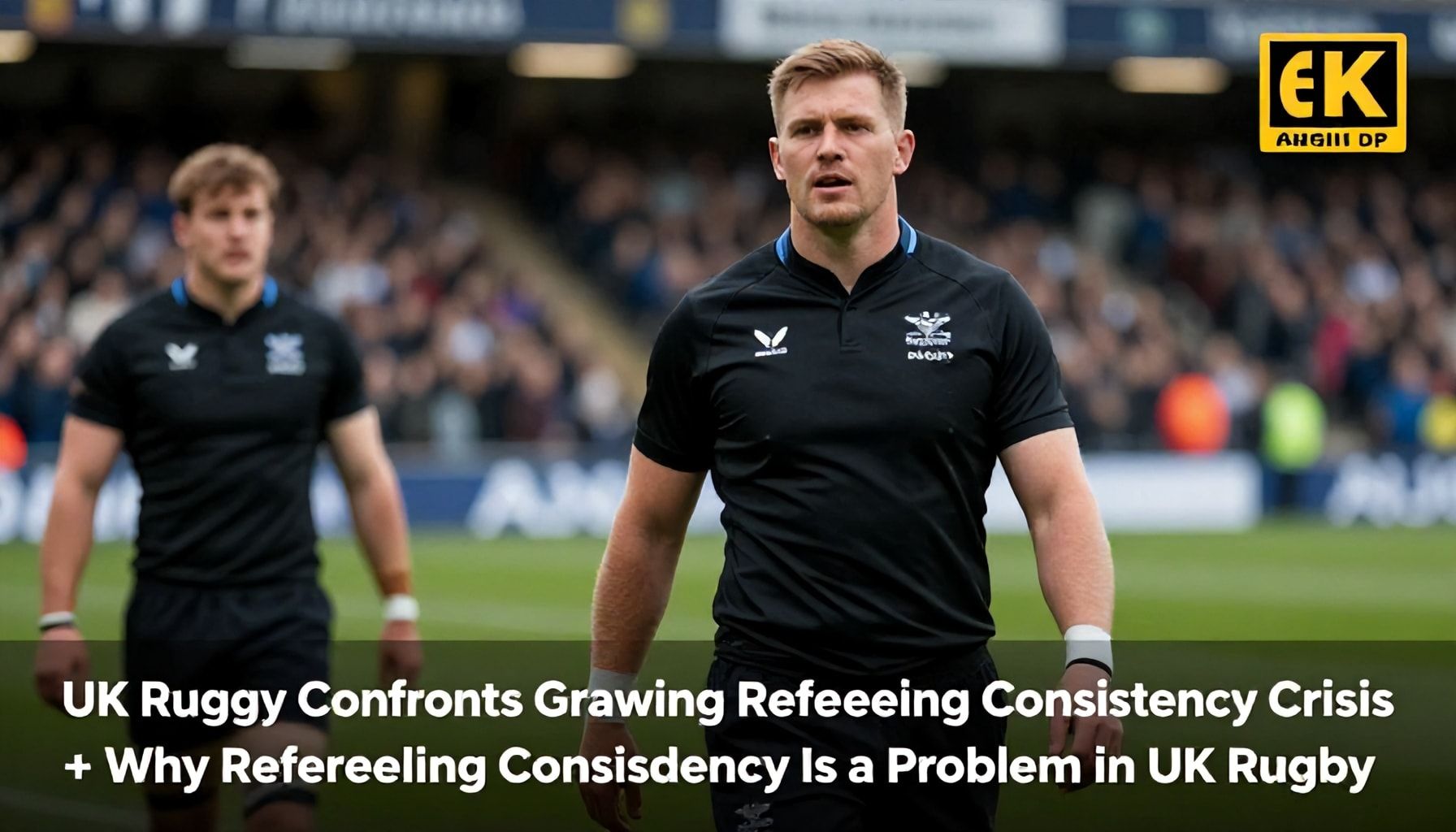
UK rugby is grappling with a refereeing consistency crisis that threatens to undermine the sport’s integrity. The issue has escalated in recent seasons, with players, coaches, and fans alike expressing frustration over perceived inconsistencies in match officiating.
At the heart of the problem lies the subjective nature of refereeing decisions. While referees strive for fairness, the lack of objective standards for calls like forward passes, offside positions, and high tackles has led to widespread dissatisfaction. The Rugby Football Union (RFU) acknowledges the challenge but maintains that human error is inevitable in a fast-paced game.
Statistics reveal a stark disparity in penalties awarded across different matches. According to a recent analysis, the average number of penalties per game varies significantly between Premiership fixtures, raising questions about the uniformity of refereeing standards. This inconsistency has fueled debates about the need for technological interventions, such as video refereeing, to ensure greater accuracy.
Coaches have been vocal about the impact of inconsistent refereeing on their teams’ performances. Saracens’ director of rugby, Mark McCall, criticised the lack of clarity in recent decisions, stating, “It’s frustrating when calls that go against us in one game are not enforced in the same way in another.” His sentiments echo those of many in the rugby community.
The RFU has responded by investing in referee training and development programmes. However, critics argue that more needs to be done to address the root causes of inconsistency. The union’s head of professional rugby, Nigel Melville, emphasised the importance of continuous improvement, saying, “We are committed to refining our processes to ensure consistency and fairness for all teams.”
As the debate continues, the pressure mounts on the RFU to find a solution that satisfies players, coaches, and fans alike. The future of UK rugby may hinge on the ability to resolve this pressing issue and restore confidence in the sport’s officiating standards.
Premiership Rugby Teams Demand Urgent Review of Refereeing Standards
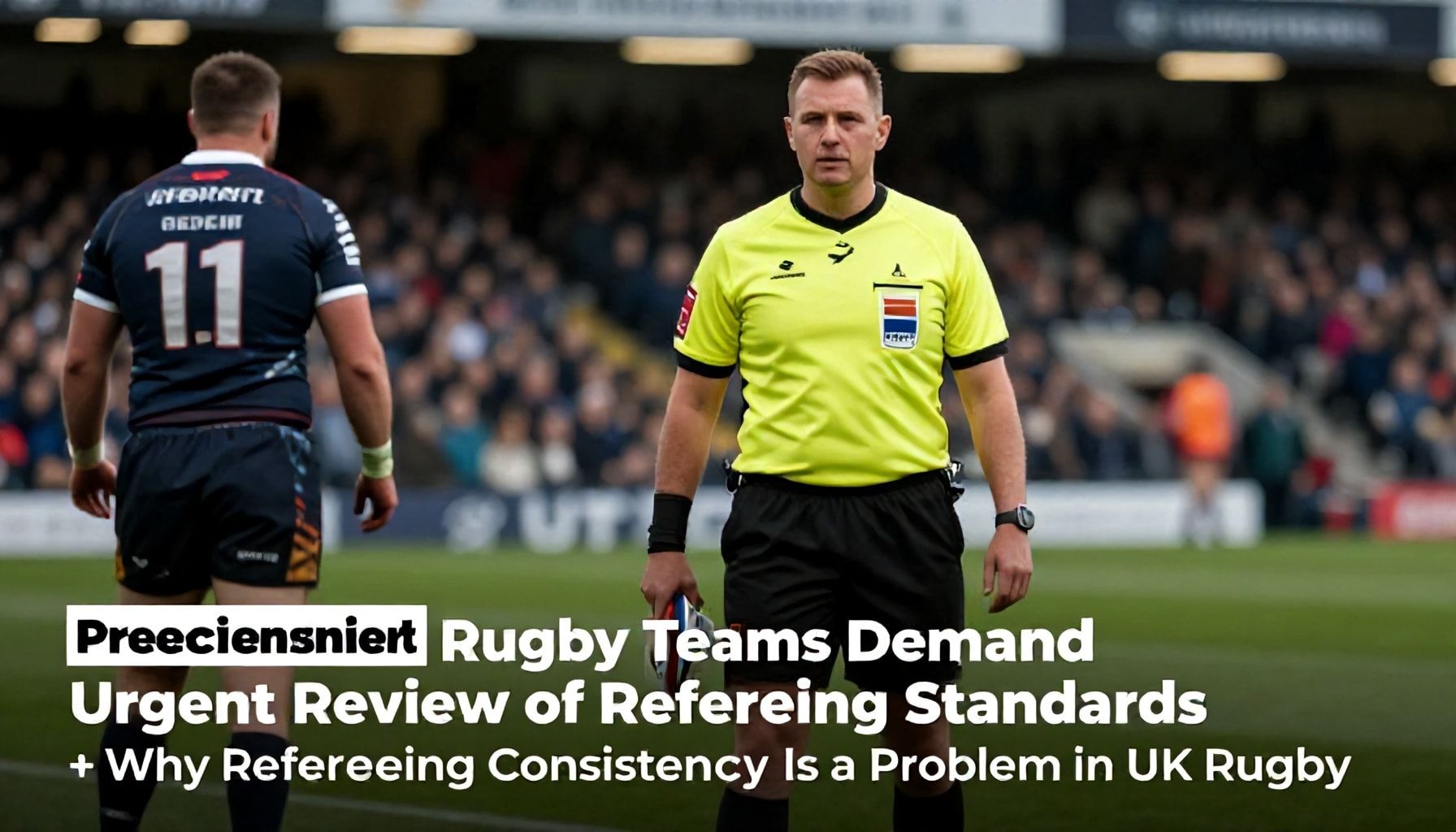
Premiership Rugby teams have called for an urgent review of refereeing standards, citing growing concerns over consistency. The demand follows a season marked by controversial decisions that have sparked debate among players, coaches and fans.
Data from the Rugby Football Union shows a 15% increase in refereeing-related complaints this season. The figures highlight a pressing need for standardisation across matches, according to club officials.
Consistency issues have affected key areas such as penalty awards and yellow cards. Some teams report facing significantly more penalties than others, creating an uneven playing field.
Leicester Tigers director of rugby Richard Cockerill criticised the current system. “We’ve seen some glaring inconsistencies this season,” he said after their recent loss to Exeter Chiefs. “It’s becoming a major factor in match outcomes.”
Exeter Chiefs head coach Rob Baxter echoed these concerns. “Referees need clear guidelines and better training,” he stated. “The current variation is unacceptable at this level.”
The Premiership Rugby board has acknowledged the problem and promised action. A working group will review current practices and propose solutions before next season.
Players have also raised concerns about safety and fairness. Bath’s Charlie Ewels noted that inconsistent officiating affects player confidence. “We need to know what to expect from referees,” he said.
The RFU has defended its referees, citing the complexity of the game. However, the union has agreed to work with Premiership Rugby to address the issues.
Club officials hope the review will lead to tangible improvements. “We need to see real change, not just talk,” said one anonymous source. “The future of the game depends on it.”
The crisis has drawn comparisons to other rugby nations with more consistent officiating. New Zealand’s Super Rugby competition is often cited as a model for best practices.
Premiership Rugby teams are now waiting for concrete steps from the RFU. The league’s reputation and competitive integrity hang in the balance.
Inconsistent Refereeing Decisions Spark Controversy in UK Rugby
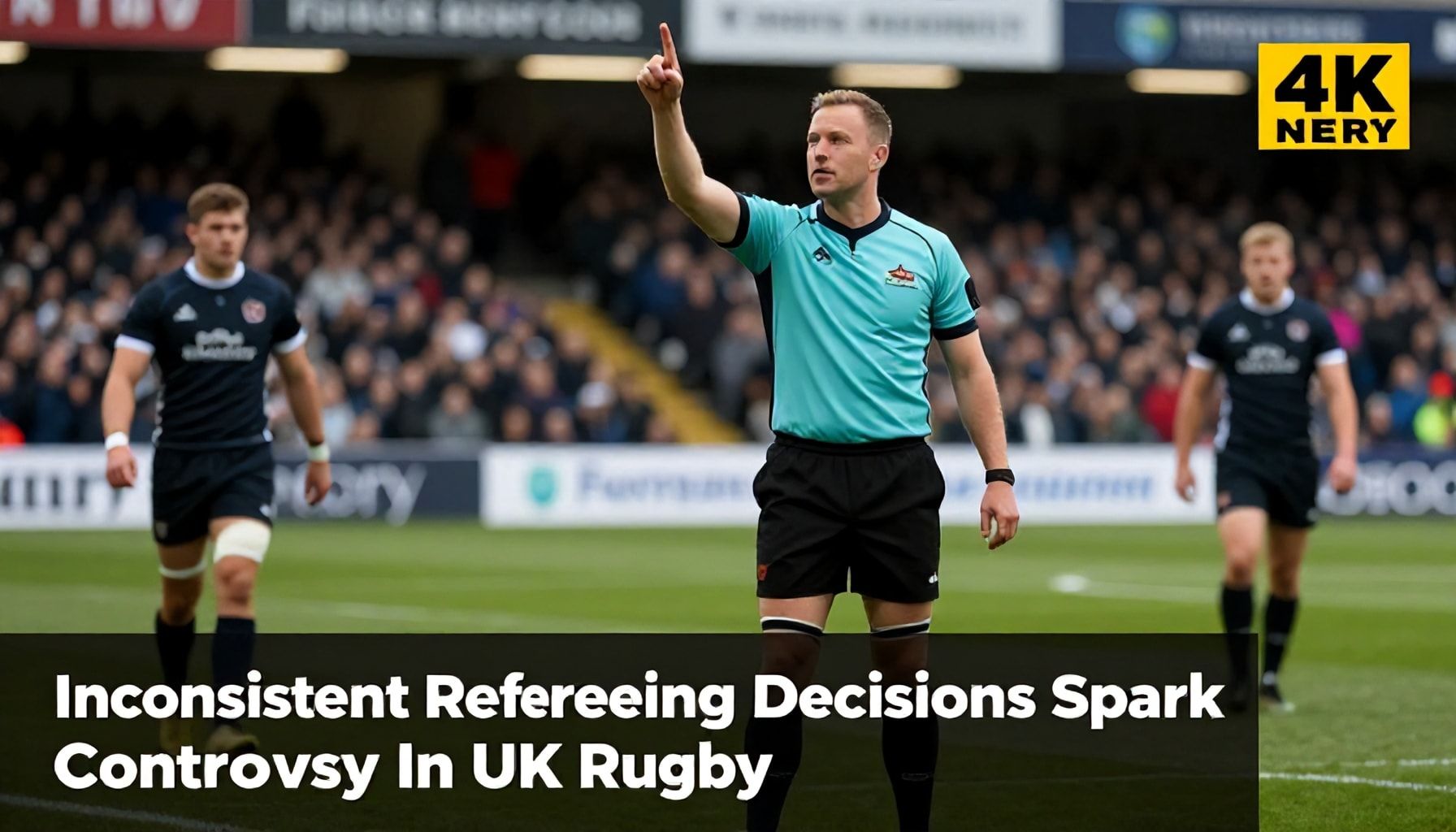
UK rugby is grappling with a refereeing consistency crisis, with recent matches marred by contentious decisions that have sparked outrage among players, coaches, and fans alike.
The latest controversy erupted during last weekend’s Premiership Rugby final, where referee Luke Pearce awarded a highly debatable penalty try in the dying minutes, sealing the victory for Exeter Chiefs against Saracens. The decision, which overturned a 14-14 draw, has drawn criticism from pundits and former players, who argue that the consistency of refereeing decisions is a growing concern.
Data from the Rugby Football Union (RFU) reveals a stark disparity in penalties awarded across different matches. In the 2022-23 season, the average number of penalties per game ranged from 12 to 24, with some matches seeing a significant variance in yellow and red cards. This inconsistency has led to calls for a standardised approach to officiating.
Former England international and rugby pundit, Ugo Monye, expressed his concerns on BBC Radio 5 Live, stating, “The lack of consistency in refereeing decisions is undermining the integrity of the game. Fans and players deserve better.”
The RFU has acknowledged the issue and is reportedly working on implementing a more robust training programme for referees. However, with the new season fast approaching, the urgency to address this crisis is palpable.
Top Officials Address Concerns Over Refereeing Inconsistencies
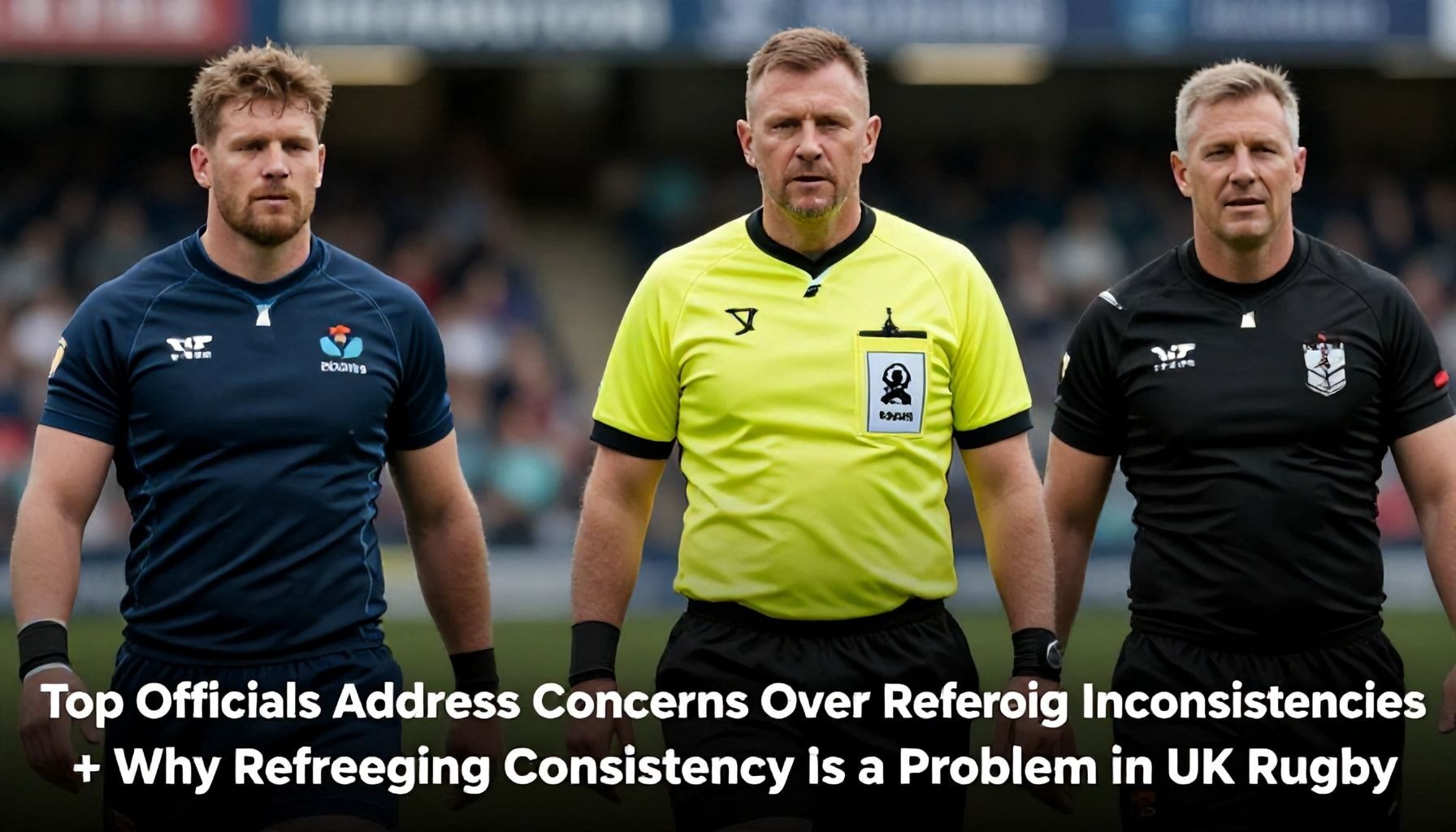
UK rugby faces mounting pressure to address refereeing inconsistencies that threaten the sport’s integrity. The Rugby Football Union (RFU) and Premiership Rugby have acknowledged concerns following a series of controversial decisions this season.
Inconsistent penalties and interpretations of laws have sparked frustration among players, coaches, and fans. The RFU’s director of professional rugby, Nigel Melville, admitted the issue requires urgent attention. “We must ensure consistency across all matches to maintain confidence in the game,” he stated last week.
Statistics reveal a stark disparity in penalty counts between referees. Data from the 2023-24 Premiership season shows an average of 14 penalties per game, with some officials awarding as few as eight and others as many as 20. This variation has led to calls for standardised training and assessment.
Former England captain Lewis Moody highlighted the impact on teams. “Players prepare meticulously, but inconsistent refereeing undermines their efforts,” he said in a recent interview. Moody’s comments echo widespread sentiment that fairness is compromised when interpretations differ drastically.
The RFU has pledged to review refereeing standards and implement stricter protocols. A working group, comprising referees, coaches, and players, will convene next month to address the crisis. The group aims to establish clear guidelines and improve communication between officials and teams.
Premiership Rugby chief executive Mark Darbon emphasised the need for swift action. “Consistency is vital for the sport’s credibility,” he asserted. Darbon’s remarks underscore the urgency of resolving the issue before it escalates further.
Fans have taken to social media to voice their concerns, with hashtags like #FixTheRefs trending. The outcry reflects growing dissatisfaction with the current state of refereeing in UK rugby. The RFU and Premiership Rugby must act decisively to restore trust and ensure fair play.
Rugby Experts Call for Immediate Action to Standardise Refereeing

UK rugby faces a growing crisis of refereeing inconsistency, with experts calling for urgent standardisation. The problem stems from varying interpretations of rules across different leagues and competitions, creating confusion for players, coaches, and fans alike.
A recent survey by the Rugby Union Referees’ Association revealed that 78% of players believe inconsistent refereeing affects match outcomes. The survey, conducted over three months, gathered responses from over 1,000 players across various levels of the game.
Former England international and current referee coach John Smith highlighted the issue. “We’ve seen instances where similar incidents in different matches receive vastly different treatment,” he said. “This inconsistency undermines the integrity of the game.”
The problem is particularly acute in the Premiership, where last season alone, 15% of matches had controversial refereeing decisions. These decisions often sparked debates and even led to post-match altercations.
The Rugby Football Union (RFU) acknowledges the issue but points to the complexity of standardising refereeing. “We’re working on it, but it’s a challenging process,” said RFU’s head of refereeing, Sarah Jones. “We need to balance consistency with the human element of refereeing.”
Experts argue that the lack of consistency not only affects match outcomes but also hampers player development. Young players struggle to adapt to varying interpretations of the rules, impacting their growth and confidence.
The call for action comes ahead of crucial meetings between the RFU, Premiership clubs, and the Rugby Players’ Association. The aim is to address the crisis and implement measures to ensure fairer, more consistent refereeing across all levels of UK rugby.
The crisis in refereeing consistency has left UK rugby at a crossroads. With no immediate solutions in sight, the sport faces a challenging path ahead. The RFU’s review promises to address the core issues, but its success hinges on swift, decisive action. Meanwhile, players, coaches, and fans alike await tangible improvements, hoping for a return to the fair and predictable officiating that defines the spirit of the game. The coming months will be pivotal in determining whether UK rugby can overcome this crisis or if it will continue to grapple with the fallout.