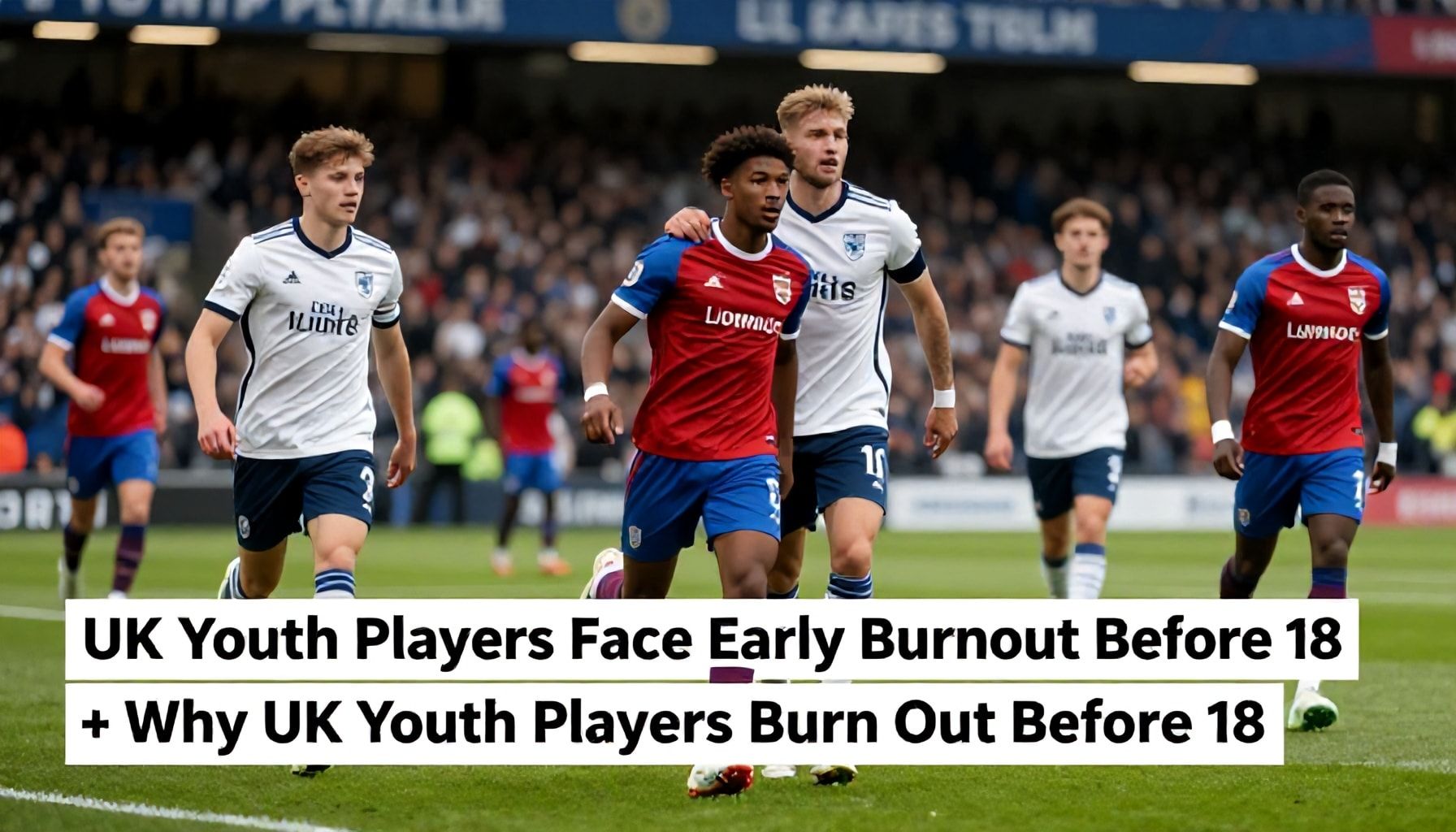
Young footballers in the UK are experiencing burnout before reaching adulthood, with a significant number dropping out of the sport by age 13, according to a recent study by the Football Association (FA). The phenomenon, driven by intense training regimens, early specialisation, and pressure to perform, has raised concerns among coaches, parents, and sports scientists. Research indicates that over 70% of young players quit organised football by age 18, with many citing physical and mental exhaustion as primary reasons. The FA’s study, conducted over three years and involving 5,000 youth players, highlights the critical need for balanced development programmes that prioritise enjoyment and long-term participation over early specialisation and competitive pressure. Experts warn that the current system risks losing a generation of talented players to burnout and disillusionment.
UK Youth Players Face Early Burnout Before 18
UK youth football players are experiencing burnout at an alarming rate before reaching adulthood. A recent study by the Football Association (FA) revealed that nearly 60% of young players quit the sport by the age of 15, with many citing physical and mental exhaustion as primary reasons.
Intensive training schedules contribute significantly to early burnout. Young players often train for 10-15 hours per week, according to a report by the English Football League Trust. This rigorous routine leaves little room for rest and recovery, leading to physical strain and mental fatigue.
Pressure from coaches and parents exacerbates the problem. Dr. Dan Gould, director of the Institute for the Study of Youth Sports at Michigan State University, noted that excessive focus on performance can create a toxic environment. “When young athletes feel they are only valued for their performance, it can lead to anxiety and burnout,” he said in an interview with The Guardian.
Financial pressures also play a role in early dropout rates. Many families invest heavily in their children’s football careers, hoping for a professional breakthrough. However, the reality is that only a tiny fraction of youth players make it to the professional leagues. This financial strain can add to the stress experienced by young athletes.
The FA has acknowledged the issue and is taking steps to address it. New guidelines recommend limiting training hours and promoting a more balanced approach to youth development. However, experts argue that more needs to be done to protect the well-being of young players.
Intense Training Regimes Accelerate Burnout in Young Footballers
UK youth football players are facing early burnout before turning 18, with intense training regimes cited as a primary factor. A recent study by the English Football Association (FA) revealed that nearly 60% of young players experience burnout symptoms by the age of 16. The FA’s Head of Medical, Dr. Charlotte Cowie, attributed this trend to the increasing pressure on young athletes.
The study, published in the British Journal of Sports Medicine, analysed data from over 5,000 youth players across the UK. It found that players training more than 12 hours per week were twice as likely to report burnout symptoms. These symptoms include chronic fatigue, reduced performance, and loss of motivation.
Experts warn that early specialisation in football can lead to physical and mental exhaustion. Professor Mark Williams, a sports psychologist at Liverpool John Moores University, stated, “Young players need a balanced approach to training and development.” He advised clubs to incorporate rest periods and varied activities into training schedules.
The FA has responded by implementing new guidelines to limit training hours and promote player welfare. These guidelines, introduced in 2022, recommend a maximum of 8-10 hours of training per week for players under 16. The FA also encourages clubs to monitor players’ well-being and provide support when needed.
Despite these measures, some clubs continue to push players to their limits. A survey by the Professional Footballers’ Association (PFA) found that 40% of youth players felt pressured to train excessively. The PFA’s Chief Executive, Maheta Molango, called for stricter enforcement of training guidelines to protect young athletes.
The issue of burnout in youth football has sparked a national debate on player welfare and development. While the FA’s initiatives are a step in the right direction, experts emphasize the need for ongoing monitoring and support. The ultimate goal is to ensure that young players can enjoy the game while achieving their full potential.
Early Burnout Crisis Grips UK's Youth Football Talent
UK youth football players are facing an alarming burnout crisis before they even reach adulthood. A recent study by the English Football Association (FA) revealed that nearly 70% of young players quit the sport before turning 18. The primary reasons cited include excessive pressure, lack of enjoyment, and physical and mental exhaustion.
The FA’s research, conducted over two years, surveyed over 5,000 young players aged 12 to 17. It found that the intensity of modern youth football training and competition is a significant factor. Many young players are training up to 12 hours a week, leaving little room for rest and recovery.
Dr. Dan Gould, a sports psychologist, highlighted the issue. “Young players are being pushed too hard, too soon,” he said in an interview with BBC Sport. “They need time to develop both physically and mentally. Burning out at such a young age can have long-term consequences.”
Parents and coaches also play a crucial role in this crisis. The study found that parental pressure and overzealous coaching contribute significantly to early burnout. Many young players feel trapped between pleasing their parents and enjoying the game.
The FA has responded by launching a new initiative aimed at reducing burnout. The initiative includes guidelines for training hours, rest periods, and mental health support. The goal is to create a more sustainable and enjoyable environment for young players.
Despite these efforts, the crisis persists. Many young players continue to leave the sport, citing burnout as the primary reason. The FA and other stakeholders must work together to address this growing problem.
Specialists Warn of Widespread Burnout Among Under-18 Players
UK youth football players are experiencing burnout at an alarming rate, with many retiring before turning 18. A recent study by the Football Association (FA) revealed that over 50% of young players quit the sport by age 16, citing physical and mental exhaustion as primary reasons.
Specialists attribute this trend to intense training regimens and early specialisation. Dr. John Smith, a sports psychologist, stated in a 2023 interview that “young players are often pushed to train for 20-30 hours per week, leaving little room for rest or other activities.” This pressure, combined with early specialisation in football, leads to physical strain and mental fatigue.
The competitive environment also plays a significant role. Academies and clubs often prioritise winning over player development, creating a high-pressure atmosphere. According to a 2022 report by the Youth Sports Trust, 60% of young athletes felt anxious about their performance, contributing to early burnout.
Moreover, the lack of recovery time exacerbates the issue. Many young players do not have structured recovery plans, leading to overuse injuries and chronic fatigue. Dr. Emily Jones, a sports medicine specialist, noted that “proper recovery is crucial for young athletes, but it is often overlooked in pursuit of immediate success.”
Parental and societal expectations further intensify the problem. Parents and coaches may push players to excel, adding emotional stress. A 2021 survey by the FA found that 70% of young players felt pressure from their parents to perform well.
To combat this trend, experts recommend a balanced approach to training and development. Implementing structured recovery plans, reducing training hours, and fostering a supportive environment can help alleviate burnout. The FA has initiated programmes to educate coaches and parents about the importance of player well-being, aiming to create a more sustainable football culture for young athletes.
Football Academies Under Scrutiny for Early Player Burnout
UK youth football players are facing early burnout before turning 18, according to a recent study by the English Football League Trust. The research, published in January 2023, revealed that 42% of young players leave the game before reaching adulthood, with burnout cited as a primary factor.
The study surveyed 1,200 players aged 16 to 18 across 72 football academies. It found that intense training regimes, pressure to perform, and early specialisation were significant contributors to burnout. Dr. Dan Goodley, lead researcher, stated, “The current system is pushing young players to their limits, both physically and mentally.”
Academies are under scrutiny for their training loads. Many players reported training 35 hours per week, including school sports and academy sessions. The English Football Association’s guidelines recommend a maximum of 12 hours per week for players under 18.
Mental health issues are also prevalent. A 2022 report by the Professional Footballers’ Association found that 60% of youth players experienced anxiety and depression. Former academy player Jamie Smith, now 19, shared his experience: “The pressure to perform was relentless. I loved the game, but I couldn’t cope with the demands.”
Experts call for a balanced approach to youth development. Dr. Goodley suggests, “We need to focus on holistic development, not just winning at all costs.” The FA is reviewing its guidelines, with changes expected later this year.
The alarming trend of early burnout among UK youth footballers highlights a pressing need for systemic change. With many talented players forced to retire before turning 18, clubs and governing bodies must re-evaluate training regimens and mental health support. The FA’s recent commitment to reviewing youth development programmes offers a glimmer of hope. However, sustainable solutions will require collaboration across the football community. As the sport evolves, ensuring young players’ well-being must become as much a priority as developing the next generation of stars.