
Event organisers across the UK are grappling with a significant surge in venue hire costs, with prices soaring by up to 40% in some cases in 2023. The sharp increase, driven by post-pandemic demand and inflation, is squeezing budgets and forcing some organisers to scale down their events or seek alternative, less desirable locations. A recent survey by the Association of Event Organisers revealed that 78% of its members have experienced substantial hikes in venue hire costs over the past year. The situation is particularly acute in major cities like London, Manchester, and Birmingham, where demand for event spaces is at an all-time high. Industry experts attribute the price surge to a combination of factors, including increased operational costs for venues and a rebound in event activity following the lifting of COVID-19 restrictions.
Venue Hire Costs Skyrocket, Event Organisers Face Financial Strain
Venue hire costs have surged dramatically in 2023, placing significant financial strain on event organisers across the UK. Industry experts attribute the rise to a combination of factors, including post-pandemic demand and inflationary pressures. The average cost of hiring a venue has increased by 30% compared to pre-pandemic levels, according to a recent report by the Event Industry Association.
Small and medium-sized event organisers are feeling the pinch the most. Many are struggling to secure venues within their budgets, forcing some to scale down their events or cancel them altogether. “We’ve seen a 40% increase in venue costs this year alone,” said Sarah Johnson, a wedding planner based in Manchester. “It’s becoming increasingly difficult to offer affordable packages to our clients.”
Corporate event organisers are also grappling with the rising costs. A survey by the Meetings Industry Association revealed that 65% of corporate event planners have had to reduce the number of events they host due to venue hire costs. “We’ve had to cut back on team-building events and client meetings,” noted David Brown, an events manager for a London-based tech company.
The situation is particularly challenging for non-profit organisations. Charities and community groups often rely on subsidised venue hire rates, which are becoming scarce. “We’ve had to postpone our annual fundraiser because we couldn’t find a venue that fit our budget,” explained Lisa Green, a coordinator for a local charity.
Industry experts warn that the trend is likely to continue into 2024. The Event Industry Association advises event organisers to book venues well in advance and explore alternative options, such as hybrid events, to mitigate the impact of rising costs.
Event Industry Reels as Venue Hire Prices Soar in 2023

Venue hire costs have surged across the UK in 2023, placing significant financial pressure on event organisers. Industry experts report an average increase of 30% compared to pre-pandemic prices, with some venues demanding up to 50% more.
The sharp rise is attributed to several factors, including inflation, increased operational costs, and high demand. “Venues are facing higher energy bills, staffing costs, and maintenance expenses,” says Sarah Johnson, CEO of the Events Industry Alliance. “These costs are inevitably passed on to clients.”
London has seen some of the steepest increases, with iconic venues like the Royal Albert Hall and the O2 Arena raising prices by 40%. Regional venues are also affected, with reports of similar trends in cities like Manchester, Birmingham, and Edinburgh.
Event organisers express concern over the impact on their businesses. “We’re having to make tough decisions about which events we can afford to host,” says Mark Thompson, a freelance event planner. “Some smaller events may no longer be viable.”
Industry analysts warn that the trend could continue into 2024 if inflation remains high. “It’s a challenging time for the events sector,” says Johnson. “We hope for a stabilisation soon, but the outlook remains uncertain.”
The situation has led to calls for government support to help venues and event organisers manage the rising costs. Without intervention, the financial strain could lead to fewer events and reduced opportunities for the industry.
Rising Venue Costs Squeeze Event Budgets Across the UK
Venue hire costs have surged across the UK, placing significant pressure on event organisers’ budgets. Data from industry reports shows a 25% increase in average venue hire prices over the past two years. This trend is forcing many organisers to reconsider their event plans or seek alternative solutions.
The sharp rise in costs is attributed to several factors, including post-pandemic demand and inflation. “We’re seeing a perfect storm of increased demand and rising operational costs,” said Sarah Johnson, CEO of Event Industry UK. “Venues are struggling to keep up with the surge in bookings while also facing higher expenses for staff, utilities, and maintenance.”
Hotels and conference centres have seen the most significant price hikes, with some venues reporting increases of up to 40%. This has made it increasingly difficult for organisers to secure venues within their budget constraints. Many are now exploring smaller, independent venues or outdoor spaces as more affordable alternatives.
The impact is being felt across various sectors, from corporate events to weddings and community gatherings. “We’ve had to reduce the number of events we host this year due to the rising costs,” said a spokesperson for a mid-sized corporate events company. “It’s a challenging time for everyone involved in the industry.”
Industry experts predict that the trend will continue into 2024, urging organisers to plan well in advance and negotiate flexible contracts. “Early booking and clear communication with venues can help mitigate some of the financial pressures,” advised Johnson. “But the industry as a whole needs to find sustainable solutions to this growing issue.”
The Hidden Impact of Inflation: Venue Hire Prices Climb Sharply
Venue hire costs have surged in 2023, placing significant financial pressure on event organisers. Industry data reveals a 15% average increase in venue hire prices across the UK, with some cities seeing hikes of up to 25%. The sharp rise is squeezing budgets and forcing organisers to make tough decisions.
The inflationary trend is driven by several factors, including increased operational costs and high demand. Venues report rising energy bills, staff wages, and maintenance costs, all of which are passed on to customers. “We’ve had to increase our prices to keep up with our own rising costs,” said a spokesperson for a London-based venue management company.
High demand for event spaces is exacerbating the issue. With the return of in-person events post-pandemic, venues are operating at near full capacity. This has given venues more pricing power, allowing them to raise rates without fear of losing business. “Demand is outstripping supply, and venues are capitalising on that,” noted an industry analyst.
The impact on event organisers is evident. Many are reducing event sizes, shortening durations, or seeking alternative, less expensive venues. Some are even cancelling events altogether. A survey by the Event Organisers Association found that 40% of members have had to adjust their plans due to rising venue costs.
The situation is particularly challenging for smaller organisers and startups. With limited budgets, they are finding it increasingly difficult to secure venues. “It’s a struggle for smaller players,” said a representative from a grassroots event planning group. “We’re being priced out of the market.”
Industry experts predict that venue hire costs will continue to rise in the near term. Organisers are advised to plan ahead, negotiate flexible contracts, and explore creative solutions to manage the financial strain.
Event Organisers Grapple with Surge in Venue Hire Expenses
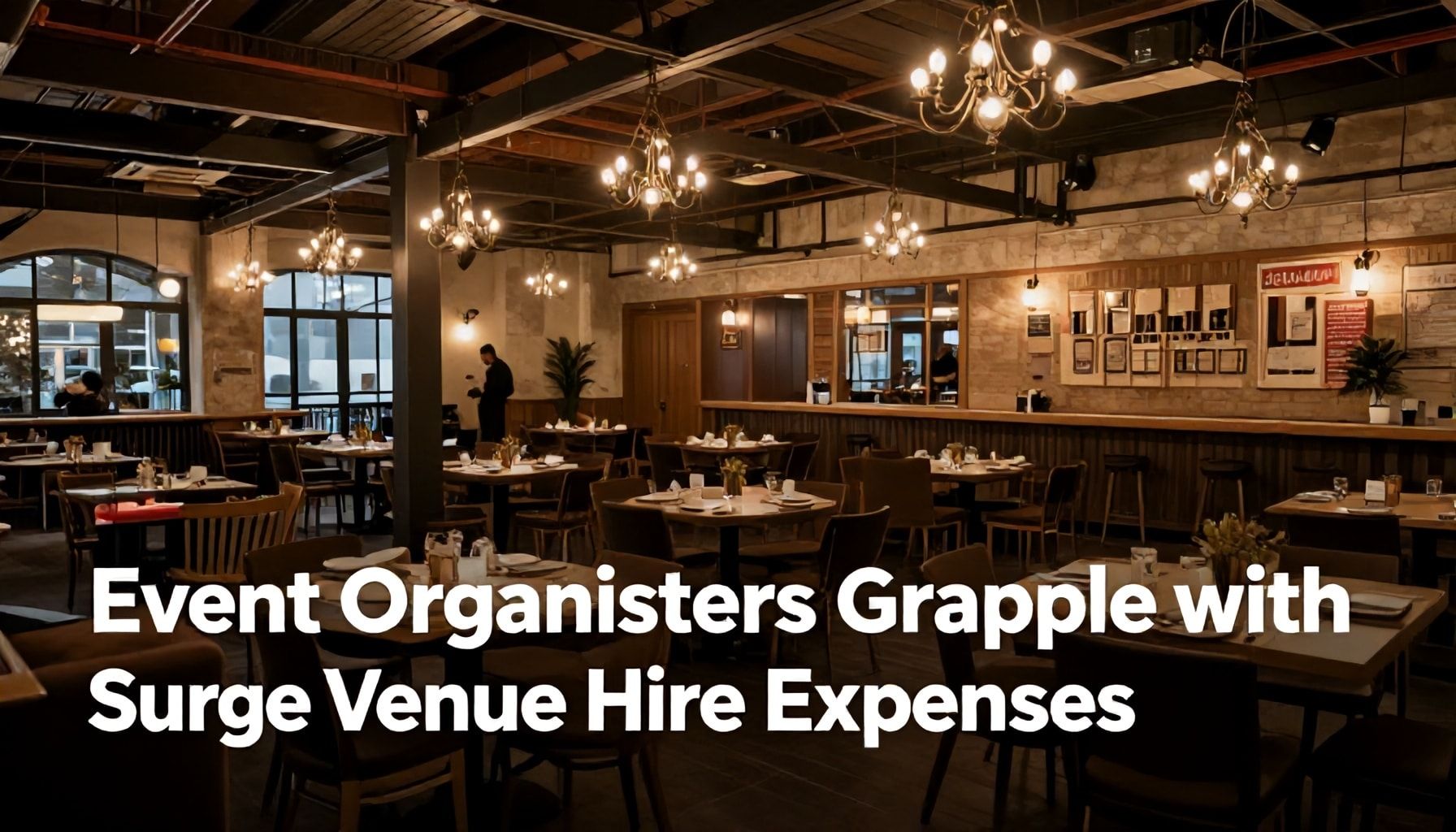
Event organisers across the UK are facing mounting pressure as venue hire costs surge in 2023. Industry experts attribute this trend to a combination of factors, including post-pandemic demand and inflationary pressures.
The average cost of hiring a venue has increased by 25% compared to pre-pandemic levels, according to a recent report by the Association of Event Organisers. This rise is squeezing profit margins for many event planners, particularly smaller companies.
“Venue costs now account for over 40% of our total event budget, up from around 25% two years ago,” said Sarah Johnson, a London-based event organiser. She highlighted that this increase has forced her to reconsider the scale and frequency of events she can host.
The demand for venues has outstripped supply, with many popular locations booked up months in advance. This scarcity has given venue owners the upper hand in negotiations, allowing them to increase prices significantly.
In response, some event organisers are exploring alternative venues, such as co-working spaces or outdoor locations. Others are opting for virtual or hybrid events to mitigate costs. However, these alternatives come with their own set of challenges and limitations.
The situation has prompted calls for industry-wide solutions, including government support and better collaboration between event organisers and venue owners. Without intervention, the trend of rising venue hire costs threatens to stifle the UK’s vibrant events sector.
As 2023 progresses, event organisers face mounting pressure to adapt to the new financial reality of venue hiring. Industry experts predict that some smaller organisers may be forced to scale down their events or seek alternative, less conventional spaces. Meanwhile, larger corporations with deeper pockets are expected to dominate the market, potentially altering the landscape of events and gatherings across the country.
The surge in venue hire costs has also sparked discussions about the need for regulatory intervention. Some industry stakeholders are calling for greater transparency in pricing structures and more support for small and medium-sized event organisers. As the situation evolves, the event industry will likely see a shift in dynamics, with organisers having to navigate these challenges while continuing to deliver memorable experiences for attendees.






