
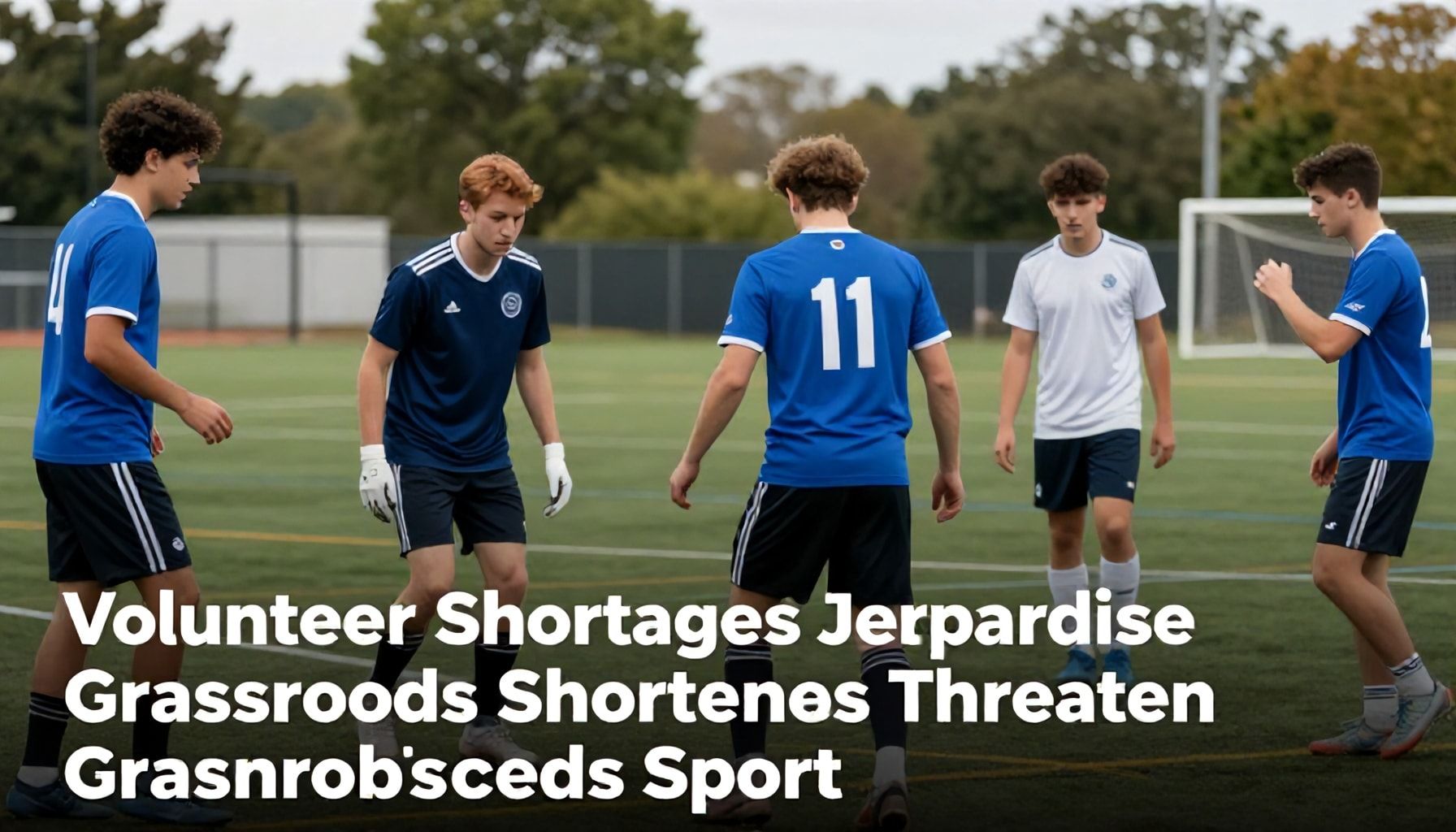
Grassroots sports clubs across the UK are facing an uncertain future this season as volunteer shortages reach critical levels. With over 6.7 million volunteers supporting local sports according to Sport England, a 20% drop in numbers has left many clubs struggling to operate.
The crisis, exacerbated by the pandemic and rising living costs, has seen key roles such as coaches, referees, and committee members go unfilled. In football alone, the FA reports that 1 in 5 youth teams could fold without urgent intervention. The situation threatens the future of community sports, with smaller clubs in rural areas feeling the pinch most acutely. Experts warn that without immediate action, the fabric of grassroots sports could unravel, leaving thousands of young athletes without opportunities to play.
Volunteer Crisis Hits Local Football Clubs Hard

Grassroots football clubs across the country are facing a volunteer crisis that threatens to derail the upcoming season. With fewer people stepping forward to fill essential roles, clubs are struggling to maintain teams and facilities.
The Football Association (FA) reports a 25% drop in volunteers over the past five years. This decline has left many clubs scrambling to cover coaching, refereeing, and administrative positions. Without these volunteers, matches cannot take place.
Local clubs are feeling the pinch. “We’ve had to cancel two youth teams this season due to lack of coaches,” says Sarah Johnson, secretary of Millfield FC. “It’s heartbreaking to turn kids away, but we simply don’t have the manpower.”
The problem extends beyond coaching. Grounds need maintenance, and teams require managers. “Volunteers are the lifeblood of grassroots football,” explains John Smith, chair of the National Grassroots Football Association. “Without them, the game grinds to a halt.”
Efforts to recruit new volunteers are underway. The FA has launched campaigns to highlight the benefits of volunteering. However, many clubs report that these initiatives are not enough to stem the tide.
The crisis is not limited to football. Rugby, cricket, and netball clubs are also experiencing shortages. This has raised concerns about the future of grassroots sports in the UK.
Experts point to changing lifestyles and increased work commitments as key factors. “People have less free time, and volunteering often falls by the wayside,” notes Dr. Emily Brown, a sports sociologist at Loughborough University.
Clubs are calling for government support to address the issue. “We need funding to create paid roles and attract more people,” says Johnson. Until then, the future of grassroots football remains uncertain.
Grassroots Rugby Faces Unprecedented Shortages

Grassroots rugby clubs across the UK are facing an unprecedented volunteer shortage, threatening the future of the sport at local levels. The Rugby Football Union (RFU) has reported a 25% drop in volunteers over the past two years, with many clubs struggling to fill essential roles.
The shortage is particularly acute in coaching and refereeing positions. According to a recent survey by the RFU, 60% of clubs have fewer than five qualified coaches, while 40% have no registered referees. This scarcity is forcing some clubs to limit training sessions and cancel matches, impacting thousands of young players.
The pandemic has exacerbated the problem, with many volunteers stepping back due to health concerns or increased work commitments. “We’ve seen a significant drop in volunteers since COVID-19,” said Sarah Johnson, a spokesperson for the RFU. “Many people who previously gave their time are now prioritising their own families and jobs.”
Financial constraints are also a factor. Many volunteers, particularly those in coaching and refereeing roles, require certification and training, which can be costly. Without adequate funding, clubs struggle to support these volunteers, further deterring potential recruits.
The situation is causing concern among rugby enthusiasts and officials alike. Without immediate intervention, the future of grassroots rugby in the UK hangs in the balance. Clubs are calling for increased government support and corporate sponsorship to help address the volunteer shortage and ensure the sport’s survival at the local level.
Netball Leagues Struggle Amid Volunteer Drought

Grassroots sports across the UK face an uncertain future as volunteer shortages threaten to derail entire seasons. The situation has reached critical levels, with many clubs struggling to find enough people to fill essential roles.
Netball leagues are among the hardest hit, with the England Netball organisation reporting a 20% drop in volunteers over the past two years. This decline has left many clubs scrambling to find referees, coaches, and committee members.
The impact is already being felt on the pitch. Several local leagues have had to cancel matches due to a lack of referees, while others have seen teams fold entirely. The situation is particularly acute in rural areas, where volunteer numbers were already low.
Experts attribute the decline to a combination of factors, including increased work commitments and a lack of recognition for volunteers. “People are time-poor and often don’t see the value in volunteering,” said Dr. Sarah Johnson, a sports sociologist at the University of Leeds.
The crisis has also highlighted the financial strain on grassroots sports. Many clubs rely on volunteers to keep costs down, and the shortage is forcing some to consider increasing membership fees or even closing their doors.
The situation has prompted calls for greater government support and investment in grassroots sports. Without intervention, the future of many local clubs remains uncertain.
Cricket Clubs Scramble to Fill Vital Roles

Grassroots cricket clubs across the country are facing a critical volunteer shortage, threatening the very existence of local teams and leagues. The England and Wales Cricket Board (ECB) has warned that without immediate action, the future of grassroots cricket is at risk. The situation is particularly acute in junior cricket, where the lack of volunteers is forcing clubs to limit team numbers or even fold entirely.
The ECB’s recent survey revealed that 78% of affiliated clubs are struggling to fill key volunteer roles. These roles range from coaching and umpiring to ground maintenance and administration. The shortage is most severe in coaching positions, with 62% of clubs reporting a lack of qualified coaches. This has led to a significant reduction in the number of junior teams many clubs can field.
The impact of the volunteer shortage is already being felt. In the West Midlands, at least five junior cricket teams have been forced to disband due to a lack of coaches. Meanwhile, in the North West, several clubs have had to merge to share resources and volunteers. The ECB’s Chief Executive Officer, Tom Harrison, described the situation as “a ticking time bomb for grassroots cricket.”
The volunteer shortage is not unique to cricket. Football, rugby, and other grassroots sports are also feeling the pinch. However, cricket’s complex rules and the need for specialist coaching make the shortage particularly challenging. The ECB is calling on former players, parents, and the wider community to step up and volunteer. Without urgent action, the future of grassroots cricket hangs in the balance.
Community Sports Reeling from Volunteer Exodus

Grassroots sports in the UK face an uncertain future as volunteer numbers plummet. The Sports and Recreation Alliance warns that over 60% of sports clubs rely entirely on unpaid help. Without these volunteers, many fear the season may not go ahead.
The exodus stems from multiple factors. Burnout tops the list, with many volunteers citing unsustainable workloads. A survey by the Charity Commission found that 40% of volunteers left their roles in the past year. Rising costs also play a part, as many can no longer afford to give their time for free.
Football is particularly affected. The Football Association revealed that 30% of grassroots teams have folded in the last two years. “We’re seeing a real crisis in the community game,” said a spokesperson. “Without volunteers, the beautiful game could disappear from many towns.”
Other sports face similar struggles. Netball England reports a 25% drop in volunteer numbers since 2020. Rugby clubs are also feeling the pinch, with many struggling to field teams. “It’s a domino effect,” explained one club secretary. “Fewer volunteers mean fewer teams, which means fewer participants.”
Local authorities are stepping in to help. Some councils are offering grants to cover volunteer expenses. Others are launching campaigns to recruit new helpers. But experts warn that more needs to be done. “This isn’t just about sports,” said one commentator. “It’s about community spirit and social cohesion.”
The situation has sparked calls for government intervention. The Sports and Recreation Alliance urges ministers to fund volunteer programmes. Without action, many fear that grassroots sports could disappear entirely. The clock is ticking for a solution.
The situation highlights a growing challenge for grassroots sports, with many organisations already struggling to cover basic operational costs. Without immediate intervention, experts warn that the decline in volunteer numbers could lead to a permanent reduction in local sports opportunities, disproportionately affecting disadvantaged communities.
Local authorities and sports governing bodies are now urging governments to provide more funding and support to address the volunteer shortage. Meanwhile, community leaders are calling on businesses and individuals to step up and fill the gap, emphasising the long-term benefits of investing in grassroots sports.






