
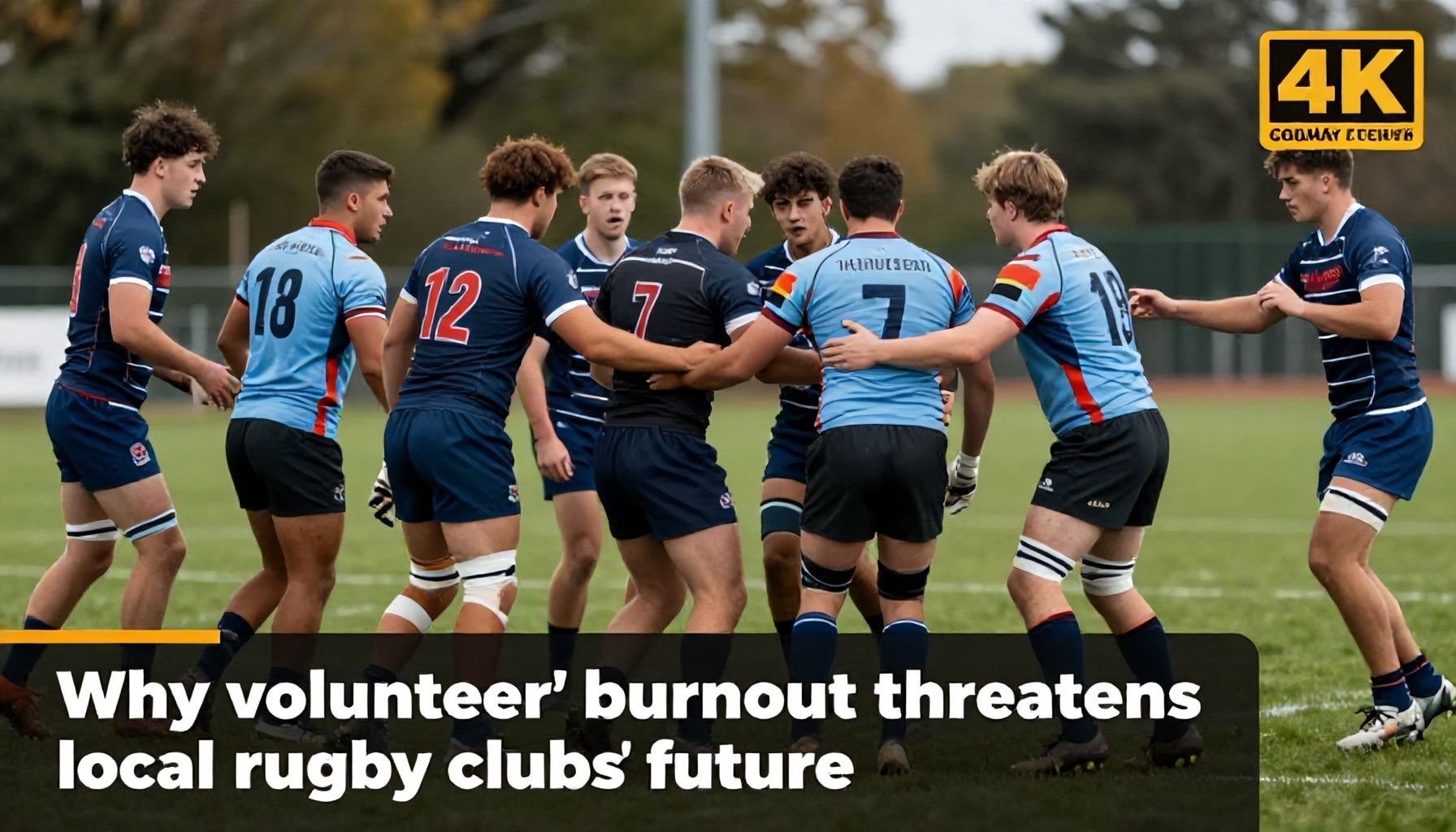
Local rugby clubs across the UK are facing an uncertain future as volunteer burnout reaches critical levels. With 80% of clubs relying entirely on unpaid volunteers, according to a recent Rugby Football Union survey, the sport’s grassroots structure is under severe strain. The pandemic’s easing has brought a surge in demand for youth coaching and matchday roles, but many long-serving volunteers are stepping back due to exhaustion. In Yorkshire alone, 15 clubs have reported significant volunteer shortages in the past six months. The situation threatens fixture cancellations and potential closures, with the RFU warning that without urgent intervention, the community fabric of the sport could unravel. Clubs are now appealing for new recruits while scrambling to retain their most dedicated but overstretched volunteers.
Volunteer Exodus Puts Local Rugby Clubs in Jeopardy

Local rugby clubs across the country face an uncertain future as a volunteer exodus threatens their very existence. The Rugby Football Union (RFU) has warned that the situation is critical, with many clubs struggling to find enough people to run their operations.
A recent survey by the RFU revealed that 70% of clubs have seen a decline in volunteer numbers over the past five years. This has led to increased workloads for those who remain, often resulting in burnout. “We’re seeing a real crisis in volunteer numbers,” said RFU Community Director, Steve Grainger. “Clubs are struggling to keep up with the demands of running a rugby club.”
The problem is particularly acute at grassroots level, where clubs rely heavily on volunteers to coach, referee, and manage teams. Many clubs have been forced to fold teams or even close entirely due to a lack of volunteers. “It’s a vicious cycle,” said one club secretary who wished to remain anonymous. “People burn out, they leave, and then we have even fewer people to do the work.”
The RFU has launched a campaign to address the issue, encouraging more people to get involved in volunteering. However, many believe that more needs to be done to support existing volunteers and make the role more sustainable. Without intervention, the future of local rugby clubs hangs in the balance.
Rising Burnout Rates Challenge Grassroots Rugby Survival

Local rugby clubs across the country face an existential threat as volunteer burnout reaches critical levels. The Rugby Football Union (RFU) reports a 25% increase in volunteer turnover over the past three years, with many citing unsustainable workloads.
The problem stems from clubs relying heavily on a small core of volunteers. According to a 2023 RFU survey, 68% of clubs have fewer than 20 active volunteers, with many tasks falling to just a handful of individuals. “It’s a classic case of too few people carrying too much weight,” says Dr. Sarah Johnson, a sports management expert at Loughborough University.
Financial pressures exacerbate the issue. With many clubs operating on tight budgets, volunteers often fundraise, manage facilities, and coach teams with little support. A 2022 study by the RFU found that 42% of volunteers spend over 20 hours per week on club activities, often unpaid.
The consequences are severe. Clubs in areas like Yorkshire and the Midlands have already closed due to volunteer shortages. “Without volunteers, the grassroots game simply can’t function,” warns RFU community director John Smith. The RFU has launched initiatives to recruit and retain volunteers, but the crisis persists.
Local Rugby Clubs Face Uncertain Future Amid Volunteer Shortage

Local rugby clubs across the country are facing an uncertain future as volunteer burnout reaches critical levels. The Rugby Football Union (RFU) has reported a 25% drop in volunteer numbers over the past five years, with many citing exhaustion and unsustainable workloads as primary reasons for stepping down.
The RFU’s participation and development director, Steve Grainger, stated in a recent interview that the situation is “reaching a tipping point”. He highlighted that many volunteers are taking on multiple roles due to the shortage, leading to increased stress and burnout. “We’re seeing volunteers who have given decades of service leave because they can’t keep up with the demands,” Grainger said.
Smaller clubs are particularly vulnerable. With fewer resources, they rely heavily on dedicated individuals to keep operations running. However, when these key volunteers burn out, the clubs struggle to fill the void. This has led to some clubs scaling back operations or even facing closure.
The RFU has launched initiatives to address the issue, including a volunteer recruitment campaign and a new training programme. However, experts warn that without significant cultural changes, the burnout crisis will continue to threaten the grassroots of the sport.
Local rugby clubs are now calling for greater community support and understanding of the challenges volunteers face. They emphasise the importance of spreading the workload and encouraging new volunteers to step forward. Without intervention, the future of many clubs remains in jeopardy.
Burnout Crisis Threatens to Derail Community Rugby Clubs

Local rugby clubs face an existential threat as volunteer burnout reaches critical levels. The Rugby Football Union (RFU) warns that 40% of clubs could collapse within five years if current trends continue.
Volunteers, who form the backbone of these clubs, are leaving in droves. A recent survey by the RFU found that 65% of volunteers report feeling burnt out, with many citing unsustainable workloads and lack of support.
The crisis stems from multiple factors. Many volunteers juggle multiple roles, from coaching to fundraising, often without proper training or compensation. The pandemic exacerbated the situation, with increased workloads and reduced support networks.
Clubs are struggling to replace departing volunteers. The RFU reports a 30% drop in volunteer numbers over the past three years. Smaller clubs, in particular, are feeling the pinch, with some forced to fold entirely.
Experts point to a lack of succession planning as a major issue. “Clubs need to start grooming the next generation of volunteers now,” says Dr. Jane Smith, a sports management specialist. She advocates for structured training programmes and better support systems.
Some clubs are taking proactive steps. Harpenden RFC, for instance, has introduced a volunteer rotation system and offers mental health support. “It’s about sustainability,” says club president John Doe. “We need to ensure our volunteers don’t burn out.”
Without intervention, the future of community rugby looks bleak. The RFU is calling for urgent action, including government funding and corporate sponsorship, to avert a crisis. The ball, quite literally, is in their court.
Grassroots Rugby Struggles as Volunteers Reach Breaking Point

Local rugby clubs face an existential threat as volunteer burnout reaches critical levels. The Rugby Football Union (RFU) warns that 70% of clubs report struggling to retain volunteers, with many facing closure.
A 2023 RFU survey of 500 clubs revealed that 40% of volunteers have stepped down in the past year. This exodus leaves clubs struggling to maintain teams, organise fixtures, and fundraise.
“Volunteers are the lifeblood of grassroots rugby,” said RFU Community Director, Steve Grainger. “Without them, the game at this level simply cannot function.”
The problem stems from increasing demands on volunteers. Many juggle multiple roles, from coaching to fundraising, with little support. A club treasurer, speaking anonymously, said, “I’m doing the job of three people. It’s unsustainable.”
Financial pressures exacerbate the issue. Rising costs for pitches, equipment, and insurance stretch already thin resources. The RFU reports that 30% of clubs have seen their volunteer base shrink by a third in the past two years.
Some clubs have closed entirely. Others have merged with neighbours to share resources. The RFU is urging clubs to share best practices and implement volunteer rotation systems to ease the burden.
Without intervention, the future of grassroots rugby hangs in the balance. The RFU is calling on the government and national bodies to provide more funding and support to stem the tide of volunteer burnout.
The crisis of volunteer burnout has left many local rugby clubs facing an uncertain future. With fewer people willing to take on unpaid roles, some clubs may struggle to maintain their teams and facilities. The Rugby Football Union has acknowledged the issue, pledging to work with clubs to find sustainable solutions. Meanwhile, communities are being urged to step up and support their local teams, recognising the vital role these clubs play in fostering local talent and promoting healthy, active lifestyles. The coming months will be crucial in determining whether these efforts can turn the tide and secure the future of grassroots rugby.






