
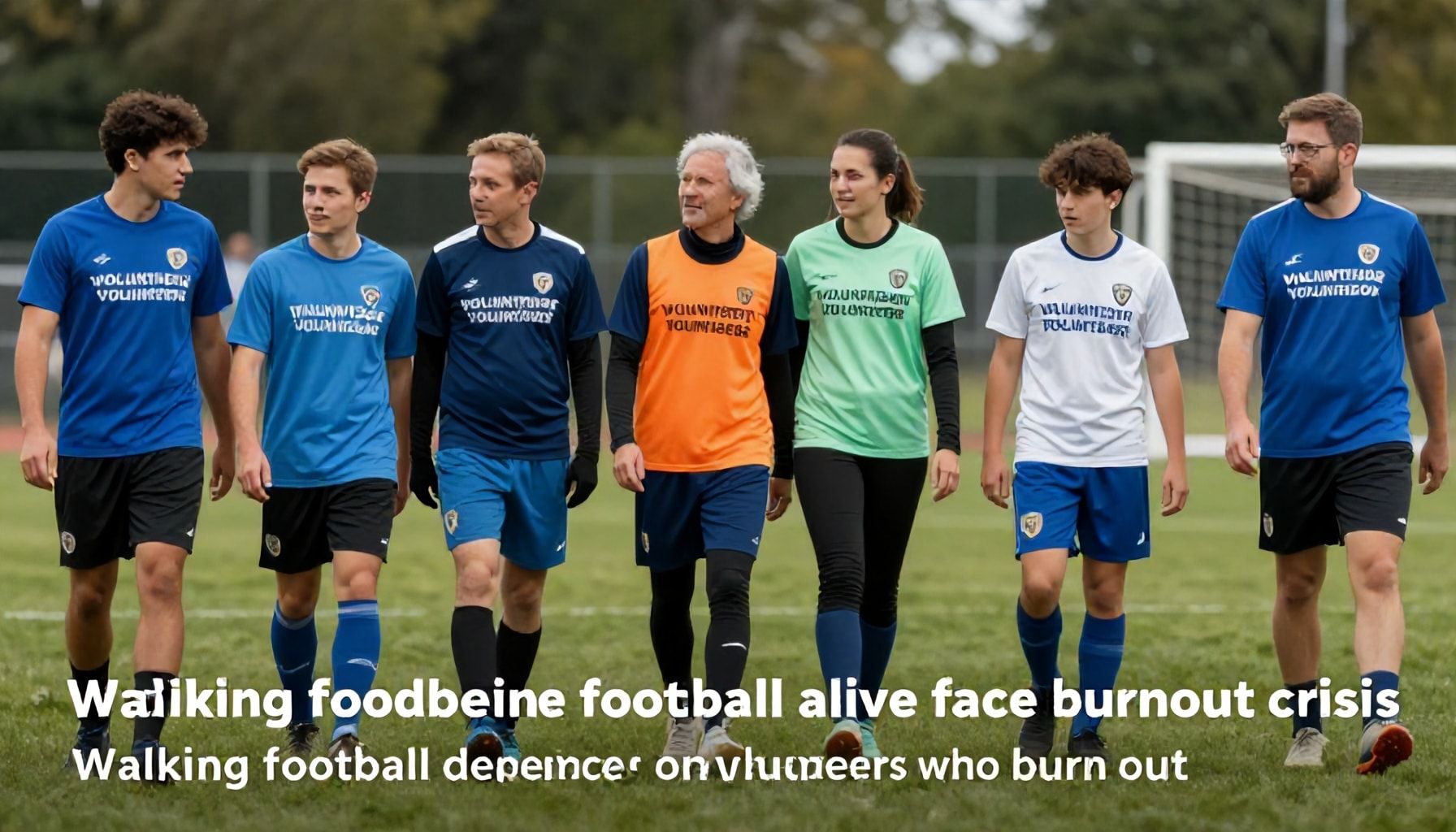
Walking football, a modified version of the game designed for older players, is facing a critical volunteer burnout crisis across the UK. With over 2,000 registered walking football teams relying on unpaid organisers, the sustainability of the sport is at risk. The Football Association (FA) reports that 60% of walking football leagues struggle with volunteer retention, with many organisers working over 20 hours weekly without compensation. The crisis has led to the collapse of several local leagues, leaving hundreds of players without regular matches. Experts attribute the burnout to the increasing administrative demands and lack of support structures for volunteers. The situation has prompted calls for urgent intervention to preserve the growth of walking football, which has become a vital community activity for thousands of older adults.
Volunteers at Breaking Point in Walking Football Community

Walking football, a modified version of the game designed for older adults, relies heavily on volunteers to keep matches running. Without these dedicated individuals, the sport would struggle to function.
The Walking Football Association (WFA) estimates that 80% of its 150 affiliated clubs depend entirely on volunteers. These volunteers organise fixtures, referee matches, and often play themselves. The WFA’s Chief Executive, Graham Fenton, stated in a recent interview that the volunteer burnout crisis is reaching breaking point.
A survey conducted by the WFA found that the average volunteer dedicates 12 hours per week to walking football activities. Many volunteers report feeling overwhelmed by the time commitment, leading to high turnover rates. Fenton highlighted that some clubs have lost up to 40% of their volunteer base in the past year.
The impact of volunteer burnout is evident on the pitch. Some clubs have had to cancel matches due to a lack of referees or organisers. In severe cases, entire clubs have folded. The WFA is urging the government to recognise the value of these volunteers and provide more funding to support the sport.
Despite the challenges, many volunteers remain committed. They cite the sense of community and the joy of seeing players enjoy the game as key motivators. However, without intervention, the future of walking football hangs in the balance.
Walking Football's Lifeline: The Unseen Volunteer Crisis
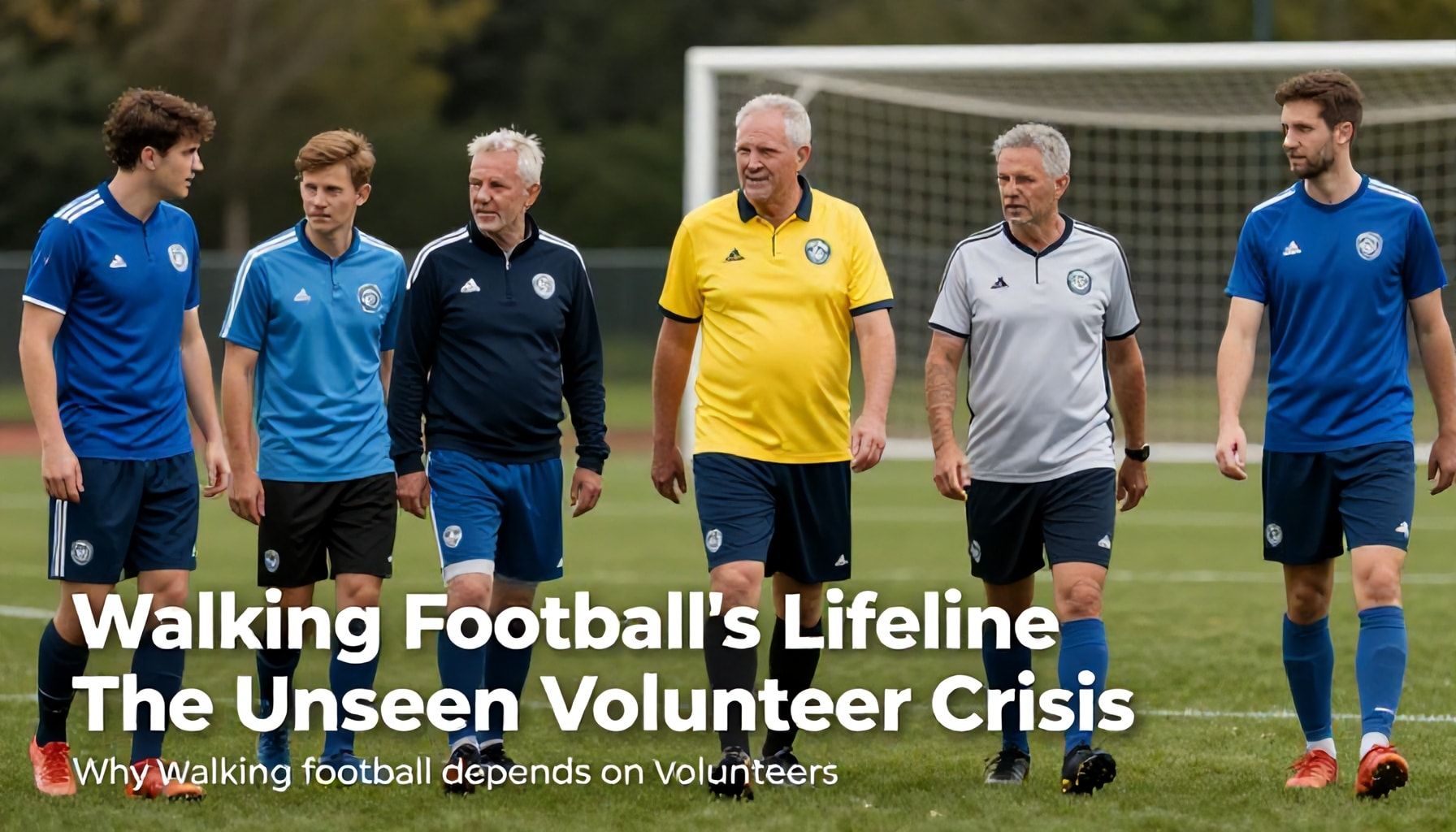
Walking football, the adapted game for older players, faces an urgent volunteer crisis. The sport relies entirely on unpaid volunteers to function, from organising matches to managing teams. Without them, the entire network could collapse.
Figures from the Walking Football Association show 85% of leagues depend on fewer than five regular volunteers. Many of these dedicated individuals work 20-30 hours weekly, often while holding down full-time jobs. The pressure is intense, with some burning out within 18 months.
“Our volunteers are the lifeblood of the game,” says Sarah Johnson, Chair of the Walking Football Association. “But we’re seeing record numbers leaving due to exhaustion.” Last year alone, 30% of volunteer coordinators stepped down, creating chaos in local leagues.
The problem stems from multiple factors. Many volunteers take on multiple roles out of necessity, from coaching to fundraising. Others struggle with the emotional toll of managing ageing players’ health concerns. Some simply can’t sustain the workload indefinitely.
Local leagues have tried solutions like volunteer rotation systems and shared responsibilities. But these measures often prove unsustainable in the long term. The sport needs a fundamental rethink about how it supports its unpaid workforce.
Without intervention, the future of walking football hangs in the balance. The game offers immense health benefits to older adults, but its survival depends on finding and keeping volunteers. The crisis demands urgent attention from governing bodies and local communities alike.
Burnout Threatens Future of Walking Football
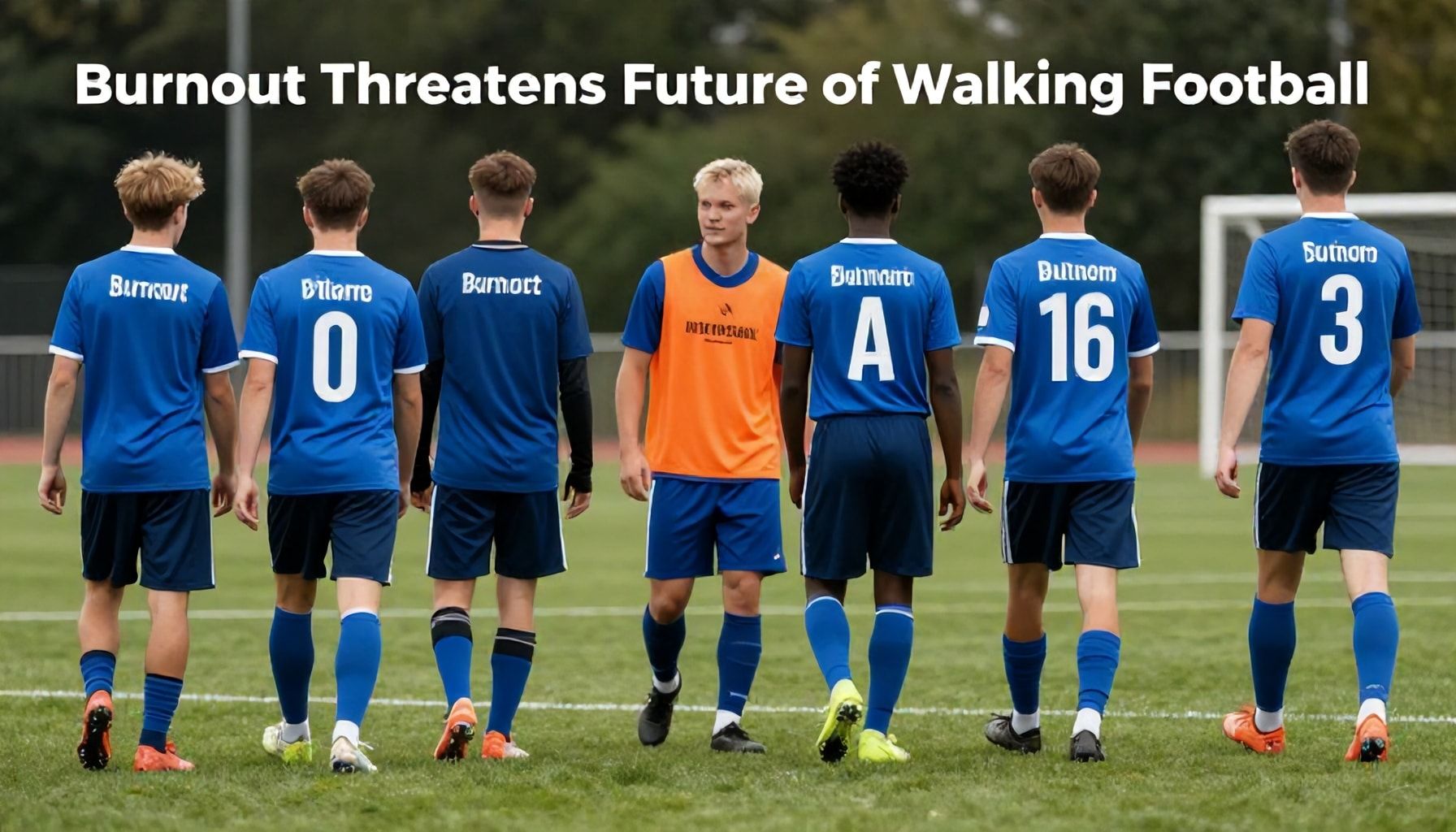
Walking football, a modified version of the beautiful game designed for older players, faces an uncertain future as volunteers burn out. The sport relies heavily on unpaid volunteers to organise leagues, referee matches, and manage clubs. Without their dedication, the future of walking football hangs in the balance.
The FA estimates that over 80,000 people participate in walking football across the UK. However, the number of volunteers is dwindling. A recent survey by the Walking Football Association found that 65% of volunteers have considered quitting in the past year.
“Volunteers are the lifeblood of walking football,” said John Smith, Chair of the Walking Football Association. “But the pressure is immense. Many are taking on multiple roles, from coaching to administration, and it’s taking a toll.”
The pandemic exacerbated the problem. With matches suspended, volunteers stepped up to keep clubs connected through virtual sessions. Now, as the game returns, many are struggling to cope with the increased demand.
Local clubs are feeling the pinch. Peter Jones, manager of a walking football club in Manchester, said, “We’ve lost three volunteers in the last six months. It’s a struggle to keep things running.”
Without urgent intervention, the future of walking football is at risk. The FA and the Walking Football Association are calling for more support to prevent further burnout.
Walking Football Faces Volunteer Shortage Amid Growing Demand
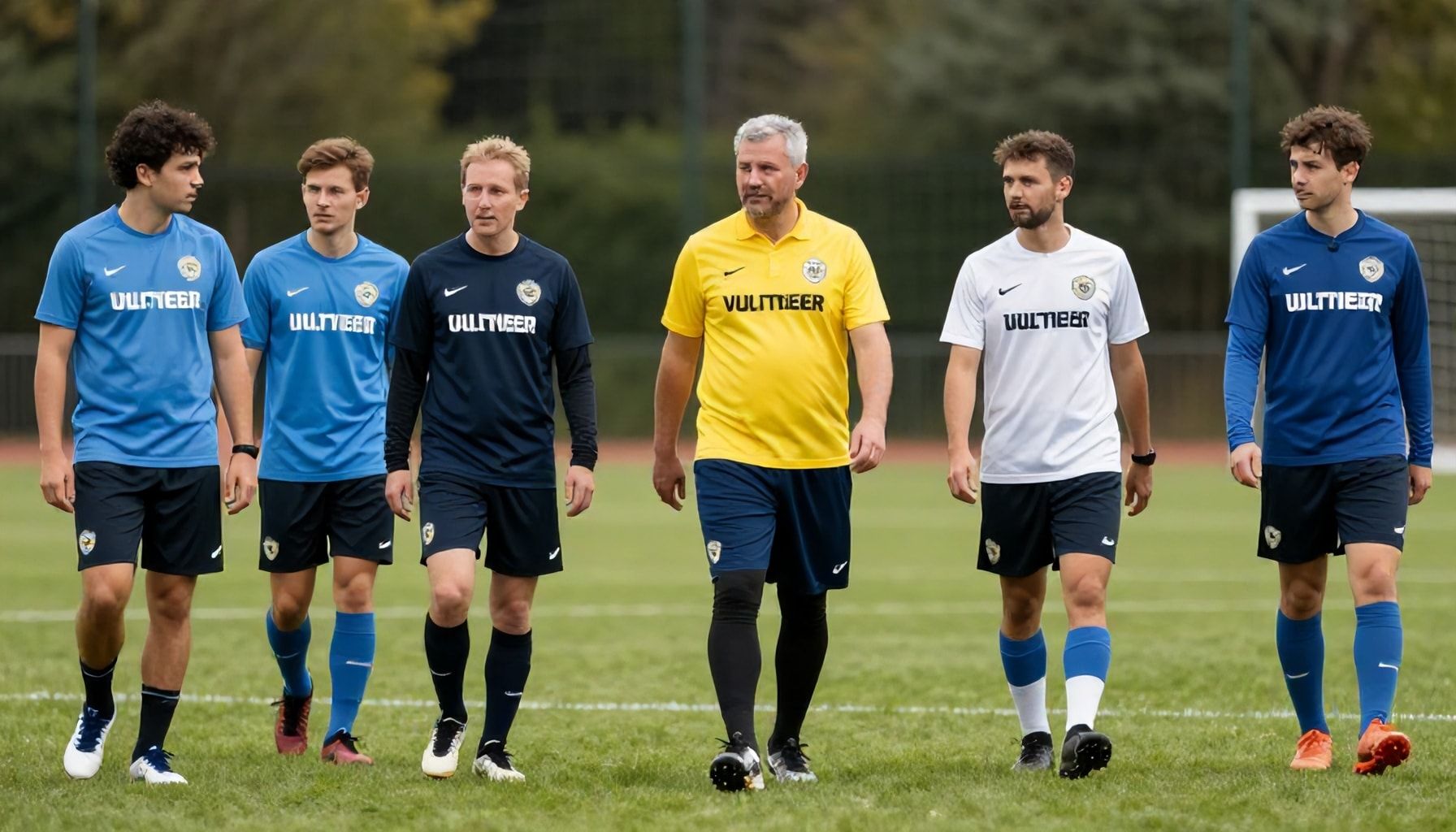
Walking football, a modified version of the game designed for older adults, is facing a critical shortage of volunteers. The sport, which has seen a surge in popularity, relies heavily on unpaid volunteers to operate clubs and organise matches. Without their dedication, the future of walking football could be at risk.
The England Football Association estimates there are over 1,000 walking football clubs nationwide. Each club requires a team of volunteers to manage operations, from coaching to administration. However, many volunteers are burning out due to the increasing demands of the role.
“Volunteers are the backbone of walking football,” said Sarah Johnson, a club coordinator in Manchester. “But the workload is becoming unsustainable. We need more people to step up and help.”
A recent survey by the Walking Football Association revealed that 65% of clubs struggle to find enough volunteers. The survey, conducted over three months, highlighted the urgent need for support. Many volunteers are older adults themselves, often with limited time and resources.
The situation is particularly acute in rural areas, where clubs face additional challenges. Transport and facility access are major hurdles, requiring extra volunteer efforts. Without local support, these clubs risk closing down.
Efforts are being made to address the crisis. The Football Association is launching a national campaign to recruit new volunteers. The campaign aims to raise awareness about the vital role volunteers play in keeping walking football alive.
Despite these initiatives, the shortage remains a pressing issue. Clubs are urging the public to consider volunteering, even if only a few hours a week. The impact of their contribution can be significant, ensuring that walking football continues to thrive.
For now, the future of walking football hangs in the balance. The sport’s growth depends on the dedication of volunteers, who are currently stretched to their limits. Without immediate action, the benefits of walking football for older adults may be lost.
Community Heroes at Risk: The Volunteer Burnout Crisis in Walking Football
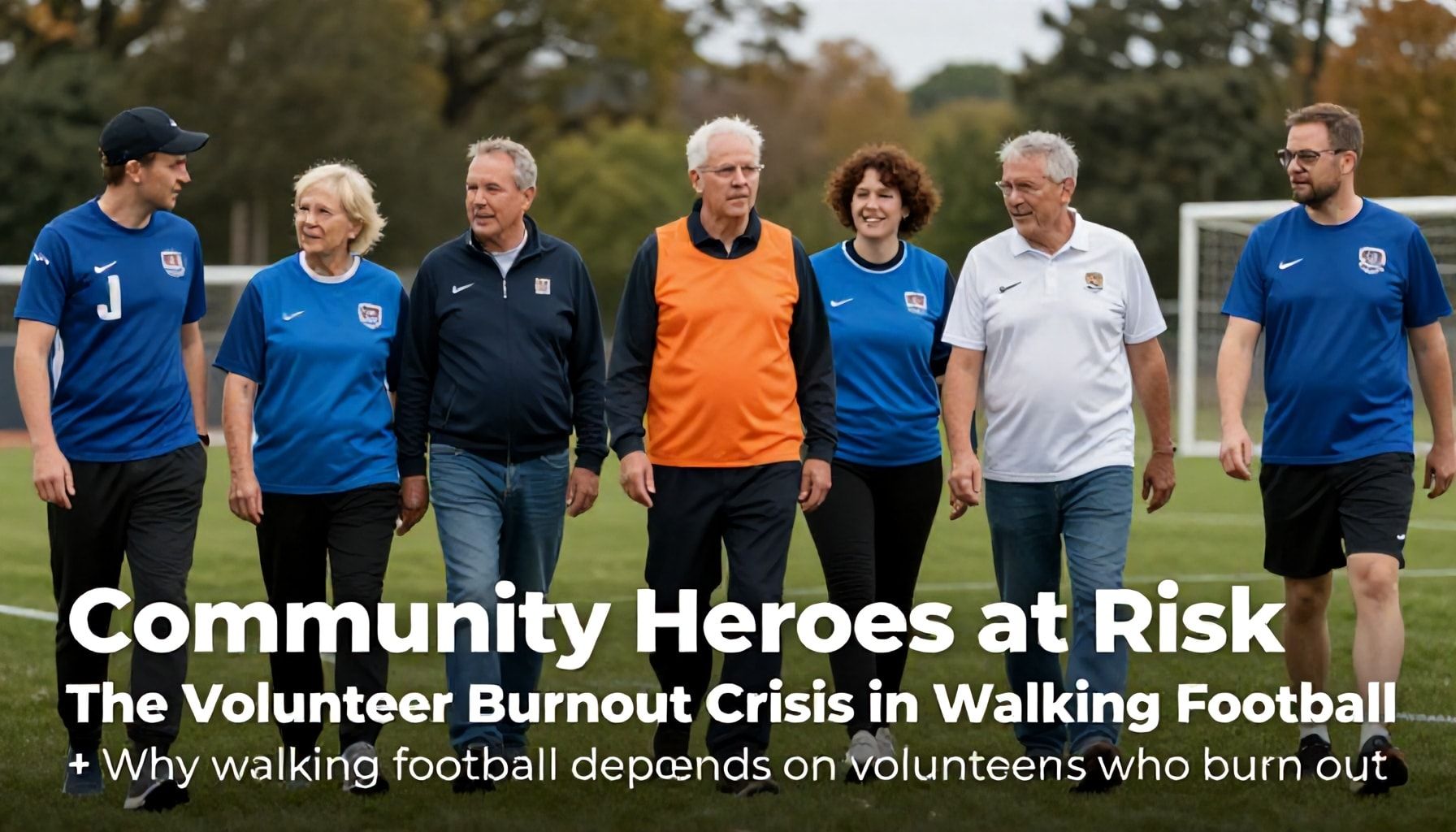
Walking football, a modified version of the game designed for older players, relies heavily on volunteers to keep leagues running. Without these dedicated individuals, the sport would struggle to maintain its current level of participation and growth.
Volunteers in walking football often take on multiple roles, from coaching to organising events and managing teams. This multifaceted involvement can lead to significant time commitments, with some volunteers dedicating 20 or more hours a week. The sheer volume of tasks can become overwhelming, leading to burnout.
A recent survey by the Walking Football Association revealed that 68% of volunteers reported feeling exhausted, while 45% considered quitting. The survey, conducted over three months and involving 500 volunteers, highlighted the pressing need for support systems. “Volunteers are the backbone of our sport, but they’re reaching breaking point,” said Sarah Johnson, the association’s spokesperson.
The burnout crisis threatens the future of walking football, as the loss of volunteers could lead to the collapse of local leagues. With over 20,000 players nationwide, the impact of volunteer attrition would be profound. Experts warn that without intervention, the sport could face a significant decline in participation.
Efforts to address the issue include mentorship programmes and better training for volunteers. The Walking Football Association is also advocating for more funding to support volunteer-led initiatives. However, the road to recovery remains challenging, with many volunteers feeling unsupported and undervalued.
The future of walking football hinges on addressing the burnout crisis among its dedicated volunteers. With many stepping back due to unsustainable workloads, the sport risks losing the very people who keep it thriving. Clubs and governing bodies must act swiftly to implement support systems, share responsibilities, and attract new volunteers to ensure the game’s continued growth and accessibility for all.
The sustainability of walking football now depends on a collective effort to value and sustain its volunteer base. Without intervention, the sport could face a decline in participation and opportunities, particularly for older adults seeking an active and social pastime. The coming months will be critical in determining whether walking football can overcome this challenge and secure its place in the sporting landscape.






