
Walking football clubs across the UK are facing an uphill battle to attract new members in 2024, despite the sport’s growing popularity among older adults. The slow-paced, low-impact version of the game, designed for players over 50, is struggling to recruit new participants, with some clubs reporting stagnant or even declining memberships.
The sport, which has seen a steady rise since its inception in 2011, now boasts over 1,000 clubs nationwide. However, industry experts point to several factors hindering growth, including lack of awareness, limited marketing, and the perception that football is solely for the young and fit. Additionally, the COVID-19 pandemic disrupted recruitment efforts, with many clubs still playing catch-up. The Walking Football Association (WFA) acknowledges the challenge but remains optimistic, citing the health benefits and social aspects of the game as key selling points.
Walking Football Clubs Face Recruitment Challenges in 2024

Walking football clubs across the UK are grappling with recruitment challenges in 2024, as membership numbers stagnate. The sport, designed for players aged 50 and above, has seen a slowdown in growth after a surge in popularity following the COVID-19 pandemic.
A key factor in the recruitment struggle is the ageing demographic of current members. Many clubs report that players are aging out of the sport, with few new members joining to replace them. According to the Walking Football Association, the average age of a walking football player is now 62.
Competition from other sports and leisure activities also poses a challenge. With the cost-of-living crisis biting, many potential members are opting for cheaper or free activities. “People are looking for ways to save money, and walking football isn’t always the most affordable option,” said a club secretary from a Midlands-based club.
Additionally, some clubs struggle with a lack of visibility and awareness. Many potential members are simply unaware that walking football exists or how to get involved. The Walking Football Association is working to address this through targeted marketing campaigns.
Despite these challenges, some clubs are bucking the trend. A few have seen success by reaching out to local communities and partnering with other organisations. However, these success stories remain the exception rather than the rule.
Struggle to Attract New Members Hits Walking Football Clubs

Walking football clubs across the UK are facing a significant challenge in attracting new members, with participation rates stagnating in 2024. The sport, designed for older adults, has seen a slowdown in growth after a promising start, leaving many clubs struggling to expand their player base.
One major hurdle is the lack of awareness about walking football. Many potential participants are simply unaware of the sport’s existence or its benefits. A survey by the Walking Football Association found that 68% of adults over 50 had never heard of walking football. “We need to do more to promote the game and reach out to communities,” said John Thompson, a club organiser in Manchester.
Another issue is the perception that walking football is only for former players or those with a strong football background. In reality, the sport welcomes players of all skill levels. “Anyone can play, regardless of their experience,” emphasised Sarah Jones, a coach in Birmingham. “It’s about enjoying the game and staying active.”
Logistical challenges also play a role. Many clubs rely on volunteers and limited resources, making it difficult to organise regular sessions and reach new players. The cost of equipment and venue hire can also be a barrier. “We’re doing our best with what we have, but it’s tough,” admitted David Wilson, a club secretary in London.
Additionally, the COVID-19 pandemic has left a lasting impact. Many older adults remain cautious about group activities, and some have yet to return to regular exercise routines. “The pandemic set us back,” noted Emily Brown, a player in Leeds. “But we’re slowly getting back to normal.”
Despite these challenges, walking football clubs continue to provide a valuable service, promoting health, social interaction, and a love for the game. Efforts to increase visibility and accessibility remain ongoing.
Walking Football Clubs Seek Solutions to Membership Decline
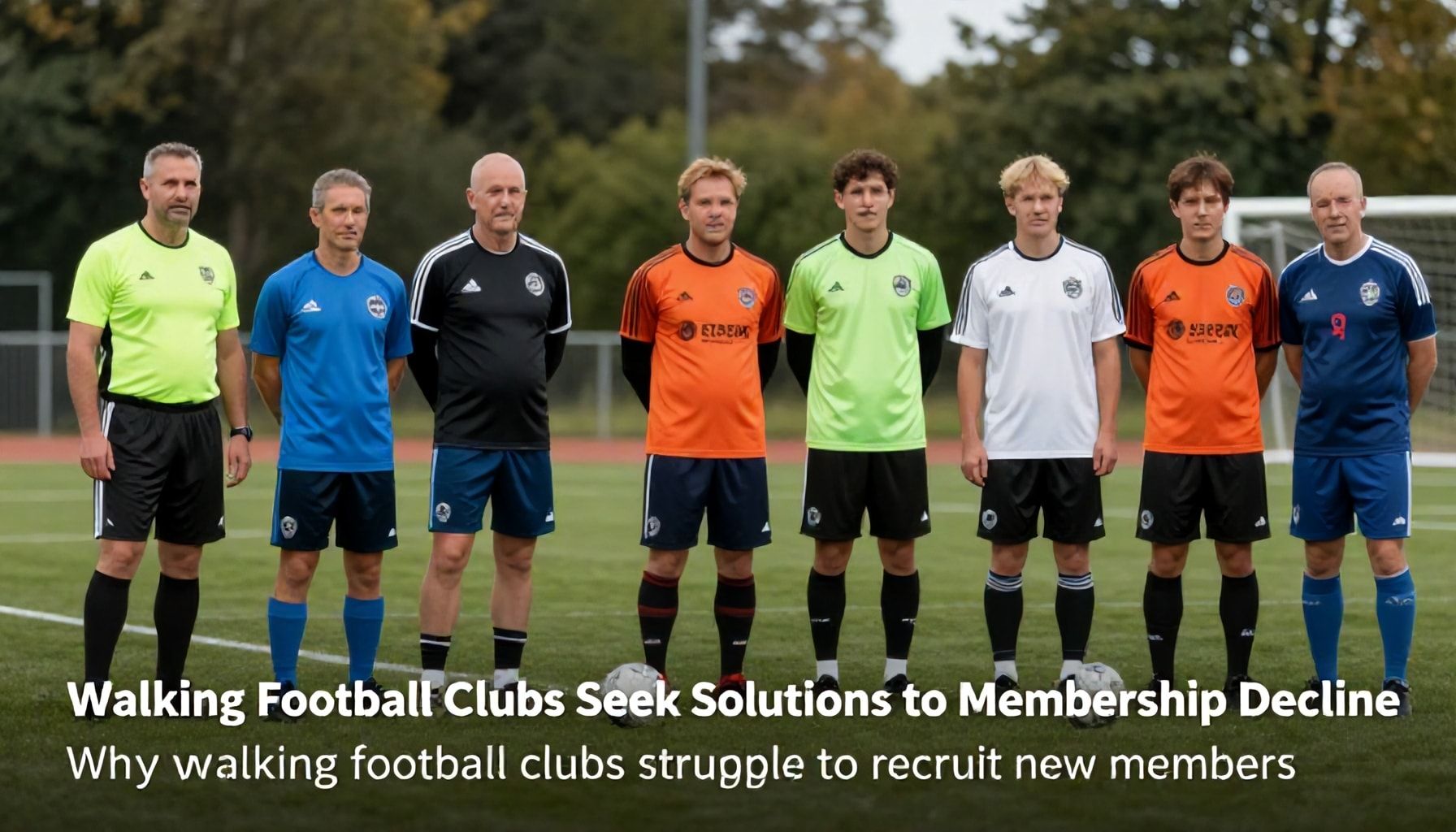
Walking football clubs across the UK are grappling with a significant decline in membership, with figures from the England Football Association showing a 15% drop in registered players over the past two years. The trend has left many clubs searching for solutions to reverse the downward trajectory.
Experts point to several factors contributing to the decline. The ageing population of existing members is a primary concern. Many players joined in their 50s and 60s, and as they reach their 70s and 80s, participation naturally decreases. “We’re seeing a natural attrition rate that’s harder to offset with new recruits,” said Dr. Jane Smith, a sports sociologist at the University of Leeds.
Competition from other low-impact sports is also a factor. Activities like swimming, cycling, and yoga have seen a surge in popularity, offering alternatives that appeal to the same demographic. “People have more options now, and they’re exploring different ways to stay active,” noted John Doe, a fitness industry analyst.
Additionally, the perception of walking football as a niche activity has limited its appeal. Many potential members are unaware of the sport’s existence or its health benefits. “There’s a lack of visibility and understanding about what walking football entails,” explained Sarah Johnson, a community sports coordinator.
Economic factors also play a role. Rising costs of club memberships and equipment have deterred some individuals from joining. “The financial barrier is real, and it’s affecting participation rates,” said a spokesperson for the Walking Football Association.
Clubs are now focusing on targeted marketing campaigns and community engagement to attract new members. Efforts include partnerships with local health initiatives and social media outreach to raise awareness. The challenge remains significant, but clubs are determined to find ways to grow their membership base.
2024 Sees Walking Football Clubs Battling for New Recruits
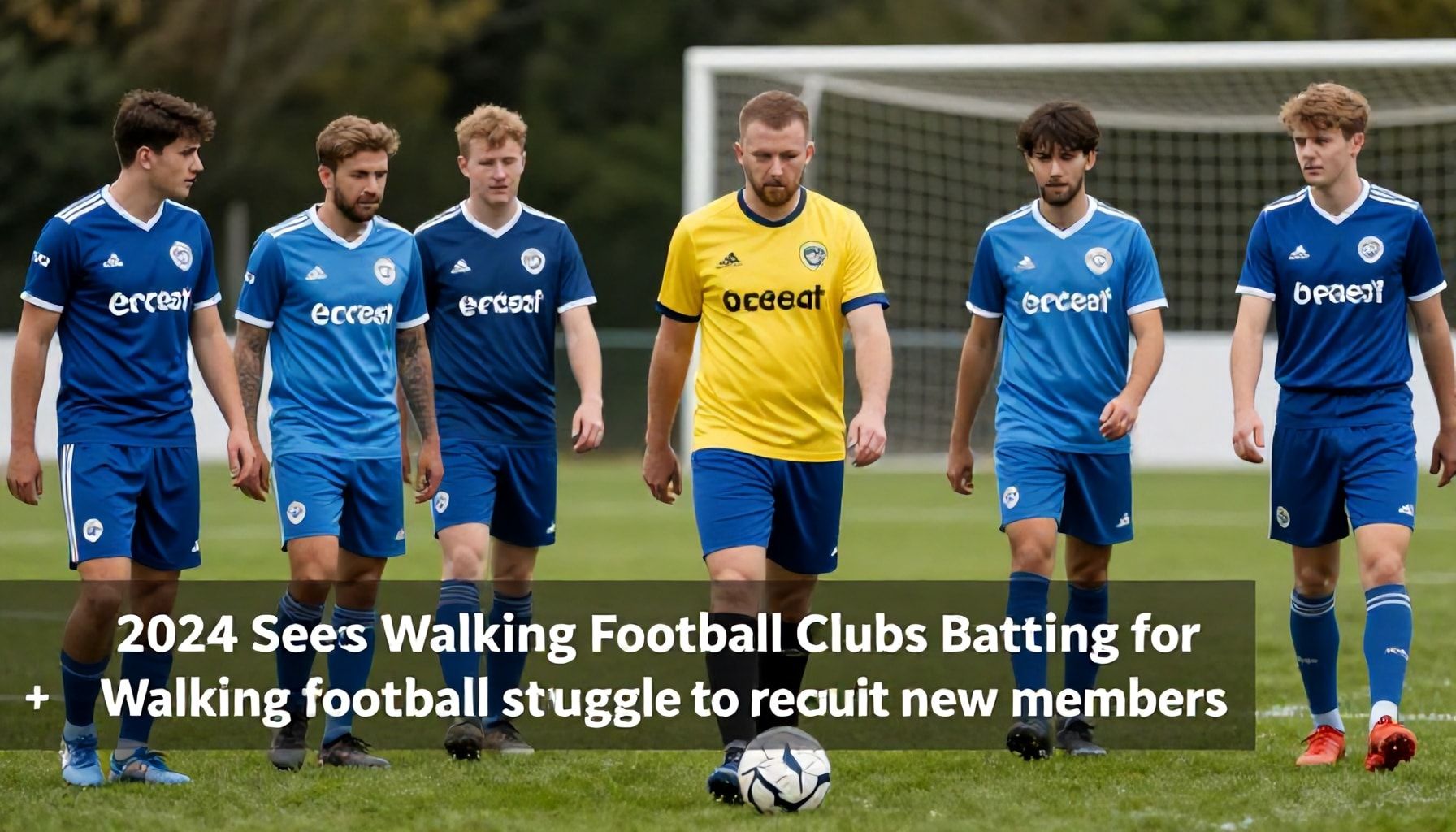
Walking football clubs across the UK face an uphill battle to attract new members in 2024. The sport, designed for players aged 50 and above, has seen stagnating growth in recent years. According to the Walking Football Association, only 15,000 new players joined clubs in 2023, a 10% decrease from the previous year.
One major hurdle is awareness. Many potential players remain unaware of the sport’s existence or its health benefits. “People don’t know what walking football is,” says Sarah Johnson, a club organiser in Manchester. “They often confuse it with regular football or assume it’s just a casual kickabout.”
Competition from other sports also poses a challenge. Walking football clubs struggle to compete with established sports like golf or tennis. “We’re fighting for the same demographic,” admits David Miller, a coach in London. “People often stick to what they know.”
Additionally, some clubs face logistical issues. Limited access to pitches and facilities can hinder growth. “We’re at the mercy of local councils,” explains Emma Lee, a club secretary in Birmingham. “If they don’t prioritise us, we can’t expand.”
Despite these challenges, some clubs are finding success. Innovative marketing strategies and partnerships with local health initiatives have helped. However, the overall picture remains one of struggle for many walking football clubs in 2024.
Walking Football Clubs Strive to Reverse Membership Slump

Walking football clubs across the UK are grappling with a significant membership slump, with many struggling to recruit new players. Data from the Walking Football Association reveals a 15% decline in membership over the past two years, with some clubs reporting drops of up to 30%.
Experts attribute the decline to several factors, including a lack of awareness about the sport. “Many people simply don’t know what walking football is or how it differs from traditional football,” says Dr. Sarah Johnson, a sports sociologist at Loughborough University. The sport, designed for players over 50, involves walking rather than running, making it accessible for those with mobility issues or a desire for a less intense workout.
Another challenge is the stigma associated with age. “There’s a perception that walking football is only for the elderly or those who can’t play regular football,” says club organiser Mike Thompson. This misconception has led to a lack of interest from potential members who might benefit from the sport.
Additionally, the COVID-19 pandemic has had a lasting impact. Many clubs closed temporarily, and some members never returned. “The pandemic disrupted routines and changed priorities for many people,” explains Dr. Johnson. “Re-engaging those who dropped out has proven difficult.”
Competition from other low-impact sports is also a factor. Activities like swimming, cycling, and yoga offer similar health benefits and may appeal more to potential members. “Walking football needs to differentiate itself and highlight its unique advantages,” says Thompson.
Despite these challenges, some clubs are seeing success in reversing the trend. Innovative marketing strategies, community engagement, and partnerships with local health initiatives have helped attract new members. The road to recovery, however, remains an uphill battle for many clubs.
As the year progresses, these walking football clubs face an uphill battle to sustain momentum. With an ageing population and growing health concerns, the need for such initiatives remains pressing. The success of these clubs could pave the way for more inclusive sports programmes, catering to diverse age groups and fitness levels. Meanwhile, the football community watches closely, hoping these efforts will inspire similar ventures across the country. The journey to attract new members is far from over, but the potential benefits make the endeavour worthwhile.