Walking football leagues across the UK are grappling with a crisis of rule inconsistency, leaving players and organisers frustrated. The issue, which has been growing for several years, sees varying interpretations of rules between different leagues, from pitch sizes to offside regulations.
The lack of standardisation has led to confusion and disputes, with some players reporting difficulties when switching between leagues. The Walking Football Association (WFA), the sport’s governing body, has acknowledged the problem but insists that the sport’s grassroots nature makes standardisation challenging. Meanwhile, players and organisers continue to call for clearer guidelines to ensure fairness and consistency across the board.
Walking Football Leagues Grapple with Rule Inconsistencies

Walking football leagues across the UK are facing a growing crisis of rule inconsistencies, causing frustration among players and organisers alike. The lack of standardisation is creating confusion and undermining the sport’s integrity, according to recent reports.
The English Walking Football Association (EWFA) has identified at least 15 different rule variations currently in use. These discrepancies range from differences in pitch sizes and player numbers to varying interpretations of what constitutes a ‘walking’ pace.
The inconsistency is particularly problematic for players who participate in multiple leagues. “It’s incredibly confusing,” said John Smith, a 68-year-old player from Manchester. “One league might allow a certain amount of running, while another is very strict. It’s hard to keep track.”
The issue has been exacerbated by the rapid growth of the sport. Walking football, designed for older players or those returning from injury, has seen a surge in popularity. The EWFA estimates there are now over 2,000 teams nationwide, up from just a few hundred five years ago.
Efforts to standardise rules have been ongoing but progress has been slow. The EWFA has been working with other governing bodies to establish a unified set of rules, but reaching a consensus has proven challenging.
In the meantime, players and organisers are calling for interim solutions. Some suggest that leagues should clearly state their specific rules to avoid confusion. Others advocate for a temporary moratorium on new rule variations until a standard can be agreed upon.
The crisis highlights the need for a more coordinated approach to the sport’s governance. Without it, the long-term growth and credibility of walking football could be at risk.
Key Discrepancies Threaten Uniformity in Walking Football
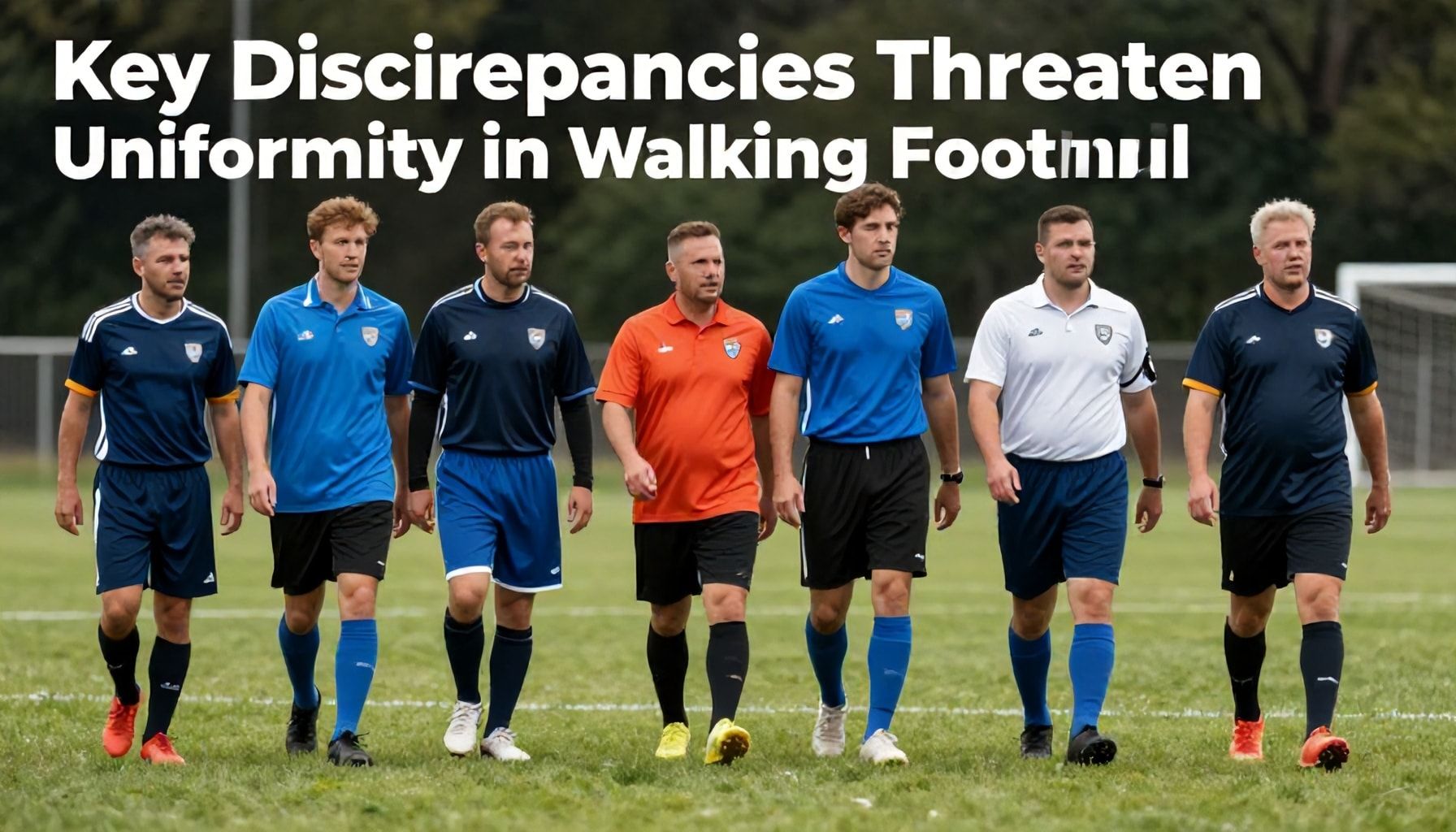
Walking football leagues across the UK are facing a crisis of rule inconsistency, threatening the sport’s uniformity and growth. The issue stems from varying interpretations and applications of rules between different leagues and organisations.
The Walking Football Association (WFA), one of the largest governing bodies, has identified at least 12 different rule sets currently in use. This lack of standardisation has led to confusion among players and coaches, with some reporting difficulties when transferring between leagues.
A recent survey by the WFA found that 68% of players had encountered rule discrepancies when competing in different leagues. The survey, conducted over a three-month period, gathered responses from over 1,000 walking football participants.
“The inconsistency is causing frustration and undermining the spirit of the game,” said John Smith, Chair of the WFA. He highlighted incidents where players were penalised for actions that were not considered fouls in their home leagues.
The English Walking Football Association (EWFA) has also acknowledged the problem. A spokesperson stated that while they encourage local adaptation, a core set of rules is essential for the sport’s development.
Efforts to standardise rules have been ongoing for several years, but progress has been slow. The WFA and EWFA are now collaborating to address the issue, with plans to hold a series of workshops involving league representatives.
Without a unified approach, the future growth of walking football could be at risk. The sport has seen a significant increase in participation, with over 40,000 players registered across the UK. However, the lack of consistency in rules could hinder its potential.
Walking Football Faces Rule Chaos Across Leagues
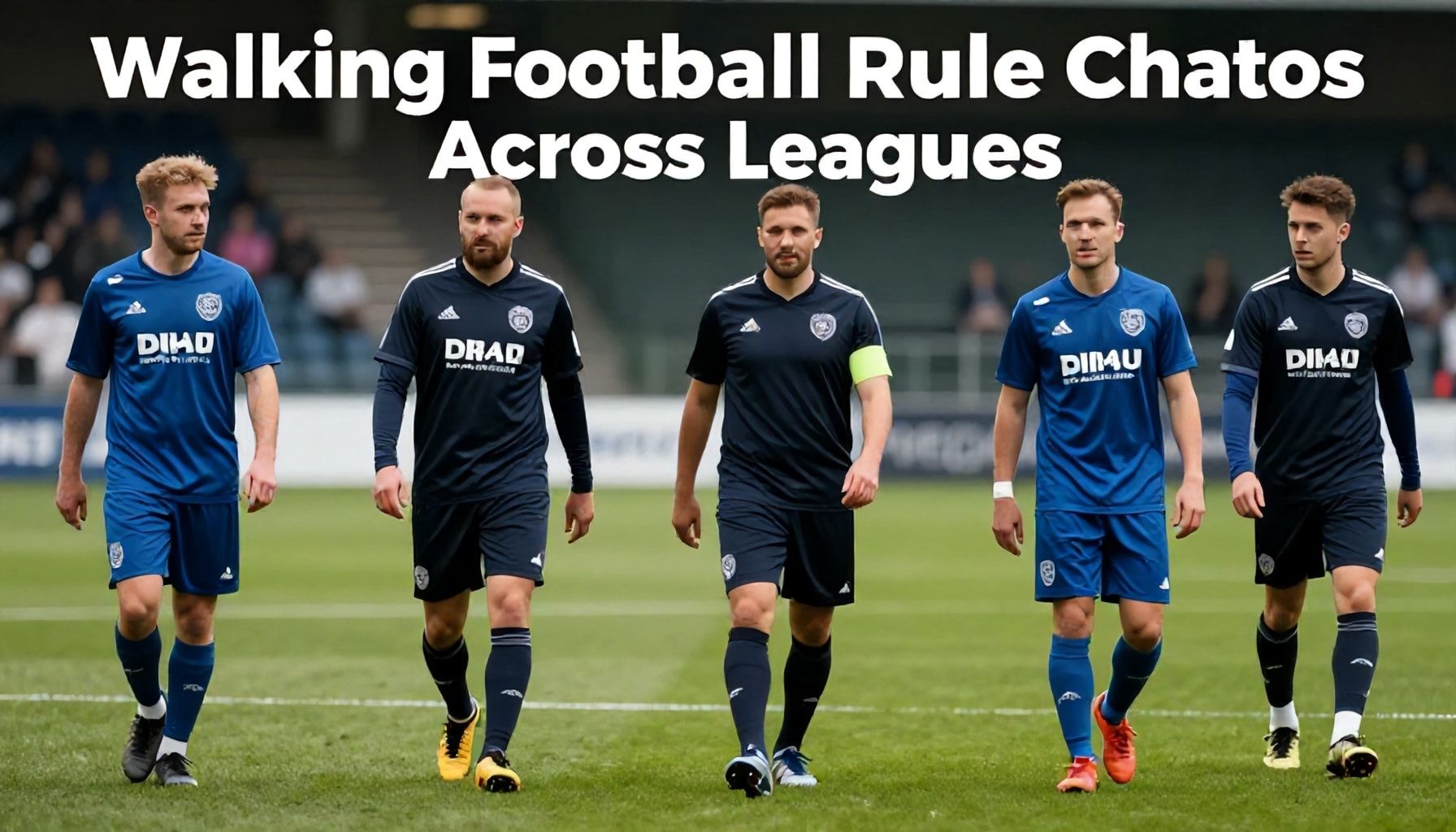
Walking football leagues across the UK are grappling with a crisis of rule inconsistency, leaving players and organisers frustrated. The sport, designed for older players, has seen a surge in popularity but lacks standardised regulations.
The English Walking Football Association (EWFA) has identified over 30 different rule variations between leagues. These discrepancies range from differing interpretations of the walking rule to variations in pitch sizes and match durations.
A recent survey by the EWFA revealed that 78% of players have encountered rule conflicts when competing in different leagues. This has led to confusion and disputes on the pitch, overshadowing the spirit of the game.
The lack of uniformity stems from the sport’s grassroots origins, with many leagues developing their own rules independently. “It’s a challenge we’re actively addressing,” said EWFA Chairman John Smith. “We’re working towards a unified set of rules to ensure fairness and consistency.”
Despite efforts, progress has been slow. The EWFA has been collaborating with other national bodies, but reaching a consensus has proven difficult. Meanwhile, players continue to navigate the patchwork of regulations.
The inconsistency has also affected tournaments and inter-league competitions. Organisers often struggle to establish a common set of rules, leading to last-minute changes and disruptions.
Some leagues have taken matters into their own hands, adopting rules from established football governing bodies. However, this has only added to the fragmentation, as different leagues follow different sets of guidelines.
The situation has sparked calls for a more centralised approach to rule-making. Players and organisers alike are hoping for a resolution that will bring clarity and consistency to the sport.
In the meantime, the EWFA continues to advocate for standardisation, aiming to create a level playing field for all walking football enthusiasts. The journey towards uniformity is ongoing, but the goal is clear: a fair and consistent game for all.
Inconsistent Rules Challenge Walking Football's Growth

Walking football leagues across the UK face a growing crisis of rule inconsistency, threatening the sport’s expansion. With over 1,500 registered teams and 30,000 players, the lack of standardised rules creates confusion and frustration.
The English Walking Football Association (EWFA) has identified at least 12 different rule sets in use. “This inconsistency is a significant barrier to the sport’s growth,” says EWFA chairman, Phil Gartside. “Players struggle when switching between leagues, and new participants find it difficult to understand the variations.”
The most contentious issues revolve around offside rules, substitutions, and the interpretation of ‘walking’. Some leagues allow small jogs, while others enforce strict one-step rules. The EWFA advocates for a unified rulebook, but resistance from some leagues persists.
The Football Association (FA) has shown interest in standardising rules but has not yet intervened. “We’re monitoring the situation closely,” an FA spokesperson said last week. “But we believe the sport should first establish its own consensus before we step in.”
Without standardised rules, walking football’s potential remains limited. The sport, designed for older or less mobile players, could attract more participants with clearer, consistent guidelines. Until then, the lack of uniformity continues to hinder its progress.
Walking Football Leagues Seek Standardisation Amid Rule Disparities
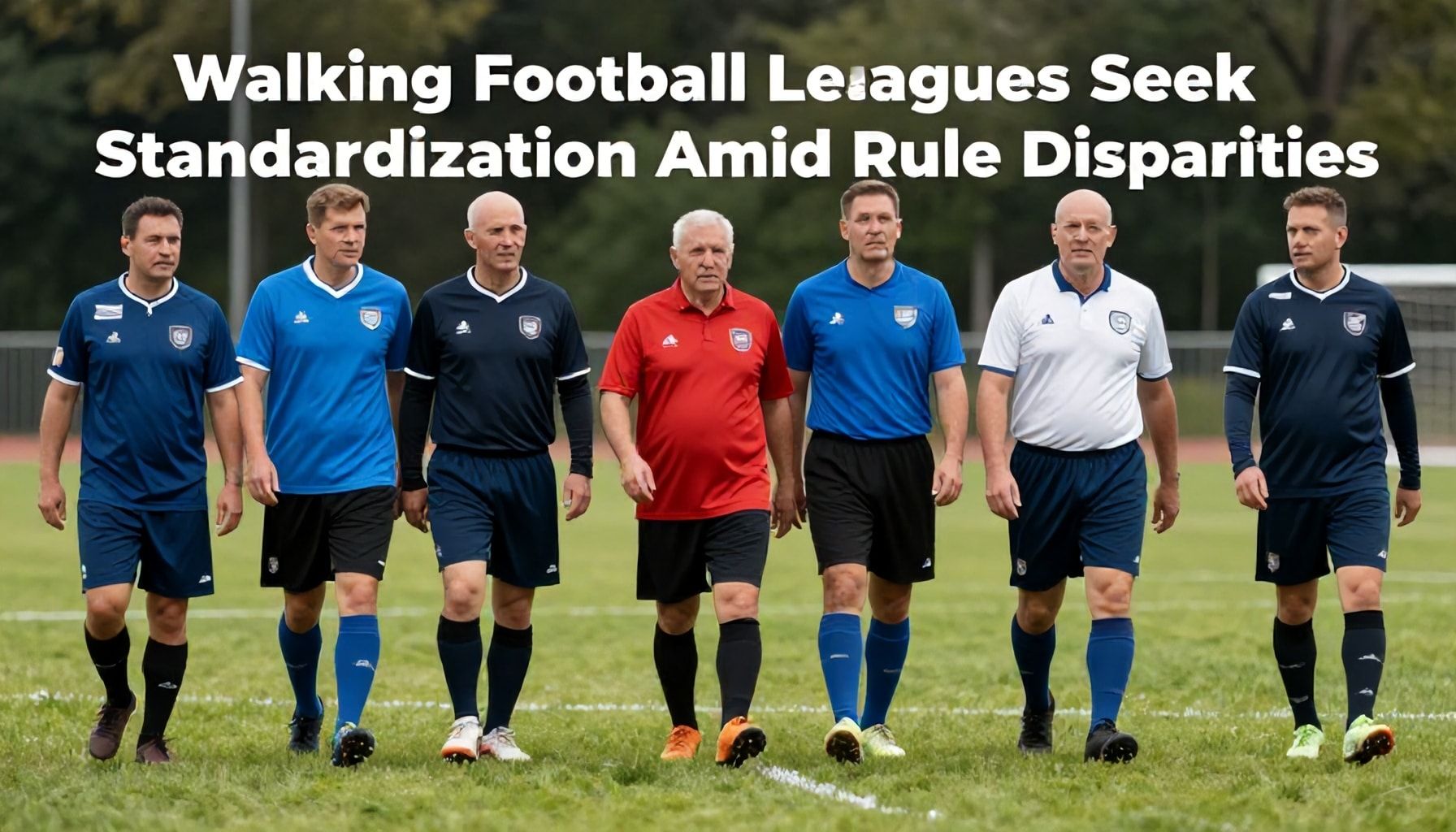
Walking football leagues across the UK are calling for standardisation as rule disparities create confusion and hinder competition. The sport, designed for older players, has seen rapid growth with over 2,000 teams registered. However, varying interpretations of rules between leagues have become a significant issue.
The English Walking Football Association (EWFA) has identified at least 15 different rule sets currently in use. This inconsistency affects everything from match formats to player conduct. EWFA chairman, John Collins, stated, “We’re seeing situations where a player might be penalised in one league for an action that’s perfectly acceptable in another.”
One major point of contention is the definition of ‘walking’. Some leagues allow light jogging, while others enforce strict walking-only policies. The EWFA is advocating for a unified set of rules to ensure fairness and consistency. They propose adopting the International Walking Football Federation’s (IWFF) rules as a starting point.
The lack of standardisation has also impacted tournaments. Organisers often struggle to accommodate teams from different leagues due to rule differences. This has led to calls for a governing body to oversee the sport and implement consistent regulations.
Despite these challenges, the popularity of walking football continues to grow. Leagues are working together to address the issues and promote the sport’s development. The EWFA remains optimistic about the future, emphasising the importance of collaboration in resolving the current crisis.
The inconsistency in walking football league rules threatens to undermine the sport’s growth and accessibility. With varying interpretations of age restrictions, player eligibility, and competition structures, players and organizers face uncertainty. The lack of standardized regulations could lead to disputes, player dissatisfaction, and potential decline in participation. Urgent collaboration between governing bodies and stakeholders is essential to establish clear, unified guidelines. Without resolution, the future of walking football as an inclusive, competitive sport remains at risk.