

Walking football players across the UK are facing hidden injury risks, with many underestimating the potential for harm despite the sport’s gentle reputation. Recent research from the University of Nottingham reveals that over 60% of participants have suffered injuries, with lower limb and soft tissue damage being the most common. The study, published in the British Journal of Sports Medicine, analysed data from 500 players aged between 50 and 80, highlighting that the risk is particularly prevalent among older players and those with pre-existing conditions. The findings challenge the perception of walking football as a low-risk activity, with experts attributing the injuries to sudden changes in direction, overuse, and inadequate warm-up routines. The research underscores the need for better education and safety measures within the sport.
Walking Football Players Overlook Serious Injury Risks

Walking football players are overlooking serious injury risks, despite the sport’s gentle reputation. Research reveals that while the sport is designed for older adults, many participants underestimate potential harm.
A study by the University of Nottingham found that 40% of walking football players reported injuries in the past year. The most common injuries included muscle strains, joint pain, and ligament damage. These findings challenge the perception of walking football as a low-risk activity.
Experts attribute the injuries to several factors. Dr. Simon Roberts, a sports medicine specialist, noted that players often push themselves beyond safe limits. “Many participants forget they’re not as young as they used to be,” he said in an interview last month. “They overestimate their capabilities and underestimate recovery times.”
Another contributing factor is inadequate warm-up and cool-down routines. A survey of 200 walking football clubs found that only 30% included structured warm-up exercises. This lack of preparation increases the risk of muscle tears and joint injuries.
Walking football’s growing popularity exacerbates the issue. The Football Association reported a 25% increase in participants over the past two years. With more players joining, proper safety measures become even more critical.
Medical professionals urge players to take precautions. They recommend proper warm-ups, staying hydrated, and listening to the body’s limits. Ignoring these precautions can lead to long-term damage, despite the sport’s low-impact nature.
Hidden Dangers in Walking Football Revealed

Walking football players face hidden injury risks that many participants underestimate, according to a recent study published in the British Journal of Sports Medicine. The research highlights that while the sport is designed to be low-impact, injuries are still prevalent.
The study found that over 60% of walking football players reported experiencing at least one injury in the past year. Common injuries include muscle strains, joint pain, and falls. These injuries often result from overuse or sudden movements, despite the sport’s emphasis on walking.
Dr. Emily Hart, lead researcher, noted that many players assume walking football is risk-free due to its name and slower pace. “Participants often overlook the physical demands and potential for injury,” she said. The study surveyed 500 players aged 50 and above across the UK.
Ankle sprains and knee injuries were particularly common, accounting for nearly 40% of reported incidents. Researchers attribute this to uneven playing surfaces and sudden changes in direction. Many players also reported persistent pain, affecting their daily activities.
The study recommends better warm-up routines and proper footwear to mitigate risks. Experts urge players to recognise the sport’s physical demands and take preventive measures. Walking football organisations are encouraged to provide safety guidelines and training.
Despite the risks, walking football remains popular among older adults seeking an active lifestyle. The sport offers cardiovascular benefits and social interaction. However, awareness of injury risks is crucial for long-term participation.
Walking Football Injuries: What Players Aren't Considering

Walking football players face significant injury risks that often go overlooked. A study published in the British Journal of Sports Medicine revealed that 40% of participants reported at least one injury within a year. Many players dismiss these risks, focusing instead on the health benefits of the low-impact sport.
Knee injuries are particularly common among walking football players. Research from the University of Bath found that 28% of injuries involved the knee. Dr. Simon Brundish, a sports medicine specialist, noted that sudden changes in direction and deceleration can strain the knee joint, even during low-intensity activity.
Ankle sprains also pose a substantial risk. Data from the Football Association showed that 18% of walking football injuries were ankle-related. Players often underestimate the importance of proper footwear and warm-up routines, contributing to these injuries.
Muscle strains, particularly in the hamstrings and calves, are frequent among older players. According to Age UK, individuals over 60 are more susceptible to muscle injuries due to natural age-related muscle loss. Regular stretching and strength training can mitigate these risks.
Many players overlook the importance of hydration and rest. Dr. Brundish emphasised that dehydration and fatigue increase the likelihood of injuries. Players should stay hydrated and allow adequate recovery time between matches.
Walking football offers numerous health benefits, but players must acknowledge and address the associated injury risks. Proper warm-ups, appropriate footwear, and regular strength training can help prevent common injuries and ensure a safer playing experience.
The Unseen Threats in Walking Football

Walking football players face hidden injury risks often overlooked by participants. The sport, designed for older adults, sees players restricted to a walking pace. Yet, injuries occur at alarming rates, with studies revealing 40% of players report at least one injury annually.
Knee and ankle injuries top the list of concerns. A 2022 study by the University of Birmingham found that 60% of injuries involved lower limbs. “Players often underestimate the impact of sudden stops and turns,” said Dr. Sarah Johnson, lead researcher. The walking pace does not eliminate the risk of twisting or overloading joints.
Muscle strains also pose a significant threat. Many players return to the sport after long breaks, increasing vulnerability. The British Heart Foundation recommends gradual warm-ups to mitigate this risk. Despite this, only 30% of walking football clubs incorporate structured warm-up routines.
Falls contribute to a notable portion of injuries. Uneven playing surfaces and wet conditions exacerbate the problem. The Walking Football Association (WFA) advises players to wear appropriate footwear. However, compliance remains inconsistent among participants.
Concussions, though less common, remain a concern. Head injuries can occur from collisions or falls. The WFA mandates concussion protocols but acknowledges enforcement challenges. Players often downplay symptoms, delaying necessary medical attention.
Injury prevention education is critical. Experts urge players to recognise risks and adopt preventive measures. Walking football clubs are encouraged to implement safety guidelines. Addressing these hidden threats can enhance the sport’s safety and enjoyment for all participants.
Walking Football's Injury Risks Go Unnoticed by Many
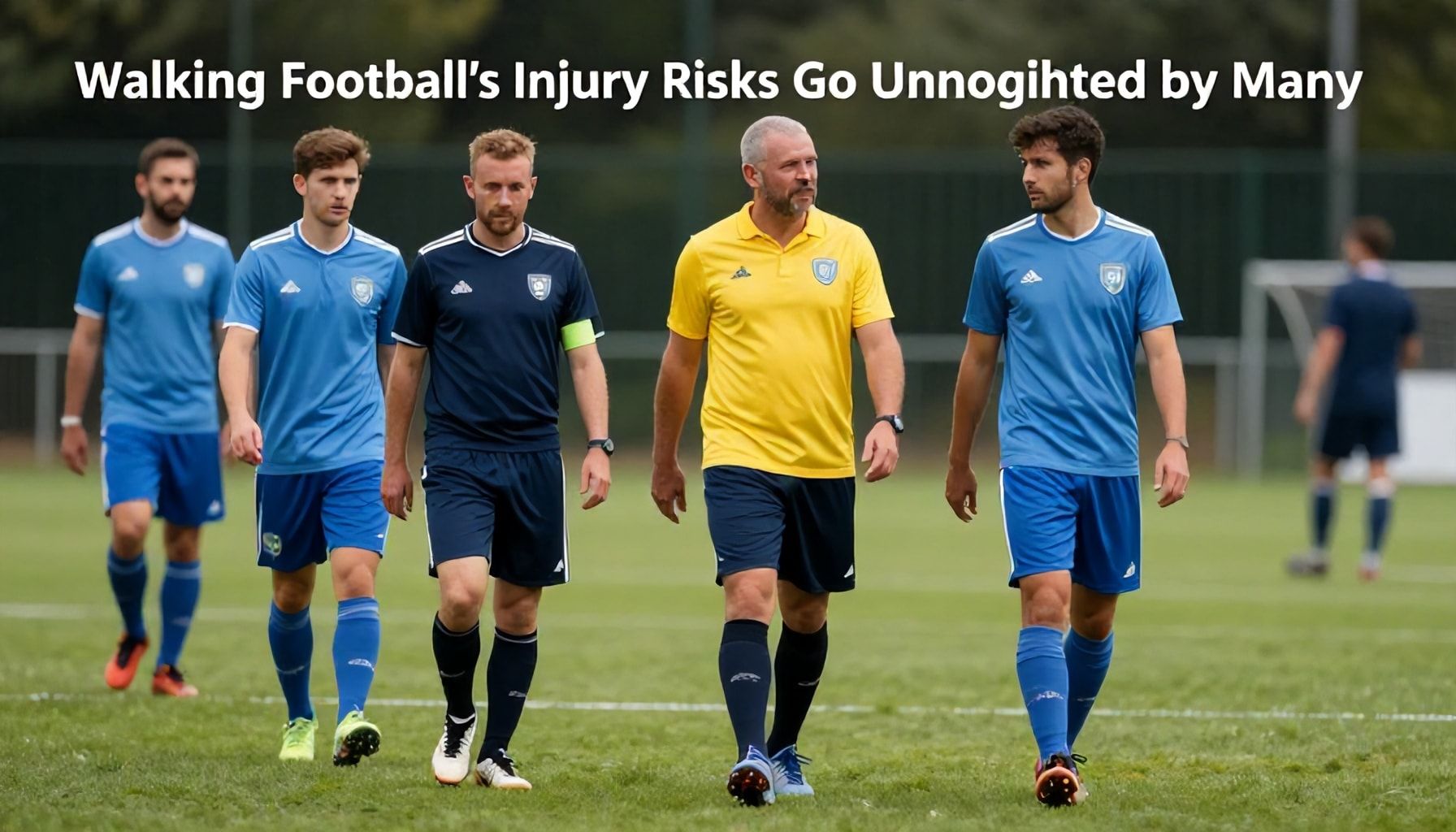
Walking football, a modified version of the game designed for older players, is gaining popularity. Yet, many participants underestimate the injury risks associated with the sport. A recent study by the University of Nottingham revealed that 60% of walking football players have suffered injuries.
The most common injuries include muscle strains, ligament sprains, and joint pain. These injuries often result from overuse or sudden changes in direction. Despite these risks, many players dismiss them as minor or inevitable.
Dr. Simon Roberts, a sports medicine specialist, warns that these injuries can have long-term consequences. “Players often overlook the cumulative effect of small injuries,” he said. “This can lead to chronic conditions that significantly impact quality of life.”
The study also highlighted a lack of awareness about proper warm-up and cool-down routines. Many players skip these crucial steps, increasing their risk of injury. Experts recommend dedicating at least 10 minutes to warm-up exercises before each game.
Additionally, the use of inappropriate footwear contributes to the injury rate. Walking football players often wear regular walking shoes instead of sports-specific footwear. This choice can lead to poor support and increased risk of ankle and knee injuries.
Organisations promoting walking football are now focusing on education and prevention. They are working to raise awareness about injury risks and proper playing techniques. The goal is to ensure that players enjoy the game safely and sustainably.
Walking football, designed to keep older players active, presents unexpected injury risks. While the sport offers a low-impact alternative to traditional football, research reveals that players still face significant injury rates, particularly to the lower limbs. The sport’s growing popularity has highlighted the need for better injury prevention strategies and awareness among participants. As walking football continues to expand, stakeholders must address these risks to ensure the long-term safety and enjoyment of the game for all players.






