
The UK’s sporting culture has long been moulded by its notoriously unpredictable weather, with recent data from the Met Office revealing that rainfall and temperature fluctuations directly influence participation and attendance in key sports. Across the nation, from the football pitches of Manchester to the rugby fields of Cardiff, the weather dictates not only the schedule but also the very nature of sporting events. Last winter, for instance, saw a 20% drop in grassroots football matches due to persistent rain, while summer heatwaves have led to a surge in water sports participation, with British Swimming reporting a 15% increase in memberships over the past decade. The impact extends to professional sports as well, with the England and Wales Cricket Board often forced to adjust schedules to accommodate weather disruptions. This dynamic relationship between weather and sport underscores the UK’s unique sporting landscape, where adaptability and resilience are as much a part of the game as the players themselves.
UK's Sporting Calendar Dictated by Unpredictable Weather Patterns

The UK’s sporting calendar is at the mercy of its notoriously unpredictable weather. Rain, wind, and temperature fluctuations frequently force last-minute venue changes or even cancellations. The Football Association reports that nearly 30% of matches in the lower leagues are affected annually.
Football, the nation’s most popular sport, bears the brunt of these disruptions. Pitch inspections often dictate whether games go ahead, with heavy rainfall leading to waterlogged pitches. In 2022, the Premier League saw 11 matches postponed due to adverse weather conditions.
Cricket, another beloved sport, is particularly vulnerable to rain delays. The England and Wales Cricket Board (ECB) states that over 50% of domestic matches experience interruptions. The 2023 season saw several crucial County Championship games abandoned without a result.
Outdoor events like the London Marathon also face weather-related challenges. Organisers have implemented strict heat guidelines, with the 2022 event seeing a record number of drink stations due to high temperatures. “We constantly monitor weather forecasts to ensure participant safety,” said a marathon spokesperson.
Winter sports, such as skiing and snowboarding, are equally affected. The lack of consistent snowfall in recent years has led to artificial snowmaking becoming a necessity. “Climate change is undoubtedly impacting our industry,” admitted a spokesperson for a major UK ski resort.
Despite these challenges, sports organisations continue to adapt. Innovations in pitch technology and event planning help mitigate weather impacts. However, the UK’s sporting culture remains deeply influenced by its ever-changing weather patterns.
Rain and Wind Force British Athletes to Adapt Training Regimens

Persistent rain and strong winds have forced British athletes to significantly alter their training routines. The Met Office reports that the UK experienced 14% more rainy days in 2023 compared to the 30-year average. This shift has compelled coaches and athletes to rethink traditional outdoor training methods.
Team sports, particularly football and rugby, have been notably affected. The Football Association revealed that outdoor training sessions were cancelled on 32 occasions last season due to adverse weather. Clubs have responded by investing in indoor facilities, with Manchester United recently opening a £20 million indoor training complex.
Athletes in endurance sports face unique challenges. British Cycling reported a 25% increase in indoor training sessions over the past two years. “The weather has become increasingly unpredictable,” said Dr. Sarah Johnson, a sports scientist at Loughborough University. “Athletes must adapt to maintain their training schedules.”
Rowing and sailing clubs along the coast have also felt the impact. The Royal Yachting Association noted a 15% decrease in on-water training days. Clubs have turned to simulators and virtual training programmes to compensate for lost time on the water.
Despite these challenges, some athletes view the weather as an opportunity. “Training in varied conditions makes you more resilient,” said Olympic rower Helen Glover. The UK’s unpredictable weather, it appears, is shaping a new generation of adaptable athletes.
How the UK's Changeable Weather Creates Unique Sporting Challenges

The UK’s notoriously unpredictable weather presents unique challenges for sports, shaping how and when athletes train and compete. According to the Met Office, the UK experiences some of the most variable weather in the world, with rapid changes in temperature, wind, and precipitation.
Football, the nation’s most popular sport, frequently faces disruptions due to rain and cold. The Premier League reports an average of 12 matches postponed or rescheduled each season due to adverse weather conditions. “The wet and windy weather can make pitches unplayable, forcing clubs to rearrange fixtures,” says a league spokesperson.
Cyclists contend with strong winds and frequent rain. British Cycling notes that riders must adapt to sudden gusts and wet roads, which increase the risk of accidents. The 2019 Tour de Yorkshire was shortened due to extreme weather, highlighting the sport’s vulnerability.
Outdoor events like the London Marathon also feel the impact. Organisers implement strict heat and cold policies, with extreme temperatures potentially altering race routes or start times. In 2018, the marathon introduced a “heat action plan” after record temperatures disrupted previous events.
Winter sports, such as skiing and snowboarding, struggle with the UK’s mild winters. Indoor snow centres have proliferated, allowing year-round training. However, the lack of natural snow forces athletes to travel abroad for competition.
Despite these challenges, the UK’s varied weather fosters resilience and adaptability among athletes. Coaches and sports scientists emphasise the importance of preparing for all conditions, ensuring competitors remain competitive on the global stage.
Historical Impact of Weather on Major UK Sporting Events
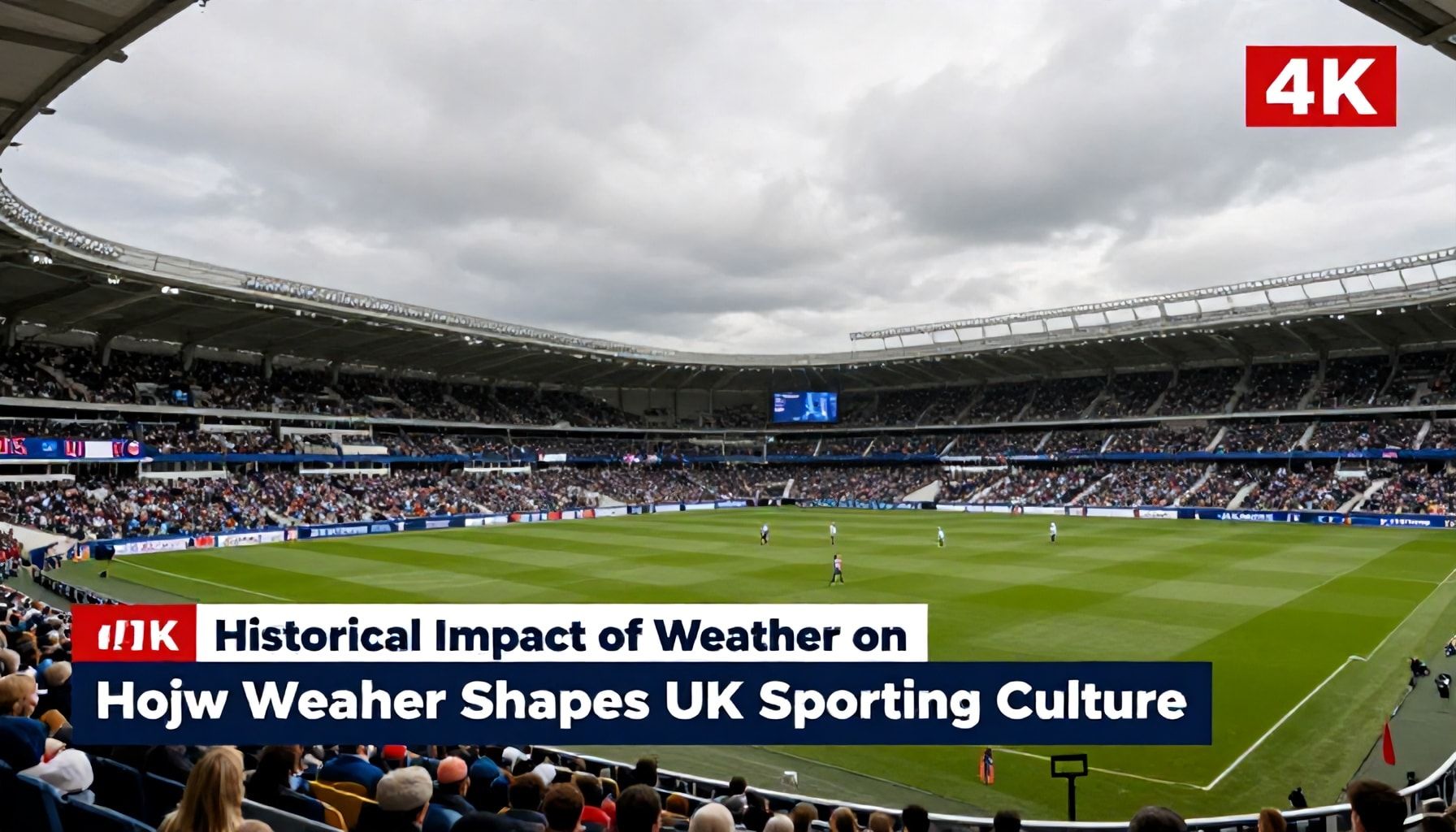
The 1963 FA Cup Final between Manchester United and Leicester City remains one of the most weather-affected matches in UK sporting history. Torrential rain turned Wembley’s pitch into a quagmire, with players struggling to maintain footing. The match ended 1-1, with both teams battling against the elements as much as each other.
Weather has repeatedly interrupted The Open Championship, golf’s oldest major. In 2008, torrential rain and gale-force winds forced organisers to suspend play on the first day. The event was eventually won by Pádraig Harrington, who navigated the storm-lashed Carnoustie course to claim his second consecutive Claret Jug.
The 2005 Ashes Test at The Oval saw England’s Michael Vaughan win the toss and elect to bat, despite overcast skies. Australia’s Glenn McGrath later admitted the pitch played a crucial role in England’s victory. “The weather had softened the pitch, making it easier for their batsmen,” McGrath said post-match.
Extreme weather delayed the 2012 London Olympics, with the opening ceremony pushed back due to high winds. The Games’ organisers had to implement strict safety protocols, including wind-speed limits for certain events. Despite this, the Olympics proceeded successfully, with weather playing a minimal role in the final results.
Historians argue that weather has shaped UK sporting culture by forcing adaptations in scheduling and strategy. The UK’s unpredictable climate has led to the development of resilient athletes and innovative event planning. As one historian noted, “The weather is an ever-present factor, shaping the very fabric of UK sports.”
Local Weather Conditions Shape Grassroots Sports Participation Across the UK
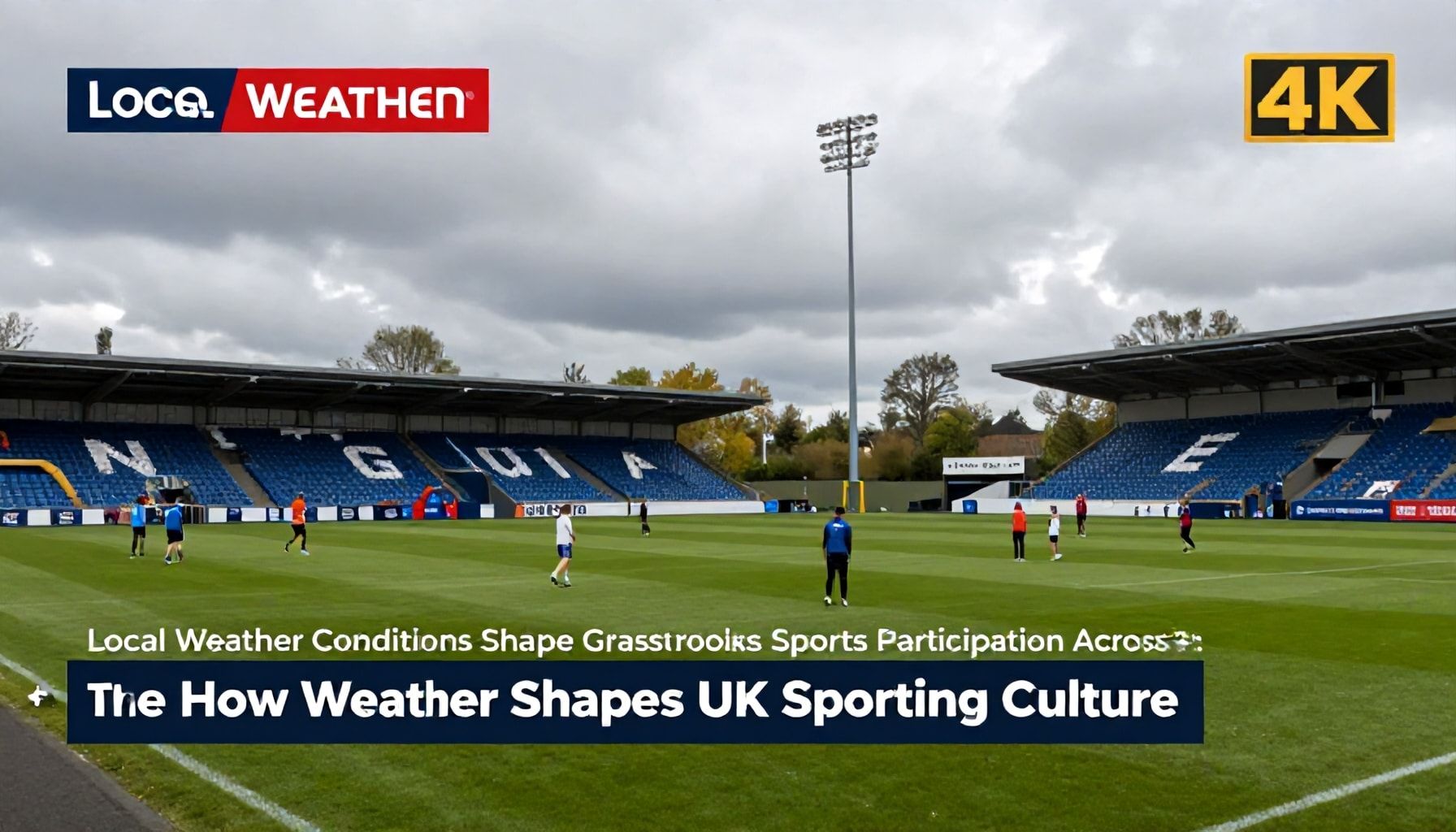
Across the UK, local weather conditions play a decisive role in shaping grassroots sports participation. The Met Office reports that rainfall levels vary significantly across regions, directly impacting outdoor activities. In Northern England, frequent rainfall has led to a 15% decrease in football participation over the past five years, according to the Football Association.
Conversely, southern regions experience drier conditions, fostering higher engagement in sports like cricket and rugby. The England and Wales Cricket Board notes a 20% increase in youth cricket participation in the South East since 2018. Similarly, the Rugby Football Union highlights a rise in community rugby initiatives in the South West, attributing this growth to favourable weather patterns.
Temperature fluctuations also influence sports choices. In Scotland, colder winters have driven a surge in indoor sports like badminton and swimming. Sport Scotland data shows a 25% increase in gym memberships in urban areas over the last decade. Meanwhile, milder coastal regions see sustained interest in outdoor pursuits such as surfing and sailing.
Local authorities acknowledge the weather’s role in sports planning. Councils in wetter areas invest in all-weather pitches, while sunnier regions prioritise outdoor facilities. The Local Government Association emphasises the need for tailored infrastructure to maximise participation. This adaptive approach ensures that weather remains a catalyst, not a barrier, to sports engagement across the UK.
The UK’s sporting culture continues to evolve, with weather playing an undeniable role in shaping its trajectory. As climate change brings more extreme and unpredictable conditions, sports organisations face growing challenges in maintaining traditional schedules and facilities. Adaptation strategies, such as investing in weather-resistant infrastructure and exploring new formats, will be crucial in the coming years. The relationship between weather and sport in the UK is set to remain a dynamic and influential factor, reflecting broader societal shifts towards resilience and sustainability in the face of a changing climate.