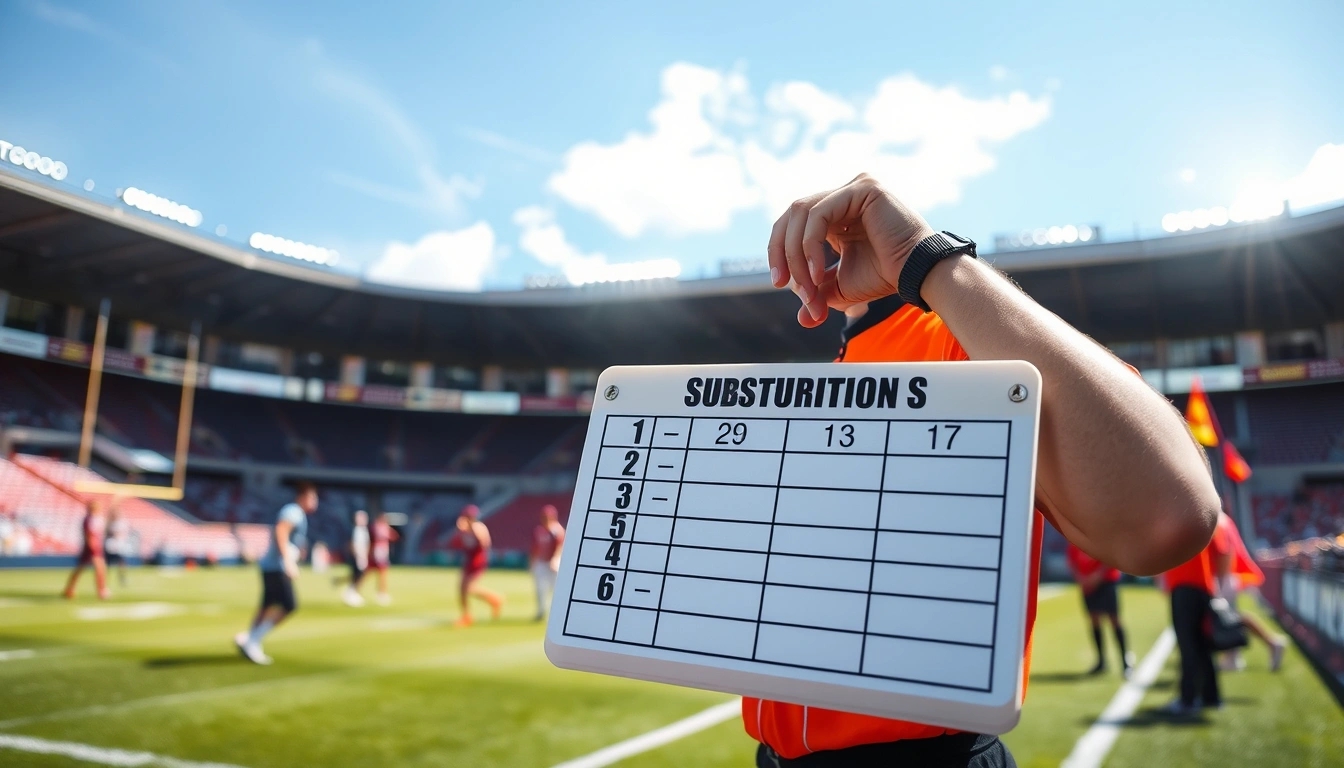
Alright, let’s dive headfirst into the chaotic, often misunderstood world of football substitutions — that magical moment when fresh legs hit the pitch and everything can turn upside down. You might think it’s just a simple swap, right? Well, think again. The rules governing substitutions are a tangled web of regulations, strategies, and sometimes downright confusion. And honestly, it’s these moments that often spice up the beautiful game more than a last-minute goal.
First off, the basics: traditionally, teams were allowed only three substitutions per match. But then, bam! The pandemic came, leagues got creative, and suddenly the rules bent a little. Now, many competitions permit up to five substitutions, but—and here’s the kicker—these changes must be made during a maximum of three stoppages in play (excluding halftime). So, it’s not just about swapping players willy-nilly; coaches have to be crafty about timing.
| Competition | Max Substitutions Allowed | Number of Substitution Opportunities |
|---|---|---|
| FIFA World Cup | 5 | 3 + halftime |
| English Premier League | 5 | 3 + halftime |
| La Liga | 5 | 3 + halftime |
| UEFA Champions League | 5 | 3 + halftime |
Now, timing is everything here. You can’t just stroll off the pitch whenever you fancy. Substitutions typically happen during stoppages—injuries, throw-ins, or when the ball is out of play. Coaches often save their changes for tactical reasons, like injecting pace late in the game or shoring up defense when holding a lead. And don’t forget the halftime switch—an unofficial “bonus” window where managers can make changes without it counting as one of their substitution opportunities.
Speaking of tactics, substitutions fall into two broad categories: tactical and injury-related. Tactical subs are all about chess moves—like bringing on a speedy winger to exploit tired defenders or swapping a striker for a midfielder to protect a lead. Injury substitutions, on the other hand, are less glamorous but crucial. They can disrupt a team’s rhythm and force managers to rethink their game plan on the fly.
- Tactical Substitutions: Planned, strategic, often late in the game.
- Injury Substitutions: Unplanned, urgent, can throw a wrench in tactics.
Now, let’s talk about the actual procedure. It’s not as simple as just waving a player off. The fourth official plays a starring role here, holding up the substitution board with the incoming and outgoing players’ numbers. The referee then has to give the green light before the change can happen. Miss this step, and you might get a substitution turned down or even a booking for delaying the game. Sometimes, the whole process feels like a mini soap opera on the sidelines—players pacing nervously, coaches gesturing wildly, and fans holding their breath.
To sum it up, substitutions are far more than just swapping players. They’re a tactical weapon, a source of drama, and occasionally, a cause of confusion. Whether it’s the number of allowed changes, the timing, or the signals that orchestrate the swap, understanding these rules adds a whole new layer of appreciation for the game. So next time you see a substitution, don’t just glance away—there’s a lot more happening behind that simple switch than meets the eye.
History of Substitutions in Football
Football, as we know it today, wasn’t always this fast-paced, tactical chess game with managers constantly juggling their benches. Believe it or not, substitutions weren’t even a thing for the longest time. Imagine a player twisting an ankle in the first 10 minutes and the team just stuck with ten men for the rest of the match. Harsh, right? Well, that was the reality until the mid-20th century. The concept of substitutions was introduced gradually, and the rules have since evolved in ways that have dramatically shaped modern football tactics.
Back in the early days, teams were expected to soldier on with injured or exhausted players because the rules simply didn’t allow replacements. It wasn’t until the 1950s that substitutions were tentatively introduced, but only for injured players. Tactical substitutions? Forget about it! The first official allowance for substitutions in English football came in 1965, but with a catch — only one substitution per match and strictly for injuries. The idea of swapping players for tactical reasons was still a distant dream.
| Year | Substitution Rule | Context |
|---|---|---|
| 1958 | First experimental substitutions allowed (injuries only) | International friendlies and some leagues |
| 1965 | One substitution per match (injuries only) | English Football League official adoption |
| 1967 | Tactical substitutions allowed | FIFA World Cup introduced tactical changes |
| 1995 | Increase to three substitutions per match | Standardized across major competitions |
| 2020 | Temporary increase to five substitutions | Response to COVID-19 fixture congestion |
It wasn’t until the 1967 FIFA World Cup that tactical substitutions made their debut on the grandest stage, changing the game forever. Coaches suddenly had the power to influence matches not just by shouting from the sidelines but by actually swapping out players to tweak formations or respond to the opposition’s tactics. This gave birth to a new dimension of strategy and drama. Fast forward a few decades, and the number of allowed substitutions increased, reflecting the growing understanding of player welfare and tactical flexibility.
- Early restrictions: Substitutions limited to injuries only.
- Gradual tactical acceptance: Allowed substitutions for strategic purposes.
- Modern flexibility: Increased number of substitutions to five in some competitions.
Now, why does all this matter today? Because substitutions are more than just player swaps — they’re a critical tool that can make or break a game. Managers use substitutions to manage player fatigue, counter opponents’ moves, or inject fresh energy at crucial moments. The evolution of substitution rules reflects football’s shift from a brute endurance test to a highly strategic contest. Without these changes, the beautiful game would probably still be stuck in the mud, literally and figuratively.
So next time you see a manager frantically waving to the bench or a player jogging onto the pitch, remember: this all stems from a long history of trial, error, and gradual acceptance. The substitution rule’s journey is a story of football’s growing pains and its relentless quest for balance between fairness, excitement, and player safety.
Quick Facts:
- Substitutions first allowed strictly for injuries.- Tactical substitutions introduced in the late 1960s.- Number of substitutions increased from 1 to 3, and recently to 5 in some leagues.- COVID-19 pandemic accelerated temporary rule changes.
And hey, who knows what the future holds? Maybe one day we’ll see unlimited subs or some wild tech-assisted player swaps. But for now, substitutions remain one of football’s most fascinating and game-changing rules — a testament to how the sport keeps evolving without losing its soul.
How Many Substitutions Are Allowed?
Alright, let’s dive into the wild world of football substitutions — a topic that’s been causing quite the stir on and off the pitch lately. You might think, “Well, it’s just swapping players, right?” Oh, if only it were that simple! The number of substitutions allowed isn’t set in stone; it’s a moving target influenced by leagues, tournaments, and sometimes, global curveballs like pandemics.
The Classic Rule: For decades, the standard was a modest three substitutions per match. That’s it. Three chances to shuffle your deck, bring fresh legs, or fix a tactical mess. This rule was pretty much the norm across most leagues worldwide, from the English Premier League to La Liga.
But then, 2020 happened. The COVID-19 pandemic forced football authorities to rethink things — players were exhausted, schedules compressed, and the risk of injuries soared. So, the International Football Association Board (IFAB) temporarily allowed up to five substitutions per game. This wasn’t just a random mercy move; it was a tactical game-changer. Suddenly, coaches had more flexibility to rotate their squads without burning out their stars.
| Competition/League | Substitution Limit | Notes |
|---|---|---|
| FIFA World Cup | 5 substitutions | Implemented since 2022 tournament |
| English Premier League | 5 substitutions | Adopted post-pandemic, with 3 substitution windows |
| UEFA Champions League | 5 substitutions | Allowed with 3 substitution moments plus halftime |
| MLS (USA) | 5 substitutions | Matches global trend |
| Lower Leagues (varies) | 3 substitutions | Some still stick to old rules |
But hold your horses — it’s not as straightforward as “five subs, done.” Most competitions limit the number of times a team can stop play to make those changes, usually to three windows during the match, excluding halftime. This means coaches have to be strategic about when to use their substitutions, or risk wasting precious opportunities.
- Why the limits on substitution windows? To keep the game flowing and avoid constant interruptions.
- Can all five subs happen at once? Nope! They must be spread out across the allowed windows.
- What about extra time? Some tournaments grant an additional substitution in extra time, adding another layer of tactical chess.
Interestingly, not every league jumped on the five-sub rule right away. Some lower divisions and smaller competitions stuck stubbornly to the traditional three, citing concerns over fairness and maintaining the “spirit of the game.” It’s a bit like that one friend who refuses to upgrade their phone — comfortable with the old ways, come what may.
As for youth and amateur football, substitution rules can be even more relaxed, sometimes allowing unlimited changes to encourage participation and reduce injury risk. But in the high-stakes professional arena, every sub counts — it’s a delicate balance between freshness, tactics, and sometimes, sheer desperation.
So, next time you watch a match and see a flurry of substitutions, remember: it’s not just about swapping tired legs. It’s a complex dance shaped by history, health crises, tactical evolution, and sometimes, stubborn tradition. The substitution rules might seem like a dry topic, but they’re actually a fascinating lens into how football adapts to the times — and how coaches keep trying to outsmart each other.
In short, whether it’s three or five, substitutions remain one of football’s most exciting and unpredictable elements. And who knows? With technology and experimental formats creeping in, we might see even crazier rules in the near future. Stay tuned, because in football, the only constant is change.

When Can Substitutions Be Made?
Alright, let’s dive into the often overlooked but oh-so-crucial timing of substitutions in football. It’s not just about swapping tired legs for fresh ones; there’s a whole strategic chess game behind when and how managers decide to pull the trigger on a sub. You might think it’s as simple as “whenever the coach feels like it,” but nope, the rules and unwritten codes are more tangled than a defender caught in a striker’s nutmeg.
First off, substitutions can happen during any stoppage in play. That means when the ball is out of bounds, during injury breaks, or when the referee blows the whistle for a foul. But here’s the kicker — substitutions cannot be made while the ball is in active play. This is why you often see players anxiously waiting near the sidelines, twiddling their thumbs until the ref gives the green light.
- Half-time swaps: The most straightforward window. Teams get a breather, coaches get a chance to shout at their players, and subs get ready to storm the pitch fresh and raring to go.
- Injury breaks: These are unpredictable and sometimes chaotic moments. When a player goes down, the game pauses, giving coaches a golden opportunity to shuffle their deck if needed.
- Strategic moments: This is where the real drama unfolds. Coaches often time subs to disrupt the opponent’s rhythm or inject energy when the team looks sluggish. Sometimes, it’s about killing time, other times it’s a desperate gamble.
But wait, there’s more! The fourth official plays a starring role here, holding up the substitution board to signal the change. It’s like a mini-theatrical production—players jogging on, fans holding their breath, and commentators speculating wildly about the impact of the fresh legs.
| Substitution Timing | Description | Typical Use |
|---|---|---|
| During Half-time | Between the two halves, when play is stopped for 15 minutes | Adjust tactics, replace fatigued players |
| Injury Breaks | When play is stopped due to a player injury | Replace injured players or tactical changes |
| Throw-ins, Goal Kicks, Free Kicks | Play is stopped but about to restart | Quick tactical substitutions |
| Added Time/Subs | Late in the game, often to waste time | Preserve lead, disrupt opponent momentum |
Now, the rules do vary a bit depending on the competition. For example, some tournaments have introduced additional subs during extra time, and others have experimented with rolling subs (where players can come off and back on again). The key takeaway? Timing is everything, and a well-timed substitution can flip the script faster than you can say “offside.”
And let’s not forget the psychological aspect. Bringing on a fresh striker in the 80th minute can lift a team’s spirits and send a message to the opposition that the game isn’t over yet. Conversely, a defensive sub might signal a team settling for the draw or protecting a slender lead. Coaches often use substitutions as a form of mind games — keeping everyone guessing.
In the end, substitutions are a wild mix of rules, strategy, and a dash of chaos. Coaches have to balance the official timing restrictions with the unpredictable flow of the game. So next time you see a player jog on or off the pitch, remember: it’s not just a break for the legs, it’s a carefully calculated move that could make or break the entire match.
Types of Substitutions: Tactical vs Injury
When it comes to football substitutions, not all changes on the pitch are created equal. There are two main flavors of substitutions that every fan, coach, and player knows all too well: tactical substitutions and those that are forced by injuries. Both shake up the game, but in very different ways, and understanding their nuances can totally change how you see a match unfold.
First up, tactical substitutions. These are the cool, calculated moves coaches pull out when they want to tweak their team’s performance. Maybe the midfield’s looking a bit sluggish, or the strikers just aren’t finishing chances. Bam! A fresh player comes on to inject energy, change formation, or just mess with the opponent’s game plan. These swaps are like chess moves—planned, deliberate, and sometimes a little sneaky. Coaches often save their best tactical subs for crunch time, hoping to catch the other side off guard or to shore up a lead. Sometimes it works beautifully, other times… well, let’s just say it’s a gamble.
| Tactical Substitutions | Injury Substitutions |
|---|---|
| Planned by coach | Unplanned, reactive |
| Used to change strategy | Used to replace injured player |
| Can boost team morale | Can disrupt team flow |
| Often done at strategic moments | May cause time loss |
| Can confuse or unsettle opponents | May force defensive reshuffles |
Now, injury substitutions? Well, those are the curveballs nobody wants but everyone expects. When a player suddenly goes down clutching a hamstring or limping off after a nasty tackle, the coach has no choice but to react quickly and plug the hole. Unlike tactical changes, injury subs can throw a wrench in the team’s rhythm. Imagine having your star midfielder hobbling off—suddenly, your whole midfield balance is off. Sometimes teams fall apart after an injury sub, scrambling to cover gaps, or worse, losing momentum entirely.
- Impact on Team Dynamics: Tactical subs often lift spirits and sharpen focus, while injury subs can cause anxiety and confusion.
- Match Strategy: Tactical changes are about control and manipulation; injury subs force adaptation and damage limitation.
- Psychological Effects: Fresh legs can intimidate opponents, but losing a key player to injury can deflate a team’s confidence.
It’s also worth mentioning how substitutions affect the bench. Tactical subs give bench players a chance to shine, sometimes turning unknowns into legends overnight. Injury subs, however, can throw the bench into chaos—suddenly, a player who wasn’t expecting to play has to jump in cold, no warm-up, no prep. That’s a tough ask.
In the end, whether a substitution is tactical or injury-driven, it’s a pivotal moment. It can flip the script, spark a comeback, or seal a team’s fate. Coaches keep their eyes peeled, ready to pull the trigger at just the right moment—because in football, sometimes the right substitution is the difference between glory and heartbreak.
Quick Takeaway:
Tactical Subs Planned, strategic, confidence-boostingInjury Subs Unplanned, disruptive, challenge to team cohesion
So next time you see a player swapped out, ask yourself: was this a masterstroke or a necessary evil? The answer might just reveal the true story behind the match.
Substitution Procedures and Signals
Ah, substitutions in football — they might seem straightforward at first glance, but oh boy, once you dive into the official process, it’s like watching a mini soap opera unfold right on the sidelines. The whole thing kicks off with the fourth official, who’s basically the unsung hero of the substitution drama. This person is the one holding up the electronic board, flashing the numbers of the players coming off and going on, and keeping an eagle eye on the time. But don’t be fooled, their job is way more complex than just holding a sign.
When a substitution is requested, the team’s staff communicates with the fourth official, who then relays the info to the referee. Here’s where things get a little tense — the referee has to make sure the player leaving the pitch is actually ready to exit and that the replacement doesn’t just barge in like it’s a free-for-all. The referee’s signal for an approved substitution is a simple, yet clear, gesture: a raised arm pointing to the side, sometimes accompanied by a whistle. This is the green light for the new player to step on.
- Step 1: Team requests substitution through the fourth official.
- Step 2: Fourth official confirms and signals the referee.
- Step 3: Referee signals approval with a raised arm and whistle.
- Step 4: Player off, substitute on — but only after the official nod!
Now, you might wonder why this process can drag on or feel like it’s taking forever. Well, it’s not just about the rules — it’s the psychology and tactics behind it. Coaches sometimes use substitutions to break the opponent’s rhythm, buying a few seconds of precious time. Players might dawdle leaving the field, and refs have to keep their cool, making sure the game stays fair.
| Signal | Meaning |
|---|---|
| Raised arm pointing sideways | Substitution approved |
| Whistle blow | Stop play for substitution |
| Electronic board display | Shows player numbers involved |
| Referee waving off | Substitution denied or delayed |
Also, a quick heads-up: substitutions can only happen when the ball is out of play, or during a stoppage. So, if you’re mid-dribble, don’t expect your coach to suddenly wave you off — that’d be chaos! And don’t underestimate the fourth official’s role in keeping all this orderly; without them, the sideline could turn into a circus.
To sum it up, substitution procedures are a blend of strict rules and human drama. From the fourth official’s watchful eyes to the referee’s crisp signals, it’s a well-choreographed dance — but with a few unpredictable twists thrown in. Next time you see a player stroll off the pitch, remember, there’s a whole story playing out behind that simple act.

Impact of Substitutions on Game Strategy
Substitutions in football aren’t just about swapping tired legs for fresh ones — oh no, they’re tactical chess moves that can flip the entire game on its head. Imagine this: the match is grinding to a halt, players are dragging their feet, and the crowd’s energy is dipping. Then, bam! A substitution happens, and suddenly the pace picks up, the ball zips around faster, and the opposition looks like they just got sucker-punched. That’s the magic of a well-timed sub.
Now, let’s get real — coaches don’t just throw subs in randomly like they’re picking lottery numbers. They analyze everything: the opponent’s weaknesses, the stamina of their own players, the scoreline, and sometimes even the weather (yes, really!). A fresh player can inject vital energy into the squad, pressuring opponents who might be slowing down or losing focus. On the flip side, if a team keeps swapping out key players too early or too often, it risks losing rhythm and cohesion. It’s a delicate balancing act.
| Substitution Impact | Effect on Game | Example Scenario |
|---|---|---|
| Injecting Fresh Energy | Speeds up play, increases pressing intensity | Bringing on a speedy winger late in the game to exploit tired defenders |
| Shifting Momentum | Changes team dynamics, can boost morale | Replacing a defensive midfielder with an attacking playmaker when trailing |
| Wearing Down Opponents | Maintains high tempo, forces opposition fatigue | Constantly rotating forwards to keep pressure high |
But substitutions aren’t just about physical freshness. Sometimes, it’s a psychological game. Pulling off a player who’s underperforming or clearly frustrated can calm nerves and reset the team’s focus. On the other hand, introducing a fan favorite or a fiery competitor can lift spirits and intimidate the opposition. It’s like a mini pep talk, but on the field.
- Tactical Substitutions: Planned changes to alter formation or style.
- Injury Substitutions: Forced changes that can disrupt a coach’s game plan.
- Time-Wasting Subs: Sometimes used to kill the clock—controversial but effective!
Of course, not every substitution is a game-changer. Sometimes, they fall flat — maybe the new player doesn’t gel, or the opposition quickly adapts. And don’t get me started on those moments when a substitution backfires spectacularly, like bringing on a defender when you desperately need goals. Yikes.
In the end, substitutions are a high-stakes gamble. They can make or break a match, turning despair into triumph or victory into heartbreak. Coaches who master this art often find themselves one step ahead, turning the sideline into a strategic battlefield where the freshest legs and sharpest minds collide.
So next time you see a substitution, don’t just shrug it off — there’s a lot more going on behind that simple swap than meets the eye. It’s football’s secret weapon, a tool that can rewrite the story of the game in a heartbeat.
Controversies and Common Misunderstandings
Football substitutions — they seem straightforward, right? Just swap one player for another, and off you go. But oh boy, if only it were that simple! The world of football substitutions is a tangled web of confusion, blunders, and eyebrow-raising moments that leave fans, pundits, and even referees scratching their heads in disbelief. Let’s dive into some of the most infamous substitution mess-ups and the murky rules that fuel these chaotic moments.
- The Classic “Too Many Subs” Fiasco: Remember that one game where a team accidentally sent on a sixth substitute when only five were allowed? Yep, it’s happened more times than you’d think. Sometimes it’s a slip-up by the coaching staff, other times a communication breakdown with the fourth official. The result? Penalties, protests, and a whole lot of post-match drama.
- Referee Confusion Over Timing: The clock’s ticking, the crowd’s roaring, and suddenly the ref signals a substitution — only to change their mind moments later. This happens when there’s uncertainty about whether the ball is out of play or if the substitution request was made correctly. It’s like watching a mini soap opera unfold on the sidelines.
| Mistake | Cause | Outcome |
|---|---|---|
| Entering without Referee’s Permission | Player confusion or eagerness | Yellow card or substitution voided |
| Substitution Outside Allowed Windows | Misunderstanding timing rules | Referee stops play, possible warnings |
| Failure to Notify Fourth Official | Communication breakdown | Delay in substitution, potential penalties |
Now, let’s talk about those gray areas that really grind the gears of everyone watching. Take the infamous “injury substitution” gray zone. Sometimes a player is clearly hurt, but is the substitution really necessary? Or is it a sneaky tactical move disguised as an injury? The rules say substitutions for injury are allowed, but proving the legitimacy? That’s a whole other ball game. Coaches have been known to exploit these loopholes, leaving fans wondering if they’re watching a genuine concern or a crafty ploy.
And then there’s the whole saga of “double substitutions” — a term you rarely hear but one that describes the chaos when substitutions happen in quick succession, sometimes leading to confusion over who’s actually on the pitch. It’s like musical chairs, but with sweaty footballers and a ticking clock.
- Substitution Signal Mix-ups: The fourth official has the tricky job of holding up the board with the numbers, but mistakes happen. Wrong numbers, delayed signals, or even tech failures can cause a substitution to be botched. The crowd gasps, commentators scramble, and the ref tries to keep a straight face.
- Fan and Pundit Misinterpretations: Sometimes, the confusion isn’t just on the pitch. Fans and analysts often misread substitution rules, leading to heated debates on social media. “Why did they wait so long to sub?” or “That substitution was illegal!” are common refrains, even when the rules say otherwise.
In the end, substitutions are more than just player swaps — they’re a microcosm of football’s unpredictability. The rules might be written down, but the human element always throws a curveball. So next time you see a substitution drama unfold, remember: it’s not just about who’s coming on or off, but the chaotic dance behind the scenes that keeps football endlessly fascinating.
Substitution Rules in Different Football Leagues
Alright, let’s dive into the wild world of football substitutions — but not just any substitutions. We’re talking about how different leagues and international competitions have their own quirky, sometimes baffling rules on swapping players. It’s like each football governing body has its own playbook (literally) on how many players you can bring off the bench and when. And trust me, it’s not as straightforward as you might think.
First off, the English Premier League (EPL) sticks pretty close to the traditional three substitutions per match rule. Yeah, three — no more, no less, unless we’re talking about extra time in knockout matches where they sometimes allow a fourth. But then, the COVID-19 pandemic shook things up globally, and suddenly, many leagues started experimenting with five subs to ease player fatigue. The EPL was a bit slow on the uptake but eventually allowed five substitutions in the 2020-2021 season, though with a catch — teams only get three substitution opportunities during the match to avoid constant stoppages. Confusing? A bit, but it’s all about balancing fairness and flow.
| League/Competition | Number of Substitutions Allowed | Substitution Opportunities |
|---|---|---|
| English Premier League | 5 | 3 (plus halftime) |
| La Liga (Spain) | 5 | 3 (plus halftime) |
| Serie A (Italy) | 5 | 3 (plus halftime) |
| FIFA World Cup | 5 | 3 (plus halftime) |
| UEFA Champions League | 5 | 3 (plus halftime) |
| MLS (USA) | 3 | 3 (plus halftime) |
Now, if you think all leagues are on board with five subs, think again. Major League Soccer (MLS) in the US, for instance, stubbornly sticks with three subs during regular time, but they’ve got a sneaky trick — they allow a fourth substitution during extra time. It’s like they want to keep the game flowing but also give coaches a little wiggle room when the game drags on.
International competitions, like the FIFA World Cup, have generally embraced the five-sub rule since 2022, which is a pretty big deal. Before that, it was a strict three-sub affair, making every substitution a nail-biting decision. But even here, the timing of substitutions is tightly regulated — you get only three chances to make those swaps during the 90 minutes, not counting halftime.
- Japan’s J-League also allows five substitutions but with a limit on substitution windows, similar to European leagues.
- German Bundesliga follows the five-sub rule but has a unique approach to extra time, sometimes allowing additional subs.
- International Friendlies can be a free-for-all, with some matches permitting unlimited substitutions to test players.
But hey, it’s not just about how many subs you get — it’s also about the philosophy behind these rules. Some leagues prioritize player welfare and reducing injuries, hence the increased subs post-pandemic. Others are more traditional, fearing that too many changes ruin the flow and drama of the game. Plus, regulatory bodies like FIFA, UEFA, and national associations all have their say, making the whole thing a patchwork quilt of rules rather than a neat, uniform system.
And don’t even get me started on the “concussion substitution” experiments popping up here and there. Some leagues are trialing extra subs specifically for head injuries, which adds another layer of complexity and, frankly, some controversy. Will this become standard? Time will tell.
Summary of Key Differences:- Number of allowed substitutions varies (3 or 5 mostly)- Number of substitution opportunities (usually 3 plus halftime)- Extra substitutions in extra time differ by league- Special rules for injuries and concussions are emerging
So yeah, next time you’re watching a match and see a substitution, remember — behind that simple act lies a tangled web of rules, traditions, and strategies that differ from league to league. It’s one of those small details that can totally change the game, depending on where you are in the footballing world.

Future of Substitutions: What’s Next?
Alright, let’s talk about the future of substitutions in football — because if you think the current rules are set in stone, well, you might wanna think again. Football’s governing bodies aren’t exactly sitting still; they’re cooking up some pretty wild ideas that could flip the substitution game on its head. And no, it’s not just about adding a few extra subs here and there, it’s about technology, experimentation, and some downright creative rule changes.
First off, technology is creeping into substitutions like never before. Imagine this: instead of the traditional paper board or the fourth official’s hand signals, coaches could soon be using real-time data analytics and AI-driven insights to decide who comes on and when. Wearable tech already tracks player fatigue and performance, so why not have a system that alerts managers when a player’s energy tanks or injury risk spikes? This could make substitutions smarter, faster, and way more tactical. But hey, there’s a flip side — too much tech might slow the game down or make it feel less “human.” It’s a tricky balance.
- Possible tech-driven substitution tools:
- AI fatigue monitoring
- Instant injury diagnostics
- Real-time tactical suggestions
Now, experimental rules are also on the horizon. Some leagues have toyed with concepts like rolling substitutions, which means players can come off and back on multiple times — think basketball or hockey style. Sounds chaotic? Maybe. But it could keep the pace electric and reduce injuries by giving players more rest. Then there’s talk about increasing the number of substitutions permanently, beyond the pandemic-driven temporary boosts we saw. The idea is to keep players fresher and allow coaches more flexibility, but critics argue it might disrupt the flow or dilute the drama of a “last-minute sub.”
| Experimental Rule | Potential Benefit | Possible Drawback |
|---|---|---|
| Rolling substitutions | More player freshness and tactical flexibility | Could confuse fans and slow game rhythm |
| Increased substitution limits | Better injury management | Less dramatic last-minute surprises |
| Substitution timeouts | Allows tactical regrouping | Interrupts game flow |
Another quirky idea floating around is the introduction of “substitution timeouts,” where teams get a short break specifically to make changes and discuss tactics. Sounds like basketball, right? While this could add strategic depth, purists might scream “blasphemy!” because football’s charm lies in its continuous flow. Plus, how many timeouts before it feels like a chess match instead of a footy game?
To wrap it up, the future of substitutions is a mixed bag of promise and potential headaches. Technology promises precision and smarter decisions, while experimental rules could make the game more dynamic — or just plain confusing. One thing’s for sure: football’s substitution saga is far from over, and fans better buckle up because the next decade might bring changes that’ll make you go “Wait, what just happened?” on the sidelines.
Key takeaways:
- Tech will play a bigger role in monitoring player fitness and guiding subs.
- Rolling subs and increased limits could become standard but might alter game flow.
- Substitution timeouts could add tactical depth but risk disrupting the game’s rhythm.
So, keep your eyes peeled — the substitution rules you know today might look like ancient history tomorrow. Football’s evolution never sleeps, and substitutions are right in the thick of it.
Frequently Asked Questions
- How many substitutions are allowed in a football match?
Great question! The number of substitutions varies depending on the league or tournament. Typically, teams are allowed three substitutions during regular play. However, recent changes, especially due to global events like the pandemic, have seen some competitions permit up to five substitutions to help manage player fatigue. It’s like having extra lifelines during the game!
- When can substitutions be made during a game?
Substitutions can happen at several times: during half-time, injury breaks, or any stoppage in play. Coaches often pick strategic moments to swap players to shake things up or slow down the opponent’s momentum. Think of it as a chess player moving pieces at just the right time to gain an advantage.
- What’s the difference between tactical and injury substitutions?
Tactical substitutions are all about strategy—bringing fresh legs or a different skill set to outsmart the opposition. Injury substitutions, on the other hand, are forced changes when a player can’t continue. Both can drastically change team dynamics, but tactical swaps often carry that surprise factor that keeps fans on the edge of their seats.
- How does the substitution process work on the sidelines?
When a coach signals for a substitution, the fourth official steps in with a board displaying the player numbers. The referee must then approve the change before the new player enters the pitch. It’s almost like a mini-drama unfolding right next to the action, with signals and timing playing a crucial role.
- Why do substitution rules differ across leagues?
Different football leagues and tournaments have their own philosophies and governing bodies, leading to variations in substitution rules. For example, some leagues embrace more substitutions to encourage attacking play, while others stick to traditional limits. This diversity reflects the beautiful game’s adaptability worldwide.
- Are there any controversies related to substitutions?
Absolutely! From referee confusion over the number of substitutions to last-minute changes causing chaos, substitution blunders have sparked debates and even affected match outcomes. These moments add an unpredictable twist to football’s drama, keeping fans and pundits buzzing.
- What does the future hold for football substitutions?
Looking ahead, technology might revolutionize substitutions, possibly allowing real-time data to influence changes or introducing new rules to speed up the game. Imagine substitutions becoming as dynamic and fast-paced as the players themselves—football is evolving, and substitutions are right at the heart of this exciting transformation.