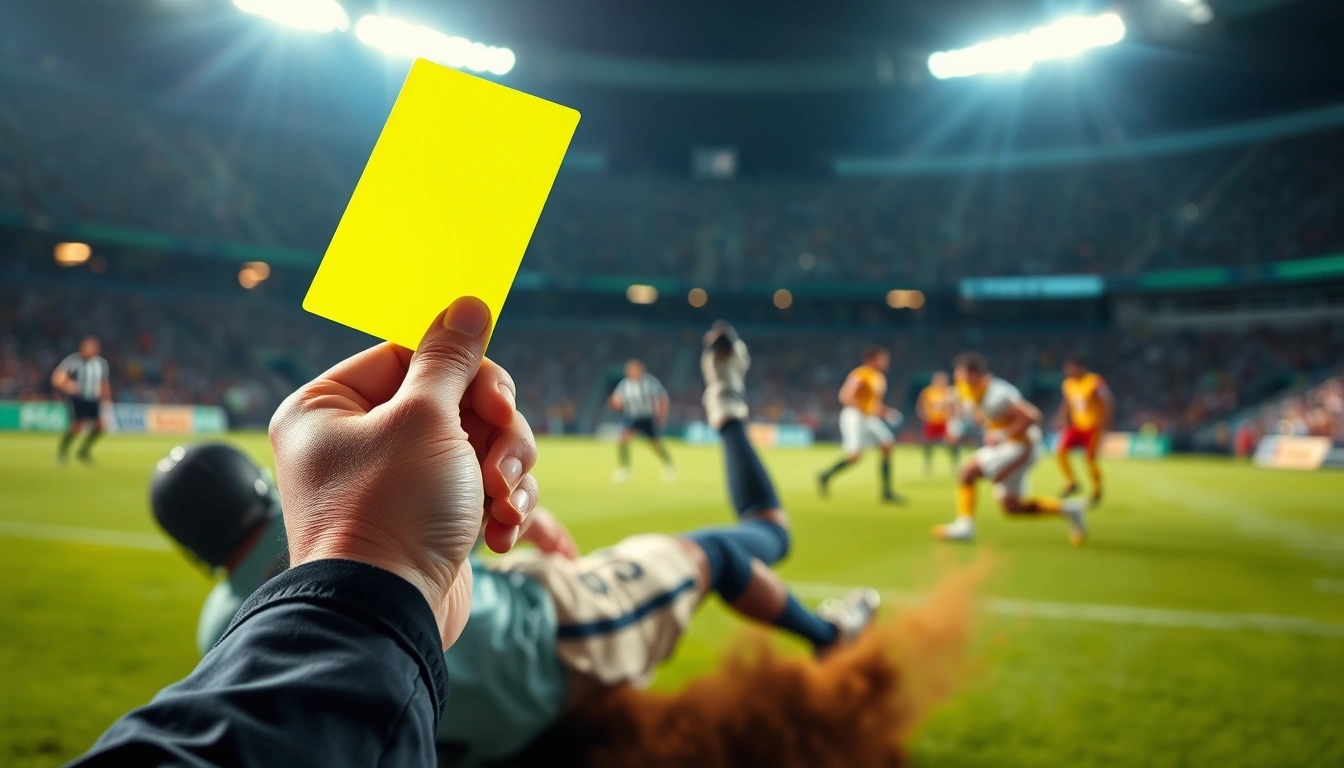
Alright, let’s get one thing straight right off the bat: football fouls aren’t just about someone tripping over their own feet or a bit of rough play. Nope, there’s a whole world behind what actually counts as a foul, and trust me, it’s not always black and white. For those just stepping into the chaotic, passionate world of football—whether you’re a rookie or a fan trying to decode the madness—this guide is your new best mate.
First up, a foul in football is basically any action that breaks the rules and gives an unfair advantage to one team. But here’s the kicker: not every bump or shove is a foul. The game’s physical, and some contact is just part of the dance. The tricky bit? Knowing when a challenge crosses the line. It’s like walking a tightrope—too soft, and you get steamrolled; too hard, and you’re offside with the ref.
| Foul Type | What It Means | Typical Consequence |
|---|---|---|
| Tripping | Using a leg or foot to make an opponent fall or stumble | Free kick or penalty kick |
| Handball | Deliberately touching the ball with the hand or arm | Free kick, penalty, and sometimes a card |
| Pushing | Using hands or body to shove an opponent unfairly | Free kick or card depending on severity |
| Charging | Running into an opponent in a forceful or reckless way | Free kick or card |
Now, if you think referees have it easy spotting these fouls, think again. They’re juggling a million things at once—players screaming, fans roaring, and the clock ticking. They have to decide in a split second if a foul happened, and sometimes, they get it wrong (we all remember that one controversial call, right?). That’s where the Video Assistant Referee (VAR) steps in, acting like the game’s instant replay guru. VAR helps refs double-check fouls, but boy, does it stir the pot sometimes! Fans either love it for fairness or hate it for killing the flow.
- Why fouls matter: They’re not just rule-breaking moments; fouls can change the whole vibe of the game. One bad tackle can kill momentum or spark a comeback.
- Strategy shifts: Teams adjust their play style when a key player is on a yellow card or after conceding a penalty.
Here’s a quick cheat sheet to keep in your back pocket next time you’re watching a game:
1. Not every contact foul.2. Watch the referee’s whistle and gestures.3. Cards mean trouble—yellow warns, red boots you off.4. VAR can save or ruin the moment.
So, next time you’re yelling at the screen about a foul, remember: it’s a lot more than just a bad tackle. It’s a mix of rules, split-second decisions, and yes, a dash of human error. Stick around, and you’ll soon spot fouls like a seasoned fan—maybe even better than some refs (well, almost).
Understanding the Basics of a Football Foul
Alright, so you’re new to football and wondering what exactly counts as a foul? Well, buckle up, because it’s not always as straightforward as it looks on TV. A foul in football is basically any unfair play or rule-breaking action committed by a player that goes against the official Laws of the Game. But hey, it’s not just about being “naughty” on the pitch—it’s about maintaining fairness and safety for everyone involved.
First things first, a foul usually happens when a player does something like kicking, tripping, pushing, or charging an opponent in a way that’s considered careless, reckless, or using excessive force. And no, it’s not just about physical contact; even handball (when a player deliberately touches the ball with their hand or arm) counts as a foul. This is why defenders sometimes look like they’re doing the hokey pokey trying to avoid the ball hitting their hands.
| Common Fouls | What They Mean |
|---|---|
| Tripping | Using the legs or feet to make an opponent fall or lose balance. |
| Pushing | Applying force to an opponent with hands or body. |
| Charging | Using the body to illegally knock an opponent off the ball. |
| Handball | Deliberate handling of the ball by a player (except goalkeepers in their box). |
Now, you might be thinking, “Okay, but what about those times when it looks like a foul but the ref just lets it slide?” Ah, the eternal mystery! Referees have to judge whether the foul was intentional or just part of the game’s flow. They consider things like the severity of the contact, whether the player was trying to play the ball, and if the foul stopped a clear goal chance. It’s a tough gig, no doubt.
- Careless fouls: Minor infractions, usually just a free kick.
- Reckless fouls: More serious, might get a yellow card.
- Using excessive force: Dangerous play, often a straight red card.
So, before you hit the stands or lace up your boots, remember that fouls are not just about breaking rules—they’re about keeping the game safe and fair. Plus, knowing the basics helps you appreciate the refs’ decisions, even when they seem to be making stuff up on the spot (we’ve all been there). Stick around, because next up, we’ll dive into those pesky fouls you see all the time and what makes them so controversial.
Quick Tip: If you want to spot fouls like a pro, watch how players react and how the referee’s whistle or gestures follow. Sometimes it’s less about the contact and more about the referee’s interpretation.
Remember:- Not every contact is a foul.- Intent and impact matter.- Referees try their best, but they’re human too!
Common Types of Fouls You’ll See on the Field
Alright, so you’re watching a football match, eyes glued to the action, when suddenly—whistle! The ref blows his whistle and everyone loses their minds. What just happened? Yep, a foul. But not all fouls are created equal, and some are more obvious than others. Let’s break down the usual suspects that make football games a little more chaotic and a lot more interesting.
Tripping and Kicking – Probably the most classic foul in football. When a player sticks out a leg and knocks an opponent off balance or to the ground without the ball, that’s a foul. Sometimes it’s accidental, sometimes it’s a bit cheeky, but refs rarely let this one slide. It’s the kind of foul that can spark a scuffle or a heated exchange between players.
Handball – Oh boy, the handball drama is real. Basically, if a player (except the goalkeeper in their own box) intentionally touches the ball with their hand or arm, it’s a foul. But here’s the catch—“intentional” is where things get murky. Did the ball just bounce off the arm? Was the arm in a natural position? Fans and pundits love to argue about this one endlessly.
| Foul Type | Description | Common Consequence |
|---|---|---|
| Tripping | Using the legs to make an opponent fall | Free kick or penalty if in the box |
| Handball | Deliberate handling of the ball | Free kick or penalty, sometimes a card |
| Pushing | Using hands or body to shove an opponent | Free kick, possible yellow card |
| Charging | Running into an opponent unfairly | Free kick or penalty, card possible |
Pushing and Holding – These are sneaky fouls where a player uses their hands or body to gain an unfair advantage. It might look innocent, like a little shove or grabbing a jersey, but refs are watching closely. Holding onto a player’s shirt? That’s an instant foul. And if it happens near the goal, you can bet the crowd will erupt.
Charging – Sounds aggressive, right? It is! Charging involves a player running into an opponent in a way that’s not considered fair or safe. Shoulder-to-shoulder challenges are allowed, but if it’s reckless or dangerous, the ref will step in quickly.
- Dangerous Play: When a player tries to kick the ball but ends up putting others at risk, like high kicks near someone’s head.
- Obstruction: Blocking an opponent without the ball, just standing in their way.
- Unsporting Behavior: Includes things like simulation (faking a foul), dissent, or time-wasting.
Now, here’s a little secret: sometimes fouls are as much about the ref’s mood as the actual action. What one ref calls a foul, another might let slide. That’s part of the game’s charm and frustration. Plus, with VAR technology stepping in, some calls get overturned, adding even more drama.
So next time you’re at the game or glued to your screen, keep an eye out for these fouls. They’re not just rule-breakers; they’re moments that can change momentum, spark rivalries, or even decide the match. And hey, if you can spot a handball or a cheeky push before the ref does, you’re already one step closer to being the ultimate football fan.
Quick Tips to Spot Fouls Like a Pro:
- Watch the player’s feet and arms closely.
- Notice if a player suddenly falls without contact—might be simulation!
- Keep track of repeated fouling by the same player—ref’s patience runs out fast.
Football’s full of passion, skill, and yes, fouls. But that’s what keeps the game unpredictable and thrilling. So embrace the chaos, and enjoy the ride!

How Referees Spot and Call Fouls
Ever found yourself yelling at the screen, “That wasn’t a foul!” or “How did he miss that one?” Yeah, you’re not alone. Referees have an insanely tough gig, and this section peeks behind the curtain to see how they manage to keep the game in check without losing their minds. It’s not just about blowing a whistle; it’s a high-stakes balancing act of judgment, speed, and sometimes a bit of luck.
First off, the referee’s perspective is unique. They’re sprinting up and down the pitch, eyes darting everywhere — players, ball, sidelines, and yes, even the fans when things get heated. They have to make split-second calls on whether a challenge was fair or a foul, often without the luxury of replay. Imagine trying to catch a sneaky trip or a subtle handball while dodging a flying elbow or two. It’s chaos, but that’s the job.
- Positioning: Referees constantly adjust their position to get the best angle. They’re trained to anticipate where the ball and players will be next, so they’re not just reacting but predicting.
- Focus: They zoom in on key battles — like strikers vs. defenders — but also keep peripheral vision sharp to catch sneaky fouls elsewhere.
- Communication: Referees rely heavily on assistant refs and the fourth official, especially in tight situations. It’s a team effort to keep the calls accurate.
| Tool/Technique | Description |
|---|---|
| Whistle | The classic tool for stopping play instantly when a foul is spotted. |
| Flag (Assistant Referees) | Used to signal offsides, fouls, and other infractions that the main ref might miss. |
| Body Language | Referees use hand signals to communicate decisions clearly to players and fans. |
| VAR (Video Assistant Referee) | Technology that helps review controversial calls, but sometimes adds fuel to the fire. |
Now, let’s talk about the mental gymnastics involved. Referees have to be impartial, but they’re human — which means pressure, crowd noise, and player antics can mess with their heads. Ever noticed how sometimes a ref seems to “let things slide” early on, only to crack down later? That’s part strategy, part survival. They try to keep the game flowing, but when things get rough, they have to assert control — or risk chaos.
Here’s a quick rundown of what goes through a ref’s mind when calling a foul:
- Was the contact deliberate or accidental?
- Did the player gain an unfair advantage?
- Was the foul reckless or dangerous?
- How will the call affect the game’s momentum?
It’s no wonder fans and players sometimes feel the refs are playing a different game! But the truth is, referees juggle a million tiny details in seconds — and sometimes, mistakes happen. That’s part of football’s charm and frustration.
Practical Tips to Understand Ref Calls:- Watch the referee’s positioning before the foul.- Notice if the foul affects the play’s flow or safety.- Pay attention to the assistant refs’ signals.- Remember, not every contact is a foul — it’s about fairness and intent.
So next time you see a ref blow the whistle, cut them some slack. They’re not just calling fouls; they’re trying to keep the beautiful game beautiful — even when the pressure’s sky-high and the crowd’s roaring like a beast.
The Role of Video Assistant Referee (VAR)
Alright, let’s talk about VAR – the technology that’s turned football on its head, for better or worse. If you’ve watched a match in the last few years, you’ve seen it in action: a referee pauses the game, checks the monitor, and suddenly the whole stadium is holding its breath. VAR isn’t just some fancy gadget; it’s a whole new layer of decision-making that backs up refs but also stirs up plenty of drama.
First off, what exactly does VAR do? Simply put, it’s a system designed to help referees make the right calls on crucial moments – think goals, penalties, red cards, and mistaken identity. The idea is to reduce human error and make the game fairer. Sounds perfect, right? Well, not always. Sometimes it feels like the ref’s second-guessing themselves, or the flow of the game gets choppy because of the stoppages.
| Step | What Happens |
|---|---|
| Incident Occurs | Referee spots a questionable play or is alerted by VAR team |
| VAR Review | Video officials check multiple camera angles for clarity |
| Communication | VAR communicates with on-field referee via headset |
| Decision | Referee either accepts VAR advice or reviews footage on pitch-side monitor |
| Final Call | Game resumes with confirmed decision |
Now, here’s where things get spicy. VAR has saved refs from making some embarrassing blunders – like wrongly awarded goals or missed penalties. But it’s also sparked outrage. Fans and players often complain about the delays breaking the game’s rhythm or the “subjectivity” still involved. Because, let’s face it, even with multiple angles, some calls aren’t black and white. A handball might be “accidental” or “deliberate,” and VAR can’t always settle those debates.
- Pro: Increased accuracy in crucial decisions
- Con: Interruptions can kill momentum
- Pro: Helps protect players from unfair punishment
- Con: Sometimes inconsistent application across leagues
One of the biggest headaches? The “clear and obvious error” standard. VAR is only supposed to intervene if the ref made a *clear* mistake. But what’s clear to one official might be murky to another. This ambiguity leads to those infamous moments where fans and pundits scream, “How was that not a foul?” or “Why did it take so long to decide?”
Despite the grumbles, VAR is here to stay. It’s evolving, with tweaks to speed up decisions and improve transparency. The next step could be more real-time communication with fans or even AI assistance. But for now, VAR is that double-edged sword – a tech marvel that can save or ruin your matchday mood in equal measure.
So, next time you see the ref jog over to the monitor, don’t just groan. Remember, it’s all part of football’s wild ride toward fairness, even if it means a few nail-biting pauses along the way.
Impact of Fouls on the Game’s Flow and Strategy
Fouls in football aren’t just some pesky interruptions—oh no, they’re like the sneaky little gremlins that can totally flip the script of a match. Think about it: one reckless tackle, a mistimed shove, or even a cheeky handball can send shockwaves through the entire flow of the game. Coaches and players alike are constantly juggling how to handle fouls, not just to avoid penalties but to turn these moments into strategic advantages.
Let’s be real, fouls can be a double-edged sword. On one hand, they disrupt the rhythm of the opposing team—imagine a slick counterattack suddenly halted by a clumsy foul in midfield. That pause can kill momentum, frustrate players, and sometimes even change the emotional vibe on the pitch. On the flip side, committing too many fouls can backfire spectacularly, giving the other side free kicks, dangerous set pieces, or even a chance to score from penalties. So, teams walk this tightrope, trying to be aggressive but not reckless.
| Foul Type | Impact on Game Flow | Strategic Considerations |
|---|---|---|
| Professional Fouls | Stops fast breaks, kills momentum | Used deliberately to disrupt counterattacks |
| Repeated Minor Fouls | Slows down the game pace | Annoys opponents, can lead to cards |
| Serious Fouls (Red Card) | Teams play with fewer players, major shift | Force tactical reshuffles, more defensive |
Now, when a team gets a player booked with a yellow card, the whole dynamic changes. That player suddenly becomes a bit of a ticking time bomb—one more foul and it’s lights out. Coaches will often tell these players to “take it easy,” which is hilarious because in the heat of the moment, controlling aggression is easier said than done. This cautious play can limit a player’s effectiveness, which in turn affects the team’s overall game plan.
- Momentum Shifts: A foul can kill the flow or spark a comeback.
- Psychological Warfare: Players might get rattled or more fired up.
- Tactical Adjustments: Teams might switch to a more defensive or aggressive style.
And let’s not forget how fouls affect set pieces. Free kicks and corners born from fouls are golden opportunities. A well-placed free kick can be a game-changer, especially if the fouled team has a dead-ball specialist. So, fouls don’t just interrupt—they create chances. Coaches often practice these scenarios obsessively because a single goal from a foul can rewrite the entire match narrative.
In the grand scheme, fouls are like the game’s wildcards. They’re unpredictable, sometimes frustrating, but always influential. The best teams? They know how to exploit fouls—both in committing strategic ones and capitalizing on the opponent’s mistakes. So next time you watch a game and see a foul, remember: it’s not just about breaking rules, it’s about shifting the chessboard.
Quick Tips for Fans:
- Watch how teams react after a foul; it often signals a change in tactics.- Notice if a player with a yellow card plays more cautiously.- Pay attention to free kicks and corners—they’re often the aftermath of fouls.
Fouls are messy, chaotic, and sometimes downright annoying—but that’s football for you. The beautiful game’s spice and unpredictability often come wrapped in those moments of rule-breaking madness. So yeah, fouls might be “bad,” but they’re also absolutely essential to the drama of football.
Penalties and Consequences of Fouls
Alright, let’s get real—when it comes to fouls in football, not all of them hit the same. Some are just little annoyances, while others can turn the entire game upside down. So, what exactly happens when a player commits a foul? Buckle up, because the penalties range from simple free kicks to those dreaded cards that can seriously mess with a team’s plans.
First up, the free kick. This is probably the most common penalty you’ll see. When a foul happens outside the penalty area, the opposing team gets a free kick from the spot of the foul. Sounds straightforward, right? But here’s the kicker (pun intended)—free kicks can be direct or indirect. A direct free kick means the kicker can shoot straight at goal, while an indirect free kick requires the ball to touch another player before a goal can count. Knowing the difference is key for players and fans alike.
| Type of Free Kick | When It’s Awarded | What It Means |
|---|---|---|
| Direct Free Kick | Serious fouls like tripping, pushing, handball | Can shoot directly at goal |
| Indirect Free Kick | Less severe infractions like dangerous play or obstruction | Ball must touch another player before scoring |
Now, if the foul happens inside the penalty box—oh boy, that’s when things get spicy. The offending team concedes a penalty kick, which is basically a one-on-one showdown between the kicker and the goalkeeper from 12 yards out. Penalty kicks can make or break matches, and they’re often the stuff of legends or heartbreaks.
But wait, there’s more! Referees have a couple of cards up their sleeves—literally. The infamous yellow card is a warning, telling a player “Hey, cool it!” Accumulate two yellows in a game, and boom, you’re off with a red card. Speaking of which, the red card means immediate ejection from the match and usually a suspension for future games. Teams hate this because playing with one less player is like trying to win a tug-of-war with one hand tied behind your back.
- Yellow Card: Caution for unsporting behavior, persistent fouling, or dissent.
- Red Card: Serious offenses like violent conduct, denying a goal-scoring opportunity, or second yellow card.
And just when you think you’ve got it all figured out, there’s the advantage rule. Sometimes, the referee lets play continue after a foul if the fouled team is in a better position to attack. It’s a gamble, but it keeps the game flowing and can catch the other team off guard.
Summary Table of Penalties:
| Penalty Type | When It Applies | Consequence ||------------------|------------------------------|-----------------------------------|| Free Kick | Fouls outside penalty area | Restart play from foul spot || Penalty Kick | Fouls inside penalty box | Direct shot on goal from 12 yards || Yellow Card | Cautionable offenses | Warning; 2 yellows red card || Red Card | Serious fouls | Player sent off; team down a player|| Advantage Rule | Referee sees benefit to play | Play continues without stoppage |
So yeah, fouls might seem like just little rule breaks, but their penalties pack a punch. They dictate how teams adjust their game plan, how players behave, and sometimes, who walks away with the win. Next time you see a ref pull out a card or award a free kick, you’ll know there’s a whole drama behind that whistle blast.
Yellow Cards vs. Red Cards: What’s the Difference?
Alright, let’s get down to the brass tacks about yellow and red cards in football. You’ve probably seen refs whip out those little cards and wondered, “Why that? Why now?” Well, it’s not just a random act of authority — there’s a method to this madness, and it’s crucial for players and fans alike to get it straight.
First off, a yellow card is basically a warning. It’s the referee’s way of saying, “Hey, you’re skating on thin ice, mate.” It doesn’t mean the player has to leave the pitch immediately, but it’s a formal notice that their behavior or play was unacceptable. You can think of it like getting a caution in a game of Monopoly — you’re still in the game, but mess up again, and you’re in trouble.
- When do players get a yellow card? Well, it can be for a bunch of things: reckless tackles, dissent (talking back to the ref), time-wasting, or even diving (yeah, that cheeky flop).
- What happens after a yellow card? The player needs to be extra careful. Two yellows in one game equal a red card, which means a one-way ticket off the pitch.
Now, a red card is a whole different beast. It’s like the referee’s nuclear option. When a player gets a red card, they’re sent off immediately, and their team has to play with one less player. No substitutions can fix that, either. It’s a big deal because it can totally change the momentum of the game.
| Card Type | Meaning | Consequences | Common Reasons |
|---|---|---|---|
| Yellow Card | Warning | Player stays on field but at risk | Fouls, dissent, time-wasting, unsporting behavior |
| Red Card | Immediate dismissal | Player sent off, team plays short-handed | Serious foul play, violent conduct, second yellow |
Why does it matter so much? Because football is a game of inches and seconds. Losing a player can mean the difference between a win and a crushing defeat. Plus, players who get red cards often face suspensions, so it’s not just about this game — it can mess with the next few matches too.
And here’s a little nugget for you: sometimes, the referee’s call on cards is controversial. Fans go ballistic, pundits argue endlessly, and social media explodes. But hey, refs are human too — they’re juggling split-second decisions with the pressure of thousands of eyes watching.
So next time you see a card waved, you’ll know it’s more than just a piece of plastic. It’s a critical part of football’s disciplinary system that keeps the game fair, safe, and, let’s be honest, way more dramatic.

Fouls That Are Often Misunderstood or Controversial
Football, oh football! The beautiful game is filled with passion, drama, and yes, those pesky fouls that leave everyone scratching their heads. Some fouls are crystal clear—like a blatant trip or a handball—but then there are those gray areas, the ones that spark endless debates in pubs, on social media, and even among referees themselves. Let’s dive into a few of these murky moments that keep fans and officials on their toes.
The “Did That Really Happen?” Moments
Sometimes, a foul looks obvious—until you rewatch the clip a dozen times and still can’t decide if it was a foul or just good old-fashioned shoulder-to-shoulder contact. This happens often with tackles where the defender barely brushes the attacker. Was it a foul? Or just tough defending? The laws say a tackle is fair if the ball is played first, but in real-time, refs have to decide in a split second. No wonder they sweat bullets!
Handball: The Eternal Puzzle
Handball rules have been tweaked so many times that even hardcore fans are confused. Is it deliberate? Did the ball hit the arm in a natural position? What about when the ball bounces off the chest and hits the arm? These questions fuel fiery arguments. Here’s a quick table to help sort some of it out:
| Situation | Usually Called Foul? | Why or Why Not? |
|---|---|---|
| Deliberate handball | Yes | Player intentionally handles the ball to gain advantage. |
| Ball hits arm accidentally from close range | Often no | Arm position natural, no intent. |
| Arm extended away from body to block ball | Yes | Unnatural position, blocking ball unfairly. |
| Ball deflects off chest then arm | Depends | Context matters, refs must judge intent and position. |
Simulation or “Diving”
Ah, diving—the art of pretending to be fouled. Some players are masters at this, selling a foul like they just got hit by a truck. It’s one of the most controversial fouls because it’s so subjective. Was the contact enough to go down? Or is the player just trying to cheat the system? Referees try to catch these acts, but it’s tough when everything happens in a blink.
- Why it’s tricky: Players can exaggerate contact, but sometimes even a small touch can cause a fall.
- VAR’s role: Helps review these moments but doesn’t always provide a clear answer.
Fouls at the Edge of the Box
Penalty area fouls are the stuff of nightmares for refs. One wrong call here can change the entire game. Sometimes a defender barely touches the attacker, but it’s enough to send them tumbling. Other times, the attacker might overreact. These borderline calls often ignite heated debates about fairness and consistency.
Common controversial foul scenarios:- Late tackles that catch the player after the ball- Contact during aerial challenges- “Pinching” fouls where a player holds an opponent subtly
In the end, these controversial fouls remind us that football is as much about human judgment as it is about rules. The game’s spirit thrives in these gray areas, where passion, skill, and a bit of luck collide. So next time you’re watching a match and see a questionable foul called, just remember: even the best refs are just folks trying to keep the chaos in check.
Keep your eyes peeled, and your debates lively!
Tips for Beginners to Spot Fouls Like a Pro
So, you’re at the pub with your mates, trying to look like a football guru but all you can do is nod and hope no one quizzes you on the referee’s decisions? Don’t sweat it! Spotting fouls isn’t rocket science, but it does take a bit of practice and knowing what to look for. Here’s your no-nonsense guide to reading the game like a seasoned fan — and maybe even outsmarting your mates when the ref blows that whistle.
First things first: Understand what a foul actually is. It’s not just about someone falling dramatically or a player grabbing another’s jersey. A foul happens when a player breaks the rules in a way that’s unfair to the opponent — think tripping, pushing, or even handling the ball deliberately (yes, handball is a classic). But beware, not every rough tackle is a foul; refs allow some physicality because football is a contact sport, after all.
- Watch the contact: If a player’s challenge is reckless or endangers an opponent, that’s usually a foul.
- Timing matters: Late tackles or hitting the player instead of the ball? Instant foul territory.
- Positioning clues: If the defender’s arm is clearly grabbing or holding the attacker, you’re probably looking at a foul.
Here’s a quick table to help you decode common fouls on the pitch:
| Foul Type | What to Look For | Typical Consequence |
|---|---|---|
| Tripping | Player’s legs or feet block an opponent unfairly | Free kick or penalty |
| Handball | Deliberate hand or arm contact with the ball | Free kick, penalty, or card |
| Pushing | Using hands or body to shove an opponent | Free kick or card |
| Holding | Grabbing opponent’s jersey or body to stop movement | Free kick or card |
Now, the tricky bit: referees don’t have the luxury of slow-mo replays during the game. They rely on positioning, experience, and sometimes gut feeling. So if you see a challenge that looks borderline, remember the ref might let it slide to keep the game flowing. This is where VAR (Video Assistant Referee) steps in during big matches, but even then, it’s not foolproof and can cause more drama than clarity.
Here’s a little insider tip: focus on the reaction of players. If the fouled player dramatically falls or appeals loudly, it can be a sign of a foul — or a dive (which is a foul too, ironically). On the other hand, if the tackled player gets up quickly and shakes it off, the ref might have judged it as fair play.
- Keep an eye on the referee’s body language — a raised arm usually signals a foul.
- Notice the assistant referees’ flags — they’re your extra eyes on the sidelines.
- Practice watching games without commentary to train your own judgment.
To wrap it up, spotting fouls is all about understanding the rules, reading the players’ moves, and accepting that sometimes even the pros get it wrong. Next time you’re at the pub, confidently call out that “handball” or “that was a clear push,” and watch your mates’ jaws drop. You’re not just a fan anymore — you’re a foul-spotting pro in the making.
Remember: The more you watch, the better you get. And if you mess up? Just blame the ref — it’s practically a tradition.
Frequently Asked Questions
- What exactly counts as a foul in football?
A foul occurs when a player breaks the rules by unfairly interfering with an opponent, like tripping, pushing, or handling the ball intentionally. It’s not just about rough play; even subtle actions like holding or reckless tackles can be fouls. Think of it as the game’s way of keeping things fair and square.
- How do referees decide if something is a foul during fast-paced play?
Referees rely on their keen eyes, positioning, and experience to spot fouls in real-time. They watch for illegal contact or rule breaches, often under intense pressure. Plus, with the Video Assistant Referee (VAR) technology, they get a second look to make sure the call is spot on, reducing surprises and controversies.
- What are the most common types of fouls I should watch out for?
Some fouls pop up more frequently, like tripping, handball, pushing, or dangerous tackles. These disrupt the game’s rhythm and often lead to free kicks or penalties. Spotting these fouls is like tuning into the game’s “red flags” that can change momentum instantly.
- What’s the difference between a yellow card and a red card?
A yellow card is a warning, a “watch out” signal for unsporting behavior or repeated fouls. A red card means immediate ejection from the game, reserved for serious offenses like violent conduct or denying a clear goal opportunity. It’s like getting a second chance versus being shown the exit door.
- Can fouls actually influence a team’s strategy during a match?
Absolutely! Fouls can shift momentum, force tactical changes, or even affect player availability due to cards. Teams might play more cautiously to avoid bookings or exploit opponents’ weaknesses after a foul. It’s a chess match where every foul is a strategic move or misstep.
- Why do some fouls cause so much controversy among fans and players?
Fouls can be subjective — what looks like a foul to one person might seem like a fair challenge to another. The game’s speed and split-second decisions add to the debate. That’s why VAR and referee explanations are crucial, but even then, some calls spark endless discussions and passionate reactions.
- How can beginners get better at spotting fouls during a game?
Start by learning the basic rules and watching how referees react to different situations. Focus on player movements, contact, and when the ball is played. Over time, you’ll notice patterns and develop a sharper eye — kind of like training your football instincts to spot the game’s hidden signals.