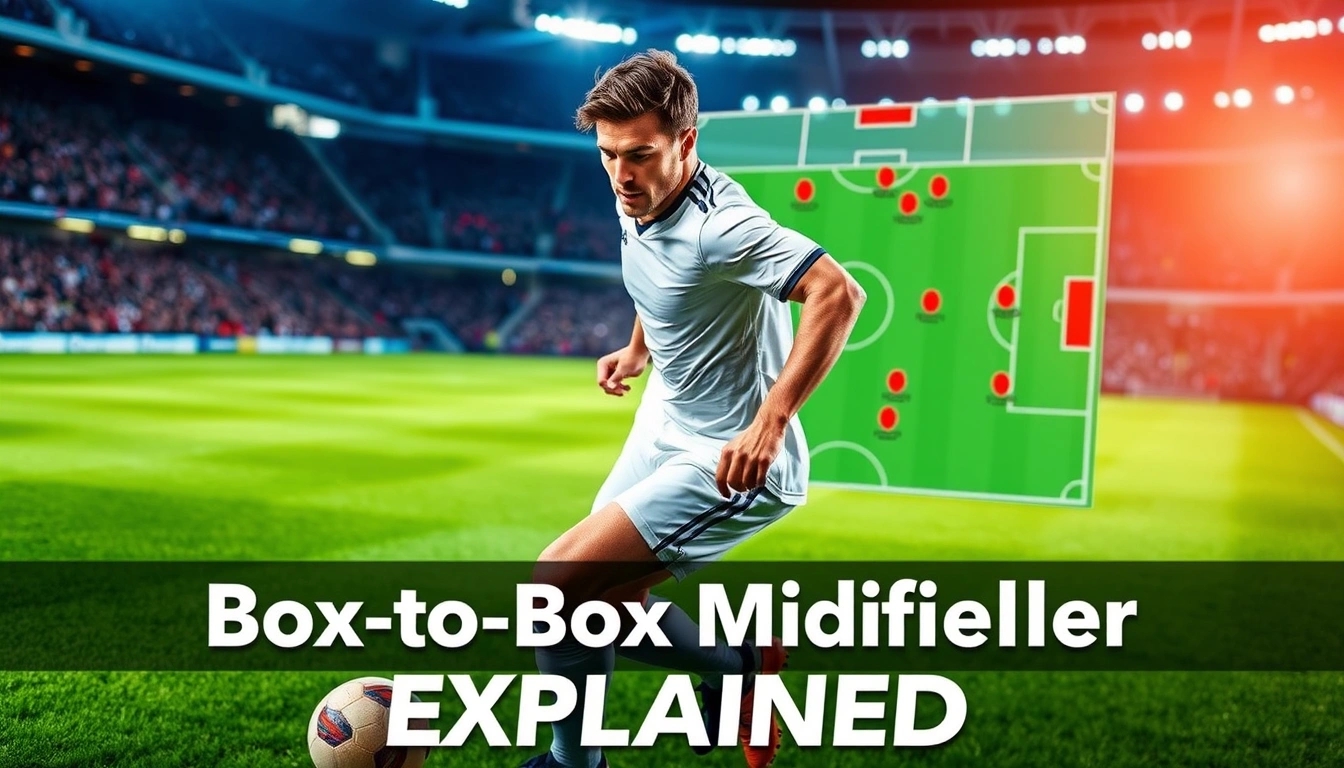
Alright, let’s talk about the box-to-box midfielder — the unsung hero who’s basically running a marathon every single game. If you ever wondered why some players look like they’ve got springs in their boots while others seem to nap on the pitch, chances are the former might be a box-to-box midfielder. These guys (or gals) are the heartbeat of any football team, covering more ground than a lost tourist in a new city. They’re not just stuck in one spot; nah, they hustle from their own penalty box all the way to the opponent’s, and back again. It’s like they’ve got a GPS tracking their every move, and honestly, they probably do.
| Role | Responsibilities |
|---|---|
| Defensive Duties | Breaking up attacks, intercepting passes, supporting defenders |
| Offensive Duties | Driving forward, creating chances, scoring goals |
| Link-Up Play | Connecting defense and attack, maintaining team shape |
Now, you might think, “Wait, isn’t that just a regular midfielder?” Not quite. The box-to-box midfielder is like the Swiss Army knife of the team — versatile, tough, and always ready to do a bit of everything. They need stamina that would shame a triathlete and a brain sharp enough to read the game like a novel. Without them, the team’s rhythm can fall apart faster than a house of cards in a storm.
- Stamina: Running up and down the pitch non-stop.
- Tactical Awareness: Knowing when to attack, when to defend.
- Technical Skill: Passing, dribbling, shooting — the whole package.
Here’s a little secret — these players don’t always get the glory. They might not be scoring the flashy goals or making jaw-dropping saves, but they’re the glue holding everything together. Think of them as the caffeine in your morning coffee — not always noticed but absolutely essential.
"Box-to-box midfielders are like the engine of a car — without them, you’re not going anywhere fast."
So next time you’re watching a game and see a player sprinting from one end to the other, tackling, passing, and occasionally blasting a shot on goal, give them a nod of respect. They’re doing the dirty work that keeps the team ticking.
In short, the box-to-box midfielder is the heartbeat, the workhorse, and sometimes the unsung hero of the squad. And honestly? Football would be a lot less exciting without them.
Defining the Box-to-Box Midfielder
Alright, let’s dive straight into what a box-to-box midfielder actually does on the pitch because honestly, it’s not as straightforward as just running up and down all day (though, yeah, they do a lot of that too). Picture this: a player who’s constantly shuttling between their own penalty box and the opponent’s, covering every blade of grass in between. That’s your classic box-to-box midfielder. They’re the ultimate workhorses, the engine room, the heartbeat—call it what you will—but without them, a team’s balance often falls apart.
Now, the term itself kinda gives away the main gig: “box-to-box.” It means these midfielders are equally involved in defense and attack. When the opposition is pressing hard, they’re the first line of defense, breaking up play, intercepting passes, and hustling like there’s no tomorrow. Then, just as quickly, they flip the script and surge forward, linking up play, threading passes, or even taking shots themselves. It’s like they’ve got two jobs in one, and somehow manage to pull it off without looking totally knackered (well, most of the time).
| Role Aspect | What It Means | Example Actions |
|---|---|---|
| Defensive Duties | Shielding the defense, regaining possession, and disrupting attacks | Tackling, intercepting, tracking back, marking opponents |
| Offensive Duties | Supporting forwards, creating chances, and scoring goals | Dribbling forward, making key passes, late runs into the box, shooting |
But here’s the kicker: not every midfielder who runs a lot is a true box-to-box. Some might be more limited to defensive roles or purely attacking ones. The real deal is the player who can switch gears seamlessly, showing both grit and flair. It’s a bit like being a Swiss Army knife on the field—versatile and indispensable.
- Energy and Stamina: These players need lungs of steel. They’re expected to cover massive distances, often topping 10-12 kilometers per match.
- Tactical Awareness: Knowing when to hold position and when to burst forward is crucial; it’s a constant mental chess game.
- Technical Skills: Passing, ball control, and shooting can’t be sloppy—these guys often dictate the tempo.
To sum it up, a box-to-box midfielder is like the team’s Swiss watch—constantly ticking, keeping everything running smoothly, and ready to spring into action at any moment. Without them, teams can look disjointed, lacking the vital link between defense and attack. So next time you see a player darting all over the pitch, making tackles one minute and threading a killer pass the next, give a nod—they’re probably the unsung hero, the true box-to-box maestro.
Fun fact: Some of the best managers swear by having a strong box-to-box presence, saying it’s the secret sauce to controlling the midfield battle. So yeah, it’s more than just running—it’s about dominating the game in every sense.
Key Attributes of Box-to-Box Midfielders
Alright, let’s get real about what makes a box-to-box midfielder the absolute engine of any football team. These players don’t just stroll around the pitch looking pretty—they’re the ones who run themselves into the ground, cover every blade of grass, and somehow still have the brainpower to make smart plays. It’s like they’ve got a secret battery that never dies, because stamina? Oh, it’s off the charts. Imagine running up and down the field for 90 minutes straight, switching from defense to attack like it’s no big deal. That’s no small feat, and it’s what sets these midfielders apart from your average Joe.
But stamina is just the tip of the iceberg. You need to have tactical awareness that borders on psychic. These players read the game like a novel, anticipating opponents’ moves, positioning themselves perfectly to intercept passes or create chances. It’s like they’ve got eyes in the back of their head (or at least, that’s what it feels like). They’re not just reacting—they’re thinking two, three steps ahead. And that mental sharpness? It’s what keeps the team balanced, switching gears seamlessly between defense and attack.
| Attribute | Why It Matters | Example |
|---|---|---|
| Stamina | Allows constant movement throughout the match, supporting both defense and attack. | Running tirelessly to close down opponents or join attacks. |
| Tactical Awareness | Helps anticipate plays and maintain team shape. | Interceptions and timely positioning. |
| Versatility | Ability to contribute in multiple phases of play. | Switching roles from ball-winning to playmaking. |
| Passing Ability | Crucial for linking defense to offense. | Delivering accurate long balls or quick short passes. |
| Physicality | Winning duels and protecting the ball under pressure. | Strong tackles and shielding the ball. |
Now, don’t get me wrong—being a box-to-box midfielder isn’t just about running non-stop. You gotta have some serious mental grit too. These guys get tackled hard, face constant pressure, and still keep their cool. It’s a tough gig. They’re expected to be everywhere, but also nowhere at the same time—covering their teammates’ backs without leaving gaps. It’s a balancing act that requires sharp decision-making and nerves of steel.
- Endurance: Not just physical but mental endurance to stay focused for the full 90.
- Spatial Awareness: Knowing where to be, when to press, and when to hold back.
- Work Rate: The relentless effort that never lets up.
- Creativity: Finding that unexpected pass or run to unlock defenses.
Here’s a little practical nugget: coaches often drill these players with high-intensity interval training to mimic the bursts of energy needed during matches. Plus, drills that combine physical exertion with quick decision-making help sharpen their mental edge. Because let’s face it, if you’re just physically fit but mentally slow, you’re toast.
So yeah, box-to-box midfielders are basically the Swiss Army knives of football. They’re expected to do a bit of everything—defend, attack, support, create. And that’s why they’re so damn valuable. Without them, teams lose that heartbeat, that relentless pulse that keeps the game ticking. And honestly? Watching a great box-to-box midfielder in action? It’s like poetry in motion, if poetry involved a lot of sweat and bruises.

Historical Greats Who Nailed the Role
When you talk about box-to-box midfielders, you’re diving into a role that demands relentless energy, insane versatility, and a footballing brain that’s always ticking. These players don’t just hang around one spot on the pitch—they’re the engines, the workhorses, the unsung heroes who run from their own penalty box all the way to the opponent’s. Over the decades, some legends have absolutely defined this role, setting standards so high that today’s midfielders still chase their shadows. Let’s take a stroll down memory lane and give credit where it’s due.
- Frank Lampard – The quintessential goal-scoring midfielder. Lampard wasn’t just about breaking up play; the guy had a nose for goal that was borderline unfair. If you think midfielders can’t score, think again. Chelsea’s legend combined tactical smarts with an uncanny ability to arrive late in the box and finish clinically. His stamina? Off the charts. He ran, he tackled, he scored—basically did everything except cook dinner for the team.
- Steven Gerrard – Ah, Stevie G. The embodiment of passion and power. He could launch a rocket from 30 yards, break up attacks, and then sprint down the pitch like a man possessed. His leadership? Next level. Liverpool’s heartbeat for years, Gerrard’s box-to-box style was as much about heart as it was about skill.
- Patrick Vieira – The midfield general who made life miserable for opponents. Vieira was a fortress in defense and a creative force in attack. His physicality and tactical intelligence meant he could boss the midfield battlefield with ease. Plus, his cool demeanor masked a fierce competitor underneath.
| Player | Era | Key Strengths | Iconic Moment |
|---|---|---|---|
| Frank Lampard | 2000s | Goal-scoring, stamina, tactical awareness | Scoring in Champions League finals |
| Steven Gerrard | 2000s-2010s | Leadership, long-range shooting, work rate | 2005 Champions League Final comeback |
| Patrick Vieira | 1990s-2000s | Physicality, defensive skills, vision | Dominating midfield battles vs. top teams |
| Lothar Matthäus | 1980s-1990s | Versatility, endurance, passing | Winning 1990 World Cup as captain |
| Roy Keane | 1990s-2000s | Aggression, leadership, tackling | Driving Manchester United’s dominance |
Now, if you think being a box-to-box midfielder is just about running up and down, you’re only scratching the surface. These legends had brains as well as brawn. They read the game, anticipated danger, made split-second decisions, and could switch from defense to attack faster than you can say “pass it here!” It’s no wonder coaches drool over players who can pull this off consistently.
Let’s not forget the mental toughness it takes. Imagine running 10 kilometers in a match, getting knocked around, then finding the energy to thread that perfect pass or take a shot from outside the box. It’s exhausting just thinking about it! And yet, these guys made it look almost easy.
Quick Tips from the Legends:- Always stay alert: anticipate both attack and defense.- Build stamina relentlessly — the role demands it.- Master passing under pressure.- Develop a killer instinct for goal opportunities.- Lead by example; the team looks up to you.
In short, these historical greats didn’t just play the box-to-box role—they redefined it. They set the bar, and while the game evolves, the essence of what they brought to the pitch remains a blueprint for aspiring midfield maestros. Next time you watch a midfielder darting across the field, remember: they’re standing on the shoulders of giants.
Modern Examples in Today’s Game
When you talk about box-to-box midfielders today, you’re diving into a world where stamina meets skill, and hustle clashes with flair. These players are the engines of their teams, running from their own penalty box all the way to the opponent’s, making tackles, threading passes, and sometimes scoring screamers. But who really nails this role in the current football scene? Let’s dig in and spotlight some of the stars who bring that relentless energy and tactical smarts every single match.
First off, Joshua Kimmich is an absolute beast in this role. The dude covers ground like a machine, switching effortlessly between defense and attack. His vision is top-notch, and he’s not shy about joining the attack, often popping up in dangerous positions. What’s wild is how he manages to keep his cool under pressure, making him a coach’s dream. Then you’ve got Frenkie de Jong, who’s more of a smooth operator. His style is less about brute force and more about intelligent movement and slick passing. De Jong’s ability to glide past opponents and control the tempo is what makes him a modern maestro in the box-to-box game.
- Declan Rice – The gritty, no-nonsense type who’s all about breaking up play and driving forward with purpose.
- Bruno Fernandes – While more attacking-minded, he often drops deep to help out defensively, showing that versatility is key.
- Nicolo Barella – A tireless runner with a knack for popping up at the right moments to score or assist.
| Player | Key Strengths | Style | Team |
|---|---|---|---|
| Joshua Kimmich | Passing, Vision, Stamina | Balanced, Tactical | Bayern Munich |
| Frenkie de Jong | Ball Control, Dribbling, Game Tempo | Creative, Smooth | Barcelona |
| Declan Rice | Defensive Prowess, Physicality | Gritty, Direct | West Ham United |
| Nicolo Barella | Work Rate, Timing, Versatility | Energetic, Opportunistic | Inter Milan |
Now, don’t get me wrong, the box-to-box role isn’t all sunshine and rainbows. It demands insane fitness levels—like, you better be ready to run your legs off for 90 minutes. These players often get caught in that awkward spot where they’re expected to do everything but sometimes end up doing nothing perfectly. But when it clicks? Oh boy, it’s magic. You see it in how they dictate games, turning defense into attack in a heartbeat. And let’s not forget their mental toughness—handling pressure, making split-second decisions, and sometimes just sheer guts.
In fact, here’s a quick rundown of what makes modern box-to-box midfielders tick:
- Endurance: They’re the marathon runners of football.
- Versatility: Switching roles mid-game without breaking a sweat.
- Technical Skills: Passing, dribbling, tackling—you name it.
- Game Intelligence: Reading the game like a chess master.
So next time you watch a match, keep an eye on these midfield dynamos. They might not always grab the headlines like strikers or flashy wingers, but trust me, without them, the whole team’s rhythm falls apart. The box-to-box midfielder is the unsung hero, the heartbeat, the glue that holds the chaos together. And the current crop? They’re redefining what it means to be the ultimate workhorse with style.
In short: The modern box-to-box midfielder is a mix of grit, grace, and grind. They’re the players who run, tackle, create, and score—sometimes all in one game. And honestly, football wouldn’t be half as exciting without them.
How Box-to-Box Midfielders Influence Team Tactics
When it comes to shaping a team’s tactical identity, box-to-box midfielders are like the secret sauce coaches love to sprinkle on their formations. These players aren’t just running machines; they’re the glue that holds defense and attack together, often dictating the rhythm of the game. Coaches, knowing this, build setups that maximize their strengths, tweaking formations so these midfield dynamos can roam free and wreak havoc—or, you know, keep things neat and tidy when needed.
- Flexible Formations: The beauty of a box-to-box midfielder is their versatility. You’ll often see coaches favor systems like 4-3-3 or 4-2-3-1, where one or two midfielders have the freedom to surge forward and drop back without losing shape. In a 4-3-3, for instance, the midfield triangle lets the box-to-box player shuttle between defensive duties and attacking support seamlessly.
- Dynamic Role Adjustments: Depending on the opponent, these midfielders might be asked to sit deeper or push higher. Coaches tweak their positioning mid-game, sometimes turning a box-to-box into a more defensive anchor or an extra attacker. It’s like having a Swiss army knife in your squad.
Now, here’s where it gets interesting: the tactical tweaks don’t stop at just formations. Coaches often adjust pressing triggers based on the box-to-box player’s stamina and decision-making. If the midfielder is a workhorse with high energy, the team might press aggressively, trusting him to cover the gaps left behind. If not, the team might sit back and absorb pressure, using him more conservatively.
| Formation | Box-to-Box Role | Coach’s Tactical Focus |
|---|---|---|
| 4-3-3 | Central midfielder shuttling between defense and attack | Balance between ball recovery and quick transitions |
| 4-2-3-1 | One of the double pivots with license to move forward | Support attacking midfielders, cover fullbacks |
| 3-5-2 | Midfield engine driving box-to-box runs | Control central areas, overload midfield |
But don’t be fooled—this role isn’t just about running up and down like a headless chicken. The best box-to-box midfielders have an uncanny tactical awareness. Coaches exploit this by designing set pieces and in-game strategies that revolve around their ability to read the game. For example, during counterattacks, a box-to-box midfielder’s timing to break forward can be the difference between a goal and a wasted chance.
- Communication Hub: These midfielders often serve as the team’s communication hub, relaying instructions and adjusting teammates’ positions on the fly. It’s a role that demands brains as much as brawn.
- Creating Overloads: By pushing forward at the right moments, they help create numerical advantages in the opponent’s half, opening up spaces for wingers and strikers to exploit.
In a nutshell, when a coach has a quality box-to-box midfielder, the entire tactical approach can be more adventurous, fluid, and unpredictable. Without one, teams often become rigid, relying on fixed patterns and hoping for individual brilliance. So yeah, these midfielders don’t just run a lot—they run the show.
Practical Insight:
Tip for Coaches:- Identify your box-to-box’s stamina limits early; adjust pressing intensity accordingly.- Use flexible formations that allow midfielders to roam without losing defensive structure.- Train midfielders in situational awareness to maximize their impact on both ends of the pitch.
So next time you see a player hustling from penalty box to penalty box, remember: that’s not just heart, that’s tactical gold in motion.

Common Misconceptions About the Role
Alright, let’s get one thing straight before we dive in: the box-to-box midfielder is often misunderstood, and honestly, it’s no surprise. This role gets tossed around like a hot potato in football chats, with half-truths and myths muddying the waters. So, buckle up as we clear the fog and set the record straight on what a box-to-box midfielder really is—and what they definitely are not.
Myth #1: They’re Just Running Machines
Sure, stamina is a big deal. These players cover ground like they’ve got springs in their boots, but calling them mere “running machines” is selling them short. It’s not just about jogging up and down; it’s about intelligent movement. Knowing when to push forward, when to hold back, and how to conserve energy while still influencing the game. It’s like playing chess at 100 miles per hour.
Myth #2: They Only Play Midfield
Despite the name, box-to-box midfielders aren’t glued to the middle of the pitch. They’re dynamic, often drifting wide or dropping deep to collect the ball. Sometimes, they even sneak into the box to score or assist. Think of them as the Swiss Army knife of the team—versatile and ready to adapt.
| Misconception | Reality |
|---|---|
| Box-to-box midfielders are just tireless runners. | They combine stamina with tactical intelligence and timing. |
| They stick strictly to midfield zones. | They roam widely, supporting defense and attack. |
| They’re the same as defensive midfielders. | Box-to-box players contribute to offense and defense, unlike purely defensive midfielders. |
Myth #3: They’re Defensive Midfielders in Disguise
Nope, this one’s a classic mix-up. Defensive midfielders focus primarily on breaking up play and shielding the backline. Box-to-box midfielders do that but also jump into attack, often making late runs into the opponent’s penalty area. They’re like a double agent—working hard to stop attacks but equally eager to launch their own.
Myth #4: They’re the Same as Attacking Midfielders
On the flip side, they’re not just attacking midfielders with a bigger engine. Attacking mids are usually more creative and focused on unlocking defenses with passes or dribbles. Box-to-box midfielders chip in offensively but aren’t solely judged on flair or assists.
- Key takeaway: The box-to-box role demands a blend of physicality, brains, and adaptability.
- They’re the team’s heartbeat, connecting defense and attack seamlessly.
- Expect them to be everywhere—sometimes annoyingly so for opponents!
To wrap it up, if you think a box-to-box midfielder is just a glorified jogger or a defensive wall, you’re missing the bigger picture. These players are the engine room of the team, tirelessly working in the shadows and spotlight alike. They might not always grab the headlines, but trust me, without them, the team’s rhythm falls apart faster than a cheap pair of boots.
So next time someone throws the term around like it’s a buzzword, you can confidently call out the misconceptions and maybe even throw in a cheeky grin. Because understanding this role? That’s half the battle won.
Training Tips for Aspiring Box-to-Box Midfielders
Alright, so you want to become the engine of your team, the unstoppable force running from one penalty box to the other, huh? Becoming a box-to-box midfielder isn’t just about jogging around like a headless chicken. It’s a demanding role that requires a blend of stamina, skill, and a mindset tougher than a two-dollar steak. Lucky for you, here’s some practical advice and drills that’ll help you get there — or at least not embarrass yourself while trying.
- Build That Stamina: This position is a marathon, not a sprint. You gotta be able to run hard for 90 minutes plus extra time and still have the energy to make that crucial tackle or pass. Interval training is your new best friend. Try alternating between 2 minutes of high-intensity runs and 1 minute of light jogging or walking for about 20-30 minutes. Repeat 3 times a week and watch your lungs beg for mercy less often.
- Master the Basics First: Passing, dribbling, tackling — sounds obvious, but you’d be surprised how many players struggle with the fundamentals. Work on your first touch drills using cones or walls. Practice short and long passes with both feet. Remember, a box-to-box midfielder needs to be ambidextrous enough to surprise opponents and keep your teammates guessing.
- Train Your Mindset: This one’s often overlooked. You need to be mentally sharp and ready to switch gears from defense to attack in a blink. Visualization techniques help here — picture yourself intercepting a pass, sprinting forward, then threading a killer through-ball. Also, develop a thick skin. You’ll get knocked down, fouled, and sometimes ignored, but resilience is key.
| Drill | Purpose | How to Do It |
|---|---|---|
| Box-to-Box Shuttle Runs | Boosts endurance and recovery speed | Run from one penalty box line to the other, touch the line, jog back, repeat 10 times |
| 1v1 Tackling Practice | Improves defensive skills and timing | Partner tries to dribble past you in a small grid; focus on clean tackles and positioning |
| Passing Under Pressure | Enhances composure and accuracy | Set up a small square with teammates; practice quick passes while defenders try to intercept |
Now, don’t get cocky and think you’re gonna nail this overnight. The role demands grit and a willingness to put in the hard yards. Also, keep in mind: nutrition and recovery matter big time. You can’t run on empty or expect your muscles to perform like a well-oiled machine if you’re eating junk and skipping sleep. Hydrate, eat balanced meals, and stretch like your life depends on it.
Lastly, watch and learn from the pros. Study players like N’Golo Kanté or Jordan Henderson — they make the box-to-box role look effortless, but trust me, it’s anything but. Try to mimic their positioning, work rate, and decision-making. And hey, if you mess up? So what! Every great midfielder has been there, done that, and bought the t-shirt. Keep grinding, and soon enough, you’ll be the heartbeat your team can’t live without.
Remember: It’s not just about running up and down. It’s about smart running, sharp thinking, and relentless hustle. Now lace up those boots and get going!
Box-to-Box Midfielders vs. Other Midfield Roles
Alright, so you’re diving into the world of midfield roles and suddenly hit a wall trying to figure out what sets a box-to-box midfielder apart from the rest. It’s like comparing apples, oranges, and those weird hybrid fruits nobody really asked for. But don’t sweat it — let’s break it down, piece by piece, so you get a clearer picture.
First up, the box-to-box midfielder is basically the Swiss Army knife of the team. They’re running from their own penalty box all the way to the opponent’s, literally covering every inch of the pitch. Their job? Defend when needed, attack when possible, and never, ever stop moving. Stamina is their best mate, and tactical awareness is their secret weapon.
| Role | Main Responsibilities | Key Attributes | Typical Positioning |
|---|---|---|---|
| Box-to-Box Midfielder | Support defense and attack, link play across the pitch | High stamina, versatility, tactical intelligence | All over midfield, from defensive box to attacking box |
| Defensive Midfielder | Shield defense, break up opposition play | Positioning, tackling, anticipation | Just in front of the defense |
| Attacking Midfielder | Create scoring chances, support forwards | Creativity, vision, dribbling | Behind the strikers |
| Deep-Lying Playmaker | Dictate tempo from deep, distribute passes | Passing range, vision, calmness under pressure | Near defensive midfield, but focused on playmaking |
Now, let’s chat about the defensive midfielder. This guy (or gal) is like the team’s bodyguard. Their sole purpose? Protect the backline with fierce tackles and interceptions. They’re not usually the ones sprinting into the opponent’s half but hanging back, reading the game like a chess master. Think of them as the anchor, steady and reliable.
On the flip side, the attacking midfielder lives in the creative zone. These are the flashy players, the ones with the killer passes and the eye for goal. They’re not bogged down with defensive duties as much; instead, they’re busy threading through balls and unlocking defenses. Less running box-to-box, more thinking and threading killer passes.
- Deep-Lying Playmaker is a bit of a special case. Often mistaken for a defensive midfielder, but their role is more cerebral. They sit deep, control the rhythm, and spray passes like a maestro conducting an orchestra. They don’t chase the ball around as much but influence the game’s flow.
- Box-to-box midfielders combine bits of all these roles but with a heavy dose of endurance and grit.
Here’s the kicker: the box-to-box role is demanding as heck. Not every player can pull it off. You need the lungs of a marathon runner, the brain of a tactician, and the heart of a warrior. It’s why these players often become the team’s heartbeat — they connect defense and attack seamlessly.
Summary of Roles:- Defensive Midfielder: Defensive shield, disrupts attacks.- Attacking Midfielder: Creative spark, sets up goals.- Deep-Lying Playmaker: Tempo controller, deep passer.- Box-to-Box Midfielder: The all-rounder, covers every blade of grass.
So next time you hear commentators rave about a box-to-box midfielder, remember — they’re the unsung heroes who hustle, tackle, create, and score. They’re the glue holding the midfield together, the engine that never quits. And honestly, without them, a team’s midfield just feels a bit… flat.

Why Every Team Needs a Box-to-Box Midfielder
Alright, let’s get real for a second. In the chaotic, fast-paced world of modern football, the box-to-box midfielder is like that all-terrain vehicle everyone secretly wants on their squad. You know, the player who’s not just parked in one spot but basically runs a marathon every match, covering every blade of grass between their own penalty box and the opposition’s. This role isn’t just important—it’s crucial, and here’s why it can make or break a team’s entire vibe.
First off, the box-to-box midfielder is the heartbeat of the team. They’re the link between defense and attack, the glue holding everything together. Without someone who can track back to defend and then surge forward to support attacks, the team’s shape quickly falls apart. Imagine a team where midfielders just hang around waiting for the ball, or worse, only focus on defense or attack. It’s like having a car with no transmission—sure, the engine’s there, but the power never really gets to the wheels.
| Why Box-to-Box Midfielders Matter | Impact on Team Dynamics |
|---|---|
| Energy & Stamina | They cover huge distances, helping out everywhere, tiring out opponents and lifting teammates. |
| Versatility | Can defend robustly and then instantly switch to creative playmaking or goal-scoring runs. |
| Leadership on Pitch | Often act as on-field generals, dictating tempo and rallying the team during tough moments. |
Now, you might think, “Hey, can’t we just have specialists for defense and attack? Why bother with a jack-of-all-trades?” Well, that’s where the magic lies. The box-to-box midfielder’s ability to read the game, anticipate plays, and adapt quickly means the team stays balanced and unpredictable. Opponents find it harder to exploit gaps because this player is everywhere, plugging holes and launching counter-attacks.
- Defensive shield: They’re not just sitting back; they break up plays, win tackles, and intercept passes.
- Attack catalyst: They create chances, drive forward with the ball, and sometimes even finish off moves.
- Psychological edge: Their relentless work ethic can demoralize opponents and inspire teammates.
But here’s the catch—if a team lacks a true box-to-box midfielder, things can get messy real quick. Midfield can become a black hole where the ball stagnates, or worse, the defense gets exposed because no one’s tracking back. Coaches often say these players are the “engine room,” and without a strong engine, the whole machine sputters.
In the end, the box-to-box midfielder is not just a role; it’s a mindset. It demands physical toughness, tactical smarts, and a burning desire to do the dirty work without always getting the glory. So yeah, every team needs one—because in modern football, where space and time are luxuries, having a player who can do it all is like having a secret weapon that keeps the team ticking and kicking.
Remember: Teams with a top-notch box-to-box midfielder often have that extra edge—whether it’s grinding out a tough win or turning defense into a lightning-fast attack. Miss this piece, and you might as well be playing with one hand tied behind your back.
Frequently Asked Questions (The title must be written in English.)
- What exactly does a box-to-box midfielder do on the field?
Think of a box-to-box midfielder as the engine of the team, tirelessly running from their own penalty box all the way to the opponent’s. They’re involved in both defending and attacking, linking the backline with the forwards. This dual role means they need to be versatile, constantly switching gears between breaking up opposition plays and launching attacks.
- Why is stamina so important for a box-to-box midfielder?
Imagine running a marathon at a sprinter’s pace—that’s the kind of endurance these players need. Stamina allows them to maintain high energy levels throughout the game, covering vast distances and staying sharp in both defense and attack. Without it, they’d be toast halfway through the match!
- How do box-to-box midfielders influence a team’s tactics?
Coaches often build their game plan around these midfield dynamos because they offer flexibility. Their ability to contribute defensively and offensively means formations can be more fluid, allowing quick transitions and unpredictable plays. It’s like having a Swiss Army knife in your lineup—versatile and indispensable.
- Are box-to-box midfielders the same as attacking or defensive midfielders?
Not quite. While attacking midfielders focus mostly on creating chances and scoring, and defensive midfielders prioritize shielding the defense, box-to-box midfielders do a bit of both. They’re the all-rounders, covering more ground and balancing responsibilities across the pitch.
- Can anyone train to become a box-to-box midfielder?
Absolutely! While natural talent helps, dedication to building stamina, tactical awareness, and technical skills can get you there. Regular drills focusing on endurance, positioning, and ball control are key. Remember, it’s about working smart and hard to handle the demanding role.
- What are some common misconceptions about box-to-box midfielders?
One big myth is that they’re just high-energy runners without much skill. In reality, they need sharp tactical brains, precise passing, and the ability to read the game. Another misconception is that they’re just substitutes for specialized midfield roles, but their unique blend of skills makes them irreplaceable.
- Who are some legendary box-to-box midfielders to look up to?
Legends like Steven Gerrard, Patrick Vieira, and Lothar Matthäus defined this role with their relentless drive and game intelligence. Watching their highlights is like studying a masterclass in how to dominate the midfield from end to end.
- Why is a box-to-box midfielder crucial for every team?
Because they’re the heartbeat that keeps the team ticking. Their energy, versatility, and tactical smarts help balance the squad, making attacks smoother and defenses tighter. Without one, a team can feel like a car missing its engine—directionless and lacking power.