Football fans and tacticians alike often throw around terms like “third-man run” as if everyone’s supposed to know what’s cooking on the pitch. But if you’re scratching your head wondering what on earth this “third-man run” is, you’re not alone. Let’s unravel this clever little trick that adds spice and unpredictability to the beautiful game.
At its core, a third-man run is a sneaky attacking move involving three players: the ball carrier, the immediate receiver (second man), and the actual runner (third man) who makes a timely dash into space. The ball doesn’t go directly to the runner but is passed around, creating confusion for defenders who are left guessing who to track. It’s like a secret handshake between attackers that leaves defenders flat-footed and often out of position.
| Player | Role | Key Action |
|---|---|---|
| First Man | Ball Carrier | Initiates pass, draws defender |
| Second Man | Immediate Receiver | Controls ball, sets up third man |
| Third Man | Runner | Makes forward run into space |
Why bother with this? Because football is a game of space and timing. When defenders are glued to the first two players, the third-man run exploits that momentary lapse, slicing open defenses like a hot knife through butter. Coaches love it because it’s a brilliant way to break defensive lines without resorting to long balls or predictable dribbles. But don’t get it twisted — it’s not a walk in the park to pull off. Timing has to be spot on, and players need to be on the same wavelength, or you’ll end up with a misplaced pass or an offside flag ruining the fun.
- Timing: The third man must start the run just as the ball is played to avoid offsides.
- Communication: Silent cues or subtle glances often signal the move.
- Spatial Awareness: Knowing when and where to make that darting run is crucial.
Of course, it’s not always smooth sailing. Miscommunication can turn a promising third-man run into a chaotic mess, leaving your team vulnerable to counterattacks. And let’s be honest, defenders aren’t dumb—they’ll catch on eventually, especially if the same move is overused.
Still, when executed well, the third-man run is poetry in motion, a testament to football’s beauty and unpredictability. It’s no surprise that some of the most iconic goals in history have involved this tactic — a cheeky little run that changes the game in a blink.
In summary:
| Aspect | Importance |
|---|---|
| Definition | Three-player movement to create space and confuse defenders |
| Strategic Value | Breaks defensive lines and opens goal opportunities |
| Execution | Requires perfect timing and communication |
| Risks | Miscommunication and offsides can kill momentum |
So next time you see a slick pass followed by a sudden darting run that leaves defenders grasping at thin air, you’ll know — that’s the magic of the third-man run at work, making football that much more thrilling and unpredictable.
Defining the Third-Man Run
Alright, so you’ve probably heard commentators throw around the term “third-man run” during a match, but what the heck does it actually mean? Let’s break it down without getting too technical or snooze-worthy. Imagine a classic football move where two players are involved in a quick exchange of passes, right? Now, the third-man run is all about a third player — someone who isn’t directly involved in the initial pass but sneaks into space to receive the ball and shake things up. It’s like a sneaky little trick that often catches defenders totally off guard.
To put it simply, the third-man run is a tactical move where Player A passes to Player B, and instead of Player B just passing back or forward, Player C makes a well-timed run into an open spot, receiving the ball from Player B. The magic here is in the timing and the unexpected movement. Defenders usually have their eyes glued on the first two players involved, so when Player C darts in, it’s like a curveball they didn’t see coming. This sudden burst can open up gaps or create goal-scoring chances that wouldn’t exist otherwise.
| Term | Explanation |
|---|---|
| First Man | The player who initiates the pass, usually setting the move in motion. |
| Second Man | The player who receives the initial pass and then quickly passes to the third man. |
| Third Man | The player making the run into space to collect the ball, often catching defenders off balance. |
Now, you might be wondering, “Why bother with all this fancy footwork?” Well, the third-man run is a brilliant way to break defensive lines. Instead of just passing sideways or back, it forces defenders to make snap decisions — do they track the runner, or do they stick to their man? It’s a chess move, really. When executed well, it can cause chaos in the opposition’s defense, creating openings that are just begging to be exploited.
- Timing is everything: If the run is too early or too late, the whole move falls apart.
- Communication: Players need to be on the same wavelength, or else you get missed passes and lost chances.
- Awareness: The third man has to spot the gap and sprint into it with purpose.
Honestly, the third-man run is one of those subtle gems in football tactics — not always flashy, but when it clicks, it’s pure poetry. Defenders hate it because it forces them to rethink their positioning on the fly, often leaving them scrambling. It’s no wonder coaches rave about it despite the risks involved.
So next time you see a player darting into space just as a pass is made between two teammates, you’ll know — that’s a third-man run, baby! And it’s one of the reasons football remains so unpredictable and thrilling to watch.
Why Teams Use Third-Man Runs
When you watch a football match, some plays just leave you scratching your head, wondering how on earth that happened. One such clever trick is the third-man run. It’s not just a fancy phrase coaches throw around to sound smart; it’s a genuine game-changer. So, why do teams bother with it? Well, the answer lies deep in the tactical chess game that football really is.
At its core, the third-man run is all about breaking defensive lines. Defenders are trained to mark players and cut passing lanes, but the third-man run introduces a sneaky wrinkle—someone who isn’t directly involved in the initial pass suddenly bursts forward, catching defenders off guard. This creates a fresh angle, a new threat, and often, an opening that can be exploited for a goal-scoring chance. It’s like pulling a rabbit out of a hat when the defense thinks they’ve got everything locked down.
- Creates confusion: Defenders have to decide whether to track the runner or stick to their original marking duties.
- Generates space: By dragging defenders out of position, it opens gaps for teammates.
- Enhances unpredictability: Opponents find it harder to anticipate the next move.
Now, coaches absolutely love this move, even though it’s far from simple. Why? Because it demands intelligent movement and perfect timing—the kind of stuff that separates the good teams from the great. It’s not just about running fast; it’s about knowing when to run, where to run, and who to pass to. That’s why drills focusing on awareness and split-second decision-making are a staple in training sessions.
| Why Coaches Love Third-Man Runs | Challenges |
|---|---|
| Unlocks tight defenses | Requires high coordination |
| Encourages teamwork and vision | Timing mistakes can lead to turnovers |
| Creates high-quality chances | Complex to execute under pressure |
But here’s the kicker—while it looks brilliant when pulled off, the third-man run can be a double-edged sword. If the timing is off or the pass is misplaced, the whole move collapses faster than a house of cards. Defenders will pounce on the ball, and suddenly your team’s caught out of position. Still, the potential rewards far outweigh the risks, which is why it remains a favorite weapon in the attacking arsenal.
In the end, the third-man run embodies the beautiful game’s love for creativity and surprise. It’s a move that demands brains, guts, and a little bit of magic—exactly what makes football so endlessly fascinating. Coaches see it as a way to inject unpredictability into their play, keeping opponents guessing and fans on the edge of their seats. So next time you see a player darting off the ball seemingly out of nowhere, you’ll know it’s not just luck—it’s strategy in motion.
How Third-Man Runs Work in Practice
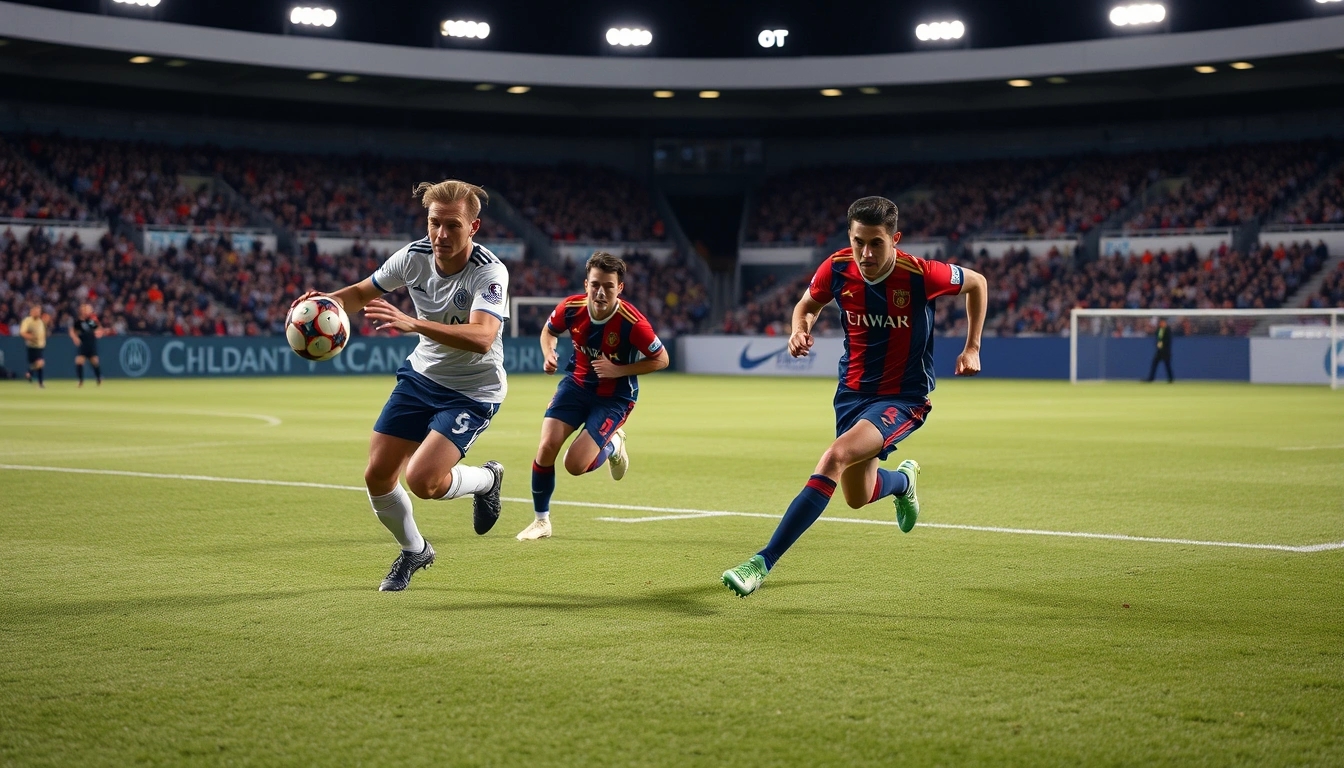
Alright, let’s get down to the nitty-gritty of the third-man run—a move that’s as much about brains as it is about boots. At first glance, it might seem like just another fancy pass-and-move trick. But nah, it’s way more intricate and, frankly, a bit of a gamble on the pitch. The whole idea revolves around three players: the ball carrier, the immediate receiver (the second man), and the third player who makes the run. The magic happens when the ball doesn’t go directly to the player making the run, but instead, it’s passed to a teammate who then immediately plays it into the third man, who’s darting into space. Sounds simple? Well, it isn’t.
- The Timing: This is the absolute dealbreaker. If the third man runs too early, defenders sniff it out like a bloodhound and cut it off. Too late, and the chance disappears faster than your favorite player’s stamina in the 90th minute.
- The Passing: Precision is king here. The pass to the second man has to be crisp but also set up perfectly for the third man’s run. It’s like threading a needle while running a marathon.
- The Movement: The third man’s run isn’t just a sprint; it’s a calculated dart into the gaps between defenders. This movement has to be unpredictable yet timed perfectly with the pass.
| Element | Key Considerations | Potential Pitfalls |
|---|---|---|
| Run | Exploit space behind defenders; avoid offsides | Poor timing leads to offsides or being marked out |
| Timing | Synchronize with passes and teammate runs | Too early or late disrupts play flow |
| Passing | Quick, accurate, and deceptive | Misplaced pass kills momentum |
| Movement | Dynamic, unpredictable, and sharp | Predictable runs get intercepted |
Now, here’s the kicker: this trick is risky. Why? Because it demands telepathic-like understanding among players. One slip-up, and you’re handing the ball to the opposition on a silver platter. But when it clicks, oh boy, it’s poetry in motion. Defenders get pulled out of position, leaving gaping holes for attackers to exploit. It’s like watching a well-rehearsed dance, but with sweat, grit, and a bit of madness.
Example Scenario:1. Midfielder (Player A) has the ball.2. Player B moves forward to receive a quick one-two pass.3. Player C times a run behind the defensive line.4. Player B, instead of holding the ball, lays it off perfectly for Player C.5. Player C bursts into space and either shoots or crosses.
Don’t be fooled into thinking this is just for the fanciful flair players. Coaches love it because it breaks defensive lines in ways straightforward passing can’t. It forces defenders into a guessing game, often causing hesitation or mistakes. Yet, it’s not for the faint-hearted or the uncoordinated. Training this requires hours of drills focusing on awareness, timing, and split-second decision-making. Without that, it’s just a mess waiting to happen.
So, next time you see a slick third-man run on the pitch, remember it’s not luck or magic—it’s a risky, well-orchestrated gamble that can turn the tide of a game in a heartbeat. And if it fails? Well, that’s football for you—sometimes you win, sometimes you learn.
Player Roles in a Third-Man Run
When it comes to the third-man run in football, not just any player can pull it off with flair. This clever tactical move relies heavily on the right players stepping up at the right time, with the right skills. So, who usually takes on this sneaky role, and what makes their involvement so crucial? Let’s break it down.
- The Playmaker: Often the initiator of the third-man run, the playmaker is the one who spots the opportunity and sets things in motion. Their vision and quick decision-making are key. Without a sharp eye and a deft pass, the whole move can fall flat.
- The Ball Carrier: This player draws defenders in, creating the space needed for the third man to exploit. Usually, it’s a midfielder or winger with good dribbling skills who can hold the ball under pressure and time their pass perfectly.
- The Third Man: The star of the show, the third man is the one making the run into space, often unnoticed by defenders. Their timing and positioning are everything — too early or too late, and the move is dead in the water. Speed, anticipation, and a knack for reading the game come into play here.
| Player Role | Key Attributes | Contribution to Third-Man Run |
|---|---|---|
| Playmaker | Vision, Passing Accuracy, Creativity | Initiates the move with a smart pass, identifying gaps in defense |
| Ball Carrier | Dribbling, Ball Control, Composure | Engages defenders, draws pressure to open space |
| Third Man | Speed, Timing, Game Intelligence | Makes the decisive run into space, receives the pass to continue attack |
It’s worth noting that not every player is cut out for the third-man run. For instance, a slow striker might struggle to time the run perfectly or lose the defender’s marker. Similarly, defenders rarely get involved in these runs, unless they have exceptional ball skills and confidence to carry the ball forward. Midfielders and wingers tend to excel here because their roles naturally involve quick thinking and movement off the ball.
Now, let’s talk about positioning. The third-man run thrives on spatial awareness. Players must sense when to break away from their markers and exploit the gaps created by their teammates. It’s a bit like a dance — if one partner misses a beat, the whole routine looks awkward. And trust me, defenders love it when you mess up the timing.
- Timing is everything: The third man should ideally run just as the ball carrier prepares to pass. Too early, and defenders catch on; too late, and the chance is lost.
- Communication: Whether verbal or through subtle gestures, players must be on the same wavelength. Miscommunication can lead to turnovers or wasted opportunities.
In real games, you often see the third-man run executed by those with a bit of swagger — players confident enough to take risks and sharp enough to read the defenders’ body language. It’s not just about speed; it’s about knowing when to explode into that space.
So next time you watch a slick passing move that leaves defenders scratching their heads, look out for the third man darting off the ball. That little run, often unnoticed by casual fans, can be the difference between a routine pass and a goal-scoring masterpiece.
In summary:
- Playmakers start the move with vision and precision.
- Ball carriers pull defenders out of position.
- Third men exploit the space with perfectly timed runs.
Master these roles, and the third-man run becomes a lethal weapon in any team’s attacking arsenal.
Common Mistakes and Challenges
When teams try to pull off the elusive third-man run, it often looks like a beautiful dance on the pitch—until it suddenly turns into a clumsy stumble. This tactic, while brilliant in theory, is fraught with pitfalls that can derail an attack faster than you can say “offside.” Let’s break down why executing a third-man run isn’t as easy as it looks, and why even the best squads sometimes get caught flat-footed.
- Miscommunication: The biggest culprit behind failed third-man runs is miscommunication. Imagine a player making a run expecting a perfectly timed pass, but the ball carrier either hesitates or misreads the run. Result? The move fizzles out, and the defense breathes a sigh of relief. It’s like a bad game of charades—one player’s thinking “go,” another’s thinking “stop.”
- Poor Timing: Timing is everything. If the third man runs too early, defenders can easily track him and snuff out the attack. Too late, and the opportunity’s gone, leaving the passer stranded or forcing a rushed decision. It’s a razor’s edge, and crossing it spells doom.
- Lack of Spatial Awareness: Players need to be acutely aware of their positioning and that of their teammates. A third-man run demands precision in movement to exploit gaps, but if the runner drifts too wide or too central, it either clogs the channel or leaves the pass impossible.
- Predictability: Overusing third-man runs without variation makes it easier for defenders to anticipate and intercept. Football isn’t chess, but it’s close—repeating the same pattern is like leaving your king open.
| Common Pitfall | Impact on Play | How to Fix It |
|---|---|---|
| Miscommunication | Loss of possession, stalled attacks | Clear signals, rehearsed patterns in training |
| Poor Timing | Runs caught offside or neutralized | Focused drills on synchronization |
| Lack of Spatial Awareness | Clogged lanes, ineffective passes | Improved positioning drills, video analysis |
| Predictability | Defenders anticipate and intercept | Mixing tactics, adding feints or decoys |
Now, you might wonder, why do teams even bother with something so risky? Well, when it works, oh boy, it’s poetry in motion—defenders left scratching their heads, goals scored out of thin air. But the truth is, the margin for error is tiny. One slip, and the whole move collapses like a house of cards. Players need to be on the same wavelength, the kind of telepathy that only comes from hours of practice and a bit of instinct.
And let’s not forget the human factor—pressure. In the heat of the moment, nerves can get the better of even the most seasoned pros. A split-second hesitation or a glance in the wrong direction can wreck the timing entirely. Plus, fatigue towards the end of games often leads to sloppy execution.
- Practical Tip: Coaches often emphasize repetition in training, drilling the exact moments when the third man should burst forward and when the passer should release the ball. It’s less about flashy moves and more about muscle memory.
- Another Insight: Video review sessions help players recognize their positioning errors and understand defensive patterns, making future runs smarter, not just faster.
In short, third-man runs are a double-edged sword—brilliant when synced well, disastrous when they’re not. Teams that master the art don’t just rely on flair; they combine communication, timing, and spatial intelligence to keep that momentum alive. Otherwise, it’s just another failed attempt that leaves fans groaning and coaches scratching their heads.
Famous Third-Man Runs in Football History
When it comes to football’s most jaw-dropping moments, third-man runs have this sneaky way of stealing the spotlight. You know that feeling when a play looks all straightforward, then suddenly bam!—someone you didn’t expect darts into space, pulls defenders apart, and sets up a goal that leaves everyone scratching their heads? Yeah, that’s the magic of the third-man run. It’s like the beautiful game’s secret weapon, a flick of tactical genius wrapped in unpredictability.
Let’s rewind to some legendary matches where this move wasn’t just a nice idea but a game-changer. Take the 2010 World Cup quarter-final between Uruguay and Ghana. Luis Suárez’s infamous handball aside, the build-up to the winning goal had a textbook third-man run. Edinson Cavani peeled off defenders just at the right moment, creating that little sliver of space for a killer pass. It was a perfect example of how timing and movement can slice through the tightest defenses.
| Match | Player Involved | Impact |
|---|---|---|
| 2010 World Cup QF: Uruguay vs Ghana | Edinson Cavani | Created decisive goal space |
| 2014 Champions League: Real Madrid vs Atlético | Isco | Helped unlock stubborn defense |
| 2018 Premier League: Liverpool vs Man City | Trent Alexander-Arnold | Assist with clever run |
Then there’s that 2014 Champions League clash where Real Madrid’s Isco pulled off a silky third-man run that sliced through Atlético Madrid’s famously tough defense. It wasn’t just about speed; it was that subtlety—the kind of move that’s so elegant it almost looks accidental. But nah, it’s all about practice and knowing exactly when to make that run.
- Why do these runs work? Because defenders usually focus on the ball carrier and the immediate passer, leaving the “third man” a ghostly presence creeping into dangerous pockets.
- What’s risky? If mistimed, it’s an easy interception or a wasted chance that can frustrate even the best teams.
Oh, and who could forget Trent Alexander-Arnold’s cheeky third-man run against Manchester City in 2018? The young full-back’s unexpected dart into space caught the City defense napping, allowing a cross that turned the tide. It was a textbook example of how youth and sharp football IQ blend perfectly to pull off these sneaky moves.
Key Takeaways for Third-Man Runs:- Timing is EVERYTHING.- Communication between players must be near-telepathic.- Requires high football IQ and sharp spatial awareness.- Can instantly change the momentum of a match.
In a nutshell, third-man runs are like that secret sauce in grandma’s recipe—if you get it right, it elevates the dish to legendary status. If you mess it up, well, you’re just left with a bland plate. But when it works? Oh boy, it’s football poetry in motion. And that’s why these moments are etched into football folklore, reminding us all that the game isn’t just about brute force or flashy footwork—it’s about brains, timing, and a little bit of cheeky unpredictability.
So next time you watch a match and see a player sneaking off the ball just when you least expect it, tip your hat. That’s the third-man run doing its thing, turning the tide, and making football the rollercoaster we all love.
Training Third-Man Runs: Drills and Tips
When it comes to perfecting the elusive third-man run, coaches often find themselves juggling a mix of patience, repetition, and a sprinkle of tactical wizardry. This move, while flashy on the pitch, demands razor-sharp timing and an almost telepathic connection between players. So, how do trainers get their squads to nail it consistently? Let’s dive into some practical insights and drills that emphasize the core ingredients: timing, awareness, and quick decision-making.
First off, timing is everything. A third-man run relies on the runner making their move at just the right moment—too early or too late and the whole play collapses like a house of cards. Coaches often start with shadow drills, where players rehearse the run without a ball, focusing purely on movement and synchronization. This helps ingrained muscle memory, so when the ball is in play, the run feels natural, not forced.
- Shadow Runs Drill: Players pair up and practice the run sequence repeatedly without the ball, emphasizing the exact moment to peel off defenders.
- Pass-and-Move Drill: A simple three-player drill where one passes to the second, who then lays off the ball to the third player making the run.
Awareness is the next hurdle. Players must constantly scan the field, reading defenders’ positions and anticipating teammates’ intentions. Coaches often incorporate small-sided games with tight spaces to force players into rapid scanning and decision-making. These games mimic match pressure and help players develop that sixth sense for when to make the run.
| Drill Name | Focus Area | Key Benefit |
|---|---|---|
| Shadow Runs | Timing | Builds muscle memory for perfect run execution |
| Pass-and-Move | Coordination | Enhances passing accuracy and movement synchronization |
| Small-Sided Games | Awareness & Decision-Making | Improves field vision and quick thinking under pressure |
Now, quick decision-making is where things get spicy. The third-man run is a split-second gamble; hesitate and the defense closes you down. Coaches stress scenario-based drills, throwing unexpected situations at players to sharpen their reaction times. For example, a drill might simulate a sudden defender press or a last-second change in passing option. Players learn to keep their heads cool and decide instantly whether to run, hold, or pass.
Here’s a quick checklist coaches swear by when training third-man runs:
- Emphasize communication—players need to talk and read body language constantly.
- Practice off-the-ball movement as much as passing skills.
- Encourage risk-taking in training to build confidence.
- Use video analysis to highlight both successful and failed runs for learning.
In the end, the third-man run isn’t just a trick — it’s an art form that blends precision, instinct, and a pinch of madness. Coaches who manage to instill these qualities in their players often see their teams unlock defenses like a master key. So next time you see that slick run slicing through defenders, remember: hours of sweat, drills, and a bit of chaos made it happen.

Third-Man Runs vs. Other Tactical Moves
The third-man run is one of those cheeky little tricks in football that can either make you look like a tactical genius or leave you scratching your head wondering what just happened. When you stack it up against other attacking strategies—like the classic overlap, the give-and-go, or even the long ball—it really shows its unique flair. But, of course, nothing’s perfect in football, right? Let’s dive into the good, the bad, and the “are you sure about that?” moments of the third-man run compared to other moves.
- Pros of the Third-Man Run: It’s brilliant for breaking down stubborn defenses. Unlike a simple 1-2 pass, the third-man run involves a player making a run off the ball to receive a pass from a teammate who’s not directly involved in the initial exchange. This can totally confuse defenders who are tracking the ball and the first runner, leaving the third man with space to exploit. It’s like a sneaky chess move that forces opponents to rethink their positioning.
- Cons of the Third-Man Run: Timing is everything here. If the run is early, late, or the pass isn’t weighted right, the whole thing falls apart. Plus, it demands high levels of communication and understanding between teammates, which isn’t always there—especially in teams that haven’t gelled fully or in high-pressure moments.
| Strategy | Best Used In | Advantages | Disadvantages |
|---|---|---|---|
| Third-Man Run | Compact defenses, tight midfield | Creates unexpected passing lanes, confuses defenders | Requires precise timing and chemistry |
| Overlap | Wide play, exploiting flanks | Stretches defense, creates crossing opportunities | Can be predictable and easy to defend |
| Give-and-Go (1-2 Pass) | Quick transitions, open spaces | Simple, fast, effective in tight spaces | Limited in congested areas, easy to intercept |
| Long Ball | Counter-attacks, bypassing midfield | Fast forward movement, catches defense off guard | Low accuracy, relies on physicality |
Now, when it comes to formations, the third-man run really shines in systems that encourage fluid movement and positional interchange. Think 4-3-3 or 3-5-2 where midfielders and forwards can rotate and swap roles easily. In rigid formations, it’s like trying to dance salsa in a straightjacket—possible but awkward. Other strategies like the overlap are more straightforward and can be executed with less fuss, especially in formations emphasizing wing play like 4-4-2.
- Game Situations Favoring Third-Man Runs: When the opponent sits deep and packs the midfield, third-man runs can unlock those tight spaces. It’s also handy when you want to keep possession and patiently carve out an opening.
- When to Avoid: If your team struggles with timing or lacks the technical ability to pull off quick, precise passes, sticking to simpler moves might be smarter. Also, under heavy pressure or in chaotic end-of-game scrambles, the third-man run can be a recipe for turnovers.
So, while the third-man run is undeniably stylish and effective in the right hands, it’s not a silver bullet. Coaches and players need to weigh their squad’s strengths and the match context before going all-in on this move. Sometimes, the old-school give-and-go or a well-timed overlap can do the trick without the risk of misfiring.
In the unpredictable world of football, mixing and matching tactics, including the third-man run, keeps defenses guessing—and fans on the edge of their seats. That’s the beauty of the game, after all: a bit of chaos wrapped in strategy.
Future of Third-Man Runs in Modern Football
The game of football is always evolving, and with it, the tactics and skills players bring to the pitch transform too. When it comes to the third-man run, a move that’s as sneaky as it is brilliant, the future looks both exciting and a bit unpredictable. You see, as defenses get smarter and more organized, the traditional ways of pulling off these runs might need a little tweak or two. But hey, that’s football for you — always a game of chess with a football.
First off, player fitness and speed are at an all-time high. Modern pros can dart past defenders quicker than ever, which means the timing of a third-man run could become razor-sharp. But here’s the catch — defenders are quicker to read these plays too. So, will the third-man run still catch them napping? Maybe, but only if teams get creative.
- Increased use of data analytics: Coaches are now obsessed with stats and heat maps. Expect third-man runs to be planned with surgical precision, exploiting tiny gaps in the defense that only numbers can reveal.
- More fluid positioning: Players won’t just stick to their zones. Midfielders and forwards might swap roles on the fly, making the third-man run less predictable and harder to defend.
- Technological aids in training: Virtual reality and AI could help players rehearse these moves until they become second nature, improving timing and coordination.
But it’s not all rosy. The complexity of the third-man run means it’s a high-risk, high-reward play. Teams that fail to sync perfectly can end up losing possession or breaking momentum — and in today’s fast-paced game, that’s brutal. Plus, as pressing and counter-pressing become more intense, the window for executing such runs shrinks.
| Trend | Impact on Third-Man Runs | Potential Outcome |
|---|---|---|
| Faster defenders | Reduce space and time for runs | More precise timing needed; fewer successful runs |
| Data-driven tactics | Identify optimal moments and zones | Higher success rate, smarter runs |
| Fluid formations | Unpredictable player movements | Defenders struggle to track; more opportunities |
| Advanced training tech | Improved player coordination | Better execution of complex moves |
So, what does this mean for the beautiful game? Well, if you ask me, third-man runs won’t disappear anytime soon. They’re just too stylish, too effective when done right. But the way teams use them might shift — less about flashy individual brilliance and more about collective intelligence and timing. Imagine a team where every player is tuned into the rhythm of the run, anticipating each move like a well-oiled machine. That’s the future.
In fact, I wouldn’t be shocked if we start seeing hybrid tactics where third-man runs blend with quick one-twos and overlapping runs, creating an almost hypnotic pattern that defenders simply can’t crack. It’s a bit like jazz — improvisation within a structure.
To wrap it up, the third-man run’s future is a mix of tradition and innovation. It’s a tactical gem that will adapt, survive, and maybe even thrive as football keeps spinning on its unpredictable axis. So next time you watch a game, keep an eye out — that sneaky third-man might just be the key to unlocking defenses in ways we’ve never seen before.
Frequently Asked Questions (The title must be written in English.)
- What exactly is a third-man run in football?
Think of a third-man run as a sneaky ghost in the attacking play. It’s when a player, not directly involved in the initial pass, makes a clever, timed run to receive the ball and break through the defense. This unexpected movement often confuses defenders and creates golden scoring chances.
- Why do coaches emphasize third-man runs?
Coaches love third-man runs because they add an element of surprise and fluidity to the attack. This tactic helps teams slice through tight defensive lines by introducing an extra layer of movement, making it harder for opponents to mark players and predict passes.
- Which players usually perform the third-man run?
Typically, midfielders or forwards with great awareness and speed pull off these runs. They have to be in sync with teammates, understanding the perfect moment to dart into space without drawing too much attention before receiving the ball.
- What are common mistakes when executing a third-man run?
Timing is everything here. Rushing the run too early or too late can kill the play instantly. Miscommunication between players or poor vision can also cause the move to fail, leaving the team vulnerable to counterattacks.
- Can you give an example of a famous third-man run in football history?
One iconic moment is when Johan Cruyff masterfully used the third-man run to dismantle defenses in the 1970s. Such plays have since become a hallmark of creative and effective attacking football.
- How do teams train to perfect third-man runs?
Training focuses on drills that sharpen timing, spatial awareness, and quick decision-making. Players practice making runs at the right moment and delivering precise passes to exploit gaps in the defense.
- How does a third-man run compare to other attacking tactics?
Unlike simple one-two passes or overlaps, third-man runs add complexity and unpredictability. While riskier due to the need for perfect coordination, when executed well, they can unlock the tightest defenses more effectively.
- Will third-man runs remain relevant in future football tactics?
Absolutely! As football evolves, players’ technical skills and tactical intelligence improve, making third-man runs even more potent. Expect to see this tactic adapt and flourish with faster, smarter gameplay ahead.