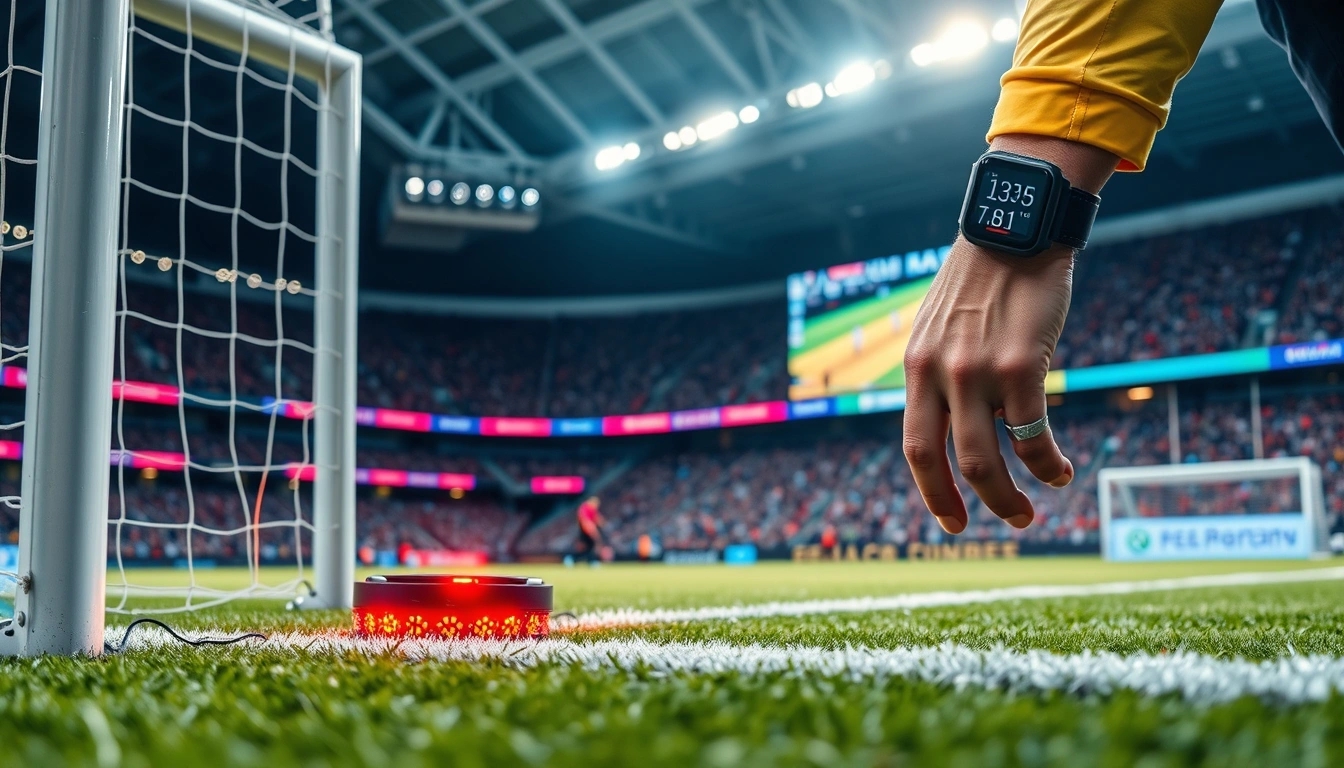
Alright, let’s get real about goal-line technology — that nifty bit of tech that’s been quietly (or not so quietly) changing the face of football over the last decade or so. If you’re the kind of fan who’s seen a match-deciding goal get swallowed by controversy, you know why this stuff matters. But what exactly is it? How does it work? And does it really make the game fairer, or just kill some of the drama we secretly love?
At its core, goal-line technology is designed to answer one simple question: did the ball completely cross the goal line? Sounds straightforward, right? But in the heat of the moment, with players piled up and the ball zipping around at lightning speed, human eyes and refs often get it wrong. Enter the tech.
| Component | Function |
|---|---|
| Cameras | Multiple high-speed cameras positioned around the goal track the ball’s exact location in real time. |
| Sensors | Embedded in the ball or the goalposts, these detect when the ball crosses the line. |
| Algorithms | Process camera and sensor data instantly to make a call within seconds. |
Now, before you start thinking this is some sci-fi magic, it’s actually pretty simple tech applied smartly. The two big players in this arena are Hawk-Eye and GoalRef. Hawk-Eye relies heavily on a network of cameras and image processing, while GoalRef uses magnetic fields and sensors embedded in the ball and goalposts. Both have had their moments of glory and, yep, a few hiccups too.
- Hawk-Eye: Famous for tennis and cricket, it uses 14 cameras to triangulate the ball’s position. Super precise but can struggle in poor weather.
- GoalRef: Uses magnetic induction, which is less affected by visual obstructions but requires special balls and equipment.
Here’s the kicker: despite the tech’s precision, it doesn’t always save the day. There have been occasions where the system’s delay or human error in interpreting signals led to confusion. And yes, some fans argue it sucks the soul out of those nail-biting “did it or didn’t it” moments. But come on, would you rather have a wrong call decide a World Cup final?
Players and referees have had to adapt too. Some refs grumble about feeling undermined, while others admit it’s a godsend, easing the pressure of split-second decisions. Players, on the other hand, sometimes act as if the tech is spying on their every move — which, well, it kind of is.
Practical Insight:- For coaches: Knowing the tech is there means training players to be aware of goal-line positioning.- For fans: Don’t expect the drama to vanish entirely; controversies now shift to other VAR decisions.
In the end, goal-line technology is one of those things football needed but maybe didn’t want — a bit like that strict referee who ruins your perfect dive. It’s making the game fairer, sure, but whether it’s making it less dramatic? That’s still up for debate.
The Birth of Goal-Line Technology
Football, the beautiful game, has always had its fair share of drama—some of it on purpose, some of it downright maddening. Before goal-line technology (GLT) stepped onto the pitch, fans, players, and referees were often left scratching their heads, wondering if that ball actually crossed the line or not. You know the scenes: a ball skimming the post, bouncing inches from the goal line, and the ref waving play on, while half the stadium erupts in fury. It was chaotic, messy, and honestly, sometimes felt like a bad joke on everyone involved.
The origins of goal-line technology are rooted in these very moments of chaos. For decades, football relied solely on the human eye—referees and their assistants—to make split-second decisions. But let’s be real: human error is part of the game, and sometimes it cost teams dearly. Remember the infamous 2010 World Cup match between England and Germany? Frank Lampard’s shot clearly crossed the line, but no goal was given. That blunder reignited calls for some kind of tech intervention. Fans were livid, pundits were ranting, and the sport’s governing bodies knew something had to change.
- Early Attempts: The first inklings of tech-assisted decisions appeared in the early 2000s, but the technology was clunky and unreliable.
- FIFA’s Hesitation: Despite mounting pressure, FIFA was slow to embrace GLT, worried about disrupting the flow and tradition of the game.
- High-Profile Errors: Each controversial non-goal piled on the pressure, making the need for a solution impossible to ignore.
Eventually, the desperation for fairness and accuracy pushed football into the 21st century. The idea was simple: use technology to provide referees with instant, undeniable proof whether the ball had crossed the goal line. But developing a system that could work in real-time, in stadiums packed with thousands of screaming fans and under all weather conditions, was no small feat.
| Year | Event | Impact |
|---|---|---|
| 1966 | Geoff Hurst’s controversial goal in World Cup Final | Early example of goal-line debate |
| 2010 | Frank Lampard’s disallowed goal vs Germany | Major catalyst for GLT development |
| 2012 | FIFA approves GLT for international matches | Turning point for tech adoption |
But here’s the kicker: even with all the tech wizardry, goal-line technology didn’t aim to take away the drama completely. It’s there to stop the outrageous mistakes that leave fans screaming at their TVs or referees getting death stares. It’s about fairness, not killing the game’s soul. Some purists grumble that it’s “too much tech,” but let’s face it—football needed a helping hand to keep things honest.
In the end, the birth of goal-line technology is a story of necessity born from frustration. It’s about football finally admitting that sometimes, human eyes just aren’t enough. And while it hasn’t erased all controversies, GLT has certainly made those nail-biting moments a little less nerve-wracking for everyone involved. The game moves on, but the memories of those chaotic disputes? They’ll always remind us why this tech was needed in the first place.
How Does Goal-Line Technology Actually Work?
Alright, let’s peel back the curtain and see what’s really going on behind the scenes when that tiny white ball teeters on the edge of glory or heartbreak. Goal-line technology (GLT) isn’t just some sci-fi gadgetry; it’s a clever cocktail of cameras, sensors, and algorithms working overtime to give referees the final say without the usual guesswork and heated debates.
First up, the cameras. Most stadiums equipped with GLT use a network of high-speed cameras positioned around the goalposts. These aren’t your average GoPros; we’re talking about cameras snapping pictures at hundreds of frames per second, capturing every micro-movement of the ball. Imagine a swarm of digital eyes, all focused, analyzing angles and trajectories.
- Camera Placement: Usually, 14 to 16 cameras are strategically placed, 7-8 per goal, to cover every possible viewpoint.
- High Frame Rate: They shoot at lightning speed to catch the ball’s exact position in real-time.
But what’s a camera without a brain? Enter the algorithms. These are sophisticated computer programs that process the visual data instantly. When the ball approaches the goal line, the algorithms calculate its exact position relative to the line — no room for “maybe it was in” or “did it cross?” moments. The system then sends a signal to the referee’s watch or earpiece, typically within a second or two. Fast, precise, and, most importantly, undeniable.
| Component | Function | Example System |
|---|---|---|
| Cameras | Capture ball movement at high speed and multiple angles | Hawk-Eye |
| Sensors | Embedded in ball or goalposts to detect crossing | GoalRef |
| Algorithms | Process data to determine ball position relative to goal line | Both systems |
Now, some systems like GoalRef take a slightly different approach. Instead of relying solely on cameras, they embed magnetic sensors inside the ball and goalposts. When the ball crosses the line, the magnetic field changes, triggering an instant alert. It’s like the ball is carrying a secret message just for the refs. Pretty neat, huh?
But hold your horses, it’s not all tech magic without hiccups. Sometimes, the systems have to wrestle with tricky situations—like a ball spinning wildly, or interference from other electronic devices. That’s where the software’s smarts get tested. Thankfully, these algorithms have been fine-tuned over years, but hey, no tech is 100% perfect, right?
- Speed vs. Accuracy: The system must be fast enough to keep the game flowing yet accurate enough to avoid errors.
- Environmental Factors: Rain, lighting, and stadium architecture can throw curveballs at the sensors and cameras.
At the end of the day, goal-line technology is like that ultra-reliable assistant referee who never blinks, never argues, and always tells the truth. It takes the drama out of the “did it cross or not?” saga, although some fans might miss the nail-biting suspense. Whether you love it or grumble about it, there’s no denying that GLT has changed football forever—making it fairer and sometimes a bit less chaotic.
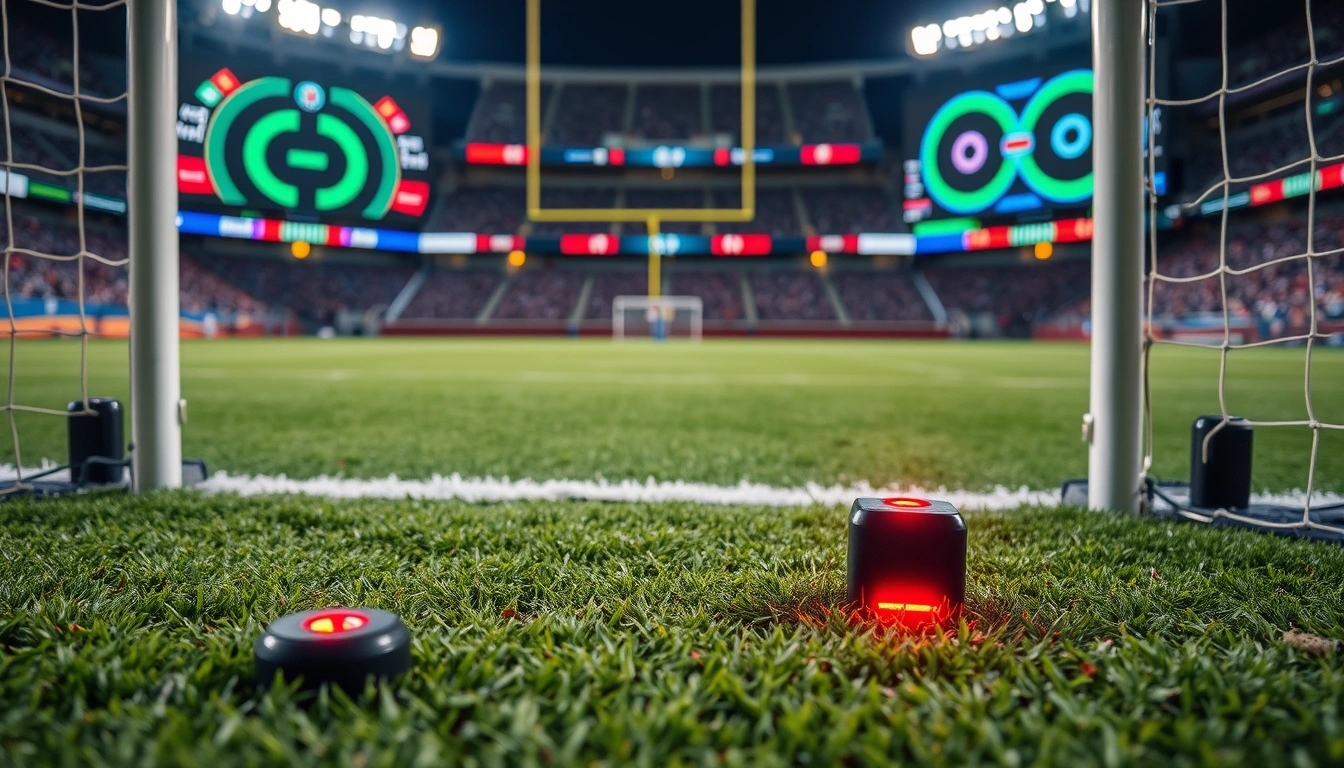
Hawk-Eye vs. GoalRef: The Tech Titans
When it comes to football’s quest for technological fairness, two systems have duked it out for the spotlight: Hawk-Eye and GoalRef. Both aim to solve the age-old problem of “Did the ball cross the line or not?” but they do it in wildly different ways, each with its own set of perks and quirks. Let’s unpack these two contenders, shall we?
Hawk-Eye is probably the more famous of the two, having made its name originally in tennis before crossing over to football. It relies on a network of high-speed cameras—usually around 14—strategically placed around the stadium. These cameras track the ball’s position in real-time, feeding data to a central computer which then reconstructs the ball’s trajectory in 3D. The magic moment comes when the system decides if the entire ball has crossed the goal line, sending a signal to the referee’s watch within a second or two. Pretty slick, right?
- Strengths: Highly accurate, instant feedback, minimal interference with the flow of the game.
- Weaknesses: Expensive to install and maintain, requires clear sightlines, can struggle in bad weather or with obstructed views.
On the other side of the ring is GoalRef, a bit of an underdog but no less impressive. Instead of cameras, GoalRef uses magnetic fields. The ball is embedded with a passive electronic sensor, and the goalposts are equipped with magnetic field generators. When the ball crosses the line, the system detects a change in the magnetic field, instantly alerting the referee. It’s a clever approach that sidesteps some of the visibility issues Hawk-Eye faces.
- Strengths: Works regardless of weather or lighting, less visually intrusive, generally cheaper to implement.
- Weaknesses: Requires special balls, occasional glitches reported with sensor sensitivity, and less widely adopted so fewer real-world tests.
| Feature | Hawk-Eye | GoalRef |
|---|---|---|
| Technology | Multiple high-speed cameras with 3D ball tracking | Magnetic field detection with sensor-embedded ball |
| Installation Cost | High | Moderate |
| Weather Dependence | Can be affected by rain, fog, or lighting | Unaffected by weather |
| Speed of Decision | ~1-2 seconds | Instant |
| Adoption | Used in Premier League, World Cup, Champions League | Used in some FIFA tournaments, less common in top leagues |
Now, let’s be real for a moment: neither system is flawless. Hawk-Eye’s reliance on cameras means it can sometimes get tripped up by players blocking the view or poor weather conditions. Remember that one time when a crucial goal was delayed because the cameras couldn’t quite get the angle? Yeah, not ideal. Meanwhile, GoalRef’s magnetic approach, while nifty, raises eyebrows because the ball has to be specially made, and sensors occasionally misfire—leading to the dreaded “false positive” or “no call” moments that fans love to complain about.
And here’s a fun tidbit: the choice between these systems isn’t always about tech superiority. Sometimes it’s politics, budgets, or just plain old tradition that decide which gets used. Some leagues swear by Hawk-Eye’s precision, while others prefer GoalRef’s simplicity and reliability in less-than-perfect conditions.
At the end of the day, both systems are crucial steps forward in making football fairer. They may have their glitches, but they sure beat the days of heated debates and angry managers waving their arms like they’re conducting an orchestra. Whether you’re team Hawk-Eye or team GoalRef, one thing’s for sure: goal-line technology has changed the game, and it’s only getting started.
When Technology Meets Human Error
Goal-line technology (GLT) was supposed to be the ultimate game-changer — the superhero swooping in to save football from those maddening, nail-biting moments when you’re left wondering if the ball really crossed the line or not. And, well, in many cases, it has done just that. But let’s not kid ourselves: it’s not all rainbows and perfect calls. Sometimes, even with the fanciest gadgets and smartest algorithms, human error still manages to sneak in through the back door. Yep, the tech is brilliant, but it’s not foolproof, and the humans behind the scenes can still fumble the ball.
Take, for example, the infamous 2014 World Cup quarter-final between France and Germany. Goal-line tech confirmed a goal after the ball crossed the line, but the referee’s hesitation and delay in signaling left fans biting their nails for what felt like an eternity. The tech did its job, but the human element — the decision-making speed — was slower than a Sunday league defender chasing a winger.
| Match | Technology | Outcome | Human Factor |
|---|---|---|---|
| 2010 FIFA World Cup (England vs. Germany) | No GLT (before implementation) | Disallowed goal despite ball crossing line | Referee missed the call, causing major controversy |
| 2014 FIFA World Cup (France vs. Germany) | GLT in use | Goal confirmed correctly | Referee hesitated, delayed signal |
| 2018 Premier League (Chelsea vs. Tottenham) | Hawk-Eye GLT | Goal confirmed instantly | Referee accepted tech without question |
Then there’s the curious case of GoalRef technology, which relies on magnetic fields rather than cameras. It’s a bit like the quirky cousin at family gatherings — effective but sometimes unpredictable. There have been moments when GoalRef’s sensors failed to detect a goal due to interference or unusual ball spin. Imagine the referee waving play on while the crowd is howling in disbelief. Technology’s supposed to cut out human error, but sometimes it just introduces a new kind of confusion.
- Human hesitation: Even with instant alerts, referees sometimes second-guess themselves.
- Technical glitches: Sensors can misfire or cameras can miss angles.
- Communication delays: The moment between tech detection and referee confirmation can feel like forever.
And let’s be honest, the pressure on referees has only shifted, not disappeared. They’re now expected to trust the tech but also make split-second decisions when the system is silent or ambiguous. It’s like being handed a shiny new GPS but still needing to rely on your gut when the signal drops. Some refs embrace the tech, others grumble about it — but everyone agrees it’s changed the game in ways we’re still figuring out.
In the end, goal-line technology is a fantastic tool, but it’s not a magic wand. It’s more like a trusty assistant that sometimes trips over its own shoelaces. The blend of human judgment and digital precision is messy, imperfect, and frankly, kind of beautiful — because it keeps football unpredictable, controversial, and endlessly entertaining.
Impact on Players and Referees
When goal-line technology burst onto the football scene, it wasn’t just the fans who had to adjust their expectations—players and referees found themselves smack dab in the middle of a tech revolution that’s been both a blessing and a headache. Sure, it’s supposed to make life easier by cutting out those nail-biting “did the ball cross the line or not?” moments, but the reality? It’s a mixed bag, and you can bet there’s been plenty of grumbling along the way.
Players, for one, have had to rethink how they approach those split-second sprints and scrambles near the goal. Back in the day, you’d see a striker celebrating wildly, only to be told later their goal didn’t count. Now? They might still celebrate—but with a bit more caution, waiting for the referee’s watch to buzz or the signal to flash. It’s like having a tech referee whispering in the background, changing the pressure dynamics on the pitch.
- Pressure Shift: Players can no longer rely on the chaos or referee’s hesitation to sneak in controversial goals.
- Trust Issues: Some players openly admit they don’t fully trust the system yet, worried about tech glitches or delays.
- Psychological Impact: The instant validation (or denial) can either boost confidence or crush morale in a heartbeat.
Refs? Oh boy, they’ve had to swallow a big slice of humble pie. The days of “my word is final” got a bit shaky when a tiny sensor or camera could overrule their gut feeling. Some refs embraced it like a lifesaver, especially under the global microscope where every call is scrutinized. Others? Well, they grumble quietly, missing the days when they could just trust their eyes and instincts without tech breathing down their neck.
| Aspect | Players’ Perspective | Referees’ Perspective |
|---|---|---|
| Pressure | More cautious, waiting for tech confirmation | Increased, as decisions are second-guessed |
| Trust | Mixed; some skeptical about tech faults | Varies; some rely on it, others feel undermined |
| Decision Speed | Slower celebrations, more tense moments | Decisions sometimes delayed due to tech checks |
But here’s the kicker: despite the occasional eye-rolls and muttered complaints, many admit that goal-line tech has taken a chunk of unfairness out of the game. No more “phantom goals” or “ghost saves” messing with results. It’s not perfect—there have been delays, and yes, a rare glitch or two—but it sure beats the chaos of the past.
Still, the tech has nudged the game’s emotional rollercoaster. Imagine a player who thinks they’ve scored, only to have the celebration cut short by that dreaded “no goal” signal. Or a ref who’s sweating bullets, waiting for the tech confirmation while the crowd roars or boos. It’s a new kind of pressure cooker, blending human instinct with cold, hard algorithms.
“Sometimes I feel like I’m playing chess with a robot,” one veteran referee joked in a recent interview. “You think you’ve made the right move, then the tech says, ‘Nope, try again.’ It’s humbling, but maybe that’s what the game needs.”
In the end, goal-line technology has reshaped the football landscape, forcing players and referees to share the spotlight with an invisible, digital third party. It’s a love-hate relationship, full of trust issues, pressure shifts, and moments where human error meets machine precision. Whether that makes the game better or just different? Well, that’s a debate that’s far from over.
Controversies and Criticisms
Alright, let’s be real for a second—goal-line technology (GLT) isn’t some flawless wizard waving a magic wand over football matches. Far from it. While it’s meant to be the ultimate truth-teller when the ball flirts with the goal line, the tech has had its fair share of hiccups, debates, and downright eyebrow-raising moments. It’s like that one friend who means well but sometimes messes up spectacularly, leaving everyone wondering, “Did that just happen?”
First off, the delays. Oh boy, the delays! You’d think in this era of lightning-fast tech, decisions would pop up instantly. Nope. Sometimes it feels like watching paint dry while the refs wait for the “all clear” from the tech team. Those agonizing seconds can drive players, coaches, and fans up the wall. Imagine a nail-biting World Cup knockout game, and suddenly everyone’s stuck staring at the ref waiting for a verdict. Tension? Through the roof.
- Delay duration: Typically 30 seconds to a minute, but some matches have seen longer waits.
- Fan frustration: Social media erupts with memes and rants during these pauses.
- Player reactions: Some visibly lose their cool, breaking the flow of the game.
Then there’s the occasional malfunction. Remember that infamous Premier League match where the tech “missed” a clear goal? Yeah, that one sparked outrage louder than a stadium chant. Technical glitches—be it sensor errors or camera misreads—remind everyone that this isn’t a perfect science. And when the system fails, the backlash is brutal, with pundits and fans alike questioning if we’re better off with good old human judgment. Spoiler alert: no one’s suggesting going back to the dark ages, but the frustration is real.
| Issue | Example | Impact |
|---|---|---|
| False negatives | 2014 Premier League match: Goal not awarded despite ball crossing line | Player protests, fan outrage, referee embarrassment |
| Technical delays | 2018 World Cup: 45-second wait for confirmation | Game flow disruption, increased tension |
| System incompatibility | Lower leagues lacking infrastructure | Unequal tech access, fairness debates |
And let’s not forget the human factor lurking behind the shiny tech curtain. The system relies on humans to operate and interpret the data—referees still make the final call. Sometimes, the tech says one thing, but the ref’s decision doesn’t quite line up, leading to heated arguments and conspiracy theories. It’s like trusting your GPS but still deciding to take that “shortcut” down a sketchy alley.
Critics also slam the cost and accessibility. Not every league or country can splash out on the expensive hardware or install the necessary infrastructure. This creates a patchwork of tech adoption—some leagues have it, some don’t—raising questions about fairness and consistency worldwide. Football is supposed to be the beautiful game for all, but when tech divides, it feels a bit messy.
To wrap it up, goal-line technology is a brilliant idea that’s still finding its feet. It’s saved countless matches from controversy but also stirred up its own share of drama. The tech isn’t perfect—far from it—and the debates, delays, and malfunctions remind us that in football, as in life, nothing’s ever black and white (or goal or no goal). So, buckle up, because this tech rollercoaster isn’t slowing down anytime soon.
Goal-Line Technology Around the World
So, here we are, taking a whirlwind global tour of goal-line technology — that nifty gadgetry designed to settle the “did the ball cross or not?” drama once and for all. But spoiler alert: it’s not as simple as slapping the tech everywhere and calling it a day. The football world is a patchwork quilt of acceptance, skepticism, and sometimes straight-up refusal to embrace the gizmo.
Let’s kick off with the European heavyweights. The English Premier League, arguably the most-watched league on the planet, jumped on the goal-line tech bandwagon back in 2013. Since then, they’ve been pretty much all-in, with Hawk-Eye leading the charge. The Germans and Italians? Also onboard, though Italy took its sweet time, debating whether to trust the tech or stick to good old human eyes and whistles. France and Spain have been a bit more cautious, deploying the tech mainly in big tournaments rather than across their entire leagues.
| League/Tournament | Tech Adoption Status | Preferred System |
|---|---|---|
| English Premier League | Fully Embraced | Hawk-Eye |
| Bundesliga (Germany) | Fully Embraced | GoalRef |
| Serie A (Italy) | Partial Adoption | Hawk-Eye |
| La Liga (Spain) | Limited Use | Occasional Hawk-Eye |
| Ligue 1 (France) | Limited Use | Hawk-Eye |
| MLS (USA) | Fully Embraced | Hawk-Eye |
| FIFA World Cup | Fully Embraced | Hawk-Eye |
Now, hopping over to South America, Africa, and Asia, the story gets a bit messier. You’d think with football being a religion in places like Brazil and Argentina, goal-line tech would be a no-brainer. But nope — cost, infrastructure, and sometimes just plain old tradition have slowed things down. The Copa Libertadores has flirted with the technology, but it’s not yet a fixture everywhere. African leagues? Most are still holding out, citing budget constraints and the fear that tech might “ruin the flow” of the game. Asia is a mixed bag — Japan’s J-League is progressive and tech-savvy, while others are still testing the waters.
- Why the hesitation? Well, for starters, not every league has the deep pockets of the EPL or Bundesliga.
- Then there’s the ‘human element’ argument — purists argue that football’s charm lies in its unpredictability and that tech might sterilize the game.
- Also, some federations worry about technical glitches and the chaos if the system fails mid-match.
And let’s not forget the international tournaments. FIFA has been a major advocate, rolling out goal-line tech in every World Cup since 2014. The UEFA Champions League? Fully on board. But regional competitions? It varies — some embrace it, others treat it like that weird cousin nobody talks about.
Summary of Global Goal-Line Tech Adoption:- Europe: Mostly embraced, with some leagues more enthusiastic than others.- Americas: Mixed, with top-tier tournaments using tech but domestic leagues slower.- Africa: Limited adoption due to costs and infrastructure.- Asia: Varied, with some leagues leading the charge and others hesitating.
So, in the grand scheme, goal-line technology’s global footprint looks like a patchwork quilt — some bright, tech-embracing patches, others still in the dark ages. Whether the hesitance is about money, tradition, or just plain stubbornness, one thing’s clear: the debate over goal-line tech is far from over. And honestly? That’s part of what keeps football endlessly fascinating.
The Future: Beyond the Goal Line
Alright, let’s talk about what’s coming next in the wild world of football technology. Goal-line tech was a game-changer—literally. But now? It feels like just the opening act in a much bigger, crazier show. Will it morph into full VAR integration, or are we heading somewhere even more bonkers? Buckle up, because football’s tech journey is far from over.
First off, let’s not kid ourselves—VAR (Video Assistant Referee) has been a bit of a rollercoaster. From saving refs’ skin to driving fans nuts with delays and “Was it or wasn’t it?” moments, it’s got its fair share of haters and fans alike. But combining goal-line tech’s pinpoint precision with VAR’s broader replay capabilities seems like the natural next step. Imagine a system where every tight call—offside, fouls, handballs—gets the same laser-focused attention as a goal-line decision. Sounds dreamy, right? Yet, the question remains: will the technology keep up with the pace and chaos of the game, or will it just add another layer of confusion?
- Potential Tech Advances: AI-powered decision-making that learns from past matches.
- Real-time data streaming: Instant feedback for referees and viewers alike.
- Augmented reality: What if fans at home could see the exact trajectory of the ball or offside lines live?
But hey, let’s not forget—football thrives on drama and controversy. Some purists argue that too much tech kills the soul of the game. After all, how many of us secretly enjoy the debates, the “Did that cross the line?” banter, or the referee’s human errors that fuel endless pub arguments? The challenge will be balancing tech’s accuracy with the game’s unpredictable charm.
| Tech Aspect | Pros | Cons |
|---|---|---|
| Full VAR Integration | More accurate decisions, fewer blatant errors | Longer game stoppages, frustration among players and fans |
| AI & Machine Learning | Faster, smarter calls; learning from patterns | Risk of over-reliance on tech; possible glitches |
| Augmented Reality for Fans | Enhanced viewing experience; deeper engagement | Could overwhelm casual viewers; tech access issues |
Looking even further ahead, some tech dreamers are tossing around ideas that sound like sci-fi. Think smart balls embedded with sensors that communicate with stadium systems or wearable tech on players that helps refs spot fouls or offside positions instantly. Or maybe, just maybe, a future where the referee’s whistle is replaced with a digital signal, cutting out human error entirely. Scary? Exciting? Probably both.
In the end, football’s tech evolution isn’t just about gadgets and gizmos. It’s about preserving the integrity of the game while embracing innovation. So, will the next chapter be seamless, or a bumpy ride filled with tech hiccups and heated debates? One thing’s for sure: the beautiful game is in for a tech makeover that’ll keep us all on the edge of our seats.
Stay tuned, because this is just the beginning.
Frequently Asked Questions (The title must be written in English.)
- What exactly is goal-line technology?
Goal-line technology is a high-tech system used in football to determine if the ball has completely crossed the goal line. Imagine having a hawk’s eye watching every angle—this tech removes the guesswork and drama, ensuring referees make the right call in split seconds.
- How does goal-line technology work during a match?
It’s a clever combo of cameras, sensors, and software algorithms. Multiple high-speed cameras track the ball’s position in real-time. When the ball crosses the line, the system instantly sends a signal to the referee’s watch—no need to pause the game for debates!
- What are the main types of goal-line technology systems?
The two big players are Hawk-Eye and GoalRef. Hawk-Eye uses multiple cameras to triangulate the ball’s position, while GoalRef employs magnetic fields and sensors inside the ball. Both aim for precision but use different tech approaches.
- Can goal-line technology make mistakes?
While it’s incredibly accurate, no technology is flawless. Rare glitches or delays can happen, but they’re far less frequent than human error. Overall, it’s a game-changer that boosts fairness in football.
- Has goal-line technology changed how referees and players behave?
Absolutely! Referees now have a safety net, lowering pressure during critical moments. Players, on the other hand, sometimes grumble about tech decisions, but most agree it makes the game fairer and reduces heated disputes.
- Why do some leagues still hesitate to use goal-line technology?
Cost, tradition, and infrastructure challenges play a big role. Not every league can afford the tech or wants to disrupt the classic feel of the game. However, the trend is shifting as more tournaments embrace these innovations.
- What’s next for goal-line technology and football tech in general?
We’re just scratching the surface! Future developments might integrate goal-line tech with full VAR systems or introduce even more advanced tracking tools, making football smarter and fairer than ever before.