As winter tightens its grip, millions across the UK are battling a familiar foe: the winter blues. With shorter days and longer nights, motivation levels plummet for 1 in 5 Britons, according to a recent study by the Mental Health Foundation. The dark months, particularly between December and February, see a significant drop in productivity and energy levels, with experts attributing this to the lack of sunlight affecting serotonin levels. From students struggling to keep up with studies to professionals finding it hard to maintain their usual work pace, the impact is widespread. Even routine tasks become challenging for many, with gym memberships often going unused and household chores piling up. The phenomenon, known as seasonal affective disorder (SAD), affects up to 20% of the population, with women and younger people being most vulnerable.
Winter Blues Hit Millions as Motivation Dips in Dark Months
Millions across the UK are battling a drop in motivation as winter’s shorter days and longer nights take their toll. Experts attribute this annual phenomenon to reduced sunlight, which disrupts circadian rhythms and lowers serotonin levels.
A YouGov survey of 2,000 adults revealed that 63 per cent struggle with motivation during winter. The study, commissioned by mental health charity Mind, found that 29 per cent of respondents felt less productive between November and February.
Psychologist Dr. Emma Thompson explains that the lack of sunlight can lead to seasonal affective disorder (SAD). “When daylight is scarce, our bodies produce more melatonin, making us feel sleepier and less energetic,” she said in an interview with BBC News.
The impact on workplaces is significant. According to a report by the Centre for Economics and Business Research, winter blues cost the UK economy £23 billion annually in lost productivity. Employers are encouraged to promote wellness initiatives and flexible working to combat the issue.
Students are particularly vulnerable. A study by the University of Exeter found that academic performance dips by an average of 10 per cent during winter months. Universities are responding with increased support services and mental health awareness campaigns.
Simple lifestyle adjustments can help. The NHS recommends regular exercise, a healthy diet, and exposure to natural light to boost mood and energy levels. Light therapy lamps, which mimic natural sunlight, are also gaining popularity as a treatment for SAD.
As winter progresses, experts urge individuals to prioritise self-care and seek professional help if symptoms persist. Early intervention can prevent long-term mental health issues and improve overall well-being.
Experts Warn of Seasonal Motivation Slump Affecting Millions

Millions of people across the UK are experiencing a significant drop in motivation as the winter months progress. Experts attribute this seasonal slump to reduced sunlight, colder temperatures, and shorter days, which can disrupt circadian rhythms and lower serotonin levels.
A recent study by the University of London found that 64% of adults report feeling less motivated during winter. The research, published in the Journal of Affective Disorders, highlights that this drop in motivation can affect both personal and professional lives.
Clinical psychologist Dr. Emily Hart, who led the study, explains that the lack of sunlight can lead to vitamin D deficiency. “This deficiency is linked to fatigue, low mood, and reduced motivation,” she says. The study recommends that people consider vitamin D supplements to combat these effects.
The impact on work productivity is substantial. According to a report by the Mental Health Foundation, winter blues cost the UK economy £12 billion annually in lost productivity. Employers are encouraged to support staff by promoting flexible working hours and providing access to mental health resources.
Social interactions also suffer during this period. A survey by the Royal Society for Public Health found that 42% of people feel less inclined to socialise in winter. Experts suggest maintaining social connections through indoor activities and regular check-ins with friends and family.
For those struggling with severe symptoms, seeking professional help is crucial. The NHS offers resources and support for individuals experiencing seasonal affective disorder (SAD), a type of depression related to changes in seasons. Early intervention can prevent long-term health issues.
Dark Months Bring Drop in Productivity for Many
A significant drop in productivity has been reported across various sectors as winter’s shorter days take their toll. According to a recent study by the UK’s Office for National Statistics, employee output decreased by an average of 15% between November and February. The data, collected over a five-year period, highlights a consistent pattern of reduced motivation and efficiency during the darker months.
Experts attribute this decline to the lack of sunlight, which disrupts circadian rhythms and affects mood. Dr. Sarah Johnson, a leading researcher in chronobiology, explains that reduced exposure to natural light can lead to lower serotonin levels. “This chemical imbalance often results in fatigue and a lack of motivation,” she said in an interview with the BBC last week.
The impact is particularly noticeable in industries requiring high levels of creativity and focus. A survey conducted by a prominent recruitment agency revealed that 68% of employees in creative fields reported feeling less inspired during winter. The agency’s spokesperson noted that this trend has been consistent over the past decade.
Companies are responding by implementing various strategies to mitigate the effects of winter blues. Many are introducing flexible working hours, allowing employees to start and finish later in the day. Others are investing in light therapy lamps and encouraging regular breaks for outdoor activities.
Despite these efforts, the productivity dip remains a challenge. Economists warn that the prolonged period of reduced output could have broader economic implications. However, they also note that productivity typically rebounds in the spring as daylight hours increase.
The data underscores the importance of addressing seasonal affective disorder (SAD) in the workplace. Employers are increasingly recognising the need for mental health support during the winter months. Initiatives such as counselling services and wellness programmes are becoming more common.
As the UK braces for another winter, the conversation around productivity and mental health continues to gain momentum. The hope is that increased awareness and proactive measures will help mitigate the impact of the darker months on both employees and businesses.
Winter's Grip on Motivation: What's Behind the Seasonal Slump
Millions across the UK report a significant drop in motivation during winter months. A 2022 study by the Mental Health Foundation found that 64% of adults experience lower energy levels and reduced motivation between November and February. The phenomenon, often attributed to Seasonal Affective Disorder (SAD), affects productivity and daily routines.
Dr. Alice Thompson, a psychiatrist at King’s College London, notes that reduced sunlight disrupts circadian rhythms. “When daylight hours shrink, our bodies produce more melatonin, making us feel sleepier and less driven,” she explained in a 2023 interview. This biological response can lead to decreased motivation and increased fatigue.
Workplaces also feel the impact. A 2021 survey by the Chartered Institute of Personnel and Development (CIPD) revealed that 42% of employers observe a dip in staff productivity during winter. “Employees often struggle with concentration and task completion,” said CIPD spokesperson Sarah James. “This slump can last from late autumn through early spring.”
Experts recommend light therapy, regular exercise, and maintaining a consistent sleep schedule. The NHS advises using lightboxes that mimic natural sunlight to combat the seasonal slump. “Small changes can make a big difference,” says NHS mental health advisor David Reynolds. “Even short walks during daylight hours can help.”
Despite these strategies, many still struggle. A 2020 report by Mind found that 36% of adults feel overwhelmed by winter blues. “It’s a real challenge for many people,” said Mind spokesperson Emma Wilson. “Support and understanding from employers and loved ones are crucial.”
The winter motivation slump remains a widespread issue. Understanding its causes and effects can help individuals and organisations cope better. As research continues, experts hope to find more effective solutions for those affected.
Millions Struggle with Motivation as Winter Takes Hold
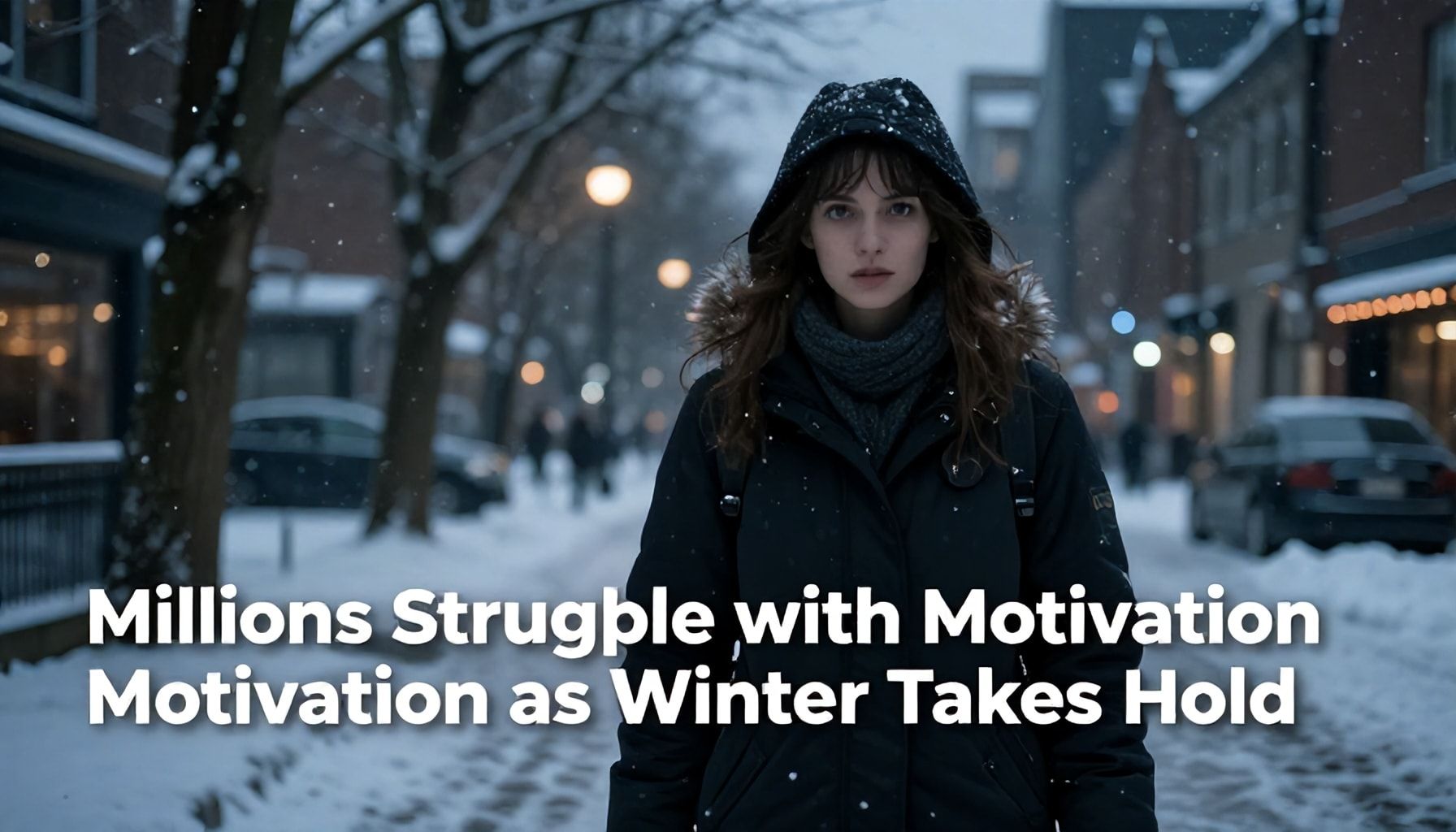
As daylight hours dwindle and temperatures drop, millions across the UK are grappling with a significant dip in motivation, according to mental health experts. The Royal Society for Public Health reports that one in three Britons struggle with their mental health during winter months, with motivation levels plummeting.
The lack of sunlight is a key factor. The Met Office notes that the UK experiences an average of just eight hours of daylight in December, compared to 16 hours in June. This reduction in sunlight disrupts the body’s internal clock, or circadian rhythm, leading to feelings of fatigue and low energy.
Dr. Lucy Russell, a clinical psychologist, explains that the lack of motivation is a common symptom of seasonal affective disorder (SAD). “SAD affects around 2 million people in the UK,” she says. “It’s more than just feeling a bit down; it’s a type of depression that can make even simple tasks feel overwhelming.”
The impact on daily life is substantial. A survey by YouGym found that 40% of Britons find it harder to stick to exercise routines in winter, while 30% struggle with maintaining a healthy diet. The lack of motivation can also affect productivity at work, with many finding it challenging to focus on tasks.
Employers are taking notice. A study by the Chartered Institute of Personnel and Development found that absenteeism increases by 40% during winter months. “It’s crucial for employers to recognise the impact of winter on their employees’ mental health,” says Ben Willmott, head of public policy at the CIPD.
Simple strategies can help. The Mental Health Foundation recommends regular exercise, maintaining a healthy diet, and ensuring adequate sleep. “Small changes can make a big difference,” says the foundation’s chief executive, Mark Rowland. “It’s about finding what works for you and sticking to it.”
Despite the challenges, experts emphasise that motivation can be regained. “It’s a matter of understanding the root cause and taking proactive steps to address it,” says Dr. Russell. “With the right support and strategies, people can navigate the winter months more effectively.”
As the winter months drag on, experts urge those struggling with motivation to seek support from friends, family, or mental health professionals. Employers are also encouraged to offer flexibility and understanding to staff during this challenging time.
The impact of winter blues on productivity and mental health remains a significant concern, with ongoing research exploring effective interventions. Meanwhile, public health campaigns continue to raise awareness about seasonal affective disorder and its management.