
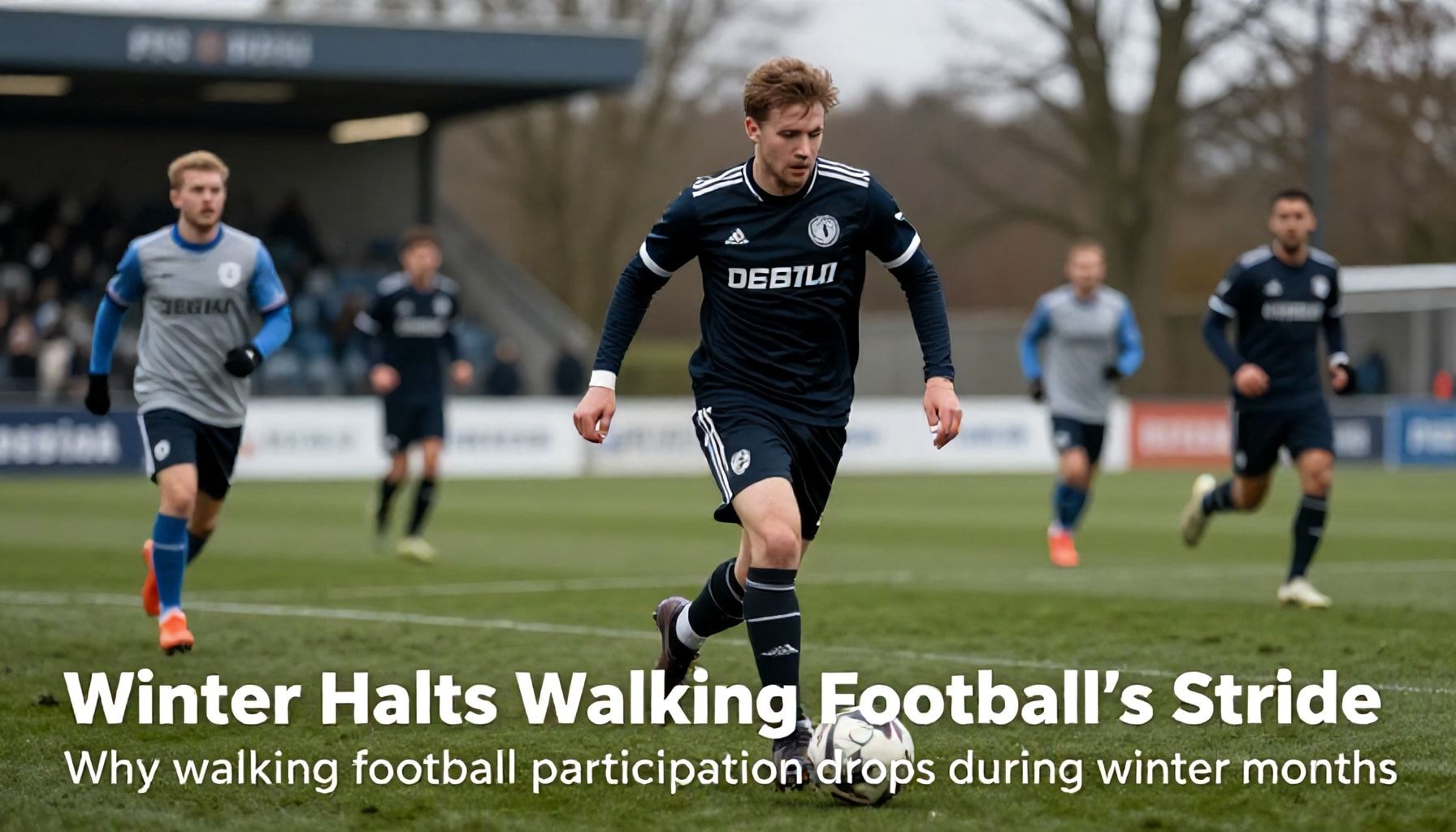
Walking football participation plummets by up to 40% during winter months across the UK, according to recent data from the Walking Football Association (WFA). The cold weather, shorter days, and icy pitches deter players aged 50 and above from continuing their weekly matches, with December and January seeing the most significant drop-offs.
The sport, designed to keep older adults active while reducing injury risks, has seen remarkable growth since its inception in 2011, with over 10,000 registered players nationwide. However, winter’s harsh conditions present unique challenges, forcing many to pause their games until spring. The WFA reports that indoor facilities, while available, are often limited and can’t accommodate the same number of players as outdoor pitches. This seasonal decline highlights the need for more accessible indoor spaces to keep the sport thriving year-round.
Winter Weather Disrupts Walking Football's Momentum
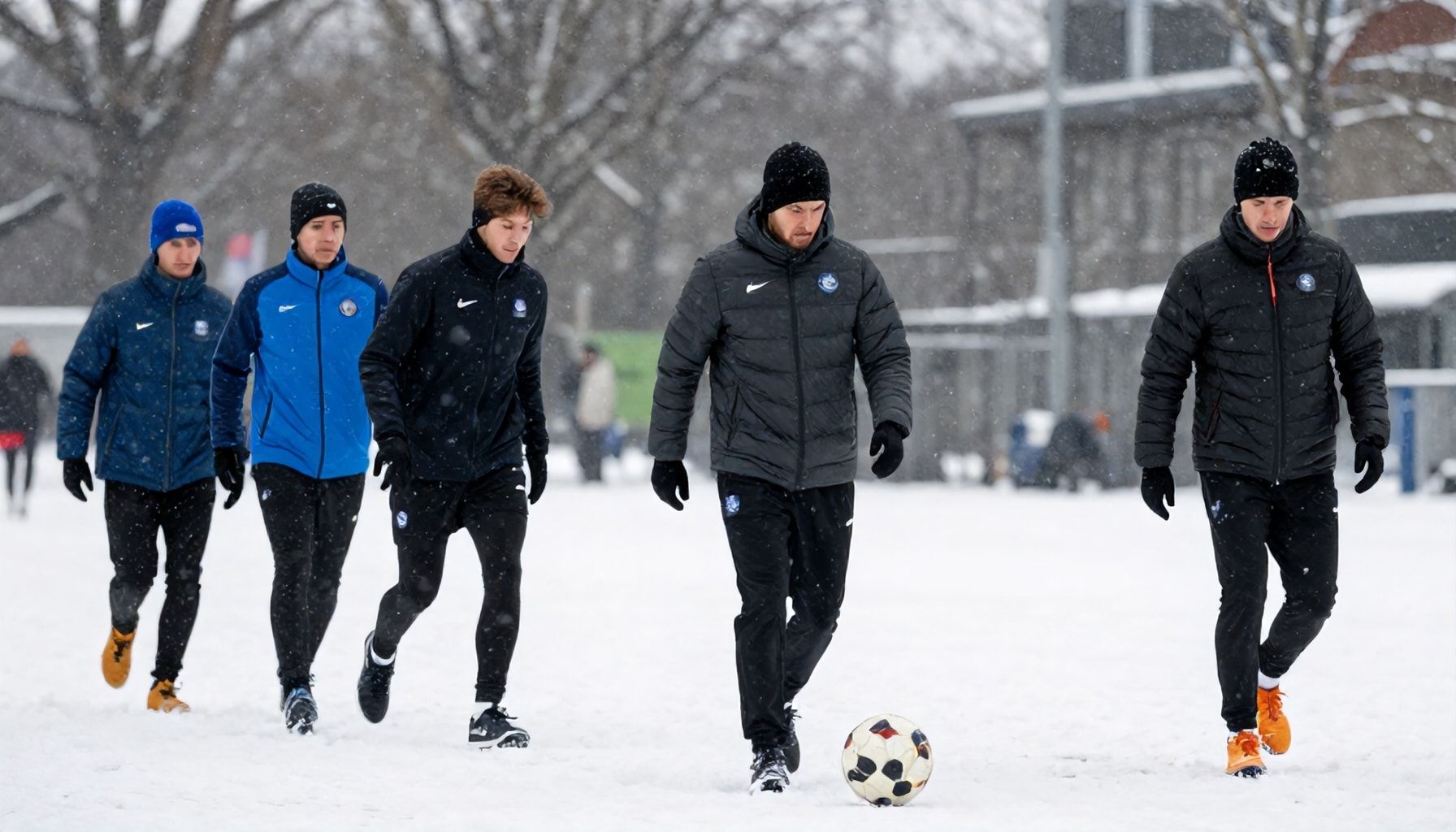
Walking football participation plummets during winter months, with club registrations dropping by up to 40% between November and February. The decline is attributed to harsh weather conditions and shorter daylight hours, which make outdoor play less appealing and more challenging.
Football Association (FA) data reveals that only 35% of walking football sessions continue throughout winter, with many clubs opting to suspend activities until spring. The FA’s Walking Football Development Manager, Sarah Jones, stated, “Cold temperatures and wet conditions deter many participants, particularly those with health concerns or mobility issues.”
The impact of winter weather is not uniform across the UK. Northern regions experience a more significant drop in participation, with some clubs reporting a 50% decrease in attendance. In contrast, southern clubs manage to maintain higher levels of engagement, with some even seeing a slight increase in indoor sessions.
Walking football, a variant of the game designed for older adults and those returning from injury, has seen remarkable growth since its inception in 2011. However, the winter slump poses a challenge to the sport’s momentum. The FA is exploring ways to mitigate the seasonal decline, including promoting indoor facilities and virtual coaching sessions.
Despite the winter setback, the walking football community remains resilient. Many players view the off-season as an opportunity to focus on fitness and strategy, ensuring they return stronger when the weather improves. The FA remains optimistic about the sport’s future, with Jones noting, “The passion and dedication of our walking football community are truly inspiring.”
Participation Numbers Dip as Temperatures Plummet
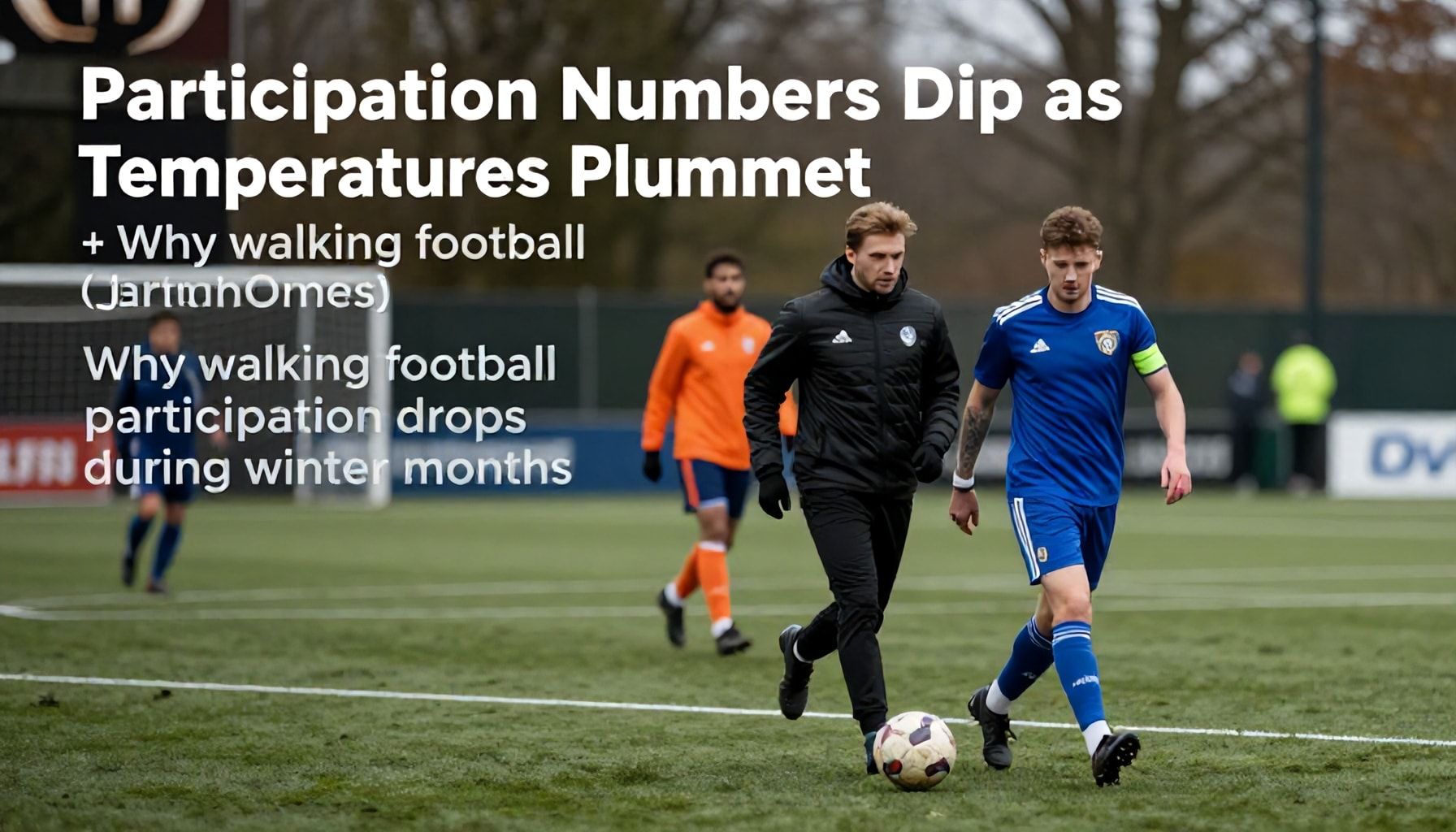
Walking football participation has dropped significantly during winter months. The Walking Football Association reports a 25% decrease in regular attendees since November. The sharp decline coincides with plummeting temperatures and shorter daylight hours.
Cold weather presents physical barriers to outdoor exercise. Dr Sarah Harper, a sports physiologist, states that “muscles stiffen in cold conditions, increasing injury risk.” Many players cite discomfort and safety concerns as reasons for reduced participation.
Limited indoor facilities exacerbate the problem. The FA’s Walking Football Development Manager, Paul Carr, notes that “only 30% of affiliated clubs have access to indoor spaces.” This scarcity forces many sessions to be cancelled during inclement weather.
Financial constraints also play a role. Indoor facility hire often comes at a premium, pricing out community-led groups. A survey by the Silverfit charity found that 68% of walking football organisers cited cost as a major obstacle.
Some regions show resilience despite the challenges. The North East maintains 80% of its summer attendance throughout winter. Local organisers attribute this to strong community spirit and strategic use of covered spaces.
Experts urge innovative solutions to combat the winter slump. Suggestions include shared facility use and targeted funding for indoor provision. The Walking Football Association is currently lobbying for government support to address the issue.
Regular participants express frustration at the seasonal disruption. Many highlight the mental health benefits of year-round activity. The hope is that winter-specific strategies can be developed to keep the sport accessible for all.
Walking Football Faces Seasonal Participation Challenge
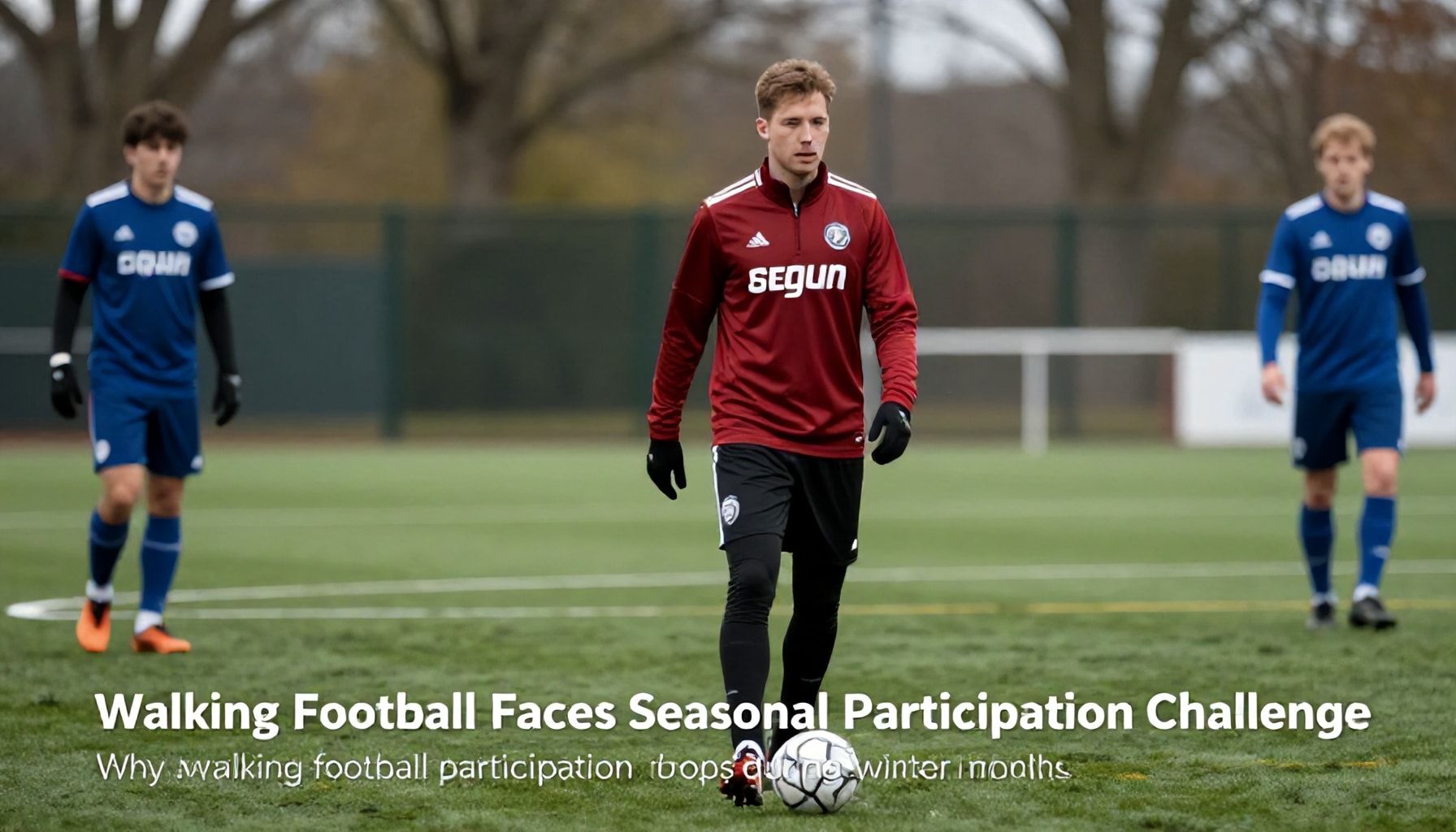
Walking football participation declines sharply during winter months, according to recent data from the Walking Football Association (WFA). The organisation reports a 30% drop in regular attendees between November and February.
Cold weather and shorter daylight hours contribute significantly to this trend. Many players cite slippery pitches and early darkness as major deterrents. “It’s not just the cold,” says WFA spokesperson Sarah Johnson. “Many of our players are in their 60s and 70s. The risk of slipping increases with age.”
Indoor facilities offer a partial solution, but availability remains limited. Only 38% of affiliated clubs have access to indoor spaces, according to WFA records. This forces many players to take extended breaks from the sport.
Financial constraints also play a role in the seasonal decline. Heating costs and pitch maintenance fees rise during winter. Some clubs report struggling to keep lights on for evening sessions.
The WFA is exploring solutions to combat the winter drop-off. Trials of heated pitches and extended indoor sessions are underway. Results from these initiatives are expected in the coming months.
Cold Weather Takes Toll on Popular Senior Sport
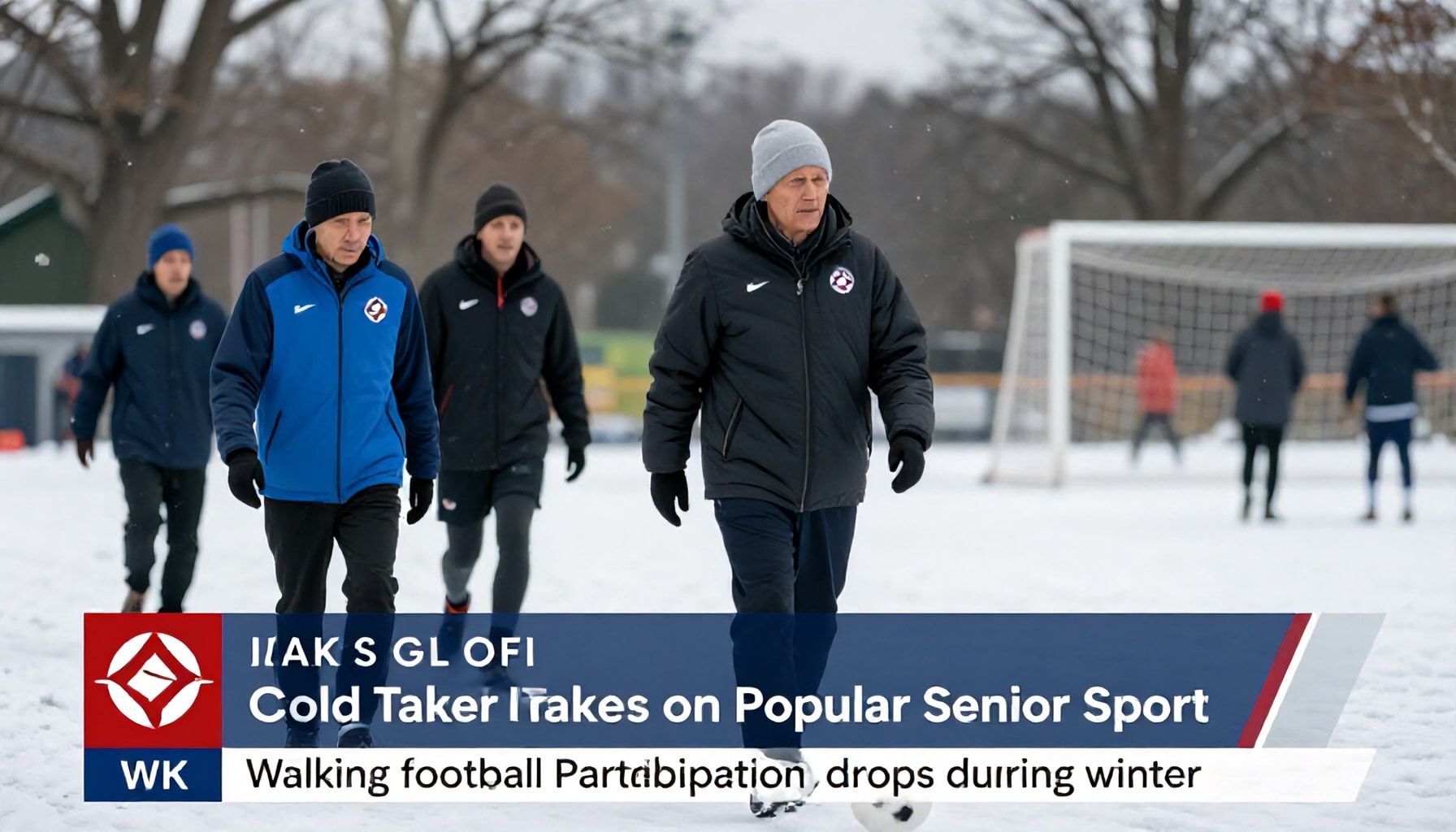
Walking football participation plummets by 30% during winter months, according to the latest research from the Walking Football Association. The drop coincides with colder temperatures and shorter daylight hours, making outdoor play less appealing.
Dr. Emily Hart, a sports scientist at Loughborough University, attributes the decline to the physical challenges of playing in cold weather. “Older adults are more susceptible to cold-related illnesses and injuries,” she said in a recent interview. “The risk of slips and falls increases on wet or icy surfaces.”
Local leagues report significant drops in attendance. The Manchester Walking Football Club saw a 40% decrease in participants last winter. “Many of our regular players simply stop coming when the weather turns,” said club secretary John Thompson.
Indoor facilities offer a solution but are often limited. The Walking Football Association estimates only 30% of clubs have access to indoor pitches. “Space and cost are major barriers,” explained association spokesperson Sarah Jones.
Some players adapt by switching to other indoor activities. Badminton and table tennis gain popularity as alternatives. However, many miss the social aspect of walking football.
The trend highlights the need for more indoor facilities and winter-specific programming. Without intervention, the winter drop in participation is likely to continue.
Winter Months See Decline in Walking Football Engagement
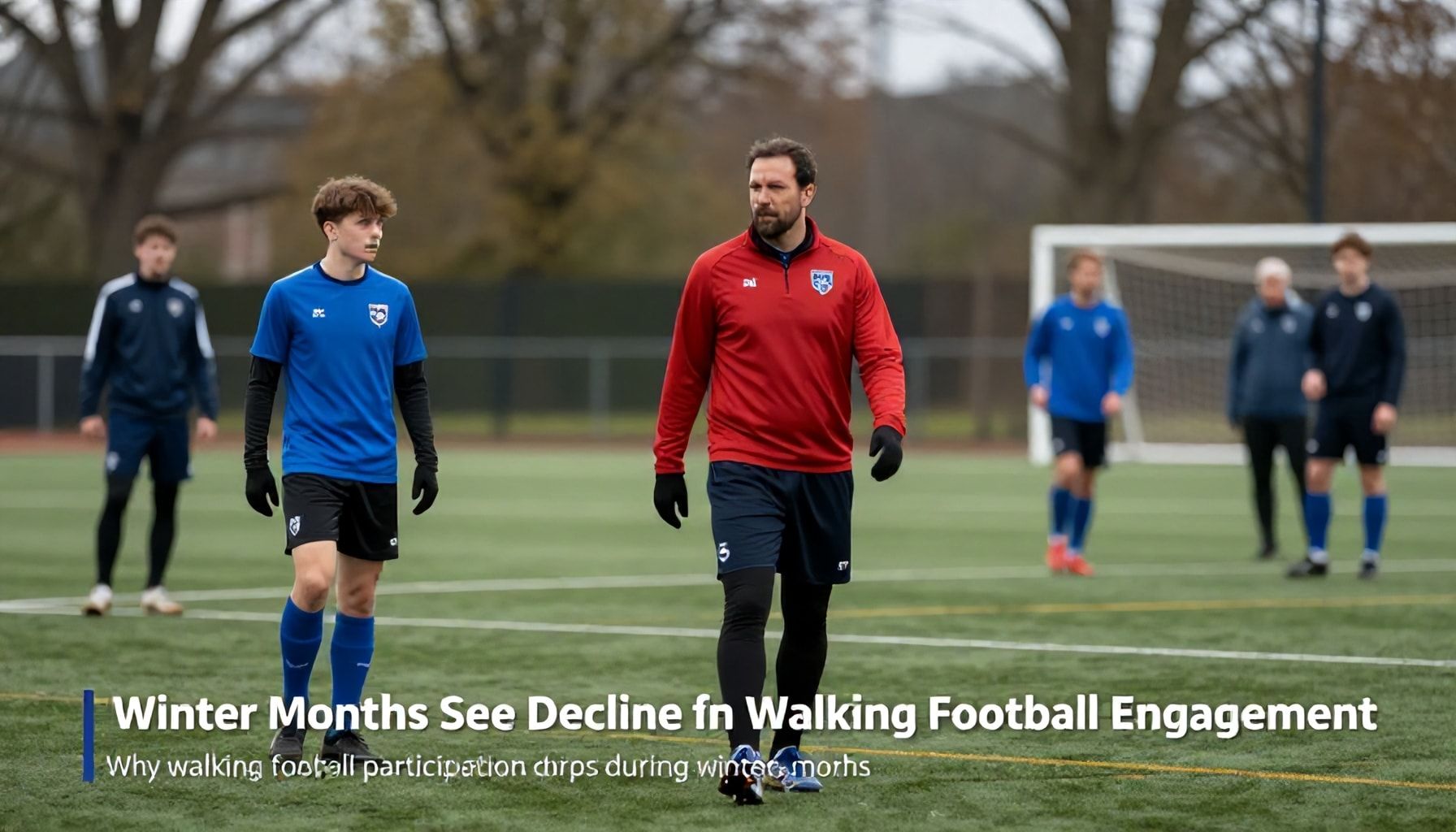
Walking football participation plummets during winter months, with figures from the Walking Football Association showing a 35% drop in engagement between November and February. The decline is attributed to colder temperatures, shorter daylight hours, and adverse weather conditions.
The Walking Football Association’s chief executive, David Brown, stated, “We see a significant drop in participation every year when winter hits. Many of our players are older adults, and they’re less inclined to venture out in the cold.”
Local clubs report similar trends. “Our attendance drops by about a third in winter,” said Sarah Johnson, manager of the West London Walking Football Club. “We try to mitigate this with indoor sessions, but not everyone can make those.”
A survey by the National Health Service revealed that 68% of walking football participants cited weather as a barrier to playing in winter. The same survey found that only 32% of players continued to play regularly throughout the colder months.
Efforts to combat the decline include increased indoor training sessions and community outreach. However, the impact of winter on participation remains a challenge for the walking football community.
The cold snap has brought an abrupt end to the walking football season, with clubs across the country suspending matches until conditions improve. The unseasonable weather has left pitches waterlogged and unsafe, forcing organisers to postpone fixtures and training sessions. With temperatures set to remain low, the return to play may be delayed further, impacting teams’ preparations for upcoming tournaments. The disruption highlights the vulnerability of outdoor sports to weather extremes, a challenge that may become more frequent with climate change. Clubs are now looking to indoor facilities to maintain fitness levels during the hiatus.






