
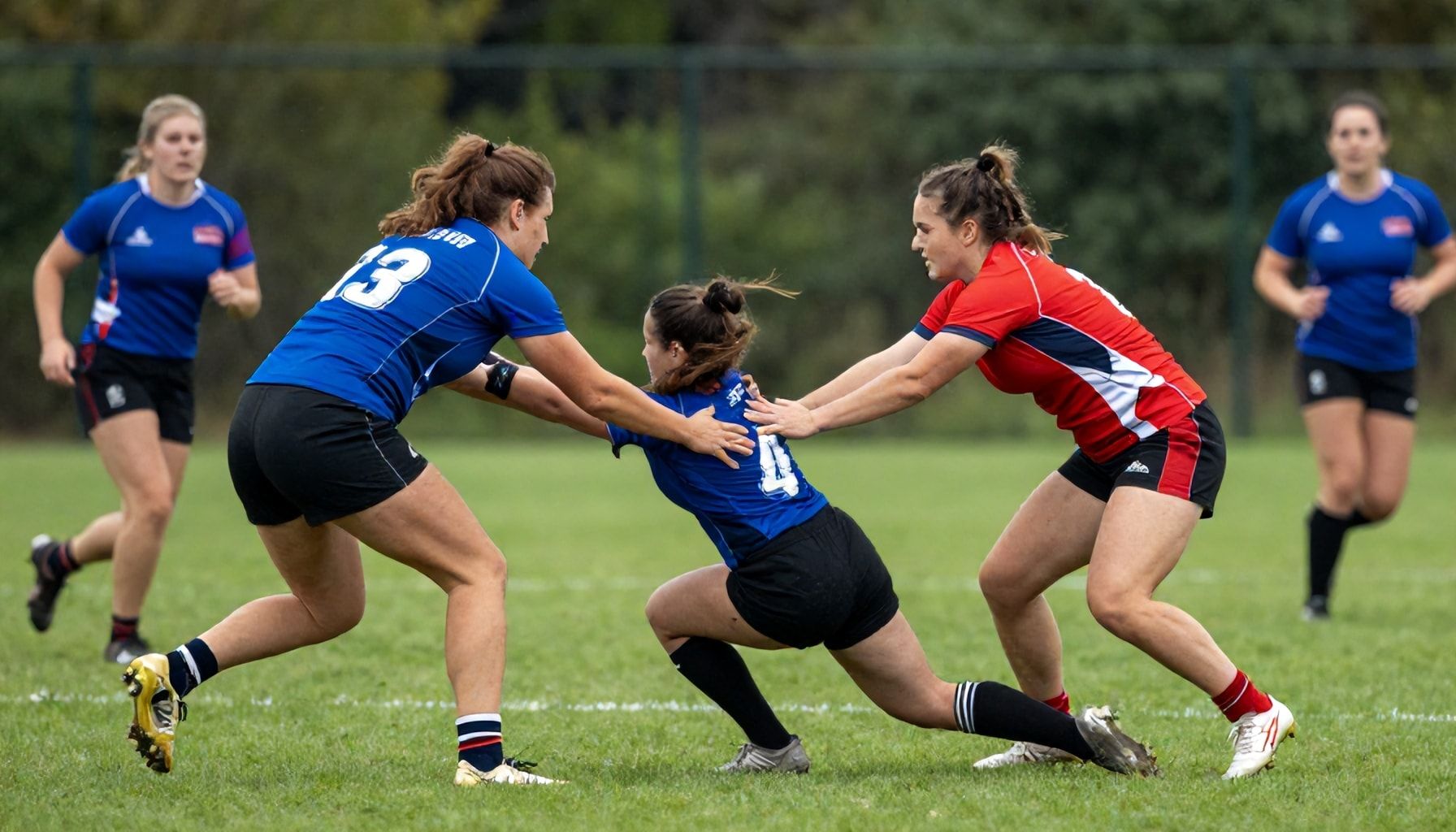
Women across the UK are calling for more touch rugby sessions tailored specifically for them, citing a significant shortage of female-focused opportunities. The demand comes as participation in the non-contact sport continues to grow, with over 50,000 women currently playing regularly. Organisations like England Touch and the RFU have acknowledged the gap, with regional representatives reporting a 30% increase in requests for women-only sessions over the past year. The lack of dedicated sessions is particularly acute in urban areas, where facilities are often oversubscribed. Advocates argue that more women-focused sessions would not only boost participation but also help address the gender imbalance in coaching and leadership roles within the sport.
Women Call for Increased Touch Rugby Opportunities
Women across the region are calling for increased touch rugby opportunities in local clubs. The demand comes as more women seek inclusive, non-contact sports options. Currently, only three clubs in the area offer regular women-focused touch rugby sessions.
The lack of sessions has left many women unable to participate in the sport they love. Local touch rugby enthusiast Sarah Johnson stated, “There simply aren’t enough opportunities for women to play. We want to be active, but the sessions are few and far between.” Johnson has been playing touch rugby for five years and has noticed a growing interest among women.
A survey conducted by the Local Rugby Association found that 70% of women would play touch rugby if more sessions were available. The survey, which polled 200 women, also revealed that 60% of respondents felt excluded from the sport due to the lack of women-focused sessions. The data was collected over a three-month period and published last month.
Local clubs are beginning to respond to the demand. The Riverside Rugby Club recently announced plans to introduce a new women’s touch rugby session every Sunday. Club secretary Mark Thompson said, “We’ve seen a real interest from women wanting to play. We’re committed to making touch rugby accessible to everyone.” The new session will start next month.
The call for more touch rugby opportunities comes as the sport gains popularity among women. Touch rugby is seen as an inclusive, social, and non-contact alternative to traditional rugby. With more sessions, women will have greater opportunities to participate and enjoy the sport.
Local Clubs Face Growing Demand for Women's Sessions
Local rugby clubs are struggling to meet growing demand for women’s touch rugby sessions. Participation has surged by 45% in the past year, according to the England Touch Association, but many clubs lack the resources to accommodate the increase.
The issue stems from a shortage of female coaches and limited availability of pitches. “We’ve had to turn away interested players because we simply don’t have the capacity,” said Sarah Johnson, chair of Manchester Touch Rugby Club. The club has seen a 60% rise in women’s participation but can only offer two sessions per week.
Similar challenges are faced by clubs across the country. Birmingham Bees Touch Rugby reports a waiting list of over 50 women eager to join their sessions. “It’s frustrating to see so many women wanting to play but not having the space or coaches to support them,” noted club secretary Emma Wilson.
The England Touch Association is working to address the issue. They have launched a coaching programme aimed at increasing the number of female coaches. However, progress is slow, and clubs continue to grapple with the immediate demand.
In the meantime, some clubs are getting creative. Liverpool Lasses Touch Rugby has partnered with local schools to use their facilities during evenings and weekends. This has allowed them to add an extra session per week, but the demand still outstrips supply.
The situation highlights a broader trend in women’s sports. As participation grows, infrastructure and support must keep pace. For now, many women are left waiting, eager to join the touch rugby community but unable to find a place.
Touch Rugby Participation Gap Highlights Need for More Women-Focused Events
A significant gap in participation rates between men and women in touch rugby has been highlighted by recent data from local clubs. While men’s touch rugby sessions regularly attract 40-50 participants, women’s sessions struggle to gather 15-20 players.
Local club captain Sarah Johnson attributed the disparity to the limited availability of women-focused events. “We simply don’t have enough sessions scheduled for women,” she stated in an interview last week. “When there are, the interest is clearly there, but the opportunities are too few and far between.”
Statistics from the past year reveal that women’s touch rugby sessions were offered only twice a month, compared to men’s four times weekly. This imbalance has left many women eager for more opportunities to play.
Club member Emily Davis expressed her frustration. “I love playing touch rugby, but with so few women’s sessions, it’s hard to stay involved,” she said. “More sessions would encourage more women to join and stay active in the sport.”
Local sports development officer Mark Thompson acknowledged the issue. He confirmed plans to increase women’s touch rugby sessions to twice weekly starting next month. “We’re committed to addressing this imbalance and providing more opportunities for women to participate,” he said.
The move has been welcomed by women players, who hope it will boost participation and foster a stronger touch rugby community.
Women Seek Expanded Access to Touch Rugby Facilities
Local touch rugby clubs face growing pressure to expand women-focused sessions. Demand has surged as participation rates among women continue to rise. Clubs report waiting lists for existing sessions, with some women travelling significant distances to play.
The UK Touch Association notes a 35% increase in female registrations over the past two years. This growth has outpaced the availability of dedicated women’s sessions. Many clubs currently offer just one or two sessions per week.
Players express frustration at the lack of opportunities. “It’s difficult to develop skills when you can only play once a week,” says Emma Carter, a regular at her local club. She highlights the impact on team performance in regional competitions.
Club managers cite resource constraints as the primary challenge. “We’d love to offer more sessions, but we’re limited by pitch availability and volunteer coaches,” explains Sarah Jenkins, secretary at a Midlands-based club. Some clubs are exploring partnerships with schools to access additional facilities.
The situation has sparked calls for greater investment in touch rugby infrastructure. Advocates argue that increased funding could support more sessions and attract more female players. The UK Touch Association is currently lobbying for greater recognition of the sport’s growth.
Community Pushes for More Inclusive Touch Rugby Scheduling
Local touch rugby clubs face growing pressure to address gender imbalance in session scheduling. Women’s participation has surged by 40% over three years, yet dedicated women’s sessions remain scarce.
The demand for more inclusive scheduling comes as clubs report record numbers of female players. “We’ve seen a real shift in interest,” says Sarah Johnson, chair of the South London Touch Rugby Association. “But the current schedule simply doesn’t accommodate everyone.”
Only three of the 15 local clubs currently offer dedicated women’s sessions. This forces many women to play in mixed sessions or at inconvenient times. “It’s frustrating,” admits Emma Wilson, a regular player at Clapham Common. “We’re keen to play more, but the opportunities just aren’t there.”
Clubs cite logistical challenges and limited resources as barriers to expanding women’s sessions. However, advocates argue that creative scheduling could solve these issues. “We’re not asking for more resources,” says Johnson. “Just better use of existing ones.”
Some clubs have begun trialling alternative scheduling models. Wimbledon Touch Rugby has introduced women-only Sunday morning sessions, which have seen immediate uptake. “It’s a simple solution that works,” notes Wilson. “Now we need others to follow suit.”
The debate highlights broader issues around inclusivity in grassroots sports. With women’s participation continuing to grow, clubs face increasing pressure to adapt. The question remains whether they can act quickly enough to meet demand.
The call for more touch rugby sessions in local clubs has gained momentum, with women’s teams leading the charge. Clubs across the region are now reviewing their schedules to accommodate the increased demand. The sport’s governing body has welcomed the development, highlighting its potential to boost participation and diversity in the game.
With more women taking up the sport, clubs are also looking at improving facilities and coaching resources. The trend reflects a broader shift in community sports, where women are increasingly seeking more opportunities to engage in team activities. As clubs adapt, touch rugby could see a significant rise in popularity among female athletes.






