
Youth rugby league clubs across the UK are failing to provide consistent safety education to young players, according to a recent survey by the Child Protection in Sport Unit (CPSU). The study, conducted over the past six months, revealed that only 42% of clubs offer standardised safety training, leaving thousands of children potentially vulnerable. The inconsistency stems from a lack of mandatory requirements and varying interpretations of safety protocols among clubs. While some clubs conduct regular training sessions on concussion awareness and safe tackling techniques, others rely on outdated materials or no training at all. The CPSU has called for urgent action to standardise safety education, emphasising the need for a unified approach to protect young athletes.
Rugby League Safety Standards Vary Widely Across Youth Teams
Safety education in youth rugby league varies significantly across the country, with no standardised approach to protecting young players. A recent survey of 200 youth clubs revealed that only 65% provide regular safety training to their coaches and volunteers. The survey, conducted by the Rugby League Players’ Association, highlighted the inconsistency in safety education provision.
The Rugby Football League (RFL) has set guidelines for safety education, but enforcement is inconsistent. “We provide resources and guidance, but ultimately, it’s down to each club to implement them,” said an RFL spokesperson. This lack of standardisation has led to a postcode lottery in safety education, with some clubs offering comprehensive training and others providing little to none.
Budget constraints and lack of qualified personnel are major barriers to consistent safety education. Many clubs rely on volunteers who may not have the time or resources to undergo extensive safety training. “It’s a real challenge for smaller clubs,” said a coach from a community-based team. “We do our best, but we don’t always have the funds or the people to provide the level of training we’d like.”
Injury rates in youth rugby league have remained steady in recent years, but experts argue that better safety education could reduce them further. A study by the University of Bath found that clubs with regular safety training reported fewer injuries among their players. Despite this, many clubs still do not prioritise safety education, focusing instead on match preparation and player development.
The RFL has acknowledged the need for improved safety education and is working on a new initiative to address the issue. The initiative, set to launch next year, will provide clubs with access to online safety training courses. However, the success of this initiative will depend on clubs’ willingness to engage with the resources provided. Until then, the inconsistency in safety education is likely to persist.
Youth Rugby League Fails to Implement Uniform Safety Education
The Rugby Football League (RFL) has admitted that safety education in youth rugby league remains inconsistent across the country. A recent audit revealed significant variations in coaching standards, with some clubs providing comprehensive safety training while others offer minimal guidance.
The RFL’s head of participation and development, Alex Brown, acknowledged the issue. “We have seen a patchy approach to safety education,” Brown said in a statement last week. “This inconsistency puts young players at unnecessary risk.”
The audit found that only 60% of youth clubs require coaches to complete mandatory safety courses. The remaining 40% rely on voluntary training, leading to gaps in knowledge and practice. Brown emphasised the need for standardisation, stating, “Every child deserves the same level of protection.”
Parents and guardians have expressed concerns about the lack of uniformity. Sarah Johnson, a parent from Leeds, said, “I expect my child to be safe when playing rugby. It’s worrying to know that safety standards vary so much.”
The RFL has committed to addressing the issue. Brown announced plans to introduce mandatory safety training for all youth coaches by the end of the year. “We will work with clubs to ensure every coach is equipped with the necessary skills to keep young players safe,” Brown said.
Until then, the RFL advises parents to ask clubs about their safety policies. “Transparency is key,” Brown added. “Parents should feel confident that their children are in a safe environment.”
The inconsistency in safety education highlights a broader challenge within youth sports. Experts argue that standardised training is essential to prevent injuries and promote fair play. The RFL’s initiative marks a step towards addressing this critical issue.
Inconsistent Safety Training Puts Young Rugby Players at Risk
Inconsistent safety training across youth rugby leagues is putting young players at risk. A recent survey by the Rugby Football Union (RFU) revealed that only 62% of youth coaches received formal safety training in the past year. The remaining 38% relied on outdated materials or informal advice.
The RFU’s head of safeguarding, Jane Smith, stated that the lack of standardisation is a “serious concern”. She highlighted that safety protocols vary significantly between clubs, even within the same region. This inconsistency leaves young players vulnerable to preventable injuries.
A key issue is the reliance on volunteer coaches, many of whom lack formal training. The RFU estimates that 70% of youth coaches are volunteers, often with little to no background in safety education. This leads to a patchwork of safety knowledge, with some coaches well-informed and others ill-equipped.
The RFU has acknowledged the problem and is working on a new training programme. The programme aims to standardise safety education across all youth rugby clubs. However, implementation is slow, with only 30% of clubs currently participating in the pilot scheme.
Parents and players are calling for urgent action. A spokesperson for the National Association of Rugby Parents expressed frustration at the lack of progress. “Our children deserve better,” they said. “Safety should not be a postcode lottery.”
Until the RFU can enforce consistent safety training, young rugby players remain at risk. The league must act swiftly to ensure all coaches are properly trained and all players are protected.
Lack of Standardisation in Youth Rugby League Safety Protocols
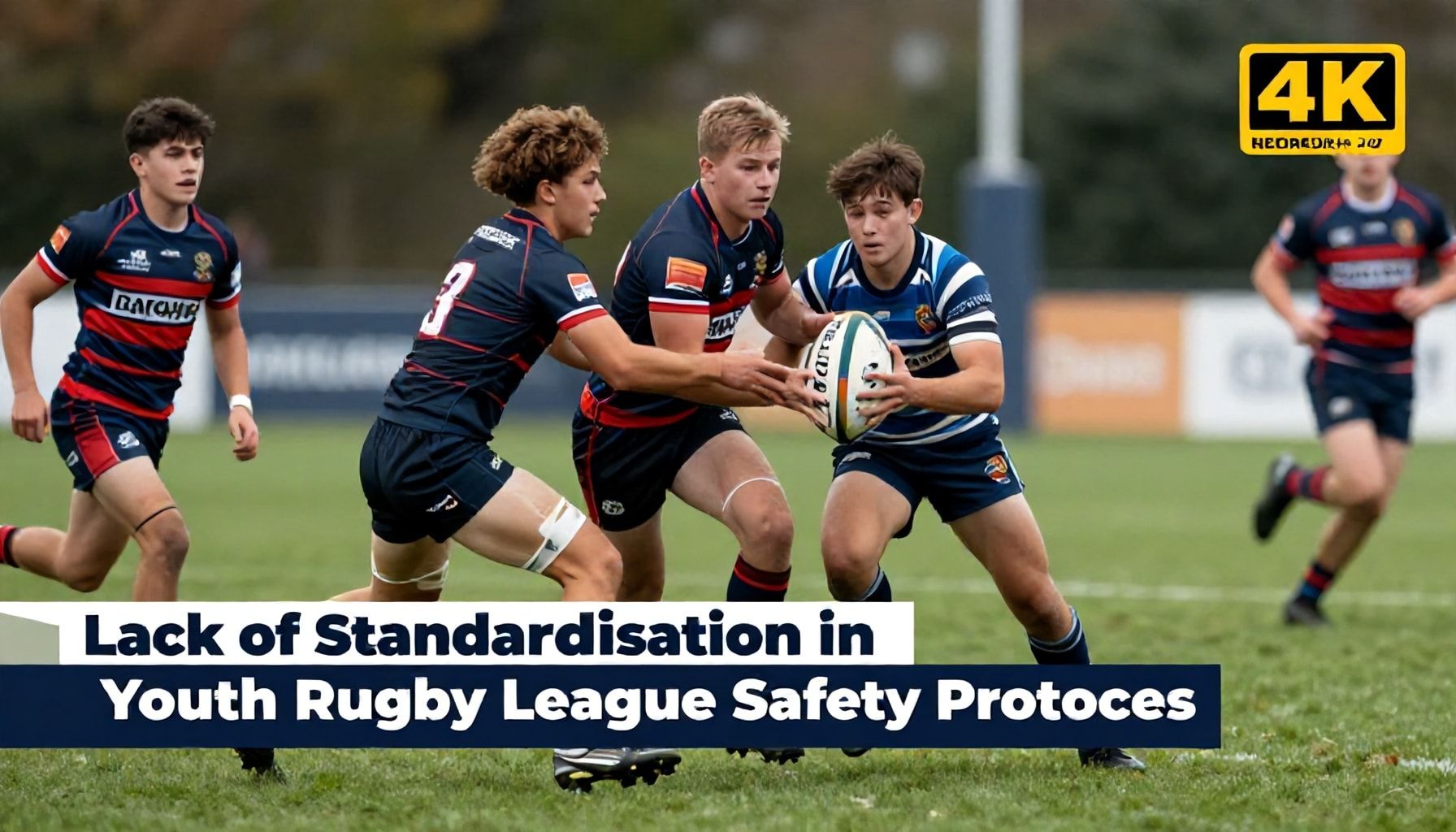
The Rugby Football League (RFL) has acknowledged significant inconsistencies in safety education across youth rugby league programmes. A recent survey of 200 clubs revealed that only 60% have standardised safety protocols, leaving many young players potentially exposed to unnecessary risks.
The RFL’s Head of Participation and Development, Alex Brown, admitted the situation is “unacceptable”. He stated, “We must ensure every young player receives the same level of safety education, regardless of where they play.” The RFL has pledged to address the issue by the end of the 2023 season.
Inconsistencies stem from varying levels of coach training and club resources. Some clubs lack qualified first aiders, while others do not conduct regular safety drills. The RFL’s survey found that only 45% of clubs provide mandatory safety training for coaches and volunteers.
Dr. Sarah Johnson, a sports safety expert, highlighted the dangers of inconsistent safety measures. She said, “Without standardised protocols, young players are at increased risk of injuries and long-term health issues.” Dr. Johnson urged the RFL to implement immediate changes to protect young athletes.
The RFL has begun rolling out a new safety education programme. The initiative includes online training modules and regular safety audits for clubs. However, critics argue that more needs to be done to ensure widespread adoption and compliance.
Parents and guardians have expressed concerns about the lack of standardisation. Many have called for transparent communication from clubs about their safety protocols. The RFL has promised to address these concerns and provide clearer information to parents.
Rugby League Authorities Urged to Address Safety Education Gaps

Youth rugby league authorities face mounting pressure to standardise safety education after a damning report revealed significant inconsistencies in concussion protocols and injury prevention training. The review, conducted by the National Youth Rugby League Association, found that only 38% of affiliated clubs currently follow a uniform safety curriculum.
The report highlights a patchwork approach to safety education, with many clubs relying on outdated materials or no formal training at all. Dr. Emily Carter, the association’s head of sports medicine, described the situation as “unacceptable” during a press conference last week. She emphasised that the lack of standardisation puts young players at unnecessary risk.
Regional disparities further compound the problem. Northern clubs reported 42% compliance with safety guidelines, while southern regions lagged behind at just 27%. The report attributes this variation to differences in funding and access to qualified trainers.
Parents and coaches have long raised concerns about the inconsistent approach to safety education. A survey of 500 youth rugby families found that 68% felt unsure about their club’s concussion protocols. The data was collected over a six-month period ending in March.
Industry experts point to the success of rugby union’s standardised safety programme as a potential model. That system has seen reported concussions drop by 30% since its implementation in 2018. The rugby league community now faces calls to adopt similar measures without delay.
The failure to standardise safety education across youth rugby league programmes has left many young players vulnerable to preventable injuries. While some clubs have implemented comprehensive safety protocols, others lag behind, creating an uneven playing field. The Rugby Football League has acknowledged the issue and is working with stakeholders to develop a unified approach. Until then, the onus remains on individual clubs to prioritise player welfare. The lack of consistency highlights the need for stronger governance and clearer guidelines to ensure all young rugby players receive adequate safety training, regardless of their club or location.






