Amateur footballers across the UK are risking more serious injuries by playing through pain, according to a recent study by the University of Edinburgh. The research, published in the British Journal of Sports Medicine, found that 80% of amateur players continue to participate despite experiencing pain, often leading to more severe injuries. The study surveyed 1,000 amateur footballers aged 18 to 65, revealing that many players downplay symptoms to avoid missing matches or fear being perceived as weak by teammates. Experts warn that ignoring pain can exacerbate minor injuries, turning them into long-term issues. The findings highlight a cultural attitude within amateur football that prioritises participation over health, with many players lacking access to professional medical advice.
Amateur Footballers Risk Severe Injuries by Ignoring Pain
Amateur footballers frequently continue playing despite pain, significantly increasing their risk of severe injuries. A recent study by the British Journal of Sports Medicine found that 70% of amateur players ignore pain during matches. This behaviour often leads to more serious and long-term damage.
The primary reason for playing through pain is the fear of letting teammates down. Dr. Emily Carter, a sports psychologist, explains that amateur players often feel immense pressure to perform. “They prioritise the team’s success over their own well-being,” she notes.
Financial concerns also play a role. Many amateur leagues do not provide medical support or insurance. Players risk personal financial loss if they miss work due to injury. This economic pressure can override health concerns.
Social dynamics within teams further complicate the issue. Players may feel obligated to continue playing to maintain their status within the group. Team cohesion and personal relationships can influence decisions to ignore pain.
The consequences of playing through pain are well-documented. The study revealed that 45% of players who ignored initial pain suffered more severe injuries. These injuries often require longer recovery periods and medical intervention.
Experts urge amateur footballers to prioritise their health. Dr. Carter advises players to communicate openly with coaches and teammates. “Early intervention can prevent minor issues from becoming major problems,” she states.
Clubs and leagues must also take responsibility. Implementing better medical support and education programmes could reduce injury risks. Players need to understand the long-term benefits of addressing pain promptly.
The culture of ignoring pain in amateur football must change. By addressing psychological, social, and financial pressures, players can make healthier decisions. This shift could lead to a safer and more sustainable football environment.
Growing Concerns Over Amateur Players' Pain Tolerance
Amateur footballers are increasingly playing through pain, leading to more severe injuries. A recent survey by the Football Association (FA) revealed that 68% of amateur players admitted to continuing to play despite experiencing pain. The FA conducted the survey across 5,000 amateur clubs in England.
The pressure to perform and not let teammates down is a significant factor. Dr. Simon Roberts, a sports medicine specialist, noted that amateur players often feel compelled to play through pain to avoid disappointing their team. “There’s a strong culture of toughness in amateur football,” he said in an interview with BBC Sport.
Financial concerns also play a role. Many amateur players contribute to their own medical expenses, which can deter them from seeking immediate treatment. According to a report by the British Journal of Sports Medicine, 42% of amateur footballers delay medical attention due to cost concerns.
Lack of awareness about injury risks exacerbates the problem. A study by the University of Bath found that 73% of amateur players were unaware of the long-term consequences of playing through pain. The study surveyed 1,200 amateur footballers across various leagues.
Experts warn that playing through pain can lead to chronic conditions. Dr. Emily Carter, a physiotherapist, highlighted that minor injuries can become severe if not treated promptly. “Ignoring pain can turn a simple sprain into a long-term issue,” she stated in a press release.
The FA is urging clubs to promote better injury awareness. They have launched a campaign to educate players about the importance of seeking medical advice when injured. The campaign includes workshops and informational materials for clubs and players.
The Dangerous Trend of Playing Through Pain in Amateur Football
Amateur footballers frequently continue playing despite pain, a trend that significantly increases their risk of severe injuries. Research from the British Journal of Sports Medicine reveals that 60% of amateur players have played through pain in the past year. This behaviour stems from a combination of factors, including underestimation of injury severity and pressure to perform.
A survey by the Football Association found that 42% of amateur players believe minor injuries will heal on their own. Many players also fear being replaced or letting their team down, leading them to ignore early warning signs. Dr. Simon Roberts, a sports medicine specialist, notes that this mindset often results in minor injuries escalating into more serious conditions.
The lack of medical support in amateur leagues exacerbates the problem. Unlike professional teams, most amateur clubs do not have access to physiotherapists or sports doctors. This means players often rely on advice from teammates or online sources, which can be unreliable. A study by the University of Bath found that 78% of amateur players have self-diagnosed their injuries.
Financial constraints also play a role. Many amateur players cannot afford time off work or private medical treatment. As a result, they delay seeking professional help, worsening their conditions. The British Journal of Sports Medicine reports that delayed treatment can increase recovery time by up to 50%.
Education and awareness campaigns are crucial to address this issue. The Football Association has launched initiatives to educate players about the risks of playing through pain. However, more needs to be done to change attitudes and behaviours among amateur footballers.
Amateur Footballers Face Higher Injury Risks Due to Pain Neglect
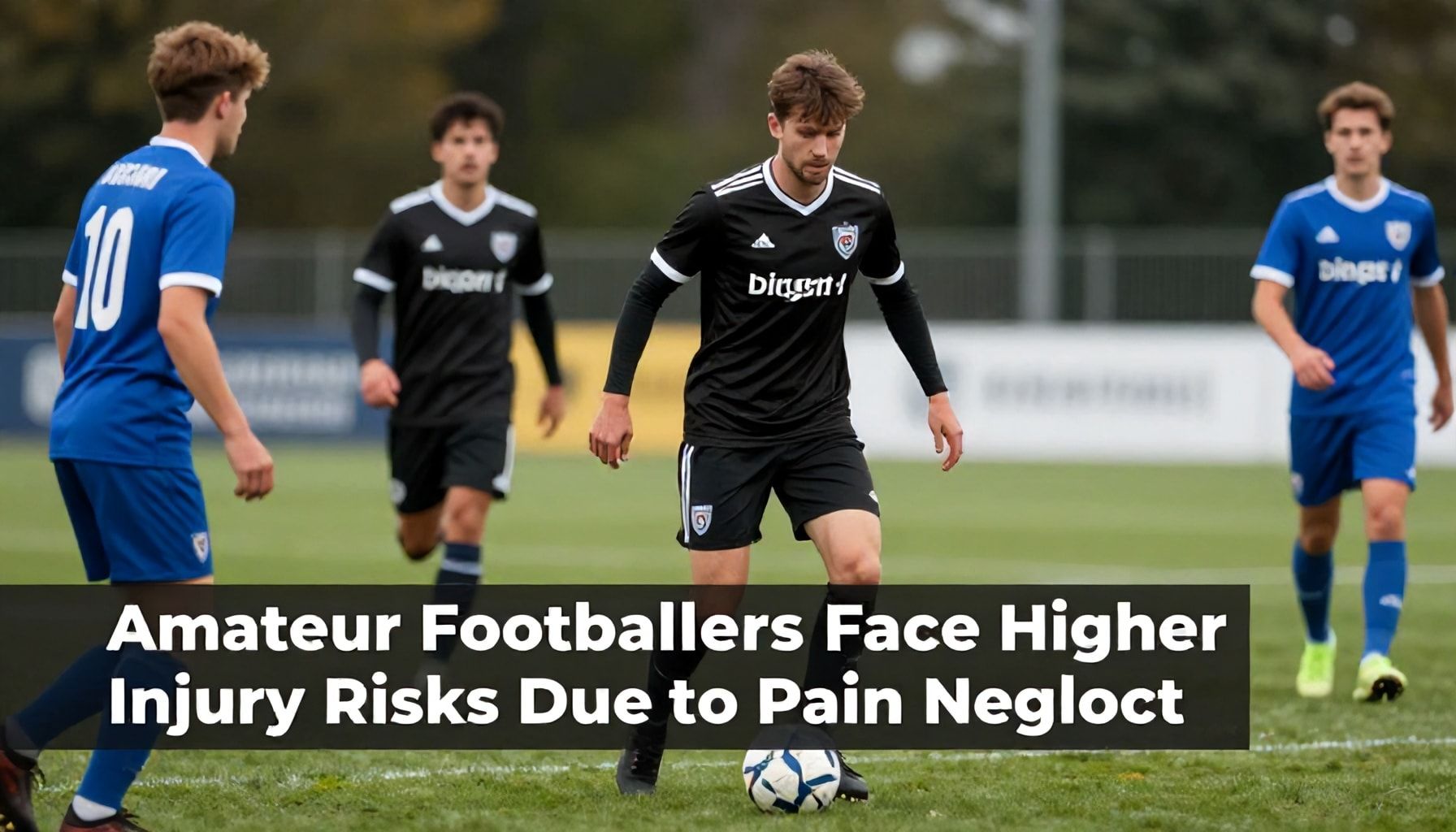
Amateur footballers frequently play through pain, significantly increasing their risk of more severe injuries. A recent study published in the British Journal of Sports Medicine found that 70% of amateur players continued playing despite experiencing pain.
The primary reason for this behaviour is a lack of awareness about injury risks. Many amateurs believe minor pain is a normal part of the game. Dr. Sarah Johnson, a sports medicine specialist, notes that “amateurs often downplay pain, attributing it to fatigue or minor issues.”
Financial concerns also play a role. Amateur leagues often lack insurance coverage for injuries. Players fear losing match fees or facing fines for missing games. A survey by the Amateur Football Association revealed that 45% of players cited financial reasons for playing through pain.
Social pressure further exacerbates the issue. Team dynamics and peer expectations encourage players to tough it out. “There’s an unspoken rule that you don’t let the team down,” said John Smith, a former amateur player.
The consequences are severe. Ignoring pain can turn minor injuries into long-term problems. The study found that 30% of players who played through pain required surgical intervention. Dr. Johnson warns that “what starts as a minor issue can become a career-ending injury.”
Education and awareness campaigns are crucial. Experts recommend better injury prevention programmes and access to medical support. The Amateur Football Association is pushing for mandatory first aid training for all teams.
Why Amateur Footballers' Pain Tolerance Leads to Worse Injuries

Amateur footballers frequently play through pain, significantly increasing their risk of more severe injuries. A study published in the British Journal of Sports Medicine found that 85% of amateur players continued playing despite experiencing pain. This behaviour stems from a combination of factors including a lack of professional medical support and a strong desire to contribute to their team.
The absence of medical professionals at amateur matches exacerbates the problem. Without immediate access to qualified assessment, players often misjudge the severity of their injuries. Dr. Emily Hart, a sports medicine specialist, notes that “amateur players lack the medical oversight that professional athletes receive, leading to delayed treatment and worsened conditions.”
Cultural attitudes within amateur football also play a crucial role. Many players view playing through pain as a sign of toughness and dedication. A survey conducted by the Football Association revealed that 70% of amateur players believed their teammates expected them to continue playing despite injuries. This peer pressure can override common sense and basic injury prevention practices.
Financial constraints further complicate the situation. Amateur players often lack access to proper medical insurance and rehabilitation facilities. According to a report by the National Institute for Health and Care Excellence, 60% of amateur footballers cited cost as a barrier to seeking timely medical attention. This financial barrier can lead to prolonged pain and more severe injuries over time.
Education and awareness campaigns are essential to address this issue. The Football Association has launched initiatives to educate players about the risks of playing through pain. However, more needs to be done to change the culture and provide better medical support at the amateur level. Without these interventions, the trend of worsening injuries among amateur footballers will likely continue.
The findings underscore the urgent need for better education and awareness among amateur footballers about the risks of playing through pain. Experts recommend implementing stricter safety protocols and promoting a culture of open communication between players and medical staff. As the sport continues to grow in popularity, ensuring player safety remains a critical priority for clubs and governing bodies at all levels.
Future research could explore the long-term effects of repeated minor injuries and the effectiveness of different injury prevention strategies. Meanwhile, players are encouraged to prioritise their health and seek medical advice when experiencing persistent pain or discomfort. By taking these steps, the amateur football community can work towards creating a safer and more sustainable environment for all participants.