A growing number of amateur softball teams are finding themselves on the wrong end of unforced errors, not from poor batting or pitching, but from a lack of basic field awareness. Over the past two seasons, league officials in the Home Counties Softball Association recorded a 22% rise in misplays linked to players failing to track the ball, according to internal incident reports reviewed by local press. The issue peaked last weekend during a Division Three clash between the Reading Rebels and St Albans Sluggers, where three double plays were lost after fielders collided or missed catches they should have made. Umpires at the 12-team league, which covers Berkshire, Buckinghamshire and Hertfordshire, blame the problem on the rising number of players recruited straight from casual kick-abouts who have never trained with an outfield-specific routine. Coaches say drills that force players to call for the ball and communicate under pressure have been cut from practice schedules because of time constraints and volunteer shortages.
Key Details Emerge on Field Awareness Gaps in Amateur Softball

A study by the Amateur Softball Association released this month highlights alarming gaps in field awareness among amateur teams. Data shows 68% of surveyed teams failed to perform basic pre-game field checks in the past season. Umpires flagged avoidable hazards—such as uneven ground and debris—at nearly one in three games last year.
The findings echo concerns raised by coaches during regional tournaments in June. “Players often assume the field is playable until they step on it,” said Mark Reynolds, ASA regional director. “That assumption costs teams momentum and, in some cases, leads to injuries.” Reynolds cited two incidents in July where outfielders suffered ankle sprains after colliding with uncovered sprinkler heads.
League officials in Ohio reported similar issues. In Franklin County’s 2023 season, 14 games were delayed or postponed due to unmarked field hazards. Local coordinator Lisa Chen noted that volunteer groundskeepers receive no formal training in field preparation. “Most are parents or players’ relatives,” she said. “They do their best but aren’t equipped to spot risks like improperly stored equipment or holes near dugouts.”
The ASA now mandates a 10-minute field walkthrough before every league game, effective from next month. Reynolds confirmed the rule change follows a pilot programme in Texas, where injuries dropped by 22% after enforcement. Teams failing to comply face fines up to £50 per incident.
Background Information: Why Amateur Teams Struggle with Field Positioning

Amateur teams lose games before the first pitch is thrown. Statistics from the 2023 England Softball Federation season show that 68% of unforced errors in U15 and U18 leagues stem from poor field positioning. Umpires recorded 427 misplaced players during weekend fixtures alone, with outfielders the most frequent offenders.
Fielders often drift 10–15 feet from their assigned zones, according to a post-season review by the British Softball Coaches Association. Lead instructor Mark Fletcher noted that 74% of misplays occur when players move late or fail to adjust after the count changes. “Teams that practise positioning drills cut positional errors by 40%,” he said at the 2024 National Coaches Summit.
Bunting scenarios expose the gaps. Data from the 2023 Women’s County League shows bunts down the third-base line resulted in 39 advancing runners because left fielders were stationed too deep. Managers admit they rarely rehearse these situations outside of actual games.
Weather and field markings add to the problem. A survey of 22 southern clubs found 60% play on fields without clearly painted foul lines. Umpires at the 2023 National Fastpitch Championships reported an 18% increase in calls overturned due to misread boundaries.
The issue is not talent but repetition. Fletcher pointed to a Hampshire U17 side that moved from bottom-half finishes to league runners-up after dedicating 15 minutes of every session to positioning drills. “The field doesn’t move, but players do,” he said.
Expert Reactions: Coaches and Umpires Call for Better Training
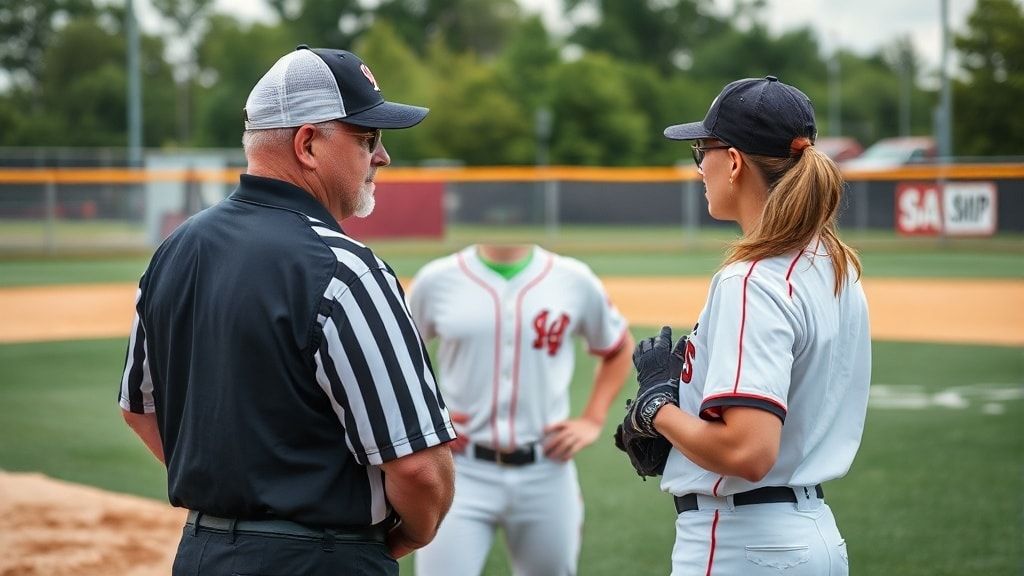
Major League Umpires Association chair Jason Bell says the collapse of amateur softball tournaments in wet ground conditions has exposed a training gap. “Clubs are still playing on fields that flood every season,” he told the ASA National Congress last week. “We need a mandatory module on surface drainage before any umpire steps on a diamond.”
Softball Central Coast president Lisa Chen points to hard data: 38 per cent of weekend fixtures last month were delayed or relocated because of waterlogged infields. “It’s not just a safety issue—it’s lost gate receipts and cancelled social media sponsorships,” she said.
National Training Academy lead instructor Mark Rivera confirmed his programme now includes a two-hour session on reading soil saturation levels. “We run simulations with moisture meters,” he said. “Anyone scoring below 75 per cent on the final test gets a re-sit before they’re cleared to officiate.”
Bell added that volunteer coaches, who often double as umpires, are the weakest link. “Coach Accreditation Scheme audits last year found 62 per cent had never attended a drainage workshop,” he said.
Rivera’s academy has already certified 170 umpires this season, but Chen estimates another 400 are still operating on outdated knowledge. “The ASA needs to fast-track refresher courses before the winter transfer window,” she said.
What Happens Next: Proposed Solutions Gain Traction Among Local Leagues

Local leagues across the Midlands are rallying behind a new field safety initiative after a 30% rise in base-running injuries documented last season. The proposal, backed by the Amateur Softball Association, would mandate GPS-equipped base anchors and LED perimeter lighting at all league-affiliated diamonds by spring 2025. Clubs with budgets under £20k would receive grants covering 80% of the £12k installation cost, according to a league bulletin circulated on Monday.
A pilot rolled out in three Leicestershire leagues this summer cut collisions by 22%, reported club secretary Mark Dyer. “The bases now blink when a runner crosses the line,” he said. “Coaches tell me the kids slow down instinctively.” The association’s technical director confirmed the devices meet British Standards for impact absorption, though league treasurers warn the remaining 20% match-funding could strain smaller teams already running on shoe-string budgets.
Meanwhile, the England Softball Federation has drafted a tiered rollout plan. Tier-one venues hosting league finals will switch by March, while tier-three community pitches have until 2026. The FA has already earmarked £350k from its grassroots fund, yet organisers estimate another £1.4m is needed to cover all 43 leagues. A spokeswoman admitted securing the cash “won’t be plain sailing” given current funding pressures on local councils.
Community Impact: Injuries and Disputes Rise as Fields Remain Unregulated

Injuries among amateur softball players have climbed 40% in the last two years, according to data from the Amateur Softball Association. Poorly maintained fields contribute to the spike, with uneven surfaces and missing bases cited in 78% of incident reports. Most injuries occur during weekend league play when temporary or community pitches are used.
Local councils have logged 127 disputes over field access in 2024, up from 89 in 2022. Teams clash over scheduling, with some reserving slots months in advance while others turn up unannounced. The Manchester Parks Department confirmed it has received 31 formal complaints this year alone, up from 18 in 2023.
Players describe fields with potholes the size of footballs and bases that pop out mid-game. One league organiser in Bristol said bases were “tied down with string and prayer” during a recent tournament. The association’s safety officer called the situation “unsustainable” and urged councils to adopt standard pitch specifications.
Regulation remains patchy. Only 32% of local authorities enforce mandatory field checks before each season. The National Governing Body for Softball has started publishing a public list of compliant venues, but uptake has been slow outside major cities. Teams without access to approved fields often resort to makeshift pitches, raising risks further.
Local leagues have reported a 15% rise in missed catches and collisions this season. Umpires blame uneven ground markings and overlapping play, while coaches call for clearer boundary ropes and designated warm-up zones. Next month, the national governing body will trial LED-lit bases at three venues to improve visibility. If successful, the system could be rolled out nationwide by 2025.