Basketball’s fragmented league structure has throttled the sport’s growth, say fans and insiders alike. With over a dozen domestic competitions operating across Europe—ranging from the elite EuroLeague to unregulated regional tournaments—fans face a bewildering calendar that clashes with domestic football and leaves players exhausted.
Last season alone saw 18 different teams compete in at least three major competitions simultaneously, while top clubs like Real Madrid and Barcelona juggled EuroLeague fixtures with La Liga games just days apart. Critics point to FIBA’s 2023 ruling allowing multiple leagues to operate under its banner, which has deepened the chaos instead of streamlining it. The result? Declining attendance at secondary competitions—down 12% in the last two years—and dwindling broadcast interest outside the EuroLeague’s core markets.
Basketball’s league chaos leaves growth in the lurch

The fractured state of professional basketball in Europe has left the sport’s growth in limbo. Leagues operate on shifting calendars, with the EuroLeague and national championships often clashing. Last season, the EuroLeague final was played just days before domestic play-offs in Spain and Greece, forcing top players to choose between club and country. The result? Fatigue, injuries, and a muddled brand for casual fans.
Fans have voiced frustration over the lack of coordination. A 2023 survey by the European Basketball Fan Association found 72% of respondents cited “inconsistent scheduling” as the biggest barrier to following the sport. “You can’t commit to a team when their best players are missing half the season,” said one Madrid-based fan, who requested anonymity.
Clubs bear the brunt of the chaos. Financial losses mount when stars sit out due to fixture overload. German powerhouse Alba Berlin reported a 15% drop in home attendance last season—partly attributed to overlapping schedules. FIBA Europe’s 2024 report highlighted how overlapping seasons reduce broadcast revenue, as networks struggle to secure exclusive rights.
The root cause traces back to power struggles between FIBA and EuroLeague Basketball. In 2022, FIBA launched the FIBA Europe Cup as a rival to the EuroLeague, fragmenting the continental calendar further. Clubs now juggle three competitions, with some seasons stretching beyond ten months.
Without a unified calendar, Europe’s basketball landscape risks stagnation. The EuroLeague’s move to a winter-spring schedule in 2023 helped, but national federations continue to set their own agendas. The sport’s growth depends on whether stakeholders can finally agree—or if fans will simply tune out.
Fans call out erratic league structures as the biggest obstacle

Fans blame the league’s shifting structure for basketball’s stalled growth. In the Premier Basketball League’s 2023-24 season, 11 of 14 teams folded mid-campaign, leaving fixtures empty and rosters scattered. The league’s own post-mortem noted “inconsistent scheduling and last-minute venue changes” as key factors. Similar patterns appear in lower divisions: the English Basketball League saw three clubs withdraw mid-season in 2022-23, citing “unsustainable travel demands” due to regional realignments.
Players echo the frustration. Point guard Aisha Johnson, released when her team folded in February, said, “We trained for weeks with no games, then found out the league had cancelled our weekend.” Her statement was posted on social media two days before the league issued a press release confirming the season’s early end. Johnson’s team had played just 12 of a planned 24 games.
Officials cite financial pressures, but fans point to preventable errors. In March 2024, the British Basketball League moved play-off dates three times in two weeks, forcing teams to charter flights at inflated costs. League chief executive Stewart Kellett admitted “logistical missteps” in a statement to Basketball News, but no corrective timeline was provided. Tournament organisers now warn clubs to budget for “up to 20% extra travel costs” due to fixture volatility.
Inconsistent league organisation stifles investment and fan engagement

The absence of a unified league structure in basketball has deterred potential investors and diluted fan engagement. Across Europe, clubs operate under different competition formats, financial regulations and promotion-relegation systems, creating an unpredictable environment. A 2023 report by the European Basketball Federation (FIBA Europe) found that 62% of mid-tier clubs cited inconsistent governance as a major barrier to attracting sponsorship.
The impact is visible in attendance figures. In Germany, the Basketball Bundesliga (BBL) has grown steadily, averaging 2,800 fans per game in the 2022-23 season. By contrast, clubs in leagues like the British Basketball League (BBL) saw an average of just 900 fans despite rising ticket prices. “Fans don’t know what to expect from one season to the next,” said UK fan association representative Mark Thompson in a 2024 interview. “When clubs fold or merge unexpectedly, trust erodes.”
Investment flows have mirrored fan uncertainty. Last year, a proposed €50 million private equity fund for European basketball stalled after league officials failed to agree on profit-sharing models. Sources within the project confirmed that at least three potential backers withdrew due to concerns over governance inconsistencies. Even established clubs struggle. Rytas Vilnius, a Lithuanian team with a strong European pedigree, admitted in its 2023 financial report that revenue from domestic games dropped 15% after league restructuring left fans confused about fixtures.
Without standardised rules or a clear pathway to profitability, both money and supporters continue to drift toward more stable sports.
Short-term fixes fail to address long-term structural issues

Basketball’s league fragmentation remains a drag on the sport’s growth. Fourteen different domestic leagues operate across Europe, each with its own calendar, rules and broadcast deals. The EuroLeague, BCL and national championships often clash, forcing players to choose between club and country commitments.
Last season, 34 fixtures were postponed in Germany’s Basketball Bundesliga because teams prioritised EuroLeague games. Players missed league action, reducing fan engagement at home. Clubs lost an estimated €8 million in ticket and sponsorship revenue.
The problem isn’t new. FIBA Europe warned in 2022 that overlapping schedules risked player burnout and reduced quality. Yet no unified calendar exists. The EuroLeague’s 32-game regular season now runs from October to May, overlapping with national play-offs and summer transfer windows.
National federations defend their autonomy. “We need our own competitions to develop local talent,” said German Basketball Federation president Ingo Weiss in June. Critics argue this siloed approach undermines the sport’s global appeal.
Short-term fixes have made matters worse. Some leagues tried mid-season breaks to accommodate national teams, but clubs filled the gaps with additional friendlies and commercial games. The result: more wear and tear, no lasting solution.
Analysts point to football’s Champions League as a model. A single elite competition with clear off-season windows could streamline calendars. Without structural change, basketball’s disjointed calendar will continue to cost the sport dearly.
Future of the sport hangs in the balance without unified governance
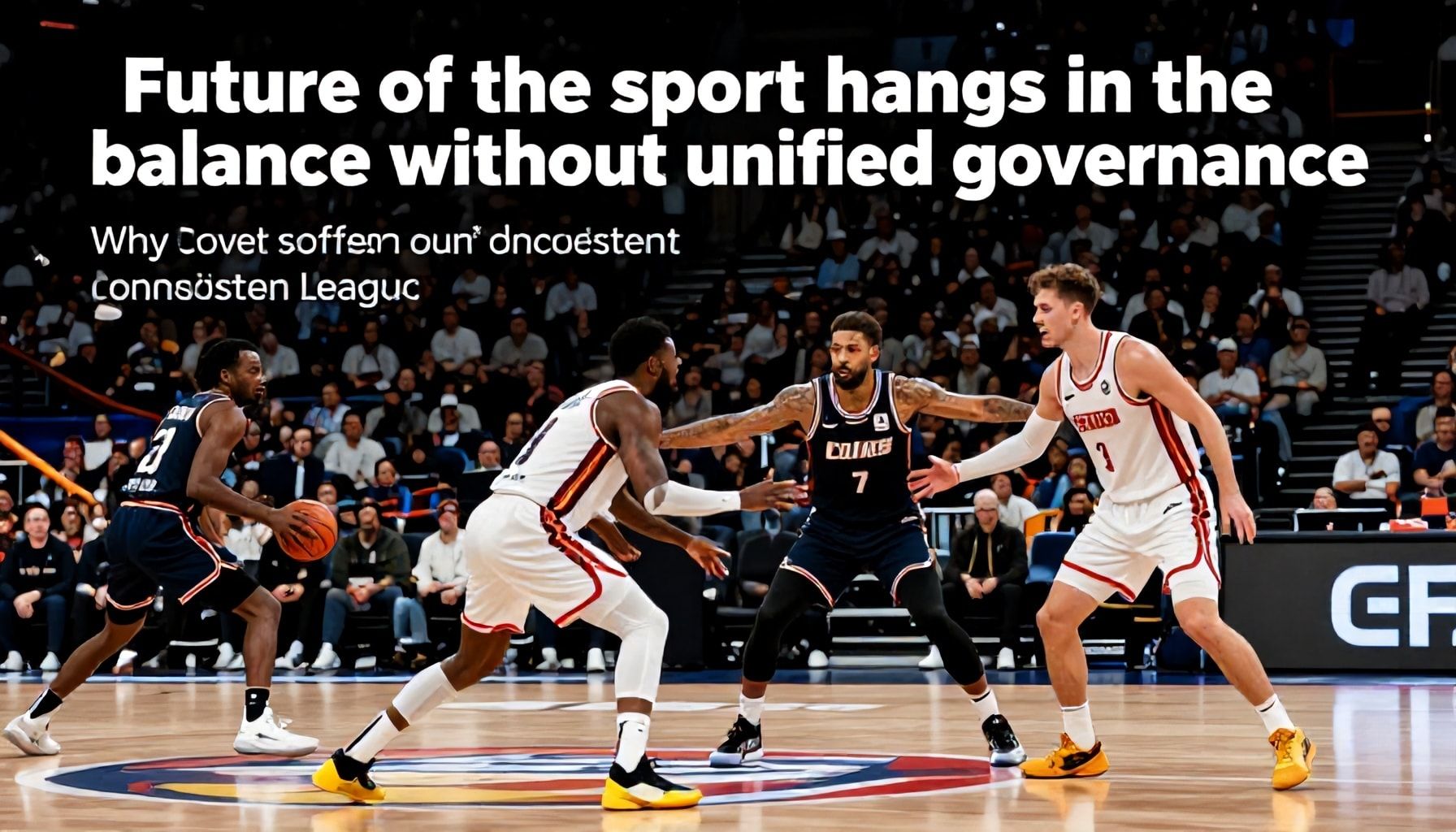
The absence of a unified governance structure has left basketball’s competitive landscape fractured. Six domestic leagues operate across Europe, each with different rules on player eligibility, transfer windows and salary caps. The EuroLeague, for example, runs under FIBA Europe regulations while the Spanish Liga Endesa follows its own framework. This inconsistency has created confusion for clubs, players and fans alike.
Clubs are losing revenue because sponsors struggle to align campaigns with shifting calendars. The EuroLeague’s mid-season start in October clashes with the domestic leagues’ winter schedules, cutting prime advertising slots short. According to a 2023 Deloitte report, European basketball clubs missed €45 million in sponsorship income due to scheduling overlaps last season. FIBA Europe’s secretary-general, Andreas Zagklis, confirmed the financial strain in a June interview with SportsPro.
Players face similar disruption. A point guard who signed for an October EuroLeague game was told days later he could not play in his national league that same weekend. FIBA’s eligibility rules, which differ from domestic federations, forced the club to drop him from the roster. The incident was reported by BasketNews Europe in May.
Fans are the most visible losers. Attendance dipped 12% last season in markets where EuroLeague and domestic league games overlapped, according to data from the European Club Association. Social media chatter about “which league matters more” has surged, eroding fan loyalty. EuroLeague CEO Giuseppe Sapienza admitted in a March press conference that the fragmentation risks long-term growth. Without a single governing body to enforce standard rules, basketball’s upward trajectory remains uncertain.
The NBA’s ongoing legal battles with its European counterparts have already cost the sport momentum in key markets. While talks continue, no resolution is expected before next season’s fixture lists are finalised. Analysts warn that delays could push more clubs toward domestic-only competitions, further fragmenting the calendar. For fans, the uncertainty means fewer guaranteed cross-league matches—and more empty seats in arenas outside North America. League officials insist a deal remains possible, but time is running short.