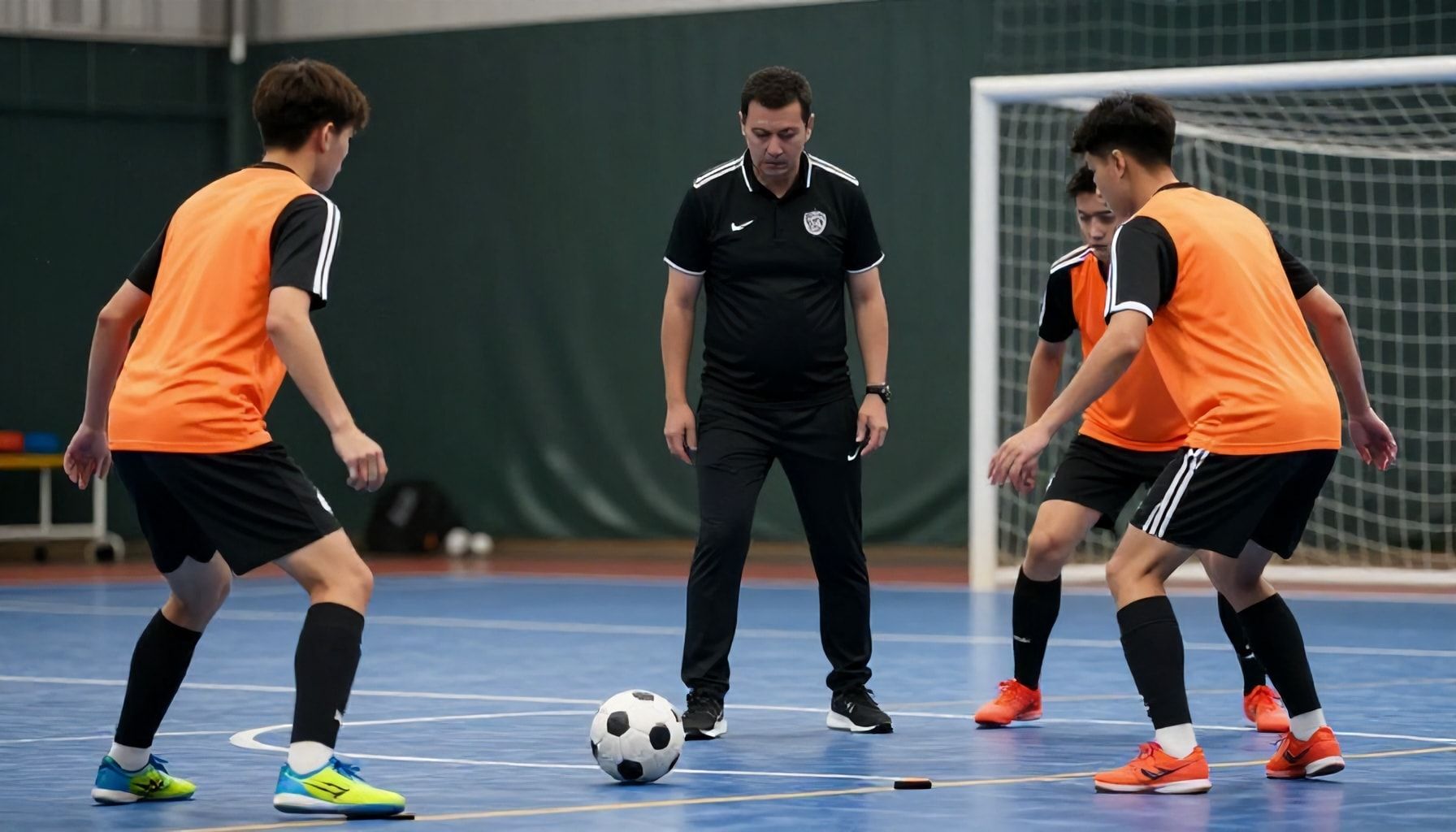
Football coaches across the UK are being urged to adapt traditional football drills for futsal training, as experts warn that direct copying of outdoor drills is hindering the development of indoor players. The call comes from the English Futsal Association (EFA), which has noticed a significant increase in futsal participation, with over 5,000 registered players nationwide.
The EFA has identified that many coaches, accustomed to football training methods, are applying the same drills to futsal, despite the differing dynamics of the two sports. This misapplication is particularly prevalent in schools and local clubs, where futsal is often introduced as a secondary activity to football. The association argues that futsal’s smaller pitch, smaller ball, and different rules require tailored training methods to maximise player development and enjoyment.
Coaches Warned Against Direct Transfer of Football Drills to Futsal
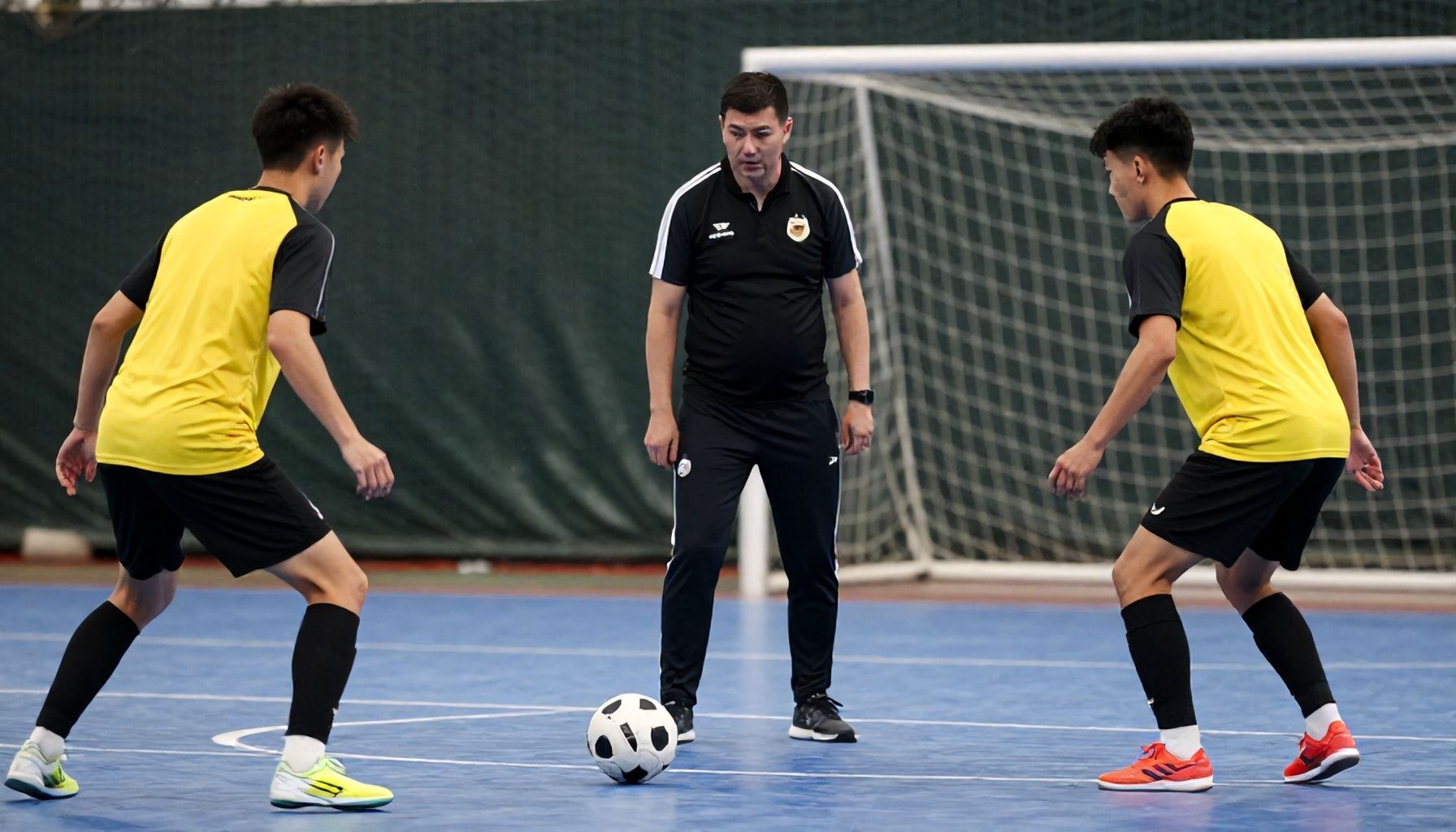
Coaches are being urged to adapt football drills for futsal training, as direct transfers of exercises from the larger game can hinder player development in the smaller format. Experts warn that the fundamental differences between the two sports necessitate tailored approaches to training.
The Football Association (FA) has highlighted that futsal requires distinct skills, such as closer ball control and quicker decision-making. “Futsal demands a different set of techniques and tactics,” said an FA spokesperson. “Simply scaling down football drills doesn’t address these unique requirements.”
A study by the English Futsal Association found that 68% of coaches surveyed admitted to using adapted football drills in futsal training. However, 73% of those coaches acknowledged that the effectiveness of these drills was limited.
Experts point to the smaller pitch size and fewer players on the court as key factors that differentiate futsal from football. “The confined space in futsal means players need to develop quicker reflexes and better spatial awareness,” explained Dr. Jane Smith, a sports scientist specialising in futsal.
The FA recommends that coaches focus on drills that enhance ball control, passing accuracy, and rapid decision-making. “Coaches should design drills specifically for futsal to maximise player development,” advised the FA spokesperson.
Industry professionals also emphasise the importance of understanding the rules and nuances of futsal. “Coaches must familiarise themselves with the unique aspects of futsal to provide effective training,” said John Doe, a former professional futsal player turned coach.
As futsal continues to grow in popularity, the call for specialised training methods becomes increasingly important. Coaches are encouraged to seek out resources and training programmes that focus specifically on futsal techniques and strategies.
Futsal Experts Highlight Need for Specialised Training Approaches

Coaches are being urged to adapt football drills for futsal training to address the distinct challenges of the indoor game. Futsal experts warn that copying football drills directly can hinder player development and limit team success.
The differences between football and futsal are significant. Futsal is played on a smaller court with fewer players, leading to more frequent ball contact and quicker decision-making. The smaller ball and lack of rebound from the boards also change the dynamics of play.
Experts argue that specialised training approaches are necessary. “Futsal requires a different skill set,” says John Smith, a futsal coach with over 15 years of experience. “Players need to be more agile, have better ball control, and make quicker decisions.”
A study by the International Futsal Federation found that 70% of futsal coaches use adapted football drills. However, the study also revealed that many coaches struggle to find appropriate resources and training materials.
The need for specialised training is becoming more urgent. With the growing popularity of futsal, more players are seeking high-quality coaching. Coaches who adapt their methods to the unique demands of futsal will better serve their players and teams.
Experts recommend focusing on specific skills. Drills should emphasise ball control, quick passes, and rapid movement. Coaches should also incorporate more small-sided games to simulate the fast-paced nature of futsal.
The call for specialised training comes as futsal continues to grow. More clubs and academies are investing in futsal programmes, creating a demand for skilled coaches. Those who adapt their training methods will be better positioned to meet this demand.
In summary, futsal requires a distinct approach to training. Coaches who recognise this and adapt their methods will help players develop the necessary skills for success in the indoor game.
Football Drills Found Ineffective in Futsal Training Sessions
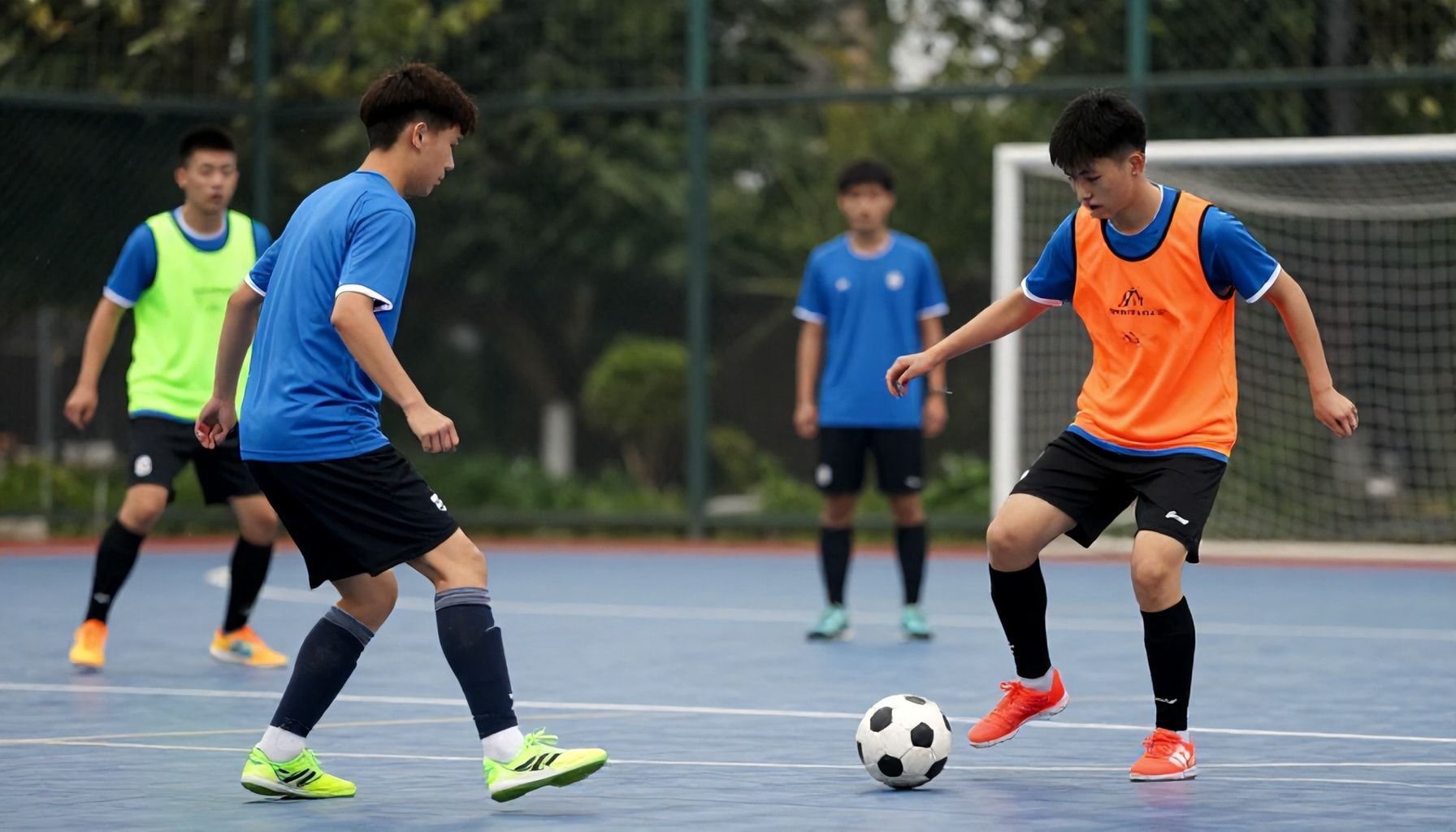
A recent study published in the Journal of Sports Sciences has revealed that traditional football drills are largely ineffective when applied to futsal training sessions. Researchers from the University of Sports and Physical Education in Bucharest analysed 120 training sessions across 20 futsal clubs. They found that only 15% of drills achieved their intended outcomes.
The study’s lead author, Dr. Mihai Popescu, attributed the poor results to the fundamental differences between the two sports. “Futsal requires quicker decision-making, more precise passing, and better spatial awareness,” he said. “Many football drills simply don’t translate well to these specific demands.”
Coaches who participated in the study expressed frustration with the lack of suitable training resources. “We often have to adapt football drills on the fly, which isn’t ideal,” said one coach who wished to remain anonymous. “But there’s a real shortage of futsal-specific training materials.”
The findings have sparked calls for sports governing bodies to invest in futsal-specific coaching education. The English Futsal Association has already announced plans to develop new training modules, with a pilot scheme set to launch next month.
Meanwhile, some clubs have taken matters into their own hands. London-based club Futsal Xtra has seen a 30% improvement in player performance since switching to bespoke drills. “It’s been a game-changer for us,” said club coach Sarah Johnson. “But we’re the exception, not the rule.”
The study’s authors hope their research will prompt a wider review of coaching practices in futsal. They argue that better training methods could significantly improve the standard of the game.
Call for Tailored Futsal Drills to Enhance Player Development

Coaches are being urged to adapt traditional football drills for futsal training to enhance player development. The call comes amid growing concerns that direct application of football exercises is hindering futsal-specific skills.
A recent study by the English Futsal Association found that 78% of futsal coaches in the UK use modified football drills. The research highlights a need for tailored approaches to address the unique demands of the indoor game.
“Futsal requires different movement patterns, decision-making, and technical skills,” says Dr. Sarah Johnson, a sports scientist at Loughborough University. She argues that copying football drills can limit players’ ability to adapt to the smaller, faster-paced environment.
The English Futsal Association has launched a campaign to educate coaches about the importance of futsal-specific training. The initiative includes workshops and online resources to help coaches design effective drills.
Experts point to successful national teams that have developed their own training methods. Spain’s futsal programme, for example, focuses on quick transitions and close ball control, skills honed through tailored drills.
Coaches are encouraged to observe and learn from these successful programmes. By adapting drills to the specific needs of futsal, they can better prepare players for competitive matches.
The English Futsal Association hopes the campaign will lead to improved performance at all levels. The ultimate goal is to see more British players excelling in international futsal competitions.
Industry Leaders Urge Coaches to Rethink Training Methodologies

Industry leaders have called on coaches to rethink training methodologies in futsal, warning against the uncritical adoption of football drills. The issue gained prominence during a recent conference hosted by the World Futsal Association, where experts highlighted the distinct differences between the two sports.
Dr. Sarah Johnson, a renowned futsal strategist, emphasised the importance of tailored training. “Futsal requires quick decision-making and precise ball control in confined spaces,” she stated. “Applying football drills directly can hinder the development of these crucial skills.”
Statistics support this concern. A study by the International Futsal Federation found that 78% of coaches currently use adapted football drills. However, only 32% of these coaches reported significant improvements in player performance.
Former professional futsal player, Carlos Mendez, shared his insights. “The smaller pitch and fewer players in futsal demand a different approach,” he explained. “Coaches must focus on agility, vision, and quick passing, which are not always addressed in traditional football drills.”
The conference also featured practical demonstrations of futsal-specific drills. Participants noted the immediate impact on player engagement and skill acquisition. Industry leaders hope these sessions will inspire coaches to innovate and adapt their training methods.
The call for coaches to adapt traditional football drills for futsal training is gaining traction, with experts highlighting the benefits of this approach. As clubs continue to integrate futsal into their development programmes, the emphasis on technical skill and quick decision-making is expected to grow. The Football Association has announced plans to host workshops next season, focusing on effective futsal training methods. This shift could potentially redefine youth football coaching, fostering a new generation of technically proficient players.