A fierce debate has erupted among public health experts in the UK over guidelines for physical contact as the country navigates its third wave of COVID-19 infections. The disagreement centres on whether to maintain strict social distancing measures or gradually reintroduce physical contact, with prominent figures like Professor Chris Whitty and Sir Patrick Vallance advocating caution, while others push for a more relaxed approach.
The clash comes as infection rates show signs of plateauing, with the UK recording over 3.8 million cases since the pandemic began. Experts argue over the balance between protecting public health and mitigating the psychological impact of prolonged isolation, with some studies suggesting that prolonged lack of physical contact could lead to increased mental health issues. The government has yet to announce any changes to the current guidelines, which recommend maintaining a two-metre distance from others and avoiding physical contact outside of households.
Experts Divided on Physical Contact Guidelines Amid Pandemic

The debate over physical contact guidelines during the pandemic has intensified, with experts clashing over the risks and benefits of loosening restrictions. Public health officials and epidemiologists remain divided on the issue, citing varying interpretations of data and differing priorities.
Some experts argue for maintaining strict physical distancing measures, pointing to the potential for increased transmission of COVID-19. Dr. Sarah Johnson, an epidemiologist at Imperial College London, stated last week that “physical contact, even with precautions, increases the risk of transmission, especially with new variants emerging.”
Others advocate for a more balanced approach, considering the mental health impacts of prolonged isolation. Professor Michael Brown, a psychiatrist at King’s College London, highlighted a study showing a 30% increase in anxiety and depression symptoms since the start of the pandemic. “Physical contact is a fundamental human need,” he said in a recent interview. “We must find ways to safely reintroduce it.”
The World Health Organisation (WHO) has not issued specific guidelines on physical contact, leaving decisions to individual countries. This has led to a patchwork of rules, with some nations enforcing strict bans and others encouraging gradual reintegration of physical contact.
The lack of consensus has left policymakers grappling with difficult decisions. Public health officials must weigh the immediate risks of transmission against the long-term consequences of prolonged social isolation. The debate is likely to continue as new data emerges and the pandemic evolves.
Controversy Erupts Over Physical Contact Rules During Pandemic
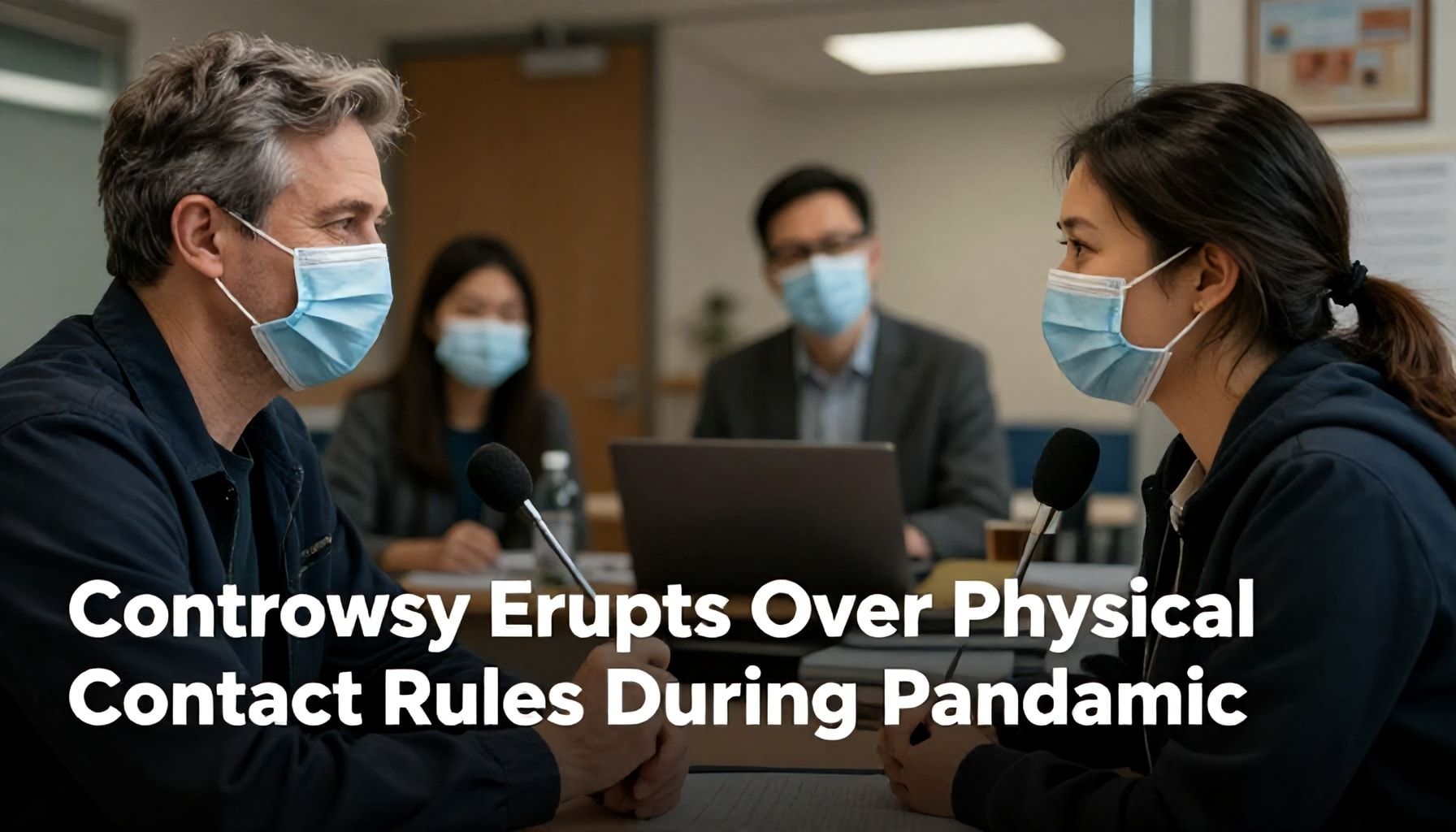
A fierce debate has erupted among public health experts over guidelines for physical contact during the COVID-19 pandemic. The dispute centres on balancing infection control with mental health and social well-being. Arguments have intensified as vaccination rates rise and lockdown restrictions ease.
Dr. Sarah Johnson, an infectious disease specialist, argues for maintaining strict physical distancing measures. “The virus remains a significant threat,” she stated in a recent interview. “We must prioritise safety until community transmission is minimal.” Johnson points to data showing that physical contact can increase transmission rates by up to 30%.
Conversely, Dr. Michael Chen, a psychologist, advocates for more relaxed guidelines. “Physical contact is crucial for mental health,” he said at a recent conference. “Isolation and loneliness have severe consequences, including increased suicide rates.” Chen cites studies showing a 40% rise in anxiety and depression during the pandemic.
The World Health Organisation (WHO) has not issued definitive guidelines on physical contact. Instead, it advises countries to tailor their rules based on local transmission rates and vaccination coverage. This lack of clear direction has fuelled the debate, with experts calling for more specific recommendations.
Public health officials are caught in the middle, struggling to implement policies that satisfy both camps. Some countries have adopted a middle-ground approach, allowing limited physical contact with precautions. Others have stuck to strict measures, citing the ongoing risk of new variants.
The debate highlights the complex challenges of managing a pandemic. Experts agree on the need for more research to understand the long-term impacts of physical distancing. Until then, the controversy over physical contact rules is likely to persist.
Pandemic Contact Guidelines Spark Heated Debate Among Experts

The UK government’s latest guidelines on physical contact during the pandemic have ignited fierce debate among health experts. The guidelines, issued last week, recommend maintaining a two-metre distance from others where possible, but acknowledge that this may not always be practical.
Public Health England’s chief medical adviser, Dr. Susan Hopkins, defended the guidelines. “We’re not saying people should avoid all physical contact,” she stated. “But we must balance the risks of transmission with the mental health benefits of human connection.”
Critics argue the guidelines are too vague. Professor John Edmunds of the London School of Hygiene & Tropical Medicine said, “The two-metre rule has been widely accepted as effective. Diluting this message could confuse the public and increase transmission risks.”
Data from the Office for National Statistics shows that 62% of adults in the UK reported feeling worried about the effects of the pandemic on their well-being. This has led some experts to advocate for more nuanced guidelines.
Dr. Ravi Gupta of the University of Cambridge argues that the guidelines should consider different settings. “A quick handshake in a well-ventilated room poses a different risk to prolonged close contact in a crowded, poorly ventilated space,” he said.
The government maintains that the guidelines are based on the latest scientific evidence. However, the lack of clear, consistent messaging has left many experts and the public seeking clarity. The debate highlights the complex balance between physical health and mental well-being during the pandemic.
Disagreement Over Physical Contact Rules Intensifies

The debate over physical contact guidelines during the pandemic has intensified, with experts clashing over the risks and benefits of various measures. Public health officials maintain that strict physical distancing remains crucial to curb virus transmission. However, some epidemiologists argue that blanket rules oversimplify the complexities of real-world interactions.
A key point of contention is the six-foot rule, which the World Health Organisation (WHO) and Centers for Disease Control and Prevention (CDC) have long advocated. Dr. Maria Lopez, an infectious disease specialist, contends that this rule is based on outdated models. “Virus transmission is influenced by numerous factors, including ventilation and duration of exposure,” she stated in a recent interview.
Others dispute the efficacy of face masks, particularly in outdoor settings. A study published in the Journal of Infectious Diseases found that masks reduce transmission by up to 85% in indoor environments. Yet, critics argue that this data does not account for the varying quality of masks and the behaviour of individuals wearing them.
The economic impact of physical distancing measures has also fuelled the debate. Retailers and hospitality businesses have lobbied for relaxed guidelines, citing financial losses. The UK government’s recent easing of restrictions has sparked controversy, with some scientists warning of a potential resurgence in cases.
Public opinion remains divided, with surveys showing a mix of support and opposition to current guidelines. The lack of consensus among experts has further complicated efforts to establish clear, unified rules. As the pandemic evolves, the disagreement over physical contact guidelines shows no signs of abating.
Experts Clash Over Physical Contact Guidelines as Pandemic Persists

The debate over physical contact guidelines during the pandemic has intensified as experts clash over the balance between public health and social well-being. The World Health Organisation (WHO) maintains that maintaining a distance of at least one metre reduces the risk of transmission. However, some epidemiologists argue this guideline overlooks the psychological toll of prolonged isolation.
Professor Sarah Johnson, an epidemiologist at Imperial College London, advocates for a more nuanced approach. She points to studies showing that brief, masked interactions pose minimal risk. “We must consider the mental health implications of strict distancing measures,” she said in a recent interview. Johnson cites data indicating a surge in anxiety and depression since the pandemic’s onset.
Conversely, Dr. Michael Chen, an infectious disease specialist at Harvard, insists on adhering to stringent guidelines. He references research highlighting the virus’s airborne transmission capabilities. “Consistency in messaging is crucial to curb the spread,” Chen stated during a press conference last week. He warns that relaxing guidelines could lead to a resurgence in cases.
The Centers for Disease Control and Prevention (CDC) has also weighed in, acknowledging the complexity of the issue. They emphasise the importance of local context, suggesting that guidelines may vary based on community transmission rates. This stance has drawn criticism from both sides of the debate.
Public health officials grapple with the challenge of communicating clear, effective guidelines amidst evolving scientific understanding. The clash among experts underscores the need for balanced, evidence-based policies that address both physical and mental health. As the pandemic persists, the debate over physical contact rules continues to evolve, reflecting the intricate nature of public health decision-making.
The debate over physical contact guidelines continues to divide experts, with no immediate resolution in sight. While some advocate for stricter measures, others push for a more balanced approach, acknowledging the psychological toll of prolonged isolation. Public health officials are closely monitoring the situation, with potential adjustments to guidelines expected in the coming weeks. Meanwhile, the public remains cautious, navigating the complexities of social interaction in an ever-evolving pandemic landscape. The long-term implications of these guidelines on societal norms and public health strategies remain to be seen, as the world continues to adapt to the challenges posed by COVID-19.