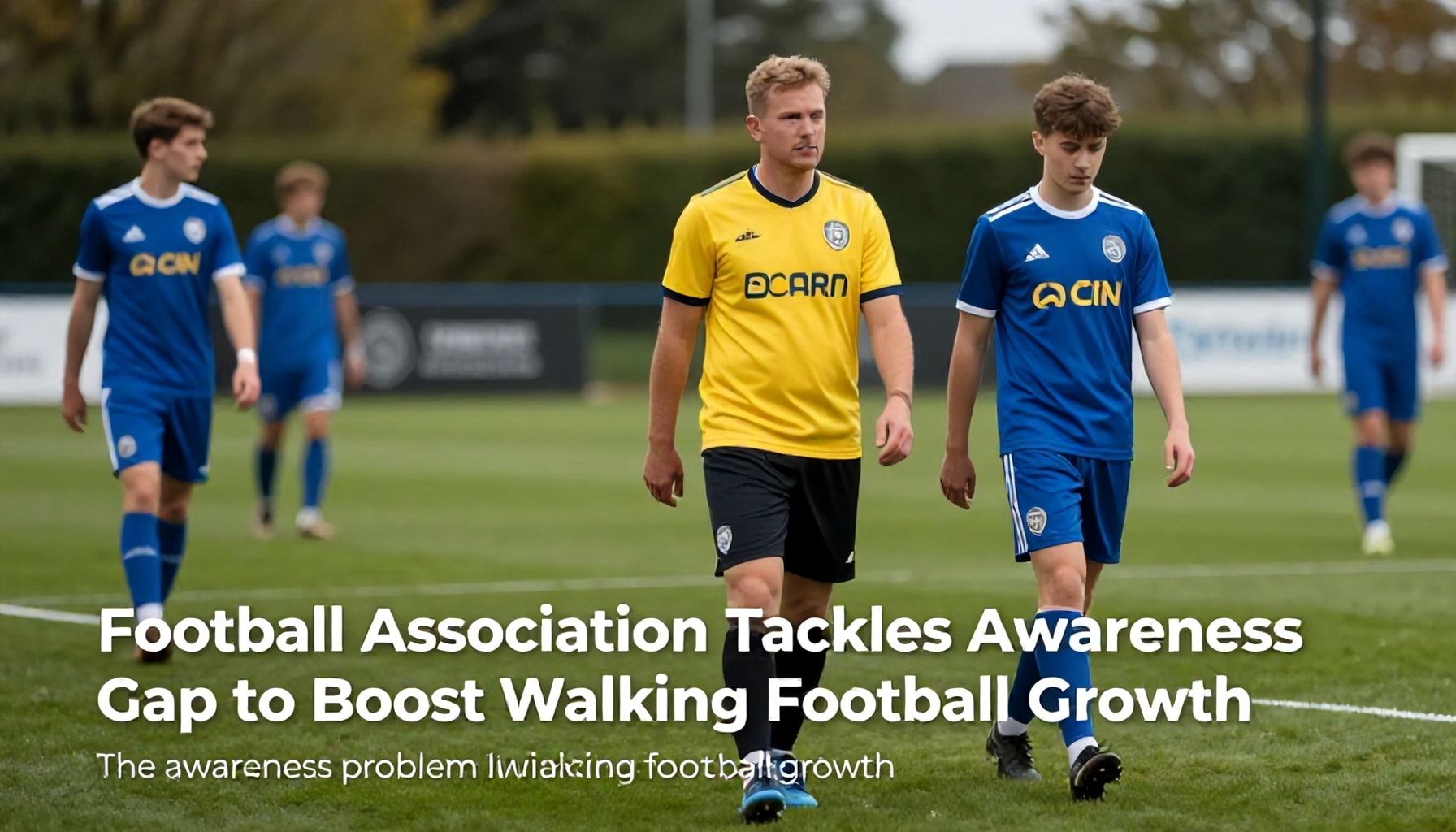
The Football Association (FA) is addressing a significant awareness gap that has hindered the growth of walking football, a modified version of the game designed for older adults. With only 30,000 registered players across England, the FA aims to double participation numbers by 2024 through targeted campaigns and community engagement initiatives. The sport, which prohibits running and allows only walking, was introduced in 2011 to promote physical activity among individuals aged 50 and above. Recent data from the FA reveals that many potential participants are unaware of the sport’s existence or its health benefits, with only 15% of local football clubs actively promoting walking football. The FA’s strategic plan includes partnerships with national health organizations and social media campaigns to raise visibility and encourage more people to take up the low-impact, inclusive sport.
Football Association Launches Campaign to Address Walking Football Awareness Gap
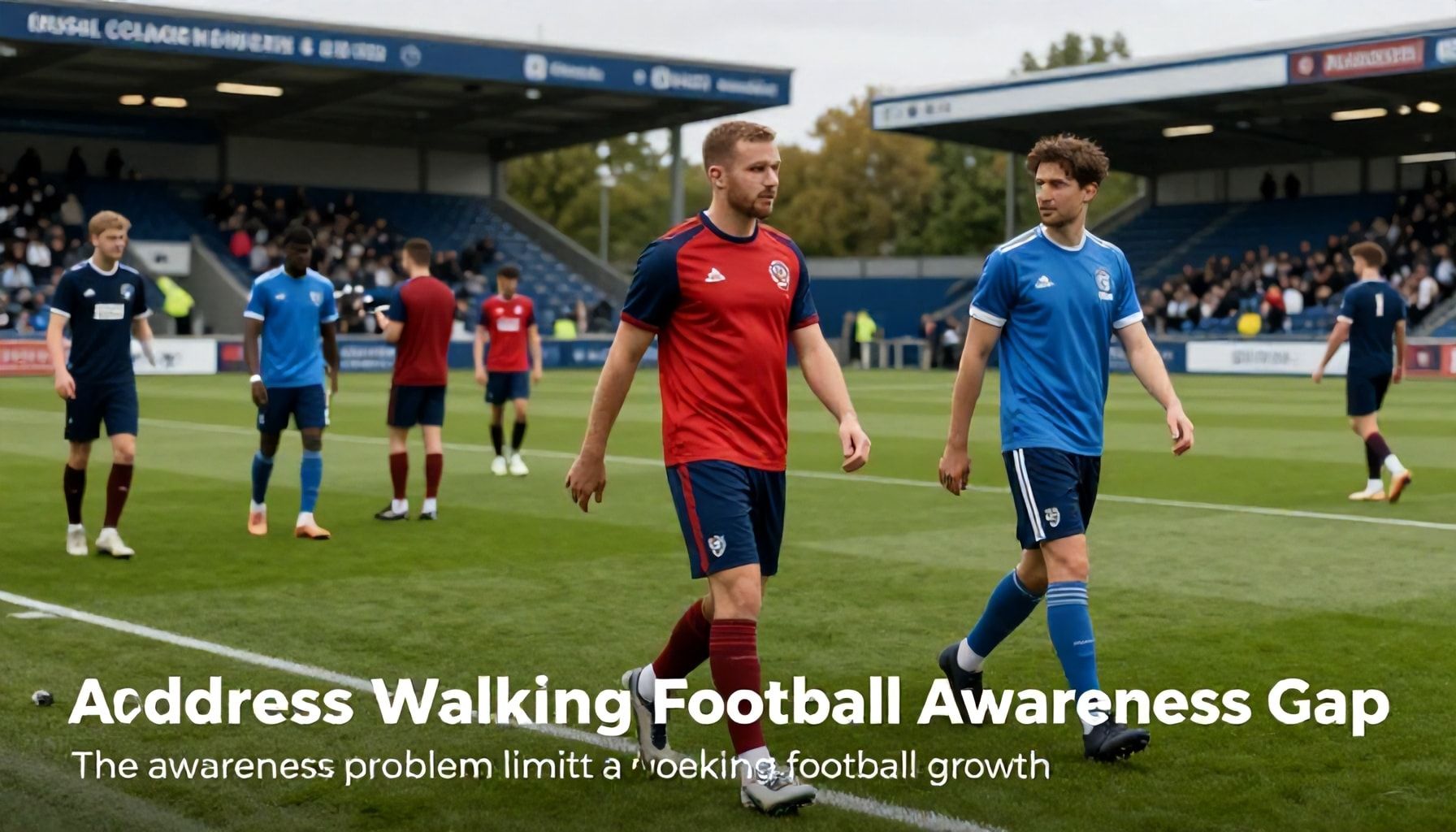
The Football Association (FA) has identified a significant awareness gap as a key barrier to the growth of walking football. Participation figures show the sport has plateaued in recent years, with around 50,000 regular players across England. The FA attributes this stagnation to a lack of understanding about the sport’s benefits and accessibility.
A recent survey conducted by the FA revealed that 60% of adults over 50 had never heard of walking football. The research also found that many who had heard of the sport assumed it was only for individuals with serious mobility issues. This misconception is limiting the potential growth of a game designed to be inclusive for all.
The FA’s new campaign aims to dispel these myths and attract new participants. The initiative includes targeted social media ads, community outreach programmes, and partnerships with local health organisations. The campaign emphasises that walking football is for anyone looking for a low-impact way to stay active and social.
Dr. Emma Hartley, a sports scientist consulted by the FA, stated, “Walking football is an excellent way to maintain fitness without the intense physical demands of traditional football.” She highlighted that the sport offers mental health benefits as well, fostering social connections and reducing isolation.
The FA hopes that by addressing the awareness gap, walking football can reach its full potential as a sport for all ages and abilities. The campaign is part of a broader strategy to promote grassroots football and encourage lifelong participation in the game.
Walking Football Growth Hindered by Lack of Awareness, Says FA
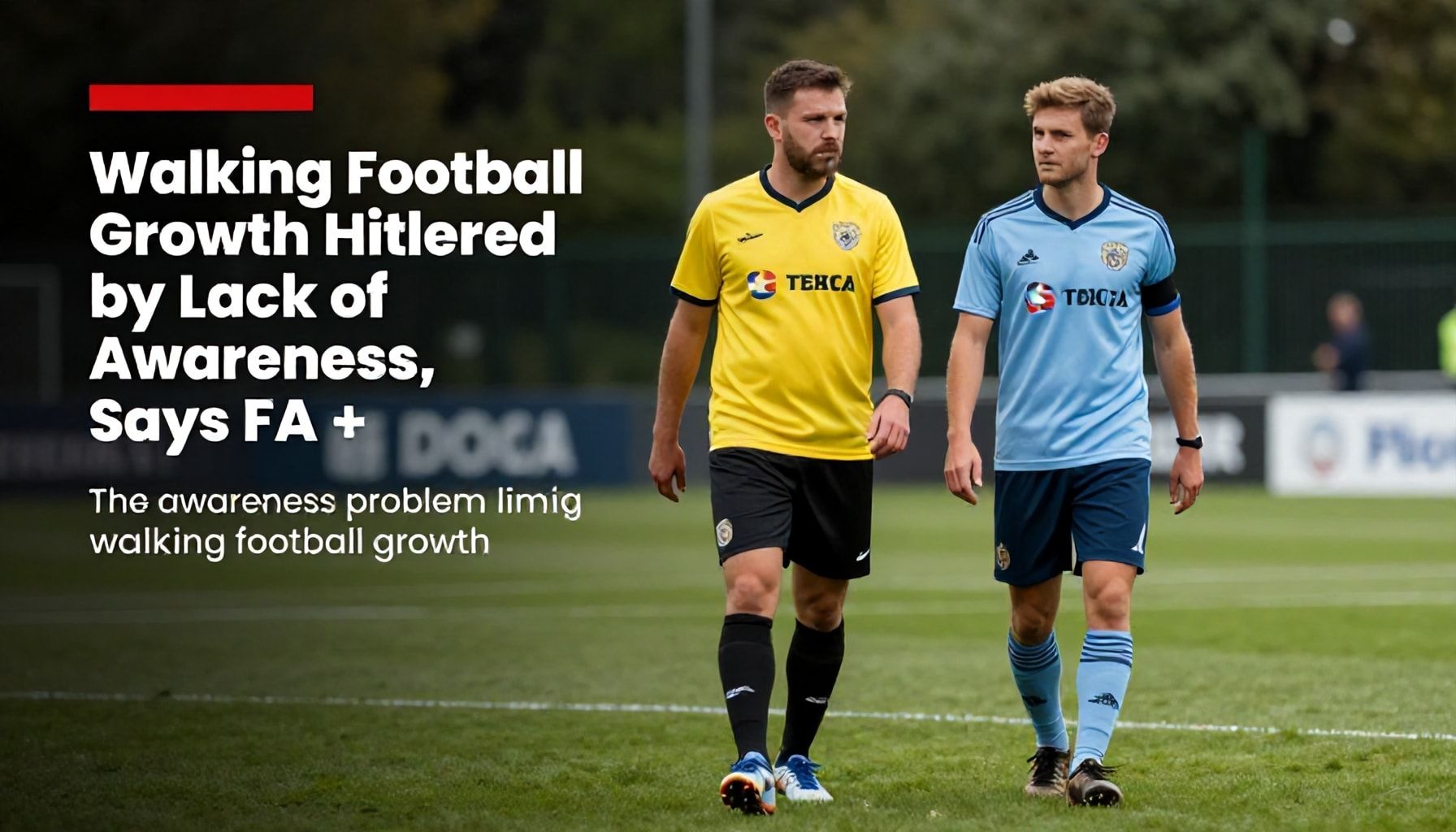
The Football Association (FA) has identified a significant awareness gap as the primary obstacle to the growth of walking football. Participation figures reveal that while over 40,000 players are currently involved, the sport’s potential remains untapped.
According to FA research, many individuals over 50 are unaware of walking football’s existence or its health benefits. The organisation highlights that targeted outreach and education are crucial to bridge this knowledge divide.
Walking football, adapted for older adults, involves playing the game without running. The FA notes that the sport promotes physical activity, social interaction, and mental well-being. Despite these advantages, the lack of awareness has hindered its expansion.
The FA’s National Game Strategy aims to address this issue by increasing visibility and accessibility. The strategy includes partnerships with local clubs, community initiatives, and media campaigns.
FA Chief Executive Mark Bullingham emphasised the importance of raising awareness. “We need to ensure that everyone, regardless of age or ability, knows about walking football,” he stated. The FA plans to launch a nationwide campaign to promote the sport.
Local clubs play a pivotal role in spreading awareness. The FA encourages clubs to organise walking football sessions and engage with their communities. This grassroots approach is essential for sustainable growth.
The FA also collaborates with healthcare providers to highlight walking football’s health benefits. Doctors and physiotherapists are encouraged to recommend the sport to patients. This collaboration aims to reach individuals who could benefit from the activity.
The FA’s efforts to tackle the awareness gap are ongoing. The organisation remains committed to making walking football a mainstream sport. By increasing visibility and accessibility, the FA hopes to unlock the sport’s full potential.
FA Tackles Low Awareness to Expand Walking Football Participation
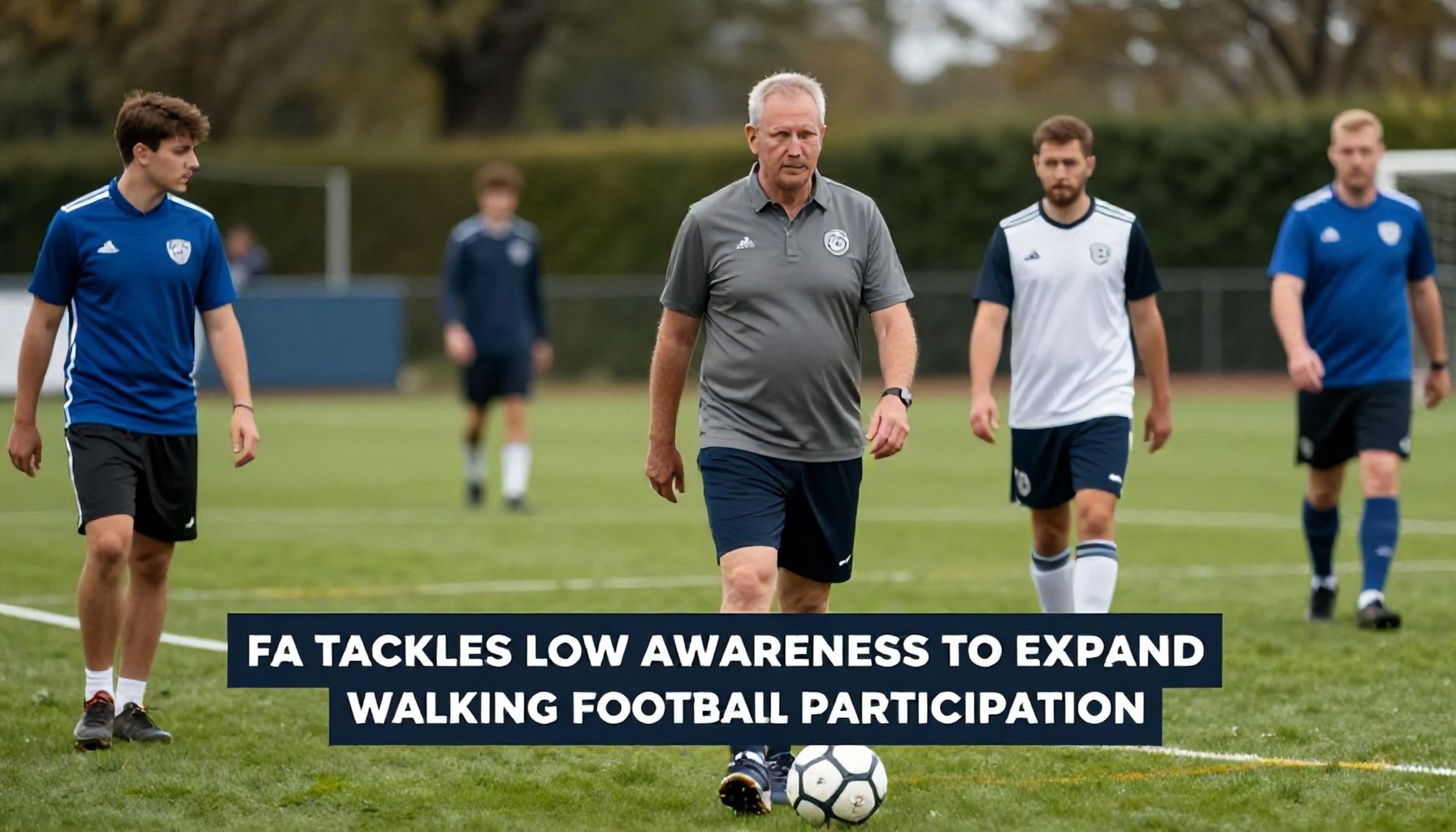
The Football Association (FA) has identified low awareness as a significant barrier to the growth of walking football. Despite its health benefits and popularity among older adults, many potential participants remain unaware of the format.
Research by the FA reveals that only 30 per cent of adults aged 50 and over have heard of walking football. This lack of awareness is particularly acute among women and those from lower socio-economic backgrounds.
Walking football, adapted for players aged 50 and above, involves walking rather than running. The format aims to promote physical activity while reducing the risk of injury. The FA reports that over 40,000 players currently participate in walking football across England.
Kelly Simm, FA Director of Football Development, stated, “We need to increase visibility and accessibility to grow the game.” She emphasised the importance of targeted campaigns and community engagement to raise awareness.
The FA has launched initiatives to address the awareness gap. These include partnerships with local clubs, social media campaigns, and collaborations with health organisations. The goal is to make walking football more accessible and appealing to a broader audience.
Despite these efforts, challenges remain. Limited funding and resources hinder the FA’s ability to reach all potential participants. The organisation continues to seek innovative solutions to overcome these barriers.
The FA remains committed to expanding walking football participation. By tackling the awareness problem head-on, the organisation aims to create a more inclusive and active community.
Walking Football's Potential Unlocked as FA Targets Awareness Barrier
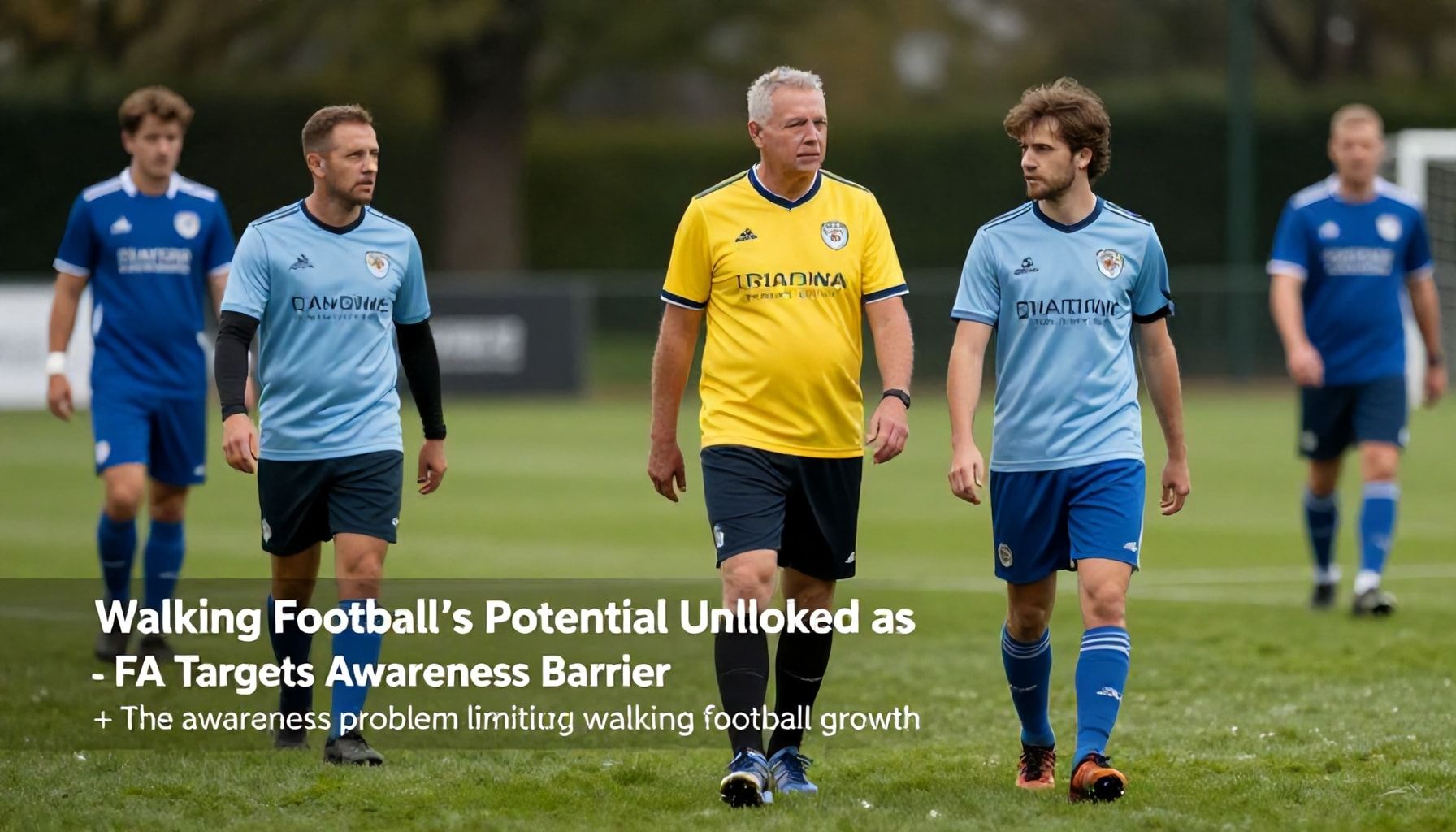
The Football Association (FA) has identified a significant awareness barrier limiting the growth of walking football. Participation figures remain stagnant, with approximately 30,000 registered players nationwide. The FA attributes this stagnation to a lack of understanding about the sport’s benefits and accessibility.
A recent FA survey revealed that 60% of potential participants aged 50 and above had never heard of walking football. The survey, conducted among 2,000 individuals, highlighted a clear knowledge gap. “We need to bridge this awareness gap to unlock the sport’s potential,” said FA Director of Football Participation, Kelly Simmons.
The FA has launched a targeted awareness campaign to address this issue. The campaign, titled “Walking Football: Your Game, Your Pace,” aims to reach one million people. It focuses on the health benefits and inclusive nature of the sport.
Local football associations are also stepping up efforts to raise awareness. They are organising taster sessions and community events to introduce walking football. The FA has provided £500,000 in funding to support these initiatives.
Despite these efforts, challenges remain. Some communities still view walking football as a niche activity. The FA acknowledges the need for sustained engagement to change perceptions. “It’s a marathon, not a sprint,” said Simmons.
The FA’s long-term goal is to double walking football participation by 2025. To achieve this, the organisation is collaborating with health bodies and community groups. The aim is to integrate walking football into national health and wellness programmes.
Football Association Steps Up Efforts to Promote Walking Football Nationwide
The Football Association (FA) has identified a significant awareness gap as the primary barrier to the growth of walking football. Participation figures show only 30,000 registered players nationwide, far below expectations for a sport designed to engage older adults and those returning from injury.
A recent FA survey revealed that 68% of non-participants had never heard of walking football. The research, conducted with 2,000 adults aged 50 and over, highlighted a lack of promotion as the key reason for low engagement.
The FA’s Director of Football Development, Kelly Simmons, acknowledged the challenge. “We’re facing an awareness issue,” she said in a statement last week. “Many people simply don’t know walking football exists or how accessible it is.”
To address this, the FA has launched a nationwide campaign targeting GP surgeries, community centres, and local media. The initiative aims to educate the public about the health benefits of walking football, which include improved cardiovascular health and reduced risk of chronic diseases.
Local football associations are also being encouraged to host taster sessions. The FA has pledged £500,000 to support these efforts, with funds allocated for marketing materials and coach training.
Despite the challenges, walking football is gaining traction in some regions. In the North West, participation has increased by 15% over the past year, thanks to targeted local campaigns.
The FA remains optimistic about the sport’s potential. “With increased awareness, we believe walking football can become a mainstream activity,” Simmons added. The association is now calling on national health bodies to endorse the sport as part of their public health strategies.
The Football Association’s initiative to bridge the awareness gap marks a significant step in promoting walking football. With targeted campaigns and community engagement, the sport is poised for growth, offering an inclusive alternative for older adults and those with health limitations. As more participants join, the FA aims to establish structured leagues and tournaments, further cementing walking football’s place in the sporting landscape.
This push aligns with broader public health goals, encouraging physical activity among aging populations. By fostering a supportive environment, the FA not only boosts participation but also enhances community well-being. The long-term impact could see walking football becoming a staple in local sports scenes, reflecting a positive shift towards accessible and inclusive fitness options.