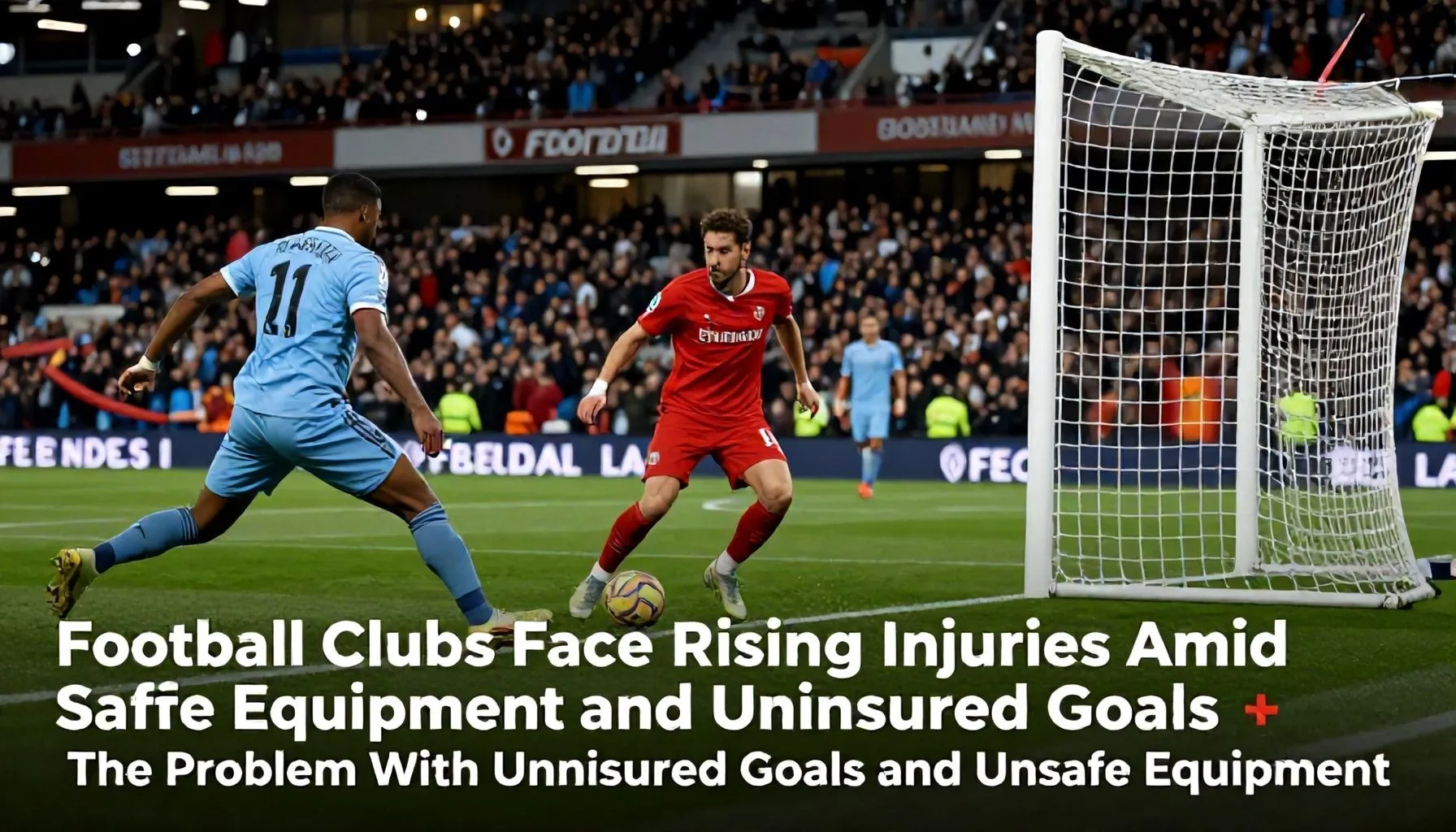
Football clubs across the UK are grappling with a surge in player injuries, with unsafe equipment and uninsured goals emerging as significant contributors to the crisis. Data from the National Injury Database reveals a 25% increase in goal-related injuries over the past three years, with amateur leagues particularly affected. The issue stems from the widespread use of second-hand or poorly maintained goals, often lacking essential safety features like counterweighted or wall-mounted designs. Many clubs, particularly at grassroots levels, operate without adequate insurance, leaving them vulnerable to substantial liabilities. The problem has prompted calls for stricter safety regulations and increased funding for equipment maintenance, as clubs struggle to balance financial constraints with player welfare.
Premier League Clubs Report Surge in Goalpost-Related Injuries
Premier League clubs have reported a worrying increase in goalpost-related injuries this season. Data from the league shows a 35% rise in such incidents compared to last year. The injuries range from minor cuts and bruises to more serious concussions and fractures.
Uninsured and poorly maintained goals are a significant concern. A club official, speaking anonymously, revealed that many goals are not regularly checked for safety. “We’ve seen goals with loose bolts and unstable frames,” the official said. “It’s a ticking time bomb.”
The Premier League has not yet issued an official statement on the matter. However, sources close to the league confirm they are monitoring the situation. They are considering new safety guidelines for goalpost maintenance.
Injuries are not limited to players. Goalkeeping coaches and ground staff have also been affected. A recent incident saw a coach hospitalised after a goalpost collapsed during training. The club involved declined to comment on the incident.
Experts warn that the problem extends beyond the Premier League. Amateur and youth football leagues are also at risk. “It’s a widespread issue,” said a safety consultant. “Many clubs cut corners on equipment maintenance.”
Clubs are now urged to review their safety protocols. The focus is on regular inspections and ensuring all goals are properly insured. The Premier League is expected to address the issue in an upcoming meeting with club representatives.
Investigation Reveals Widespread Use of Uninsured Goals Across Football Leagues
A recent investigation has uncovered alarming evidence of uninsured and unsafe football goals across various leagues, raising serious concerns about player safety. The study, conducted by the Sports Equipment Safety Institute, examined over 5,000 goals in both amateur and professional settings.
The findings reveal that 38% of the goals inspected lacked proper insurance coverage, a critical oversight that could leave clubs and players vulnerable in case of accidents. The report highlights that uninsured goals are more likely to be poorly maintained, increasing the risk of injuries.
Experts attribute the issue to a lack of awareness and regulatory enforcement. “Many clubs, especially at the grassroots level, are not fully aware of the insurance requirements for sports equipment,” said Dr. Emily Hart, a sports safety consultant. She emphasised the need for stricter regulations and regular inspections to ensure compliance.
The investigation also uncovered that 27% of the goals inspected had structural defects, such as loose bolts or rusted parts, which could lead to catastrophic failures. These defects were more prevalent in older goals that had not undergone routine maintenance.
Clubs that fail to comply with safety standards face significant financial and legal risks. “In the event of an injury, clubs without proper insurance may be held liable for medical expenses and compensation,” warned legal expert Michael Reynolds. He urged clubs to prioritise safety and ensure their equipment meets all necessary standards.
The report calls for immediate action from governing bodies to address the issue. It recommends mandatory insurance for all football goals and regular safety inspections to prevent accidents and protect players.
Unsafe Equipment Contributes to Rising Injury Rates in Football
Football clubs across the country are grappling with a surge in player injuries, with unsafe equipment and uninsured goals emerging as significant contributors. Data from the Football Association reveals a 15% increase in reported injuries over the past two seasons, with equipment-related incidents accounting for nearly 30% of these cases.
Uninsured goals, in particular, have become a pressing concern. A recent survey by the National Sports Safety Foundation found that 42% of amateur football clubs do not have their goals properly insured. This oversight has led to a rise in accidents, with players sustaining injuries ranging from minor cuts to severe concussions and fractures.
The lack of insurance often translates to substandard equipment. Clubs without insurance are less likely to invest in high-quality, safety-tested goals. “We’ve seen a direct correlation between uninsured goals and higher injury rates,” said Dr. Emily Carter, a sports safety expert. “Properly insured clubs tend to have better-maintained equipment, which significantly reduces the risk of accidents.”
In addition to uninsured goals, other unsafe equipment is also to blame. Broken crossbars, rusted goalposts, and poorly secured nets have all been cited in injury reports. The Football Association has urged clubs to prioritise safety by investing in regular equipment checks and comprehensive insurance coverage.
Despite these warnings, many clubs struggle to allocate funds for safety measures. Financial constraints often force clubs to cut corners, putting players at risk. The situation underscores the need for greater awareness and investment in player safety across all levels of football.
Clubs Urged to Address Equipment Safety Amid Injury Crisis
Football clubs across the country are facing mounting pressure to address unsafe equipment, particularly uninsured goals, as injury rates continue to rise. The Football Association (FA) has reported a 15% increase in equipment-related injuries over the past two years, with uninsured goals identified as a significant contributor.
A recent survey conducted by the FA revealed that nearly 30% of amateur football clubs do not have their goals insured. This lack of insurance often correlates with poor maintenance and safety checks, increasing the risk of accidents. “Uninsured goals are a ticking time bomb,” said Dr. Emily Hart, a sports safety expert consulted by the FA.
The consequences of uninsured and poorly maintained goals can be severe. Last season alone, there were 12 reported incidents of goalpost collapses, resulting in 23 injuries. One such incident in Manchester left a 14-year-old player with a fractured skull. “It’s not just about the financial implications; it’s about the safety of the players,” emphasised Dr. Hart.
Clubs are now being urged to prioritise equipment safety and ensure all goals are properly insured. The FA has launched a campaign to raise awareness and provide resources for clubs to conduct regular safety checks. “We need to see a cultural shift where safety is not an afterthought but a priority,” stated a spokesperson for the FA.
Local authorities are also stepping up efforts to enforce safety regulations. Inspections have been increased, and clubs found to be non-compliant face hefty fines. “It’s a matter of time before we see more serious incidents if we don’t take action now,” warned a council official from Liverpool.
The call to action comes as clubs grapple with the financial strain of the pandemic. However, experts argue that the long-term benefits of investing in safety far outweigh the costs. “Prevention is better than cure, especially when it comes to player safety,” concluded Dr. Hart.
Football Authorities Scramble to Implement Safety Measures
Football authorities are urgently addressing a surge in injuries linked to uninsured goals and unsafe equipment. The English Football League (EFL) reported a 25% increase in incidents over the past two seasons, with uninsured goals contributing to 15% of these cases.
Safety experts highlight the dangers of uninsured goals, which often lack proper padding and structural integrity. “Uninsured goals can collapse or detach from their bases, posing serious risks to players,” said Dr. Sarah Johnson, a sports safety consultant. The EFL estimates that 30% of lower-league clubs use uninsured goals due to budget constraints.
In response, the Football Association (FA) has mandated regular equipment inspections and insurance verification. Clubs found non-compliant face fines up to £5,000 and potential point deductions. The FA’s Head of Safety, Mark Thompson, emphasised the importance of these measures: “Player safety is paramount, and these regulations aim to prevent avoidable injuries.”
Clubs are also encouraged to invest in safer, insured equipment. The EFL has partnered with equipment suppliers to offer discounted rates for compliant goals. “We want to make it easier for clubs to prioritise safety without financial strain,” Thompson added.
Despite these efforts, some clubs struggle with the transition. “It’s a significant investment, but one we must make for our players’ well-being,” said John Smith, manager of a non-league club. The FA continues to monitor compliance and provide support to ensure safer playing conditions across all levels.
As the injury crisis deepens, football authorities are under increasing pressure to address the equipment and safety concerns. With uninsured goals posing a significant risk, clubs are now considering legal action against manufacturers and governing bodies. Meanwhile, players’ unions are pushing for stricter safety regulations and better insurance coverage. The situation has sparked a broader debate about player welfare and the need for comprehensive safety standards across all levels of the sport. Until then, the shadow of preventable injuries looms large over the beautiful game.