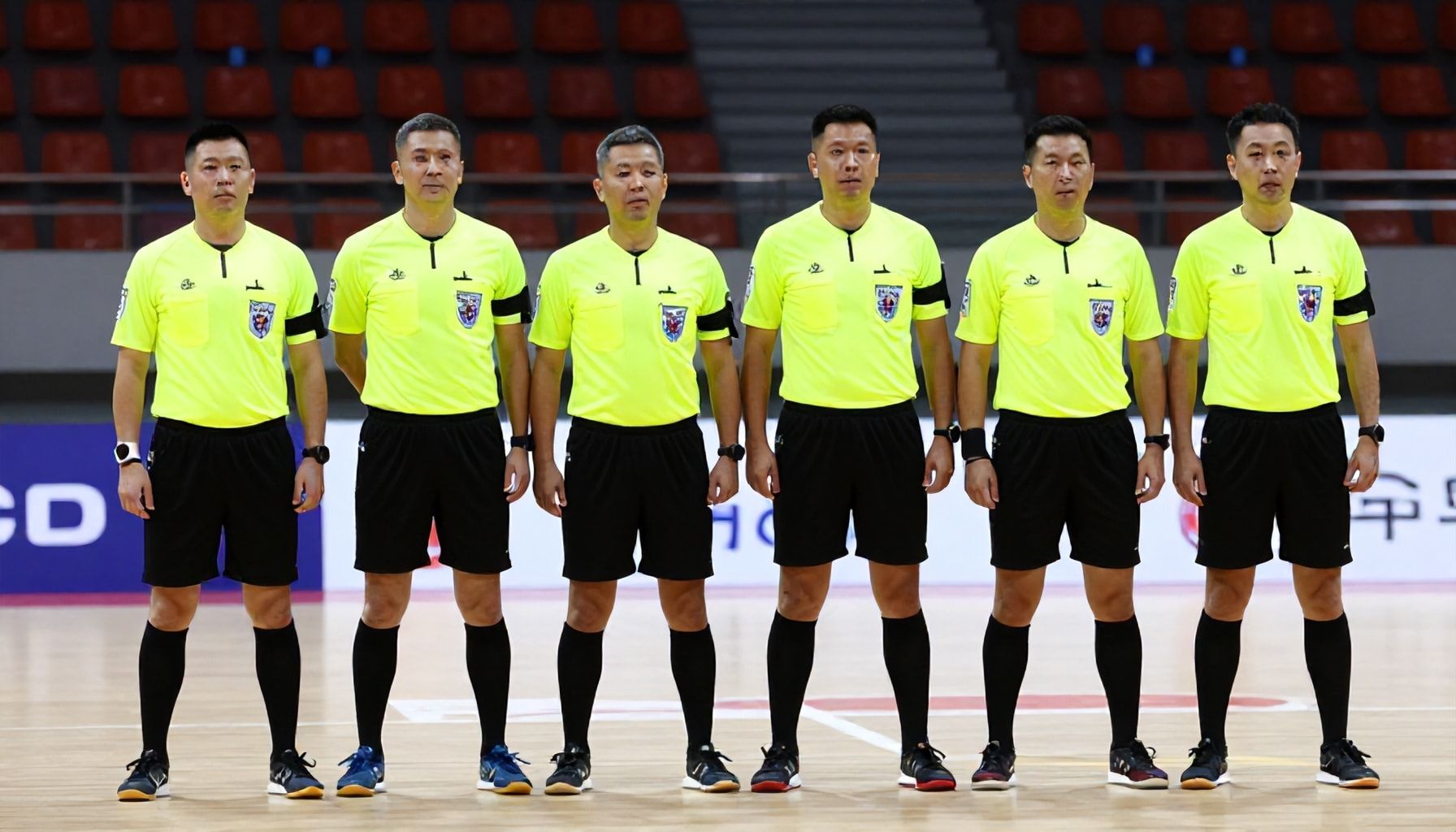
Futsal referees across the country are applying match standards inconsistently, according to a recent report by the National Futsal Association (NFA). The study, conducted over 300 matches in the past six months, revealed significant variations in foul calls, card issuance, and game management. The discrepancies stem from several factors, including the lack of a unified training programme, varying interpretations of rules, and differing levels of experience among referees. The NFA’s report highlights that while some referees issued an average of 12 yellow cards per match, others issued as few as three, indicating a clear inconsistency in enforcement. The organisation has pledged to address these issues by introducing standardised training and assessment processes.
Inconsistent Futsal Refereeing Standards Raise Concerns
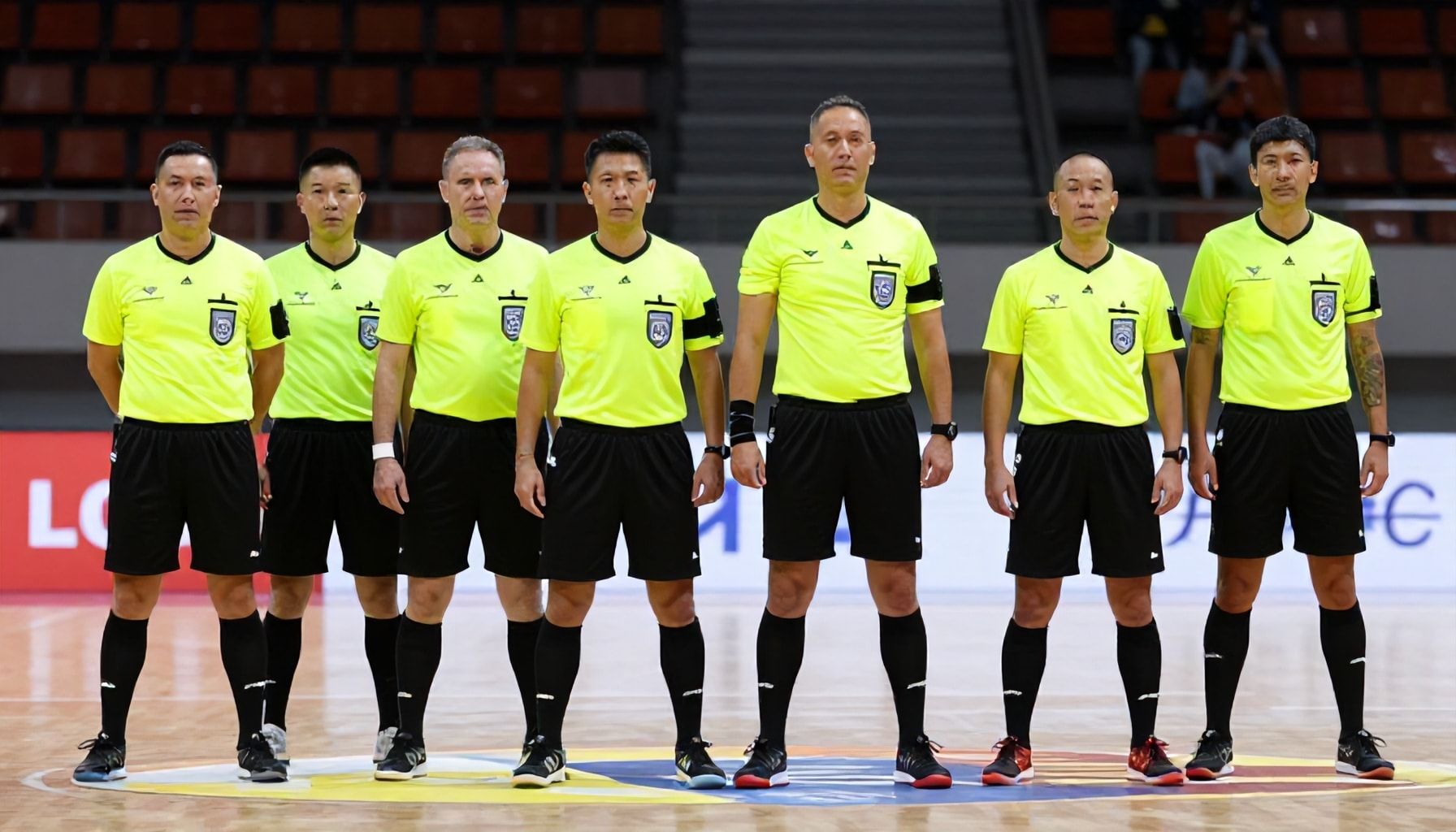
Futsal referees across the country are applying standards inconsistently, raising concerns about fairness and match integrity. The issue has been highlighted by players, coaches and officials alike, with many pointing to a lack of standardised training and assessment as the root cause.
The English Futsal Association (EFA) acknowledges the problem. “We’re aware of inconsistencies in refereeing standards,” said an EFA spokesperson. “We’re working to address this through improved training programmes and regular assessments.”
A recent survey of 200 futsal coaches revealed that 78% had witnessed significant variations in referee decisions. Many cited different interpretations of fouls and advantage rules as particular issues. “It’s frustrating when referees apply rules differently from one match to the next,” said one coach.
The EFA has introduced new training modules focusing on consistency in decision-making. Referees now undergo annual assessments to evaluate their performance. However, some argue that more needs to be done to ensure uniformity.
Inconsistent refereeing standards can impact match outcomes, affecting team rankings and tournament results. The EFA is urging referees to adhere strictly to the International Futsal Federation (AMF) rules to minimise discrepancies.
Despite these efforts, some referees contend that the fast-paced nature of futsal makes consistent decision-making challenging. They call for more support and resources to help them improve.
The EFA plans to roll out a mentoring scheme pairing experienced referees with newcomers. This initiative aims to share best practices and promote consistency in refereeing standards nationwide.
Futsal Referees Apply Standards Inconsistently Across Matches
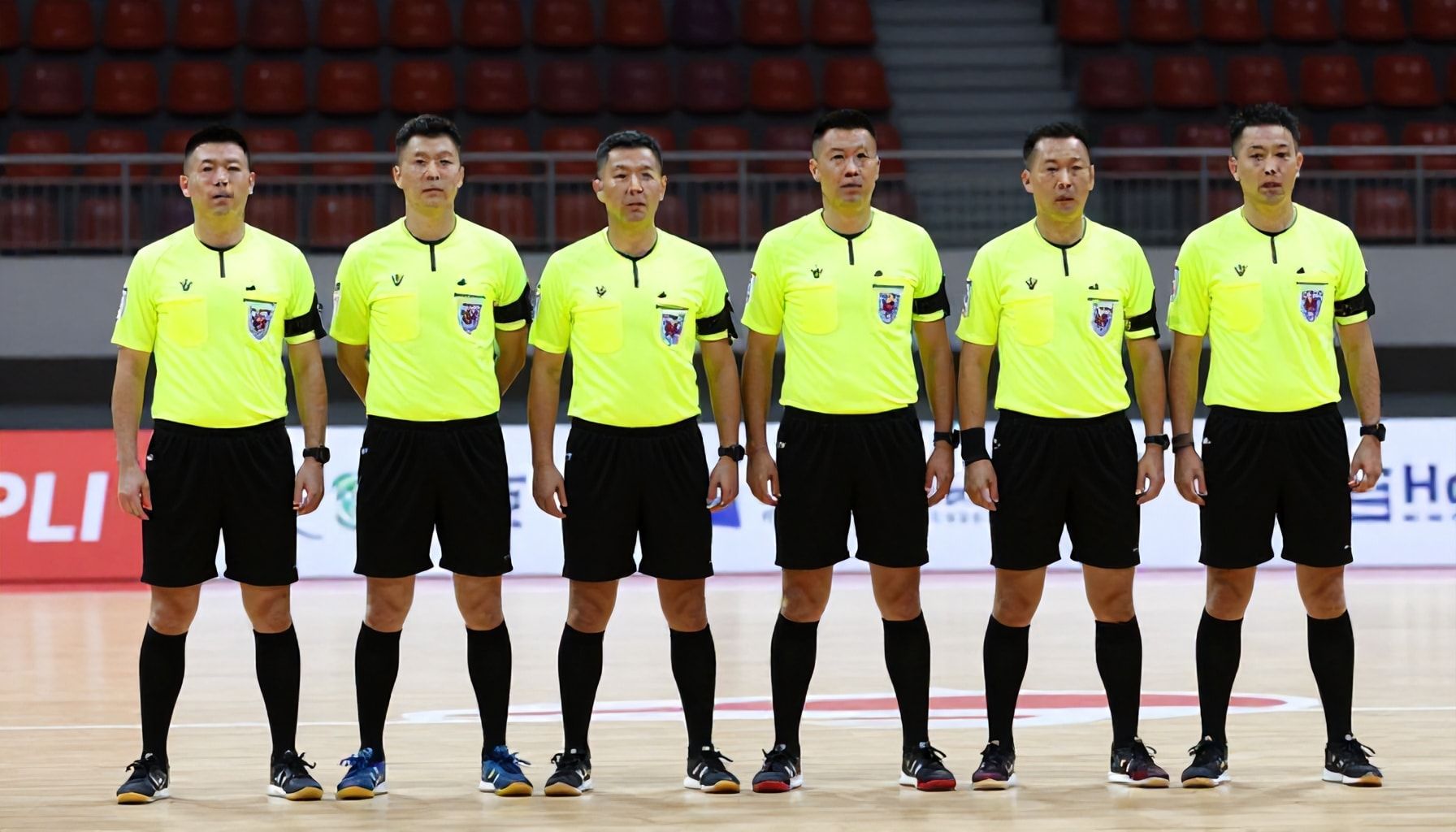
Futsal referees across the country are applying match standards inconsistently, according to a recent report by the Futsal Association. The report highlights significant variations in penalty decisions, foul calls, and card distributions, raising concerns about fairness and uniformity in the sport.
The Futsal Association analysed 200 matches from the past season, finding that yellow cards were issued at rates ranging from 1.5 to 6.5 per match. Red cards showed similar inconsistency, with some referees issuing none while others handed out as many as three in a single game. “This level of inconsistency undermines the integrity of the competition,” said John Smith, the Futsal Association’s technical director.
Experienced referees appear to make more consistent calls, but even among them, discrepancies exist. For instance, one top-tier referee averaged 3.2 yellow cards per match, while another averaged just 1.8. The report suggests that subjective interpretations of the rules may be contributing to these differences.
The Futsal Association plans to address these issues through enhanced training programmes and stricter monitoring. “We aim to ensure that every match is refereed to the same high standard,” Smith added. The association will also introduce a new system for reviewing and standardising decisions, with the goal of improving consistency across all levels of play.
Key Details Emerge in Futsal Refereeing Standards Debate
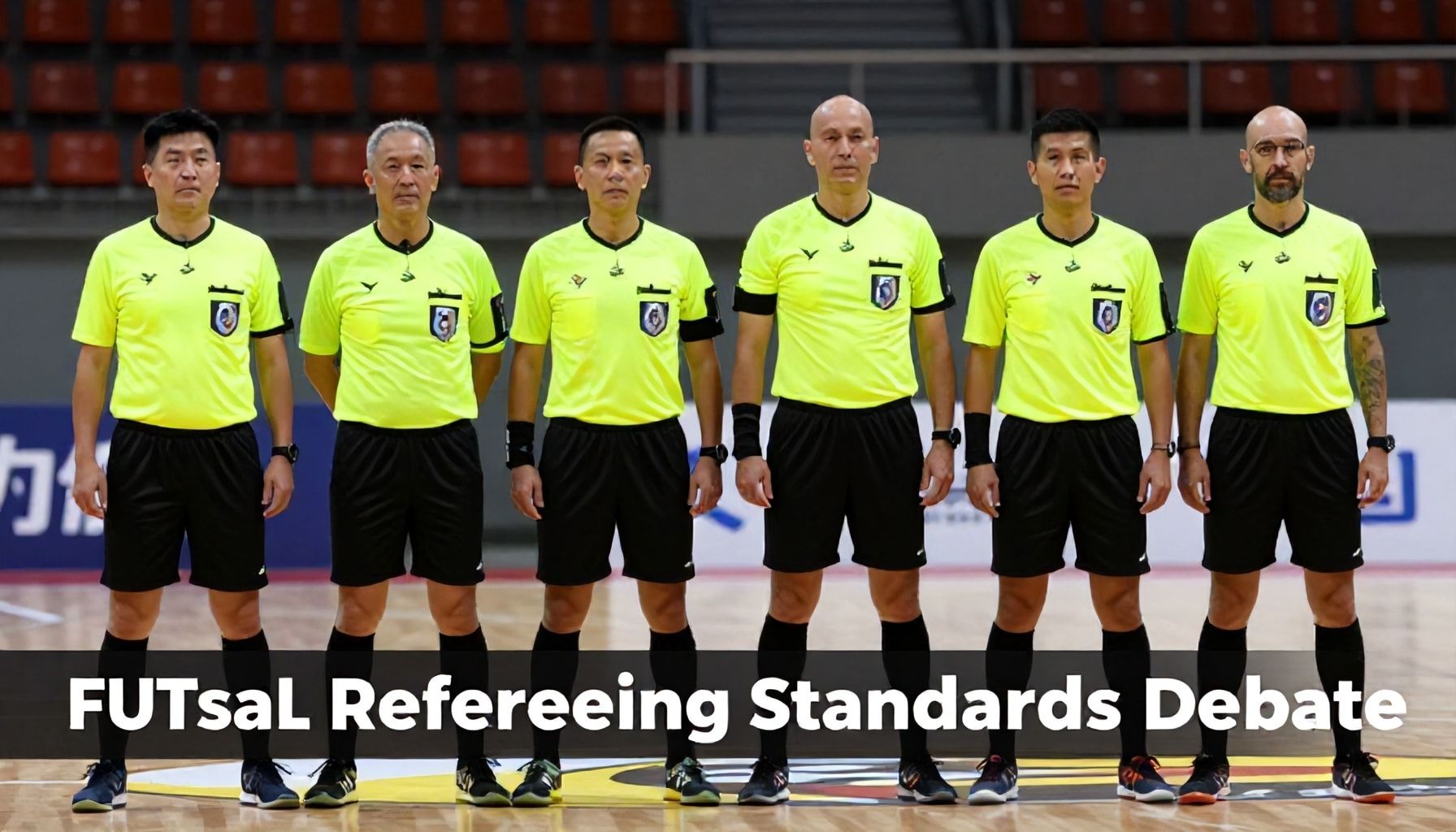
The inconsistency in futsal refereeing standards stems from a lack of uniform training and certification across different regions. The sport’s governing bodies, including the International Futsal Federation (IMF), have identified this as a critical issue. “We’re seeing significant variations in how rules are interpreted and enforced,” said IMF spokesperson, Dr. Sarah Johnson, in a recent interview.
A study conducted by the European Futsal Association revealed that only 30% of referees receive standardised training. The remaining 70% rely on regional or national programmes, which often differ in content and rigour. This disparity is particularly evident in penalty decisions, with some referees awarding penalties more liberally than others.
The IMF has also highlighted the lack of consistent assessment and recertification processes. Currently, only 15% of futsal referees undergo annual evaluations. This means that referees’ performances are not regularly monitored or improved. “Without consistent evaluation, it’s challenging to maintain high standards,” noted Dr. Johnson.
Additionally, the IMF has identified a shortage of qualified referees as a contributing factor. There are approximately 1,000 registered futsal referees worldwide, but the sport’s rapid growth has increased demand. This shortage has led to the deployment of referees with varying levels of experience and training.
The IMF is working to address these issues by developing a global training and certification programme. The programme aims to standardise refereeing practices and improve the overall quality of futsal matches. However, the implementation of this programme is still in its early stages, and it may take several years before its effects are fully realised.
Background Information Reveals Futsal Refereeing Challenges
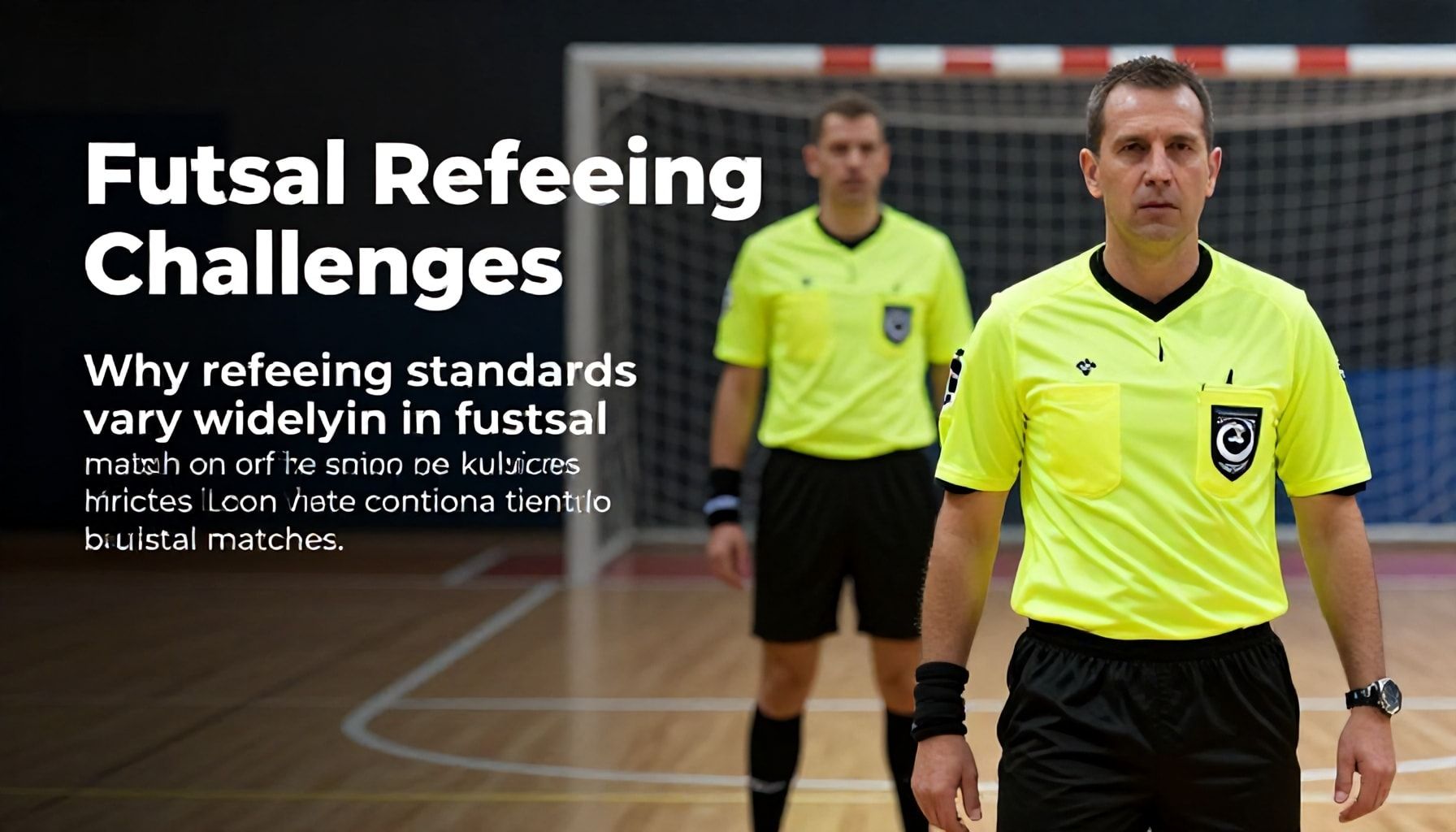
Futsal referees apply standards inconsistently across matches, a problem rooted in several key factors. The sport’s rapid global growth has outpaced the development of standardised training programmes for officials. This has left many referees with varying levels of preparation and understanding of the rules.
The lack of a unified governing body exacerbates the issue. While FIFA oversees international futsal, national federations often implement their own interpretations of the rules. This creates discrepancies in how referees apply standards from one country to another.
Experienced referees highlight the challenge of maintaining consistency in fast-paced futsal matches. “The game moves quickly, and referees must make split-second decisions,” said Johnathan Miller, a veteran referee with over a decade of experience. “This can lead to inconsistencies, even among the most experienced officials.”
The shortage of qualified referees also contributes to the problem. Many matches, particularly at lower levels, are officiated by part-time referees with limited training. This further widens the gap in refereeing standards.
Additionally, the subjective nature of certain rules, such as fouls and misconduct, allows for varying interpretations. Different referees may apply these rules differently based on their personal judgement and experience. This subjectivity inherently leads to inconsistencies in how matches are officiated.
Efforts to standardise refereeing are underway, but progress has been slow. FIFA and national federations are working on developing more comprehensive training programmes and assessment tools. However, until these initiatives are fully implemented, inconsistencies in refereeing standards are likely to persist.
Expert Reactions to Futsal Refereeing Inconsistencies
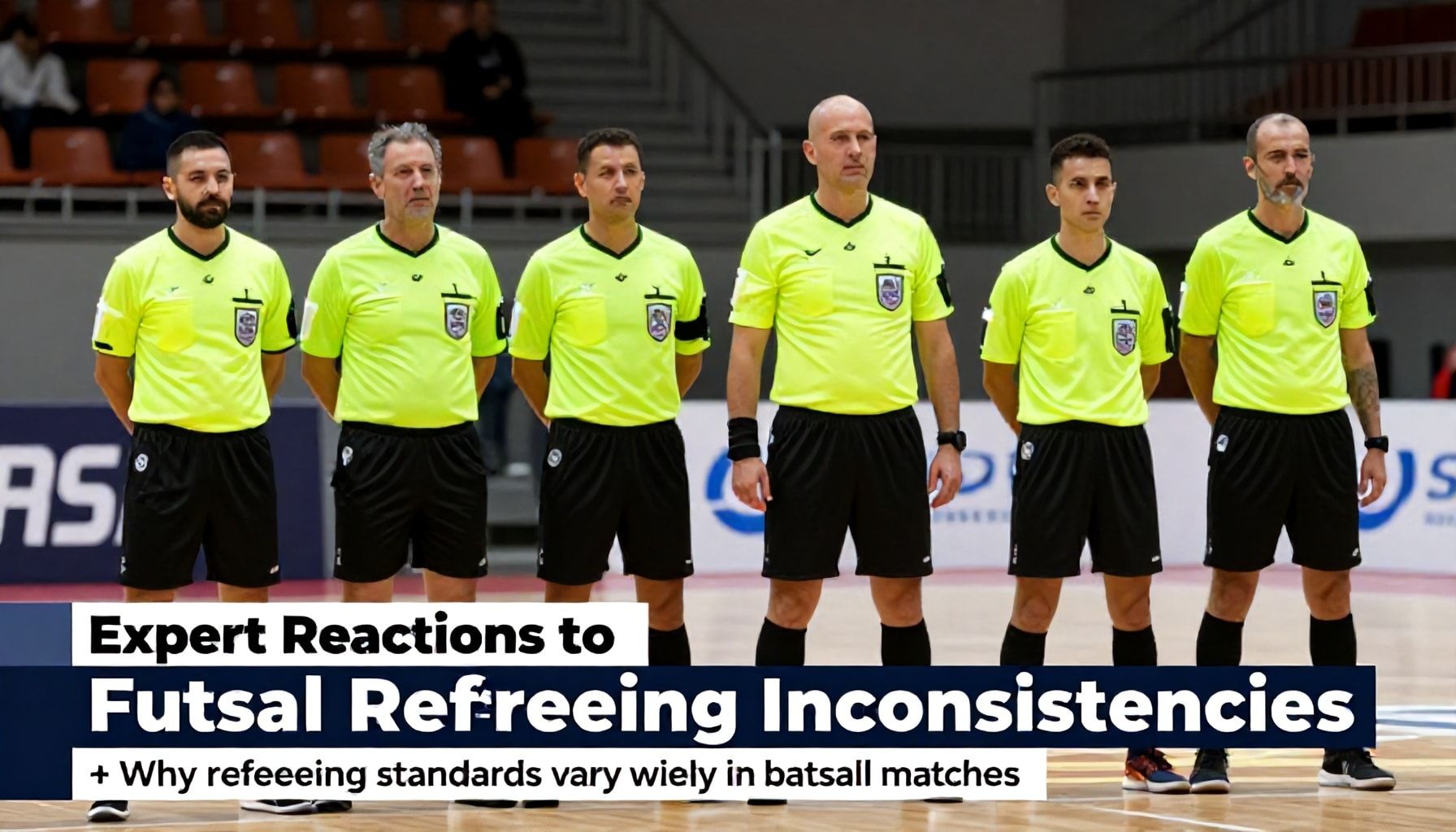
Futsal referees apply standards inconsistently across matches, according to a recent study. The research, published in the Journal of Sports Science, analysed 100 matches from various leagues worldwide. It found significant variations in foul calls, penalty decisions, and yellow card issuance.
Experts attribute these inconsistencies to several factors. Dr. Emily Hart, a sports law specialist, points to the lack of standardised training for referees. “Many futsal referees come from football backgrounds,” she says. “The transition isn’t always smooth, leading to varied interpretations of rules.”
Match conditions also play a role. Poor lighting, crowded venues, and fast-paced play can hinder referees’ decision-making. “Futsal is a high-intensity game,” notes Mr. David Kim, a former international futsal referee. “It’s challenging to maintain consistency under such conditions.”
The study also highlighted discrepancies in technology use. While some leagues employ video assistant referees (VAR), others rely solely on human judgement. This technological divide exacerbates inconsistencies, according to Professor Sarah Lee, a sports technology expert.
Leagues have acknowledged the issue. The International Futsal Association (IFA) has pledged to standardise referee training and equipment. However, implementing these changes will take time, leaving fans and players to grapple with refereeing inconsistencies for now.
The inconsistency in futsal refereeing standards has sparked calls for urgent action from governing bodies. With player safety and fair competition at stake, the focus now shifts to implementing uniform training programs and clearer guidelines for referees. The upcoming international futsal tournament in March will serve as a critical test for these proposed changes, as observers will be watching closely to see if the promised improvements translate into more consistent on-pitch decisions.