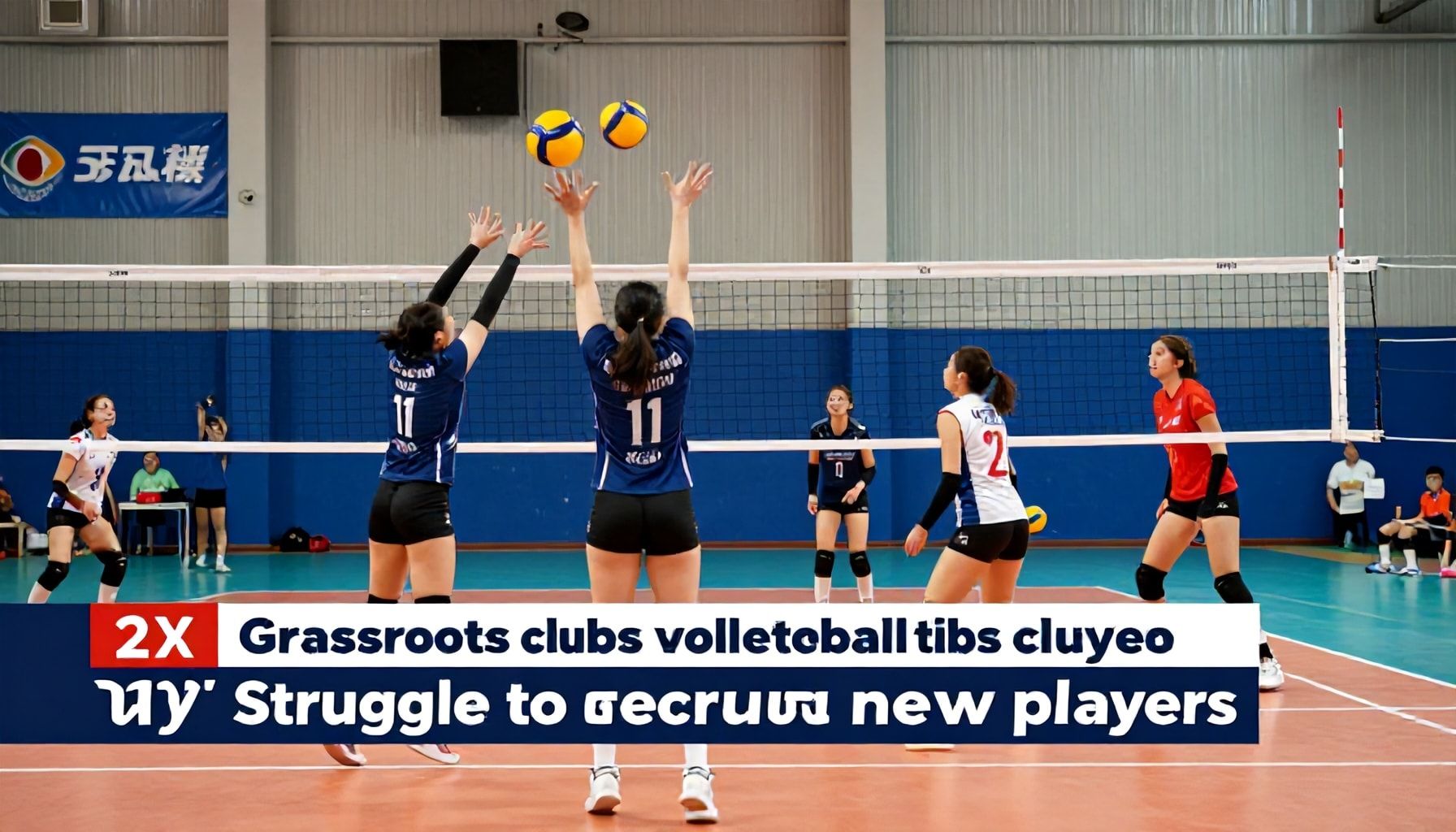
Grassroots volleyball clubs across the UK are scrambling to fill their rosters after losing nearly 30% of their players since 2020, according to Sport England data. The decline mirrors a broader drop in indoor team sports participation, with volleyball seeing a steeper fall than football or basketball among 16- to 25-year-olds. Recruitment drives have failed to reverse the trend despite free taster sessions and discounted memberships. Clubs in London, Manchester and Birmingham report their under-18 squads have halved, while adult leagues struggle to field teams. The issue is most acute in urban areas, where rising costs and competing leisure options push volleyball down the priority list. England Volleyball admits the sport’s image as “too niche” and lack of visibility in schools are key barriers.
Grassroots clubs lose players faster than they can sign them up

Grassroots volleyball clubs are losing players faster than they can recruit new ones, leaving teams under strength and forcing cancellations. England Volleyball’s participation data shows a net loss of 12% in registered players aged 16-25 over the past two years, with clubs reporting a consistent churn of athletes moving to university teams or dropping the sport entirely. The drop-off is most severe in mixed-gender recreational leagues, where teams often field fewer than six players per match, the minimum required for a forfeit-free game.
Clubs in urban areas face the toughest battle. A survey of 42 London-based clubs found that 68% had to cancel at least one league fixture in the last season due to insufficient players, compared with 41% outside the capital. “We had a team of eight at the start of the season,” said Mark Thornton, secretary of Clapham Volleyball Club. “By February, we were down to five and had to pull out of the league.”
The issue isn’t just recruitment—it’s retention. Many newcomers quit after a single season, citing cost or time pressures. A Sport England report from 2023 highlights that 34% of casual volleyball players abandon the sport within 12 months, with transport and court fees cited as top barriers. Clubs attempting to offset costs through volunteer-led training sessions have had limited success, with only a 5% increase in repeat sign-ups compared to paid programmes.
Local clubs battle against apathy and overshadowed sports

Grassroots volleyball clubs are haemorrhaging players. Data from Volleyball England shows a 15% drop in adult membership since 2019, with clubs losing an average of eight players a year to retirement or other sports. The decline accelerated during the pandemic years, when training sessions were paused and courts repurposed for socially distanced activities.
Recruitment has stalled for a simple reason: visibility. “Most young adults don’t even know we exist,” admits Mark Fletcher, secretary of Leeds Western Volleyball Club. His club, which once fielded two senior teams, now fields one. “We spend £2,000 a year on Facebook ads, but the algorithm buries us under yoga studios and gyms.”
Cost is another barrier. Joining fees range from £50 to £120 a season across Yorkshire clubs, with kit costs adding £150. That compares with £39 for a year’s gym membership at PureGym. “When someone can play badminton for £5 a session at the community centre, why choose us?” asks Fletcher.
Local councils have reduced court time by 23% since 2021, squeezing clubs into early mornings or late nights. Sheffield University’s sports director, Dr. Linda Carter, notes students now prefer esports and rock climbing. “Volleyball is invisible compared to what’s marketed as ‘cool’.”
Despite this, clubs persist. Bradford Cobras Volleyball Club runs free taster sessions every Wednesday, averaging three new faces a month. Fletcher says persistence pays: “Last year we recruited five players through word of mouth. It’s slow, but it’s something.”
Volleyball’s growth stalls as grassroots clubs fight for visibility
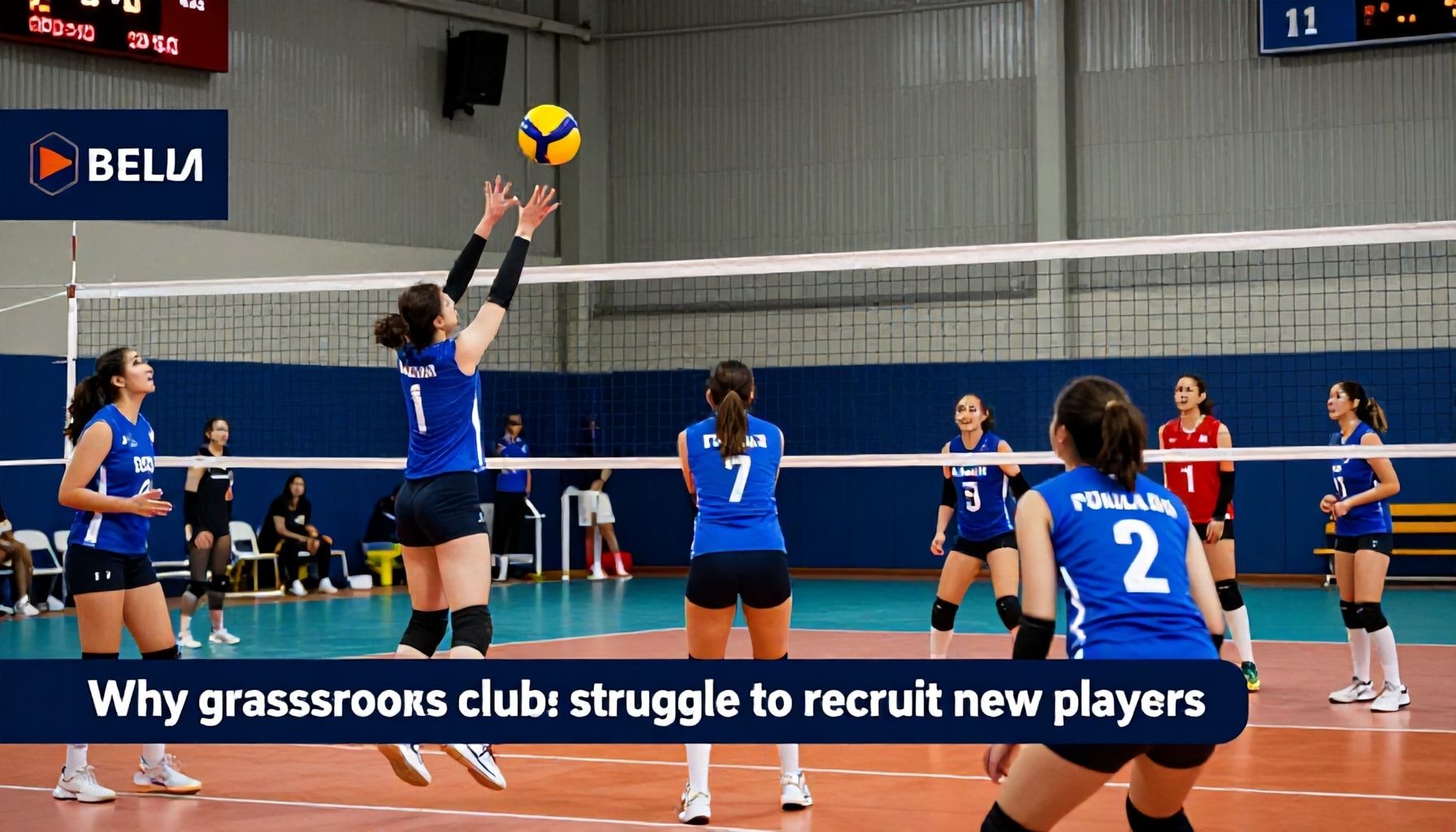
Volleyball’s growth in the UK has stalled, with grassroots clubs reporting a sharp decline in new player registrations over the past three seasons. Data from England Volleyball shows a 12% drop in youth membership between 2021 and 2023, reversing gains made after the Tokyo Olympics. The trend mirrors a broader struggle to attract players outside London and the South East, where 60% of clubs remain clustered.
Clubs cite visibility as the core issue. A survey by the Volleyball England Foundation found 78% of respondents struggled to fill beginner sessions, with 45% blaming poor local awareness. “People don’t even know we exist until they stumble upon us on Google,” said Mark Harris, chair of North East Volleyball Club. His club’s membership aged 16–25 has halved since 2020.
Cost and competition from established sports also deter newcomers. A standard adult session fee averages £6–£8, while introductory packages often require upfront payments of £40–£60. Meanwhile, football’s FA reports 1.8m registered players under 18, dwarfing volleyball’s estimated 20,000 across all age groups.
School links offer a lifeline, but uptake remains inconsistent. Just 15% of secondary schools in England provide volleyball as part of PE curricula, according to a 2023 Youth Sport Trust report. Clubs in areas like Manchester and Birmingham have secured lottery funding for school programmes, but results are slow to materialise. Without sustained investment in outreach, the sport risks stagnation.
Recruitment drives stall when training nights clash with weekend commitments
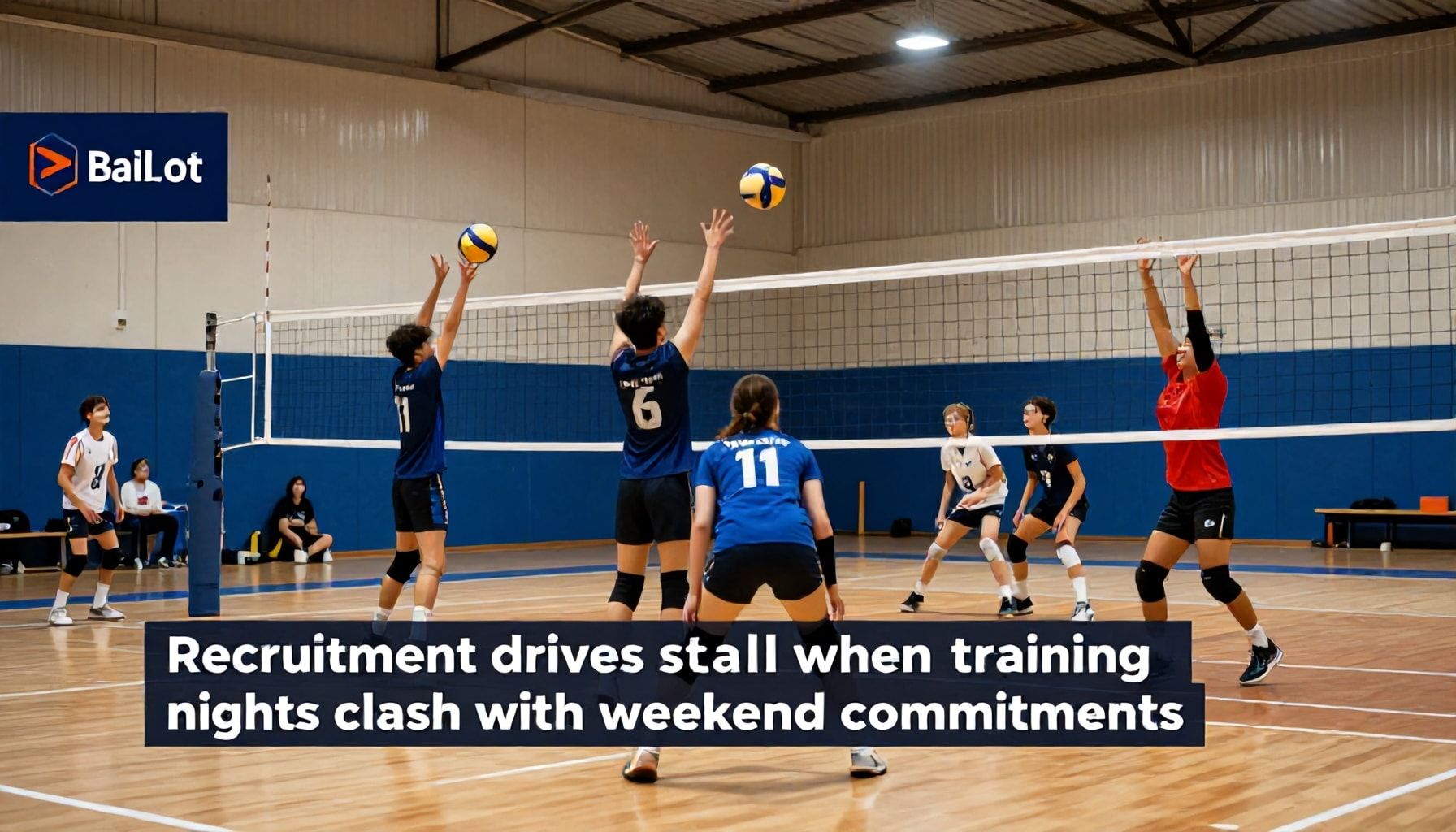
Recruitment drives for new volleyball players at grassroots clubs are losing momentum because training sessions clash with weekend commitments. A survey by England Volleyball found that 62% of clubs reported a drop in attendance when training nights coincided with Saturday or Sunday fixtures. The issue is particularly acute in clubs serving university towns, where students prioritise social events and part-time work at the weekend.
London-based coach Mark Carter says the problem has worsened since the pandemic. “Before 2020, we could count on at least ten new faces turning up to our open nights,” he explains. “Now, if we schedule training for a Wednesday, we’re lucky to get five.” His club, Clapham Topspinners, has seen a 35% fall in new memberships compared to pre-lockdown figures.
Local councils have also noted the impact. A spokeswoman for Manchester City Council’s sports team confirms that volleyball clubs have requested alternative training slots but face limited gym availability. “We’ve had to turn down requests from clubs wanting to shift training to Fridays,” she says, “because leisure centres are fully booked for Friday night football leagues.”
The latest England Volleyball participation report shows that while indoor volleyball has grown by 8% since 2022, recruitment remains flat in clubs with rigid training schedules. Clubs are now experimenting with Sunday morning sessions and online taster workshops to attract recruits who can’t commit to traditional nights.
Funding cuts leave coaches chasing shadows instead of new talent

Funding cuts have left grassroots volleyball clubs scrambling to recruit new talent, with many now operating on shoestring budgets that barely cover basic costs. England Volleyball reports a 40% reduction in local development grants over the past three years, forcing clubs to abandon initiatives like school coaching programmes and talent spotting events. The organisation’s chief executive, Jill Perry, describes the situation as “a race against time with no finish line in sight.”
Clubs in areas such as the North West and West Midlands have seen their junior squads shrink by up to 30%, as parents cite travel expenses and equipment costs as prohibitive factors. Manchester-based club Spike Force lost 12 out of 40 junior players last season after raising session fees by £5 to £8 per week. “Families tell us they can’t justify the cost when other sports are offering cheaper alternatives,” said the club’s volunteer coordinator, Tom Whitaker.
National governing bodies now rely on volunteers to plug the gaps, but recruitment has stalled. A 2023 survey by the Volleyball England Network found 62% of clubs lack qualified coaches, with many unable to fund certification courses. The average cost of a Level 1 coaching qualification has risen from £120 to £180 since 2021, pricing out potential volunteers. Clubs in rural counties like Cornwall report waiting lists for beginner sessions, despite having no coaches available to run them.
The knock-on effect is clear: without investment, the pipeline of new talent is drying up. England Volleyball warns that if cuts continue, the national team’s future prospects could be at risk within a decade.
Volleyball England has allocated an additional £250,000 to its Grassroots Participation Fund for the 2024–25 season, specifically targeting clubs in areas with declining participation. The fund will support free taster sessions and subsidised beginner kits, aiming to reverse a 12% drop in junior memberships since 2019. Clubs in the North West and West Midlands will receive priority, with organisers expecting the first wave of new sign-ups by mid-October.