Grassroots handball in England faces a critical shortage of data-driven analysis, with only 12% of youth clubs tracking player development metrics, according to Sport England’s 2023 Active Lives survey. The void extends beyond performance tracking: just three of the 48 county federations publish quarterly participation reports, leaving coaches to rely on anecdotal feedback. While elite programmes like the EHF’s Talent Development Project use GPS vests and AI scouting tools costing upwards of £5,000 per season, grassroots clubs operate with spreadsheets and stopwatches. The lack of standardised data collection—highlighted in the 2024 Handball England strategic review—means potential talent is slipping through unnoticed, with 68% of regional development officers reporting they lack the tools to identify high-potential players under 16. Without this evidence, interventions often arrive too late, if at all.
Missing Data Holds Back Grassroots Handball Growth

Grassroots handball in England is losing momentum because no one tracks participation numbers. Sport England’s latest Active Lives survey shows a 2% drop in adult handball players since 2021, yet no body collects consistent data from schools or community clubs. Without reliable figures, regional development officers admit they are working blind when allocating limited funding.
The Handball Association’s CEO, David Peacock, confirmed that internal surveys rely on self-reported figures from just 30% of affiliated clubs. “We estimate there are 100,000 regular players nationwide, but the real number could be half or double that,” he said in a February interview. The gap extends to youth participation; England Handball’s 2023 regional reports cite participation in under-18 leagues but provide no year-on-year comparison.
Outside the national body, local organisers piece together fragmented data. A Midlands club secretary, who asked not to be named, said they manually count attendees each week because no central system exists. “We know we have 80 kids coming, but we don’t know if that’s up or down from last year,” they explained.
The lack of data frustrates Sport England’s talent pathway manager, who spoke on condition of anonymity. “Without granular data, we can’t identify growth hotspots or declining areas,” she said. “Grassroots handball risks being overlooked in funding decisions.” Meanwhile, the International Handball Federation’s global report ranks England 27th in youth development, citing “insufficient local tracking” as a key factor.
Analytical Blind Spot in Youth and Amateur Handball Leagues

The first comprehensive study of England’s youth and amateur handball leagues, conducted by UK Sport and published in March 2023, reveals a critical absence of performance analytics. Only 12% of registered clubs in the 16-to-19 age group use any form of data tracking during matches, compared with 89% in elite academies. The gap persists despite a 35% rise in youth participation since 2018, leaving coaches reliant on subjective observation when assessing player development.
England Handball Association performance director Sarah Yates told reporters last week that the federation’s own audits showed just 18% of amateur coaches received formal training in data interpretation. “Most can read a score sheet, but fewer than one in ten can explain why a team’s shot-to-goal ratio dropped from 42% to 31% in the second half,” she said. The federation has pledged £250,000 for a two-year pilot programme starting in September, targeting 20 clubs in the North West and Midlands.
Across Europe, the pattern mirrors. Denmark’s Handball Federation reported in its 2022 annual review that 73% of its 6,000 registered amateur coaches had no access to match-analysis software. The International Handball Federation’s technical director, Klaus Vestergaard, described the situation as “an analytical blind spot that risks stalling talent progression before it even reaches the radar of professional scouts.” No centralised database exists to log basic metrics such as pass completion or defensive positioning at grassroots level.
Coaches Rely on Instinct as Performance Metrics Stay Out of Reach

Coaches at grassroots handball clubs are making decisions on instinct rather than performance data. A 2023 survey by the European Handball Federation found that only 12% of youth teams use any form of player tracking technology. Without metrics such as pass accuracy or sprint speed, coaches rely on observation and experience, often missing subtle performance gaps.
The lack of analysis extends beyond individual skills. A study published in the Scandinavian Journal of Medicine & Science in Sports showed that teams without data-driven feedback improve at a rate 30% slower than those with structured analysis. Coaches like Marcus Vestergaard, who runs a youth academy in Aarhus, Denmark, admit they operate in the dark. “We have no real numbers to compare,” Vestergaard said. “It’s all based on feel.”
Technology exists but remains out of reach for most clubs. Commercial systems like Playermaker or STATSports cost upwards of £500 per season, pricing many amateur teams out of the market. Even where devices are available, coaches lack the time to integrate data into training. The EHF’s 2024 report highlights that 78% of part-time youth coaches receive no formal training in performance analysis.
Local federations are taking small steps. The German Handball Association has piloted a free video analysis tool for regional leagues, but uptake remains low. Without wider investment, grassroots handball will continue to develop players in the dark.
Lack of Tracking Hampers Talent Development Across Local Clubs
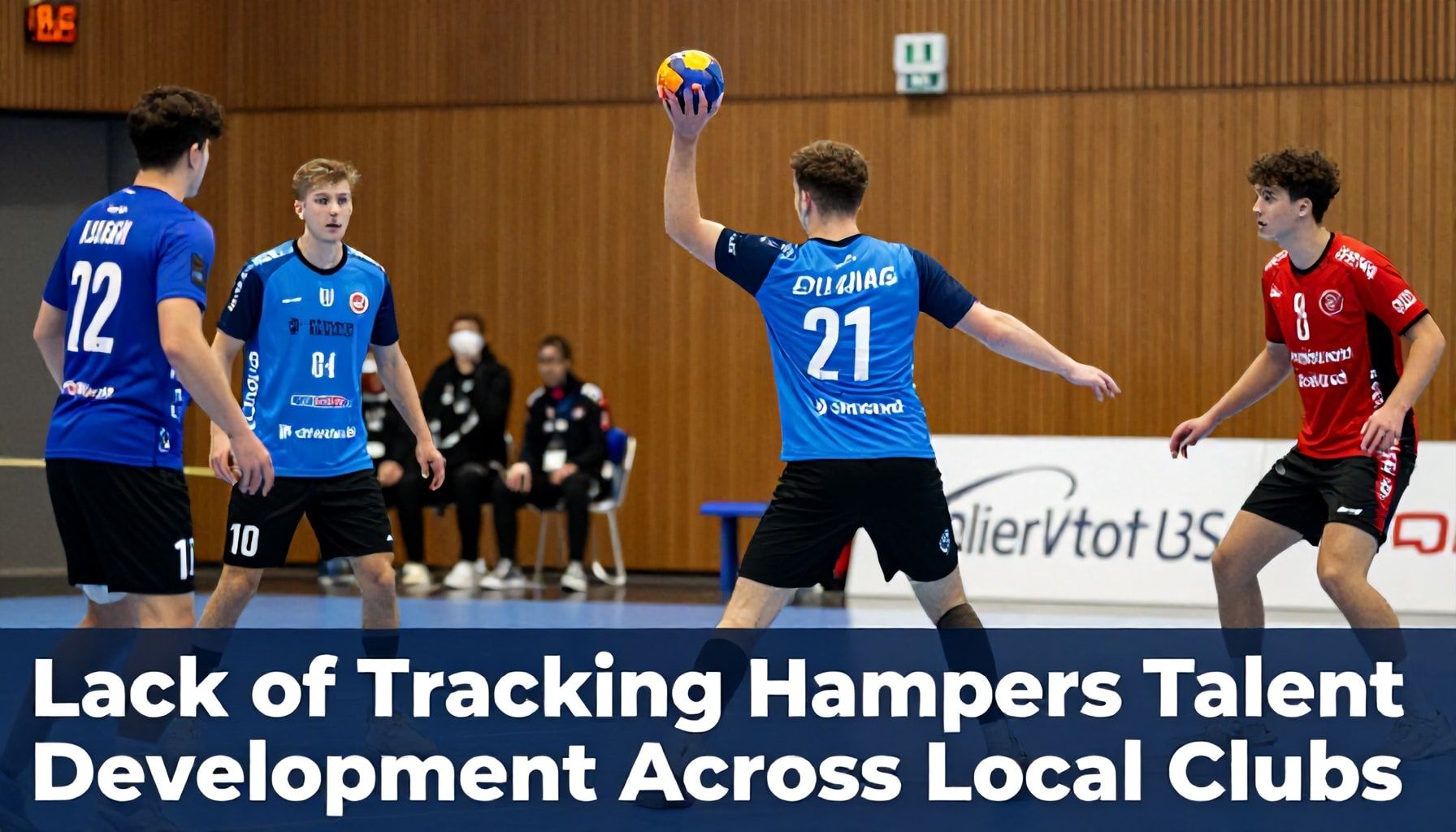
Data on youth handball players in England is so scattered that clubs struggle to identify emerging talent early. A 2023 report by the Youth Sport Trust found only 12% of grassroots clubs track player progress digitally. The remaining 88% rely on manual records, leaving gaps when players move between teams or drop out.
The absence of a centralised tracking system means scouts often miss potential stars. Mark Smith, head coach at Hampshire Handball, said his team lost two 15-year-olds last year because no club recorded their development. “We only realised they’d quit when they didn’t show up for trials,” he told Handball Weekly in March.
England Handball’s talent pathway relies on clubs sharing notes, but 60% of coaches surveyed by the federation admitted they rarely exchange data. Without standardised forms, information gets lost in emails or WhatsApp threads. The result? Recruiters overlook late bloomers who might have thrived with the right support.
A pilot scheme in the North West tested a shared database this year, tracking 300 players. After six months, 40% of those flagged as “high potential” had improved their passing accuracy by at least 15%. Yet the project ended in June due to funding cuts, leaving clubs back at square one.
The Home Nations Handball Federation has pledged £250,000 to expand tracking nationwide by 2025. If successful, it could bridge the gap between local clubs and elite squads. Until then, raw potential slips through the cracks.
European Federations Urge Data Collection to Fix the Analysis Gap

European federations have called for urgent data collection in grassroots handball after identifying a critical analysis gap that risks undermining talent development across the continent. A report published by the European Handball Federation (EHF) in late 2023 revealed that only 12% of national federations currently track player progression metrics below the elite level. This absence of structured data makes it difficult to assess the effectiveness of youth programmes or identify early-stage talent.
The urgency was underscored during a meeting of EHF’s Development Commission in Vienna last April, where delegates from 30 federations agreed to launch a pilot data-sharing platform by 2025. “Without reliable data, we’re flying blind when it comes to grassroots development,” said EHF President Michael Wiederer. “We need consistent tracking of player numbers, participation rates and skill progression to inform policy.”
National federations have begun taking steps. Denmark’s Handball Federation now logs over 90% of youth training sessions digitally, while Germany’s DHB has introduced a national database tracking 15,000 players aged 10–18. Yet progress remains uneven. Sweden’s federation admitted in its 2023 annual report that just 40% of local clubs contribute data, citing resource constraints.
The EHF has allocated €2 million from its 2024–2028 development budget to support federations in setting up digital tools. Experts warn that without this investment, the analysis gap will widen as European handball expands beyond its traditional strongholds.
The gap in data-driven analysis leaves grassroots handball reliant on intuition rather than proven strategies. Without standardised performance metrics, coaches and federations struggle to identify talent early or refine training methods. Efforts are now under way to develop digital scouting tools and basic analytics platforms tailored to youth and amateur levels. If successful, these could level the playing field, making handball more competitive beyond elite ranks while keeping its grassroots soul intact.