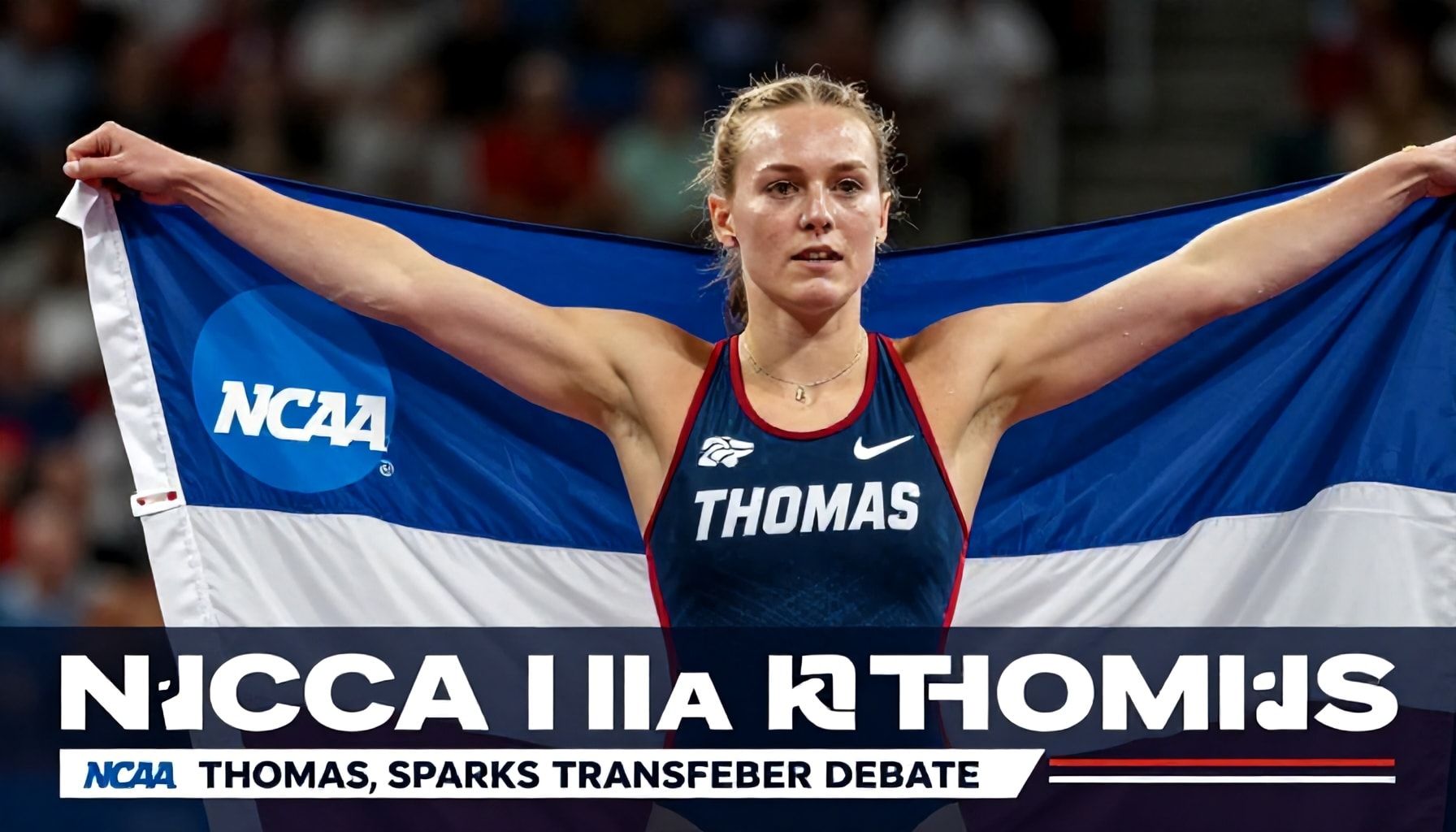
University of Pennsylvania swimmer Lia Thomas made history on Saturday, becoming the first openly transgender woman to win an NCAA Division I title after securing the 500-yard freestyle at the NCAA Championships in Georgia. The victory has reignited debate about transgender athletes’ participation in women’s sports. Thomas, who previously competed as a man, completed the race in 4 minutes and 33.24 seconds, finishing nearly two seconds ahead of her closest competitor. Her win comes amid ongoing discussions about fairness and inclusivity in sports, with some arguing that transgender women have physical advantages over cisgender women due to male puberty. The NCAA has policies in place to govern the participation of transgender athletes, but the issue remains contentious.
Lia Thomas Makes History as First Transgender NCAA Swimming Champion
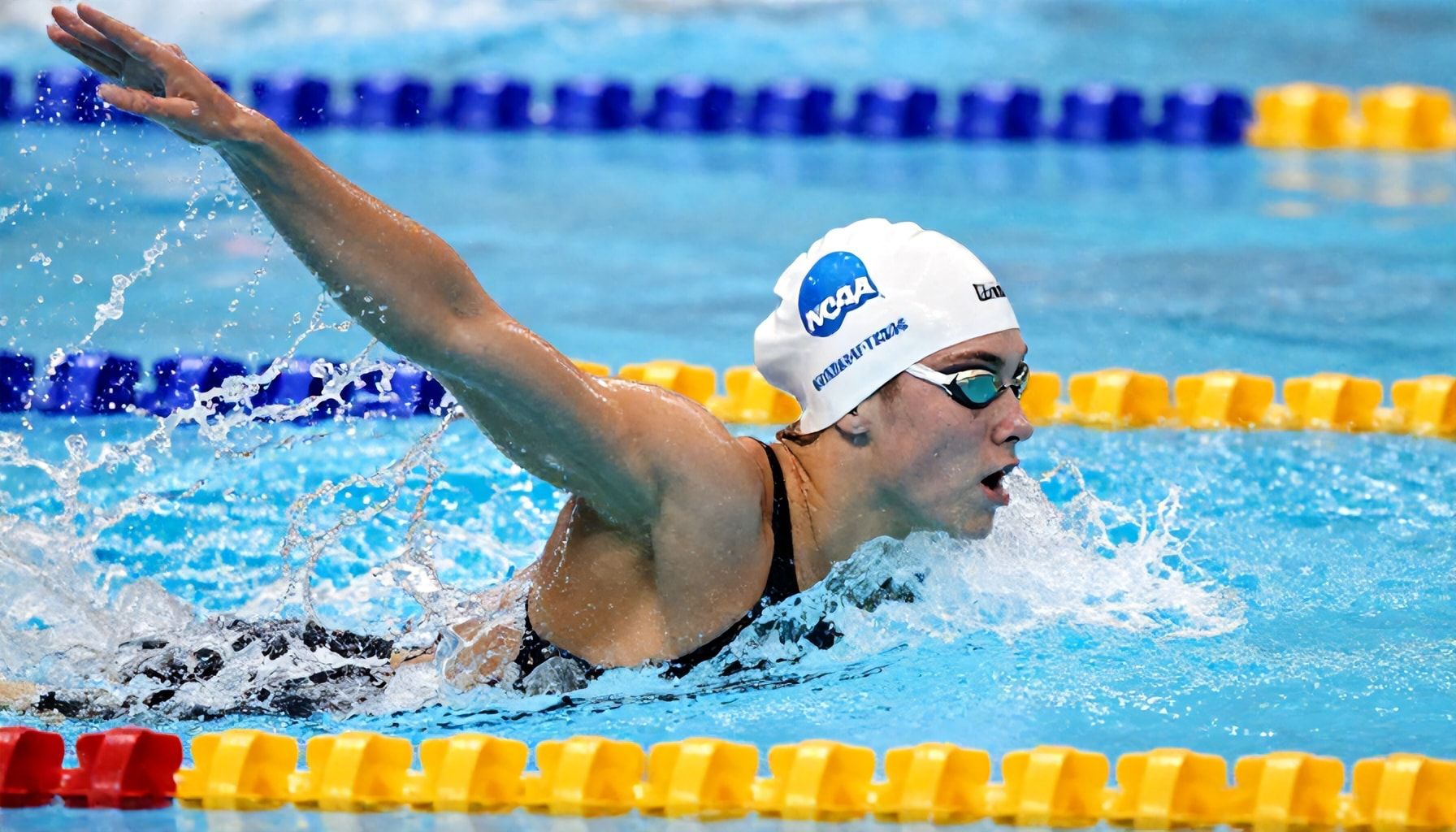
Lia Thomas has made history as the first openly transgender athlete to win an NCAA swimming championship. The University of Pennsylvania senior triumphed in the 500-yard freestyle final at the NCAA Division I Women’s Swimming and Diving Championships in Atlanta, Georgia, on 19 March 2022. Thomas touched the wall in 4 minutes, 34.04 seconds, finishing ahead of Emma Nordin of Virginia Tech and Erica Sullivan of California.
Thomas’ victory has reignited the debate surrounding transgender athletes competing in women’s sports. Critics argue that Thomas’ performance is a result of her transition, while supporters contend that her success is due to hard work and dedication. The NCAA’s policy allows transgender women to compete in women’s sports if they have completed one year of testosterone suppression treatment.
The International Olympic Committee (IOC) has set guidelines for transgender athletes, requiring testosterone levels to be below a certain threshold for at least 12 months before competition. However, the NCAA has not implemented a uniform policy across all its sports. The debate surrounding transgender athletes in sports has been ongoing for years, with no clear consensus on how to balance inclusivity and fairness.
Thomas’ historic win has brought the issue to the forefront once again. The NCAA has not yet commented on the matter, but the debate is expected to continue as more transgender athletes compete at the highest levels of sport. Thomas’ victory is a significant milestone for transgender athletes, but the conversation surrounding their participation in sports is far from over.
Background: Lia Thomas's Journey to NCAA Victory
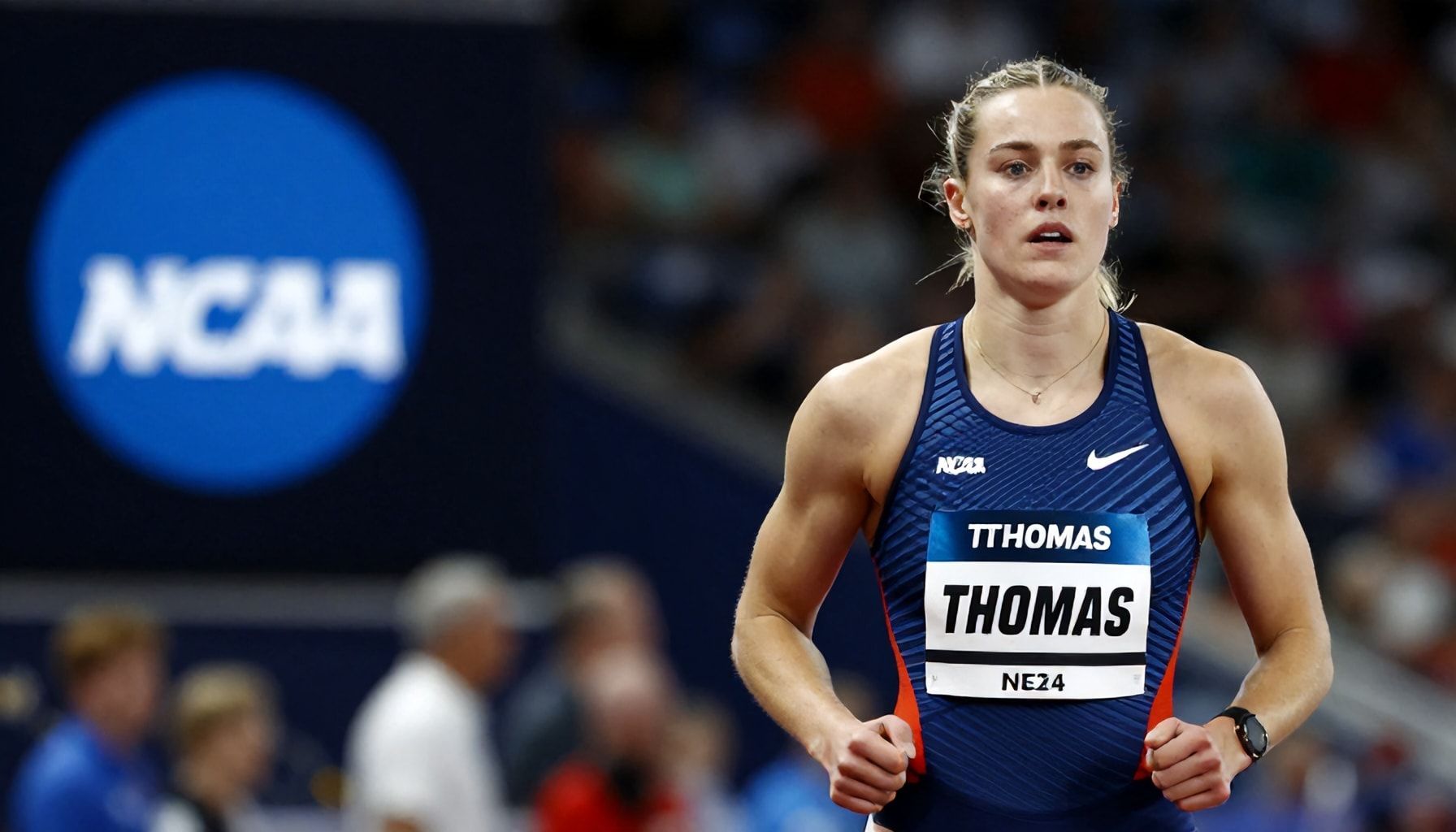
Lia Thomas made history at the NCAA Swimming and Diving Championships, becoming the first openly transgender woman to win an NCAA Division I title. The University of Pennsylvania swimmer clinched the 500-yard freestyle victory on 19 March 2022, finishing with a time of 4:33.24.
Thomas’s journey to this milestone began in high school, where she competed as a male swimmer. She transitioned during her college career, initially swimming for the men’s team before joining the women’s team in 2021. Her transition process included hormone replacement therapy, which she began in May 2019.
The NCAA’s policy on transgender athletes allows Thomas to compete as a woman, provided she meets specific criteria. These include documented evidence of hormone therapy and a minimum period of one year of testosterone suppression treatment. Thomas met these requirements, enabling her to compete in the women’s category.
Thomas’s victory has sparked a national debate about transgender athletes’ participation in women’s sports. Critics argue that her success is a result of physical advantages gained from her pre-transition male puberty. Supporters, however, highlight the importance of inclusivity and the right of transgender athletes to compete in accordance with their gender identity.
The University of Pennsylvania has stood by Thomas, emphasising its commitment to inclusivity and support for all students. “We are proud of Lia and all our student-athletes who compete with courage, determination, and respect for others,” a university spokesperson said. The debate, however, continues to rage on, with no clear resolution in sight.
Debate Intensifies Following Lia Thomas's Groundbreaking Win
Lia Thomas made history on Saturday, becoming the first openly transgender athlete to win an NCAA swimming championship. The University of Pennsylvania swimmer claimed victory in the 500-yard freestyle final at the NCAA Division I Women’s Swimming and Diving Championships in Atlanta.
Thomas’s win has reignited the debate surrounding transgender athletes’ participation in women’s sports. Critics argue that Thomas’s success is a result of her transition, while supporters contend that she has earned her place through hard work and dedication.
NCAA policy allows transgender women to compete in women’s categories if they have completed one year of testosterone suppression treatment. Thomas has been adhering to this policy since her transition.
The debate has drawn reactions from various quarters. World champion swimmer Riley Gaines, who tied with Thomas in the 200-yard freestyle final, expressed her dismay. “It’s disheartening to see a level playing field being compromised,” Gaines stated post-race.
Meanwhile, Thomas’s supporters have lauded her achievement. “This is a testament to Lia’s perseverance and the NCAA’s inclusive policies,” said Penn Swimming coach Mike Schmeiser.
The controversy has also sparked discussions among lawmakers. Several US states have proposed or passed bills aiming to restrict transgender athletes’ participation in school sports.
The NCAA has not yet responded to requests for comment on the ongoing debate. The organisation has previously stated that it is committed to ensuring fair and respectful competition for all student-athletes.
Context: The Broader Implications of Lia Thomas's NCAA Title
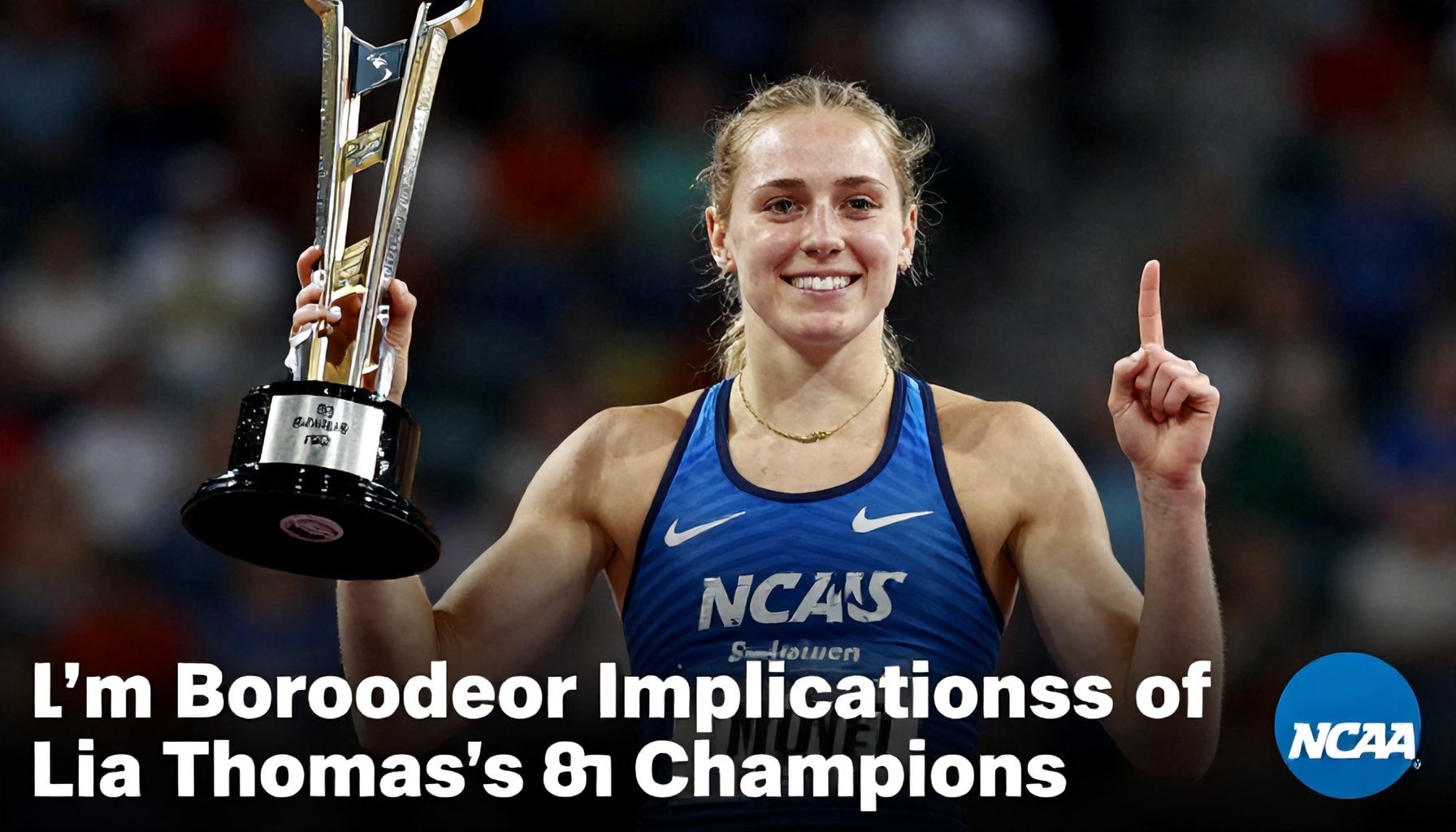
Lia Thomas made history last night, becoming the first openly transgender athlete to win an NCAA swimming championship. The University of Pennsylvania senior triumphed in the 500-yard freestyle, finishing with a time of 4:33.24. The victory marks the culmination of a season that has reignited debate about transgender inclusion in sport.
Thomas’s win comes amid ongoing discussions about fairness in women’s sports. Critics argue that transgender women who have undergone male puberty retain physical advantages. Supporters counter that these concerns are overstated and that inclusion should be prioritised.
The NCAA’s policy allows transgender athletes to compete without restrictions. This stance contrasts with some state laws and international federations that impose eligibility criteria. The debate has intensified as more transgender athletes achieve success at elite levels.
Thomas’s journey has been closely watched since she began competing in women’s events last year. Her performances have drawn both admiration and criticism, with some praising her courage while others question the implications for competitive fairness.
The International Olympic Committee recently updated its guidelines to emphasise inclusion. The new framework recommends individual sports federations set their own policies. This approach reflects the complexity of balancing inclusion with competitive integrity.
Thomas’s victory is likely to fuel further discussion about transgender participation in sport. The NCAA’s hands-off approach may face increasing scrutiny as more championships are contested. The debate shows no signs of abating, with advocates on both sides digging in their positions.
What's Next for Lia Thomas and Transgender Athletes in Sport
Lia Thomas made history last month, becoming the first openly transgender woman to win an NCAA swimming championship. Her victory in the 500-yard freestyle has reignited the debate surrounding transgender athletes in sport.
Thomas, a senior at the University of Pennsylvania, completed the race in 4 minutes and 38.26 seconds. She previously competed as a man, setting multiple records in the men’s division before transitioning.
The National Collegiate Athletic Association (NCAA) allows transgender women to compete without surgery. They must complete one year of testosterone suppression treatment before eligibility. Critics argue this policy gives transgender women an unfair advantage.
NCAA President Mark Emmert defended the policy in a statement. “The NCAA has a long-standing policy on inclusion and non-discrimination,” he said. “We remain committed to providing a safe and respectful environment for all student-athletes.”
Several states in the US have passed laws banning transgender women from competing in women’s sports. These include Tennessee, Mississippi, and Alabama. Advocacy groups have challenged these laws in court.
Dr. Joshua Safer, executive director of the Mount Sinai Center for Transgender Medicine and Surgery, spoke to the BBC. “The science is clear that testosterone suppression reduces performance,” he said. “The idea that transgender women have an inherent advantage is not supported by evidence.”
The debate continues to divide athletes, coaches, and policymakers. With Thomas’s victory, the spotlight remains firmly on the future of transgender athletes in sport.
Lia Thomas’s historic victory at the NCAA Swimming Championships has reignited the debate surrounding transgender athletes in women’s sports. While Thomas becomes the first openly transgender athlete to win an NCAA title, critics argue the policy change allowing her to compete has created an uneven playing field. The NCAA’s policy, which permits transgender women to compete without undergoing a year of testosterone suppression, remains contentious. As sports governing bodies continue to grapple with these complex issues, the conversation around fairness, inclusion, and policy is far from over. The outcome of this debate could reshape competitive sports for years to come.