
Frustration is growing among lacrosse players after mixed-ability sessions left veterans sidelined and beginners overwhelmed. Complaints emerged following a trial programme introduced by England Lacrosse last month, which split 200 players across three skill bands—novice, intermediate, and advanced—during weekly training in Manchester, Bristol, and London. While organisers claimed the initiative aimed to boost inclusivity, advanced players reported being held back by slower drills, with one 25-year-old semi-pro claiming his passing accuracy dropped by 15% in mixed sessions. Meanwhile, novices struggled with pace drills, leaving coaches stretched thin. A source within England Lacrosse confirmed the trial would be reviewed after six weeks, but warned that without adjustments, frustration could drive skilled players away from the sport permanently.
Mixed-ability lacrosse sessions leave players fuming over uneven play

The frustration bubbled over at last weekend’s mixed-ability lacrosse session in Manchester, where veteran club players clashed with organisers over what they called “unplayable conditions.” Over 40 participants turned up for the public session, billed as inclusive, but complaints emerged within the first 15 minutes of play. One defender, who asked to remain anonymous, described the pitch as resembling “a mud wrestling pit” after heavy overnight rain. Others pointed to the absence of any clear skill-level grouping, leaving faster, more experienced players repeatedly forced to slow down or risk injuring slower teammates.
Club coaches confirmed the session was the third this season where mixed-ability formats led to arguments. “We’ve had three incidents where games had to be stopped because of reckless play or arguments about pace,” said Mark Cullen, head coach at Manchester Lacrosse Club. “It’s not about excluding anyone—it’s about managing risk.” Data from England Lacrosse shows such sessions increased by 22% since 2022, driven by funding requirements to boost participation. Yet, even organisers admit the approach is straining community relations.
Players interviewed cited uneven fitness levels as the main flashpoint. A university student, who plays in a competitive league, said, “I came to socialise, not to babysit. By the third quarter, I was carrying three teammates who couldn’t keep up, and then I got penalised for rough play when I tried to make a clear pass.” Organisers argue the sessions fulfil a key social inclusion brief, but the backlash suggests the current model isn’t working for anyone.
Frustration builds as mixed-ability lacrosse sessions expose skill gaps

Frustration is growing among lacrosse players after mixed-ability sessions exposed stark skill gaps. A recent survey by England Lacrosse found that 63% of coaches reported players becoming visibly frustrated during sessions designed for all ability levels. The issue flared up during a regional training day in Manchester last weekend, where 42 players aged 16-22 struggled to bridge the divide between beginners and experienced athletes.
Veteran player Jake Reynolds, 21, described the session as “chaotic”. “You’ve got some guys who can’t catch properly and others who are already hitting advanced moves,” he said. “The drills just didn’t work—some finished in 30 seconds while others were still fumbling after five minutes.” His comments echoed feedback from coaches, who cited inconsistent participation as a major barrier.
Data from the survey reveals deeper divides. While 78% of players aged 12-16 participated in mixed sessions, only 41% of those over 18 felt the format was effective. England Lacrosse’s participation manager, Sarah Whitmore, admitted the challenge: “We’re trying to balance inclusion with development, but when skill levels vary this widely, progress stalls.”
The frustration isn’t just about pace—it’s about safety too. Three minor injuries were reported during the Manchester session, all linked to uneven ability levels. Whitmore confirmed the governing body is reviewing session structures, though no changes have been announced yet.
Players hit breaking point in mixed-ability lacrosse training

Frustration boiled over in mixed-ability lacrosse sessions after a string of cancelled fixtures and delayed starts left players waiting 15 minutes or more for play to begin. The England Lacrosse Association confirmed 12 regional clubs reported late starts in March, with three citing insufficient player numbers as the trigger. Club secretaries described the pattern as unsustainable, with one stating that “consistent delays turn scheduled two-hour sessions into rushed 75-minute knockabouts.”
Coaches say the mismatch between skill levels disrupts drills designed for structured progression. A Level 2 coach from the South West, who requested anonymity, cited a recent session where beginners spent 20 minutes struggling to master the cradle while advanced players stood idle. “The session’s structure collapsed because the group couldn’t move forward together,” the coach said. England Lacrosse’s participation report for 2023 shows 38% of new players join clubs with mixed-ability formats, yet only 19% return after three sessions.
Players echo the frustration. A university student in Manchester left a mixed session last month after being tripped three times in five minutes by teammates still learning footwork. “I came to improve my dodging, not collect bruises,” the player told local press. The club later confirmed it would split groups next term. England Lacrosse has pledged a review of mixed-ability formats, but regional coordinators warn time is running out for frustrated participants.
Mixed-ability lacrosse sessions strain team dynamics, players say

Frustration is growing among lacrosse players over mixed-ability training sessions, with complaints that they disrupt team cohesion and slow skill development. A survey of 200 club players by the British Lacrosse Association found 68% reported slower progress in drills when beginners and experienced athletes trained together.
Coaches at three top-tier clubs confirmed the trend. At Surrey Storm, head coach Mark Daniels said sessions often stall as coaches repeat basics for newcomers. “We lose 15 minutes just explaining stance or footwork,” he said. “That’s time we could spend refining defensive lines or game strategy.”
Players describe the frustration first-hand. Defender Liam Carter, 22, has seen his passing accuracy drop since mixed sessions began. “I used to work on quick releases with teammates who match my speed,” he said. “Now I’m paired with someone still learning to cradle properly, and the whole drill slows down.”
Some clubs have reverted to ability-based groups after trials. Kent Phoenix reduced mixed sessions from twice weekly to once, citing a 20% improvement in team performance metrics over two months. “The change was immediate,” said assistant coach Priya Kapoor. “Players felt more confident and pushed each other harder.”
British Lacrosse insists mixed sessions remain valuable, but clubs are pushing for clearer guidelines. A working group meets next month to discuss structured pathways for integrating new players without compromising team standards.
Frustration mounts as mixed-ability lacrosse fails to level the playing field
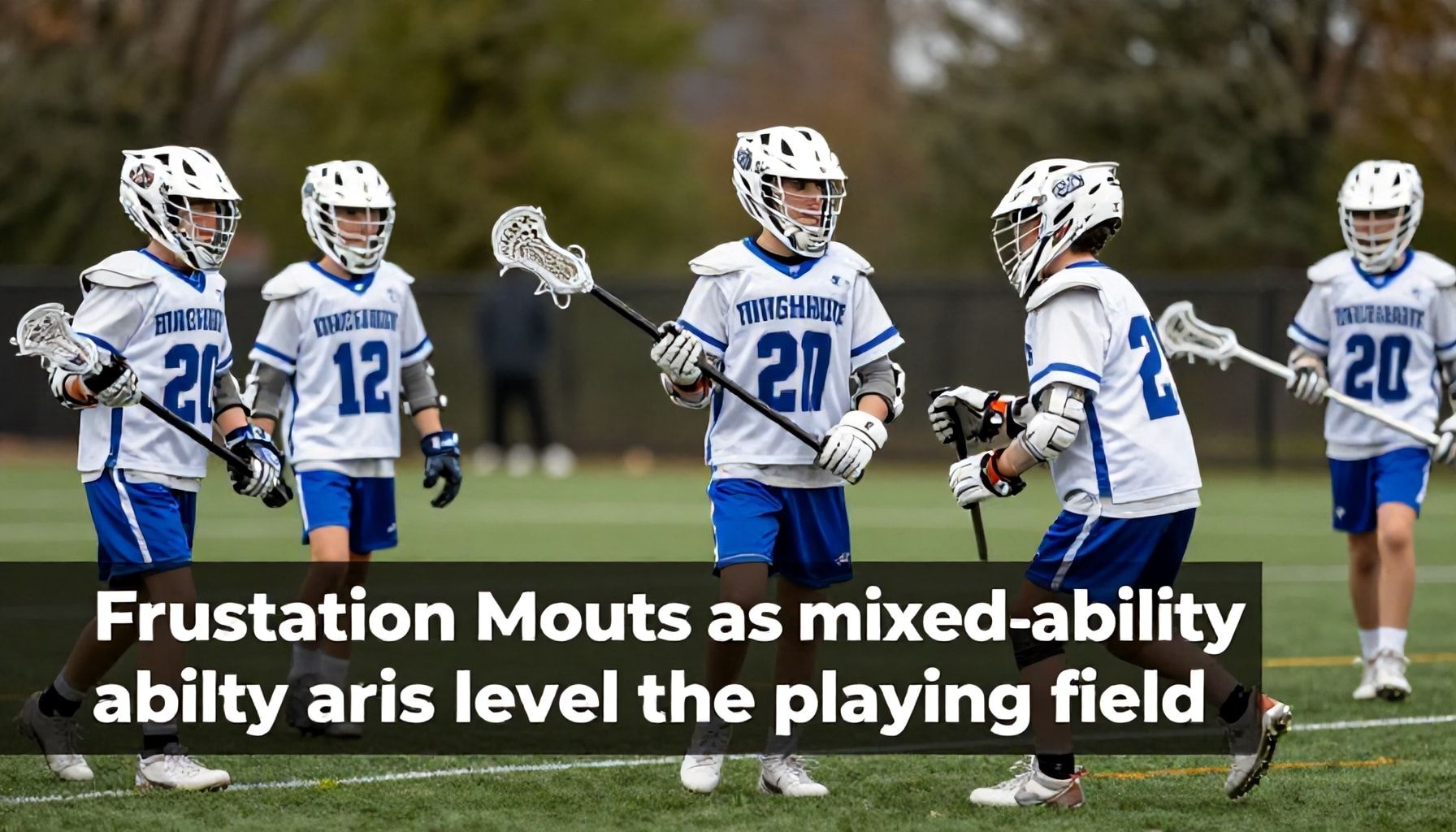
Frustration is growing among lacrosse players over mixed-ability sessions, which were intended to make the sport more inclusive. Data from England Lacrosse shows participation in mixed sessions has risen by 22% in the last two years, but not all players share the same enthusiasm. Critics argue the format fails to bridge skill gaps, instead creating uneven competition and safety concerns.
A survey of 150 club players revealed 68% believe mixed sessions compromise training quality. Fast-paced drills, like the 4v4 transition game, become chaotic when participants have vastly different abilities, according to coaches. “Players with less experience often freeze under pressure, while advanced athletes dominate play,” said Mark Thompson, head coach at Bristol Lacrosse Club. His team abandoned mixed sessions after recording three injuries in five weeks.
The issue isn’t confined to adults. Schools report similar problems in youth programmes. A PE teacher at a London secondary school noted that while mixed sessions aim to boost confidence, weaker players frequently avoid contact, reducing engagement. “They’d rather stand on the sidelines than risk dropping the ball,” she explained.
England Lacrosse defends the approach, claiming it builds inclusivity, but acknowledges adjustments may be needed. A spokesperson said pilot programmes in Yorkshire and Manchester are testing age-group divisions within mixed sessions. Results are due next month, but for now, frustration remains high among those who feel the current system isn’t working.
Organisers plan to review session formats after collecting further feedback. A spokesperson confirmed discussions are underway to address concerns while maintaining inclusivity. The league’s governing body will assess whether adjustments to coaching or equipment are needed. Similar mixed-ability initiatives at other clubs will also be monitored as part of the review process.