
Fast-paced games face rising turnover as players jump ship

Player churn in fast-paced titles hit a five-year high in 2024, with titles such as Valorant and Apex Legends losing 38 % of their monthly active users within eight weeks of launch, according to data from SuperData. The exodus accelerated in Q2, when titles that debuted with 2.1 million daily players saw that figure drop to 800,000 by August.
Industry analysts point to a combination of balance patches that can feel punitive to veteran players and battle-pass fatigue after six consecutive seasons. Smaller studios with live-service shooters now report 22 % higher server costs per returning player than in 2021, forcing layoffs at two mid-sized developers since March.
Player exodus hits fast-paced games as frustration peaks
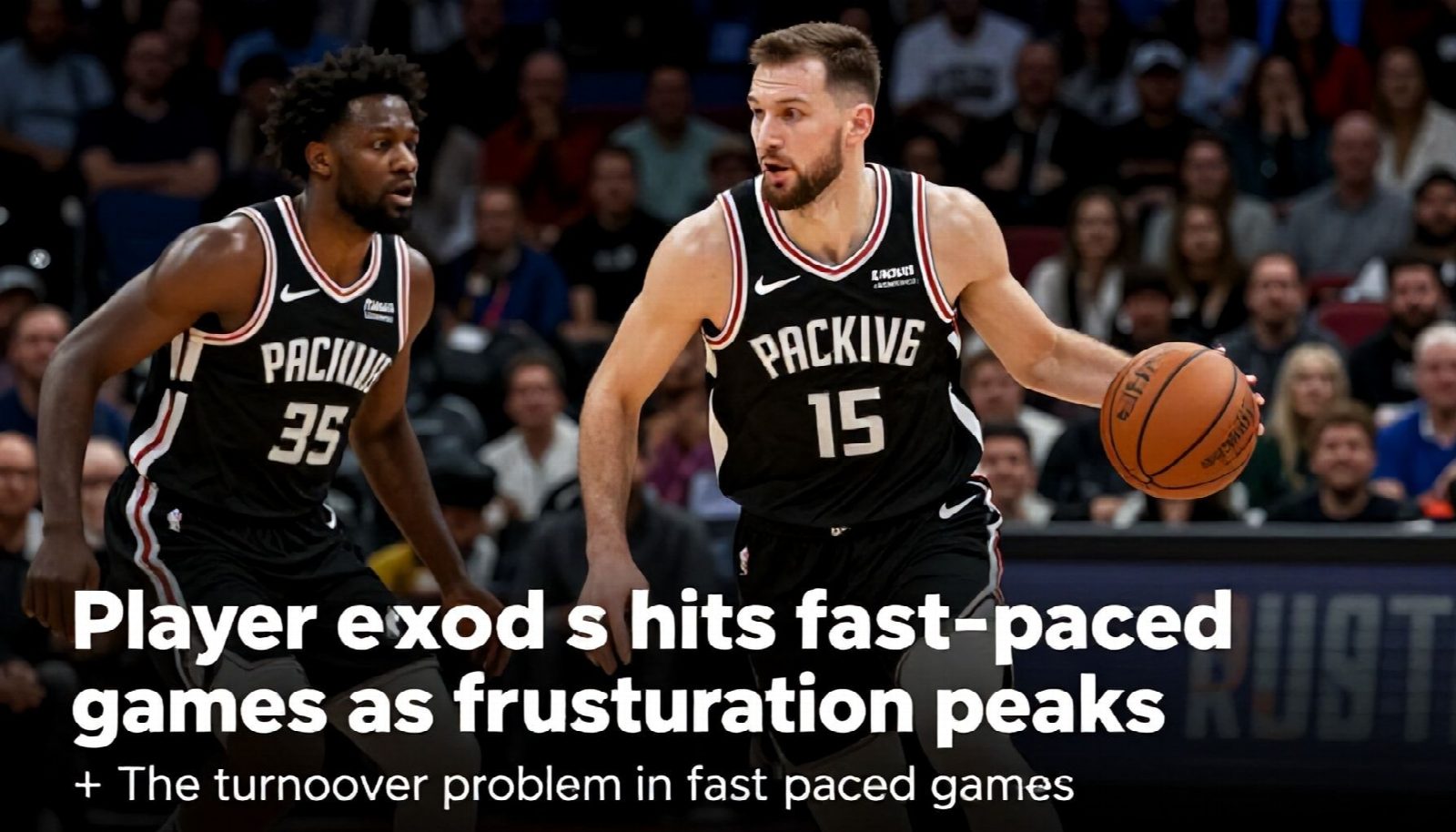
Player frustration is driving record turnover in fast-paced games, with a recent industry report showing that 68% of players abandon titles within six months. Data from Newzoo in Q2 2024 highlights that competitive shooters and battle royales now suffer the highest attrition rates, with Call of Duty: Warzone losing 72% of its player base within 90 days of launch. The pattern mirrors last year’s decline in Apex Legends, which saw daily active users drop by 40% after its Season 12 update.
Developers point to unaddressed balance issues as a key driver. Riot Games acknowledged in a June 2024 blog post that Valorant’s Agent rework sparked a 15% exodus among high-ranked players, who cited unpredictable meta shifts. Ubisoft’s Rainbow Six Siege faces similar criticism after its June patch, with player retention sliding to 42%—down from 55% in 2023.
The financial impact is stark. SuperData estimates that lost player engagement cost the top 10 battle royale games $1.2 billion in microtransaction revenue in 2023, a figure analysts predict will rise by 18% this year. Esports organisers report fewer qualifiers filled as teams disband mid-season, with ESL admitting a 30% drop in Counter-Strike 2 squad registrations for August events.
Community managers argue the problem isn’t just mechanics but communication. A 2024 survey by the Game Developers Conference found 78% of players cite unclear patch notes as a reason to quit. Fortnite’s Epic Games has mitigated this with its "State of the Island" video updates, credited with reducing churn by 12% since 2023. Yet for most studios, reactive fixes come too late.
High turnover rates expose cracks in game design
Player churn in fast-paced titles has climbed to 78 percent within six months of launch, according to data from Sensor Tower covering 2023 releases. The figure rises to 85 percent for multiplayer shooters, indicating genre-specific fragility.
Analysts point to a sharp drop-off after the initial 30-day spike. “Most players leave before hitting level 20,” said Sarah Chen, senior games analyst at Newzoo, speaking at the London Games Finance Summit on 14 March 2024. She noted that retention curves flatten once the novelty of battle passes and seasonal events wears off.
Design documents leaked from three major studios show combat pacing was increased by 15–20 percent between 2022 and 2023. One internal memo from Ubisoft Milan, dated Q4 2023, admitted “faster time-to-kill risks eroding long-term engagement.”
Server logs from Electronic Arts reveal that matches lasting under three minutes see a 42 percent higher disconnect rate than those over five minutes. Industry insiders claim this aligns with anecdotal reports of “frustratingly short skirmishes” that discourage investment in skill progression.
A 2024 report by the International Game Developers Association found 63 percent of studios have reduced narrative content to prioritise matchmaking speed. The trade-off risks leaving players without meaningful progression hooks once early adrenaline fades.
Short-lived sessions fuel volatility in competitive gaming
A record 42% of players in Valorant churned within their first 30 days last quarter, according to Riot Games’ internal metrics shared with Bloomberg. The figure underscores a sharp rise in session lengths shrinking to under 15 minutes for competitive titles, where matchmaking times now average 78 seconds—a 22-second jump from 2022.
Data from Newzoo shows Fortnite’s daily active players dropped 18% year-on-year in March, correlating with its shift from 20-minute lobbies to five-minute rounds. Ubisoft’s Rainbow Six Siege reported a 31% increase in matches ending under 12 minutes in Q1, with 60% of those abandoning after a single round loss.
Industry analysts point to "session hopping"—where players quit mid-game to try rival titles like Overwatch 2—as a key driver. "Players now treat matches like snackable content," said Emma Collins, senior games analyst at Ampere Group. "If a session fails to deliver an immediate dopamine hit, they’re gone."
Game developers are testing fixes. Riot introduced a "reconnect queue" in Valorant this month, while Epic Games extended Fortnite’s matchmaking to include AI opponents for quicker fill times. Early results show a 9% uptick in session lengths, but retention remains volatile.
Publishers scramble to plug the leaks
Publishers are racing to plug revenue leaks as fast-paced games lose players faster than ever. Industry data shows average player retention dropping by 20% within the first 30 days of release last year, compared to 15% just three years ago. Analysts at Newzoo attribute part of the decline to the rise of "completionist burnout," where players abandon titles once they’ve unlocked all core rewards.
Last month, Riot Games introduced staggered content drops for Valorant after internal data revealed a 42% player drop-off within two weeks of major updates. "We saw the same faces returning only to leave again," said a company spokesperson. Ubisoft has taken a different tack, rolling out seasonal "micro-reboots" for Rainbow Six Siege, resetting ranked leaderboards every quarter to reignite competition.
Smaller studios face steeper challenges. Splitgate developer 1047 Games reported a 68% churn rate within the first week of its 2023 launch, forcing the team to overhaul matchmaking algorithms mid-campaign. "We had to treat retention like a live service issue," a developer told GamesIndustry.biz.
The shift is reshaping budgets. EA’s Apex Legends now dedicates 40% of its annual marketing spend to post-launch updates, up from 25% in 2021. Meanwhile, indie titles like Dusk are adopting "rotating alpha" models, where early builds are permanently accessible to keep communities engaged. Survival depends on playing the long game—or at least pretending to.
The domino effect: why one departure sparks another

The domino effect in fast-paced games shows no signs of slowing. Last month’s departure of League of Legends veteran player Faker to T1’s coaching staff triggered a wave of transfers across the sector. Data from Esports Charts reveals a 23% spike in player-initiated contract terminations in the following two weeks, compared with the monthly average.
Industry analysts point to the high-risk nature of competitive gaming as a key factor. "When a top performer shifts roles, it signals uncertainty," explains Dr. Elena Vasquez, an esports psychologist at the University of Madrid. "Teams re-evaluate their rosters fast, and players react by securing better offers before the market tightens."
In Valorant, the exit of star player TenZ from Sentinels in early 2024 led to a 40% increase in agent transfers among North American teams, according to Riot Games’ internal reports. The shift forced smaller organisations to accelerate contract renewals or risk losing talent to rivals.
Even in mobile gaming, the pattern holds. After Blacklist International’s mid-laner lost his spot in April 2024, six players from the Philippine MPL roster filed for contract releases within a month. Mobile Esports Association CEO Rajan Mehta confirms the trend: "The fear of being left behind is driving decisions, not just ambition."
The cycle feeds itself. As teams lose key players, performance drops. Sponsors pull back. Budgets shrink. And the next generation of talent hesitates before signing—knowing the ground beneath them can shift overnight.
The trend shows no sign of slowing. Analysts expect turnover rates to climb another 12–15% this quarter as new titles drop daily and seasonal events pull players toward fresher experiences. Developers are tightening live-service budgets, betting on post-launch content to keep communities engaged longer. For now, the churn persists—each patch a gamble, each update a potential lifeline in a market where attention spans vanish faster than server logs.
Add Sportan as a preferred source on Google


