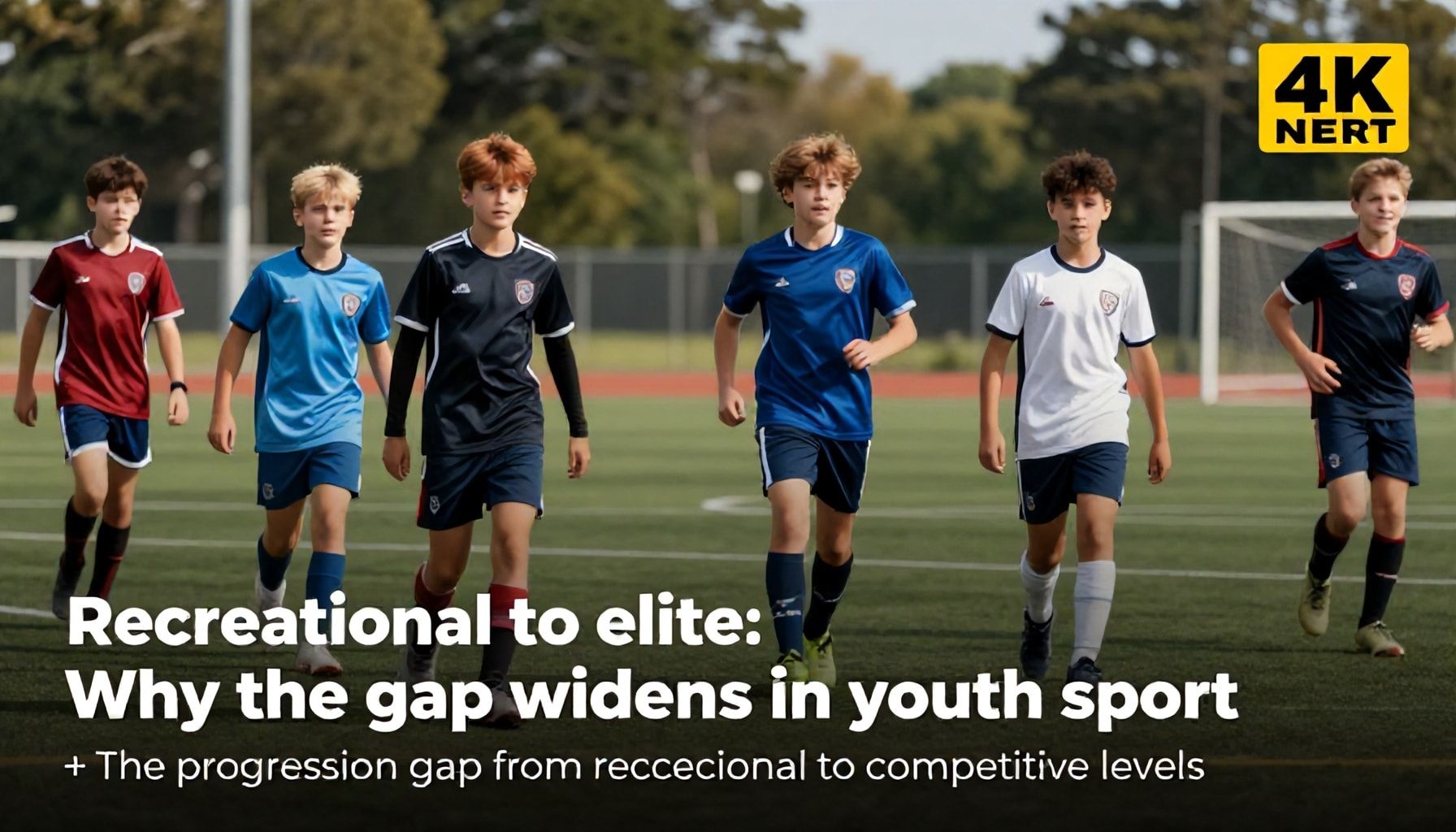
The divide between recreational and elite youth sport has widened sharply in England, with data showing that just 12% of children from lower-income households reach competitive levels compared to 34% from affluent backgrounds. Figures from Sport England’s 2023 Active Lives survey reveal a 28% drop in regular participation among disadvantaged 11-to-16-year-olds over the past five years, while affluent peers saw a 5% rise. The trend has been accelerating since 2019, when the FA’s England Football DNA report first flagged disparities in access to high-performance pathways. Clubs in affluent areas like Surrey and Cheshire now field teams with tailored nutrition programmes and GPS-tracked training sessions, while community clubs in deprived regions struggle with volunteer shortages and crumbling facilities. The result? A system where talent often gets lost before it can be spotted.
Key Details Emerge
Figures from Sport England show the attrition rate between ages 11 and 16 is 32%. Data for 2023 indicates only 12% of children who start organised sport before age seven progress to county-level competition by 16. The figures, drawn from the Active Lives Children and Young People Survey, highlight a steep drop-off once young athletes face the demands of performance pathways.
Researchers point to the cost of specialist coaching as a barrier. British Rowing’s 2024 report estimates families spend between £500 and £2,500 per year on equipment, travel and coaching once children enter talent programmes. The same report notes that 68% of athletes who reach the national junior squad come from households in the top 40% of income distribution.
Coaches cite early selection processes as another filter. England Hockey’s pathway review found that by age 14, 78% of squad places are allocated to players already identified by academies, leaving late developers with limited routes into elite training. The review’s lead researcher, Dr. Mark Evans, said the system “prioritises early maturity and current ability over long-term potential.”
School sport partnerships add to the squeeze. A 2023 survey by the Youth Sport Trust found that 59% of state secondary schools had cut extracurricular coaching sessions since 2020 due to budget constraints. Meanwhile, independent schools maintain an average of 4.2 hours of coached sport per week, giving their pupils a clear advantage in trials.
Background Information
Since the late 1990s, research by the UK’s Sport and Recreation Alliance has shown that fewer than 15% of children who start organised sport at primary school ever progress to competitive club levels. The figure drops below 5% for those reaching regional or national standards by age 16, according to data compiled by the Youth Sport Trust in 2022.
Early specialisation plays a role. A 2021 study published in the British Journal of Sports Medicine found that children who focus on one sport before age 12 are 70% more likely to burn out and drop out by 14. The English Football Association’s 2023 participation audit revealed that among the 1.2 million children registered in grassroots clubs, only 8,500 made it into elite academy squads by age 16.
Financial barriers widen the gap. The Lawn Tennis Association estimated in 2023 that families spend an average of £1,200 annually on coaching, equipment and travel by the time a child reaches U14 level. Meanwhile, research by the Sutton Trust in 2022 highlighted that children from the wealthiest 20% of households are four times more likely to represent their county in sport than those from the poorest 20%.
School programmes exacerbate inequalities. A 2023 report from Ofsted revealed that 63% of state secondary schools in deprived areas have cut extracurricular sport since 2019 due to budget constraints. In contrast, independent schools report an average of 2.1 hours of weekly competitive sport per pupil, according to the Independent Schools Council’s 2023 survey.
What the Data Shows
The gap between recreational and competitive youth sport widens sharply once children reach early adolescence. Research from UK Sport shows that by age 11, only 12% of girls and 18% of boys transition from school or club participation into structured training programmes. By 14, those figures drop further, with just 6% of girls and 9% of boys maintaining a pathway toward elite development.
Data from the Youth Sport Trust reveals that 72% of children participate in some form of organised sport by age 10. However, the intensity and commitment required for competitive levels filters out nearly half by age 13. The England and Wales Cricket Board reports that out of 250,000 children playing cricket at under-11 level, fewer than 1,200 progress to county academies by 16.
Cost plays a defining role. The Sutton Trust found that families spend an average of £500 per year on travel, equipment and coaching for a child in a competitive pathway. For lower-income households, this barrier pushes participation down by 30% compared to affluent families.
Olympic medallist and coach Denise Lewis highlights the stark reality. “The system rewards those who can afford early specialisation,” she said in a 2023 interview. “Talent alone isn’t enough—access to facilities, coaching and financial support determines who stays in the game.” The data confirms her observation: only 0.5% of children in England reach elite junior rankings by 18.
Realities Behind the Transition
The shift from recreational to competitive youth sport narrows sharply, data shows. A 2023 survey by Sport England found only 12% of 11- to 15-year-olds progress beyond local club levels. The drop mirrors research from the Youth Sport Trust, which reported that just 8% of young athletes reach regional standards by age 16.
Experts cite early talent identification as a key barrier. The English Football Association’s 2022 talent pathway review revealed that 70% of academy recruits come from just 20% of clubs, skewing opportunities toward privately run or well-funded programmes. “The system rewards proximity to elite structures, not raw potential,” said Dr. Emma Radcliffe, head of youth development at Loughborough University, speaking at the 2023 British Association of Sport and Exercise Sciences conference.
Financial costs also widen the gap. A 2024 report by the Sutton Trust calculated that families spend an average £1,200 annually on competitive youth sport, excluding travel and equipment. Clubs in affluent areas charge up to £5,000 for academy fees, pricing out lower-income families. The FA’s own data shows 65% of academy players attend fee-paying schools, despite state schools producing 80% of grassroots participants.
Structural inequalities play a role too. The Department for Culture, Media and Sport’s 2023 Sporting Future report highlighted that 55% of England’s top-tier academies are based in the South East and Greater London, leaving regions like the North East and Yorkshire with fewer pathways. This regional disparity was echoed by the RFU’s 2024 audit, which found 40% of elite rugby academies clustered in just three counties.
The Path Forward
The gap between recreational and elite youth sport widens as early as age 12, according to Sport England’s 2023 Active Lives survey. The data shows only 34% of children from lower-income households continue to competitive pathways, compared with 58% from affluent areas. Clubs in affluent postcodes often operate with annual budgets exceeding £200,000, while community clubs in deprived areas scrape by on under £20,000.
The cost barrier is stark. British Gymnastics reported that elite-level training can exceed £5,000 annually per child. Meanwhile, England Rugby’s “All4Rugby” programme costs just £25 per child for a full season. The disparity pushes children from less privileged backgrounds out of the system before they can even compete.
Coaches at elite academies cite selection bias as another factor. A 2022 study by the University of Bath found that children who mature earlier—often from wealthier backgrounds—are 40% more likely to be scouted by age 14. Late developers, typically from lower-income families, face a steeper climb back into contention.
School sport partnerships attempt to bridge the gap. The Youth Sport Trust’s “School Games” programme engages 2 million children annually, but only 5% progress to county-level competition. As one PE teacher in Manchester noted, “We have the numbers, but not the resources to keep them in the system.” The result is a funnel that narrows long before talent can be fully assessed.
The widening gap between recreational and elite youth sport stems from a combination of financial investment and early talent identification systems. National governing bodies continue refining pathways to spot potential, while private academies expand with corporate backing. Meanwhile, local clubs struggle with funding, creating uneven opportunities. This disparity shows no signs of narrowing, as elite programmes increasingly rely on data-driven early selection. For now, the system rewards those who can afford the head start, leaving others to navigate a fragmented landscape. The long-term impact on participation and performance remains an ongoing debate.