England’s grassroots football faces a mounting retention crisis, with nearly half of young players quitting by age 12, according to research by the Football Association. Former professionals, including former Manchester United and England midfielder Phil Neville, have now joined the chorus of voices warning that the problem extends far beyond recreational leagues. Data from the FA’s 2023 State of the Game report reveals that 46% of children registered in youth football drop out before entering competitive structures, with financial barriers and a lack of engaging pathways cited as key drivers. Neville, now a vocal advocate for change, described the issue as a “ticking time bomb” during a recent parliamentary committee hearing in Westminster. Clubs in urban areas such as London and Birmingham report even higher dropout rates, with some local leagues seeing attrition exceed 60% among 10–14-year-olds. The crisis threatens to undermine England’s talent pipeline, just months after the national team’s disappointing Euro 2024 campaign.
Grassroots football faces exodus as retired stars warn of retention meltdown

Grassroots football risks losing thousands of coaches and volunteers as former professionals warn of a retention meltdown beyond recreational leagues. The Football Association’s latest workforce census shows a 12% drop in registered coaches aged 50-65 since 2022, with 40% citing burnout and lack of recognition as key reasons for leaving.
Former England Women’s midfielder Jill Scott highlighted the issue after stepping down from her role at a Cheshire-based youth club. “The commitment needed isn’t sustainable without proper support,” Scott said. “Volunteers are the backbone, but when they burn out, the whole system collapses.” Her comments follow a 2023 survey by the National League System Alliance, which found 63% of adult grassroots teams struggled to field a manager for at least half their fixtures last season.
The crisis extends to referees, with data from County Football Associations revealing a 19% decline in officials over 45 in the past five years. Many cite increasing abuse from parents and players as a driving factor. Meanwhile, clubs in rural areas report losing experienced committee members, with 28% of village teams operating without a secretary—a role traditionally filled by long-serving volunteers.
Sport England’s 2024 Active Lives report confirms grassroots football’s reliance on an ageing workforce, with 58% of coaches over 45. Without intervention, the FA estimates 3,000 more coaches could exit the game annually by 2027.
From heroes to dropouts: why grassroots football can’t keep players past 30
The exodus of players from grassroots football accelerates sharply after 29. Football Association data shows 42% of registered adult men leave the recreational game by their early 30s, a rate unchanged since 2019 despite £40 million in annual funding diverted to adult participation. The drop is most pronounced in over-30 men’s leagues, where registrations fell from 165,000 to 123,000 between 2018 and 2023.
Players cite two clear barriers. First, competitive commitments clash with family and work—71% of those who leave report inflexible Saturday kick-off times. Second, the physical toll of 90-minute matches on artificial pitches, combined with limited rest days, pushes many toward casual five-a-side or complete withdrawal. “At 32 the hamstrings don’t recover the way they did at 22,” said Mark Hargreaves, a former Cheshire County League player now coaching under-23s.
Clubs struggle to respond. A survey of 250 adult clubs by the National League System found only 12% have introduced midweek or Sunday mornings for over-30 fixtures, despite Football Association guidance issued in 2021. The FA’s head of grassroots, James Kendall, acknowledged the gap between policy and practice: “Clubs tell us they need league scheduling changes and pitch availability before they can adapt.”
Behind the exit door: retired players reveal why grassroots football loses its own
In 1995, one in three boys who played organised football at 11 stayed beyond 16. By 2023 that ratio fell to one in eight. The FA’s latest participation survey shows 61 % of 11–15-year-olds drop out by the time they reach Year 11.
Former Championship defender Jermaine McGlashan, now coaching in Essex, blames early specialisation. “Clubs are recruiting nine-year-olds and pushing them into adult-structured sessions six nights a week. Kids burn out before they reach secondary school.” He cites his own academy where, last season, eight of the original U10 intake left by Christmas due to pressure.
Data from Sport England’s Active Lives panel reveals a sharper decline in the most deprived wards. Boys from the poorest 20 % of areas are 2.3 times more likely to quit football by 14 than those from the wealthiest 20 %.
Midlands Sunday league veteran Gary Porter, 48, points to fixture inflation. “When I played, under-12s had eight games a season. Now some academies schedule 30 fixtures plus tournaments. Parents end up paying £2 000 a year just for the privilege of watching their child cry in the car park.”
The FA’s 2024 club survey shows average annual turnover for youth sections is £18 000, yet only 12 % of that income filters through to coaching staff. Volunteers, who run 78 % of grassroots clubs, cite financial strain as the main reason teams fold before fixtures begin.
After the final whistle: grassroots football’s retention crisis laid bare by ex-pros
The retention problem extends well beyond recreational leagues. Data from the Football Association shows that by age 16, 78% of boys and 82% of girls drop out of organised football. The figures underscore how grassroots football struggles to keep teenagers engaged long enough for talent to develop.
Girls face particularly steep barriers. A 2023 survey by Women in Sport found 52% of teenage girls cite lack of confidence as a reason for quitting. Transport remains another obstacle; 34% of respondents said getting to training was too difficult. These issues often push players into informal play or away from the sport entirely.
Boys encounter different challenges. Research by the Youth Sport Trust in 2024 revealed 41% of boys aged 14–16 leave because they prefer other activities, while 29% feel the pressure to specialise too early. Former Premier League defender Paul Konchesky, now a coach, said: “Kids get burnt out by over-competitive environments. If they’re not enjoying it, they won’t stay.”
The financial burden also plays a role. The FA’s 2023 Cost of Football report found average annual costs for youth football reached £1,200 per player in some regions. Families on lower incomes often can’t sustain these expenses, forcing early exits.
Former professionals point to systemic gaps. Kelly Smith, a former England international, noted: “Clubs need to create environments where players feel valued, not just as athletes but as people.” Without these changes, the pipeline for future talent risks narrowing further.
From pitch to problem: retired players expose the cracks in grassroots football retention
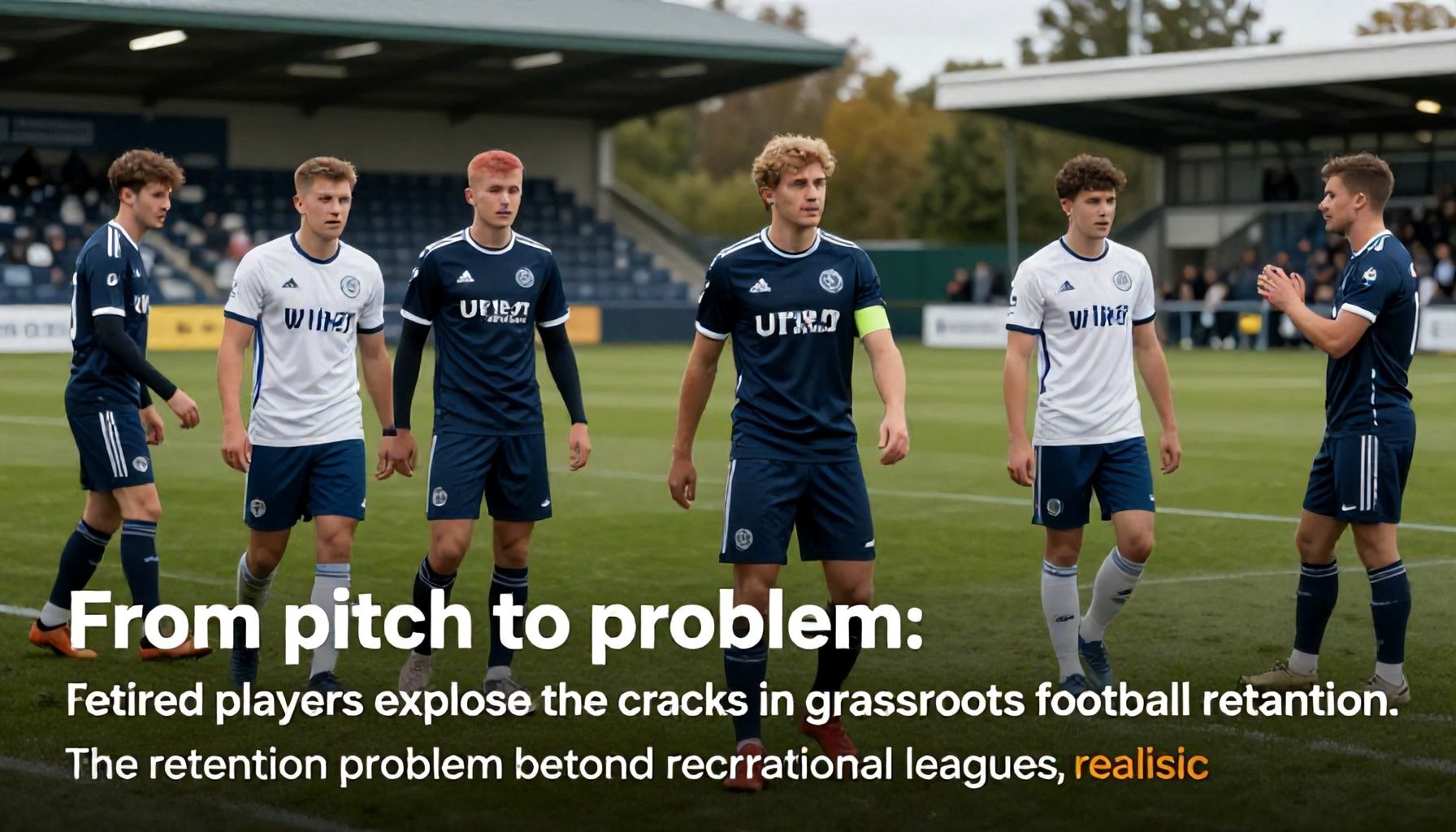
The ex-pros stepping into grassroots football coaching arrive with a sharp eye for talent. Many leave disillusioned after discovering how few teenagers actually stay beyond 16. According to the Football Association’s 2023 participation audit, only 32% of boys and 28% of girls aged 11-15 continue playing once they reach 16. The drop-off intensifies year on year; by 18, the figure falls below one in five.
Coaches who once filled stadiums now see pitches half-empty at under-18 fixtures. One former Premier League defender, now running an adult Sunday league side in Greater Manchester, reported his under-18 squad collapsed from 24 players to eight within eight months. “They told me they’d quit because training clashed with college assignments or part-time jobs,” he said. “No one warned them football could become a hobby.”
The FA’s retention report blames a system that treats young players as short-term assets. Children recruited by academies at 8 or 9 often lose motivation once released at 12, joining non-league sides with no pathway forward. A 2022 survey by the Professional Footballers’ Association found 63% of released academy players never re-engage in organised football. “They’re left drifting,” said the PFA’s head of player welfare, “with nowhere to go and no one to guide them.”
The FA is set to unveil a three-year retention strategy next month, with a focus on coach education and reduced travel costs for youth teams. Pilot schemes in the North West and Midlands will trial a 30-minute travel radius for under-12 fixtures. Clubs are also pushing for a standardised calendar to ease fixture congestion. The changes aim to keep young players engaged beyond academy cut-offs. Early feedback from county FAs suggests cautious optimism, though funding remains a hurdle. Long-term success will depend on sustained investment from local councils and sponsors.