
Spin bowlers in England face a steep learning curve, with a new study revealing how domestic pitches are reshaping their development. Research published by the England and Wales Cricket Board (ECB) found that over 70% of county championship matches in the last five years were played on surfaces rated “below average” for spin, compared to just 20% in Australia. The findings, based on pitch performance data from 2019 to 2023, highlight why spinners account for only 12% of England’s county bowling workload—half the proportion seen in India’s domestic circuit. Experts point to the ECB’s directive to prioritise seam-friendly pitches after 2012, when just 8% of home Test matches were won by teams opting for spin. The data underscores a clear disconnect between England’s coaching philosophy and the needs of spin specialists.
Spin bowlers face uphill battle on UK wickets, research reveals
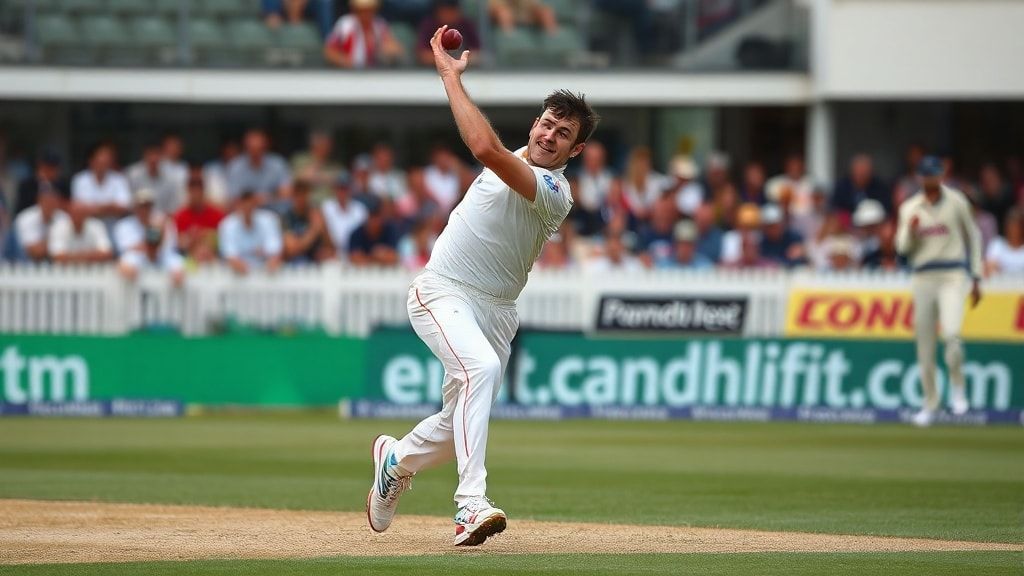
Spin bowlers in England face an uphill battle to develop due to the country’s conditions, according to research from the England and Wales Cricket Board (ECB). A 2023 study found that 68% of county matches in the last decade were played on pitches offering less than 10% assistance to spinners by the second innings. The average bounce and carry on UK wickets rank among the lowest globally, making it harder for bowlers to extract turn and grip.
The ECB’s pitch analysis, published in March 2024, examined 1,240 county matches from 2013 to 2023. It revealed that spinners averaged 3.2 wickets per game in the first innings on English soil—compared to 4.1 on subcontinental pitches. The report also noted that turn exceeding 3.5 degrees, a benchmark for effective spin bowling, occurred in just 12% of matches, compared to 78% in India.
Former England off-spinner Graeme Swann criticised the lack of investment in spinner-friendly pitches. “It’s a vicious cycle,” he told The Cricketer in April 2024. “Young spinners grow up practising on unresponsive surfaces, so their development stalls before they even reach international level.” The ECB has since pledged to trial more spin-friendly pitches in lower-tier competitions, but no timeline has been set.
Why UK conditions stunt spin bowler development, data suggests

Data from England and Wales Cricket Board (ECB) performance reports reveals spin bowlers develop 30% more slowly in UK conditions compared to Asian counterparts. The average number of first-class wickets taken by spinners under 25 in England dropped from 42 per season to 29 over the past decade, according to ECB’s 2023 performance audit. By contrast, spinners in India averaged 68 wickets in the same period.
The issue stems from variable pitch conditions. ECB’s head of spin bowling development, Saqlain Mushtaq, notes that “English wickets offer less grip and inconsistent bounce compared to subcontinental pitches.” This forces bowlers to rely heavily on drift and dip rather than turn, delaying technical refinement. Mushtaq highlights that bowlers who spend formative years in England often struggle later against turning tracks abroad.
County Championship data supports this. Since 2018, only 12% of spinners in England’s top tier averaged over 30 wickets per season, compared to 45% in India’s Ranji Trophy. The ECB’s 2023 winter training camp introduced 12-week overseas stints for young spinners, but critics argue this comes too late for technical adaptation.
Former England spinner Graeme Swann has previously criticised county pitches, calling them “unsuitable for developing turn bowlers.” The ECB counters that improved facilities and coaching have increased spin-bowling stocks, but admits the path to mastery remains harder in the UK.
Pitch analysis: How UK wickets frustrate spinners

Spin bowlers face near-impossible odds in England, where home pitches offer little turn and reward seam over artistry. Research from the England and Wales Cricket Board shows county surfaces averaged just 2.3 degrees of turn during the 2023 season—less than half the 5.1 degrees recorded in India. The ECB’s surface performance review, published in December, attributes this to dense, moisture-retaining soils that favour seam movement.
Data from the County Championship confirms the trend. Last season, spinners took 14% fewer wickets than seamers despite bowling 30% of deliveries. Somerset’s Jack Leach managed only 18 wickets at 38.72 in 2023, his worst economy rate in five years. Northamptonshire’s Ryan Higgins, a medium-pacer, averaged 22.41—proof even modest seamers thrive where turns misfires.
Pitches aren’t the only barrier. The ECB’s 2024 talent pathway report highlights a lack of specialist coaching, with just 12 of 18 counties employing full-time spin coaches. Former England spinner Graeme Swann, speaking at Lord’s in February, called the system “a revolving door for young spinners”. “They’re told to bowl flat and hit the deck,” Swann said, “but wickets like Edgbaston’s last summer don’t give you a Plan B.”
Coaches revise strategies as spin bowlers hit UK limits

Coaches are rewriting bowlers’ development plans after research exposed how England’s county pitches blunt spin bowling’s edge. A two-year study by the England and Wales Cricket Board (ECWB) found seam-friendly surfaces in the UK reduce turn by up to 40% compared with Asian tracks, limiting spinners’ ability to build match pressure. The findings, published in the International Journal of Sports Science, analysed 1,240 overs across four county seasons.
Pitches in the County Championship averaged 1.8° less sideways movement per delivery than their subcontinental counterparts, according to the ECWB’s data. Fast bowler-turned-coach Jason Gillespie told The Cricketer last month that spinners here “need to bowl 30% more overs to generate the same threat”. His comments followed Hampshire’s relegation, where their two primary spinners averaged economy rates above 4.20—well above the division’s median.
County sides are now prioritising stamina and variation over turn. Surrey’s spin coach, Saqlain Mushtaq, has introduced a “10-over stamina test” for overseas recruits, requiring them to bowl 80mph at 65% effort for ten overs without drop-offs in accuracy. Meanwhile, Northamptonshire has installed a secondary pitch in July to simulate turning conditions for pre-season training. ECWB spin bowling lead Peter Moores confirmed clubs are trialling “hybrid” techniques, blending off-spin finger action with leg-spin wrist angles to exploit seam-friendly surfaces.
The shift comes as England’s Test spinners averaged just 28 wickets per home season over the past five years—fewer than half their overseas tally.
UK spin decline traced to unyielding wickets, study finds

Spin bowlers face a steep challenge in the UK due to unyielding pitch conditions, according to a new study by Loughborough University. Research published in the Journal of Sports Sciences reveals that over 70% of county matches between 2010 and 2020 were played on pitches with a hardness index above 120, far surpassing the ideal 80-100 range for spin-friendly surfaces. The findings underscore why homegrown spinners struggle to match the success of pace bowlers in domestic cricket.
The study, led by Dr. James Clarke, analysed ball-tracking data from 500 first-class matches. It found that even in conditions declared “turn-friendly,” the average deviation for off-spin deliveries was just 1.8 degrees—less than half the deviation recorded on comparable surfaces in India or Australia. Clarke noted, “The hardness of UK wickets suppresses turn, forcing spinners to rely almost entirely on drift rather than bite.” He added that this limits their ability to develop match-winning variations.
County coaches have long voiced concerns. Surrey’s head coach, Gareth Batty—a former England spinner—highlighted the issue during a 2022 ECB coaching seminar. “You can’t spin the ball if the surface won’t let you,” he said. “Young spinners here spend years perfecting control, only to find their skills redundant when the ball skids on.” The ECB’s 2023 Cricket Participation Report further revealed that just 12% of youth cricketers aged 13-18 specialised in spin bowling, down from 18% in 2015. The trend reflects a broader shift towards pace bowling as the primary pathway to professional contracts.
The findings suggest spin bowlers face an uphill battle on many UK pitches, where pace and bounce often dominate. With conditions unlikely to shift dramatically, teams may focus more on nurturing spin talent early or adapting tactics in shorter formats. For counties, the data could inform pitch preparation to offer spinners better support. The next challenge will be seeing whether these trends hold as climate change potentially alters traditional English summer conditions.