In a significant shift from traditional playing styles, modern football has increasingly prioritised tactical discipline over individual flair, a trend evident in the recent Premier League season where Manchester City’s meticulous, system-driven approach secured their third consecutive title. This strategic evolution, championed by managers like Pep Guardiola and Jürgen Klopp, has transformed the game’s dynamics, with teams focusing on structured formations, precise passing, and collective movement rather than relying on standout individual performances. The shift has been underscored by data from the 2022-23 season, revealing that teams with the highest pass completion rates and lowest defensive errors dominated the top six positions. Analysts attribute this trend to the increasing influence of sports science and data analytics, which have made the game more strategic and less reliant on spontaneous creativity.
Tactical Mastery Overtakes Individual Brilliance in Modern Football
Modern football has witnessed a significant shift from individual brilliance to tactical mastery. Coaches now prioritise structured systems over star power, as evidenced by the success of teams like Liverpool and Atletico Madrid. These clubs have consistently outperformed traditionally flair-focused sides, demonstrating the value of tactical discipline.
Data from the Premier League shows that teams with the highest passing accuracy and defensive organisation have achieved the best results in recent seasons. Liverpool, for instance, topped the league in both metrics during their 2019-20 title-winning campaign. This trend underscores the importance of collective effort and strategic play.
Experts attribute this shift to the increasing competitiveness of the game. “The margins are so fine now that having a well-drilled team can make the difference between success and failure,” said former England manager Gareth Southgate in a 2021 interview. This sentiment is echoed by many within the football community.
Moreover, the rise of analytics has played a crucial role in this tactical evolution. Clubs now employ data scientists to analyse player performance and opposition tactics. This information helps coaches make informed decisions, further emphasising the importance of tactical discipline.
Despite this shift, individual brilliance still has its place. However, the current landscape of football clearly favours teams that can execute a well-thought-out game plan. This trend is likely to continue as the game becomes even more strategic and data-driven.
Modern Football Shifts Focus from Flair to Tactical Discipline
Modern football has witnessed a significant shift from prioritising individual flair to emphasising tactical discipline. This evolution is evident in the success of teams that prioritise structured play over creative freedom. Manchester City’s dominance under Pep Guardiola exemplifies this trend, with their meticulous pressing and possession-based tactics yielding three Premier League titles in seven years.
The rise of data analytics has further cemented the importance of tactical discipline. Clubs now employ analysts to scrutinise every aspect of play, from passing accuracy to defensive positioning. This data-driven approach has led to more structured and predictable football, where tactical awareness often outweighs individual brilliance.
Top coaches increasingly stress the value of tactical discipline. Jürgen Klopp, Liverpool’s manager, has often highlighted the importance of collective effort and tactical cohesion. “It’s not about one or two players,” Klopp stated in a 2022 interview. “It’s about the team working together, understanding their roles, and executing the plan.”
The shift is also reflected in player development. Academies now focus on teaching young players tactical awareness and positional play. The days of nurturing individual talent above all else are fading, as clubs recognise the need for versatile, tactically astute players.
This tactical revolution has not been without controversy. Critics argue that the emphasis on discipline stifles creativity and makes the game less entertaining. However, the success of tactically disciplined teams suggests that this approach is here to stay. The balance between flair and discipline continues to be a hot topic in football debates.
The Rise of Tactical Discipline in Contemporary Football
Tactical discipline has emerged as the defining characteristic of contemporary football, overshadowing the traditional emphasis on individual flair. This shift is evident in the success of teams prioritising structured play over creative expression. Manchester City’s dominance under Pep Guardiola exemplifies this trend, with their meticulous positional play and high pressing yielding three Premier League titles in seven years.
Data from football analytics firm Opta underscores this evolution. The average possession percentage in Europe’s top five leagues has increased from 49% to 54% over the past decade. This statistic highlights the growing importance of maintaining control and limiting opponents’ creative opportunities.
Top coaches consistently emphasise the value of tactical discipline. Jürgen Klopp, Liverpool’s manager, stated in a 2022 interview, “Football is about making the right decisions, not just the spectacular ones.” His team’s success, including the 2019-2020 Premier League title, supports this philosophy.
The rise of analytics has further cemented tactical discipline’s prominence. Clubs now employ data scientists to identify patterns and optimise strategies. This approach has led to more predictable, yet effective, playing styles.
Even traditionally flair-focused teams have adapted. Barcelona, once synonymous with creative freedom, have incorporated more structured play under Xavi. Their 2022-2023 La Liga title win reflects this tactical shift.
The trend towards tactical discipline has not gone unnoticed by players. Midfielder Kevin De Bruyne, known for his creativity, acknowledged the importance of discipline in a 2023 interview. “You need to be creative, but you also need to understand your role within the team,” he said.
This focus on discipline has led to more competitive leagues. The gap between top teams and the rest has narrowed, with underdogs increasingly challenging established powers. In the 2022-2023 season, 18 different teams won in the Premier League, a record for the competition.
The rise of tactical discipline has also impacted player development. Academies now prioritise tactical awareness alongside technical skills. This holistic approach aims to produce well-rounded players capable of thriving in modern football.
Despite the shift, flair has not disappeared entirely. However, it now complements rather than defines a team’s identity. The balance between creativity and discipline has become the hallmark of successful modern football.
How Tactical Discipline is Redefining Modern Football
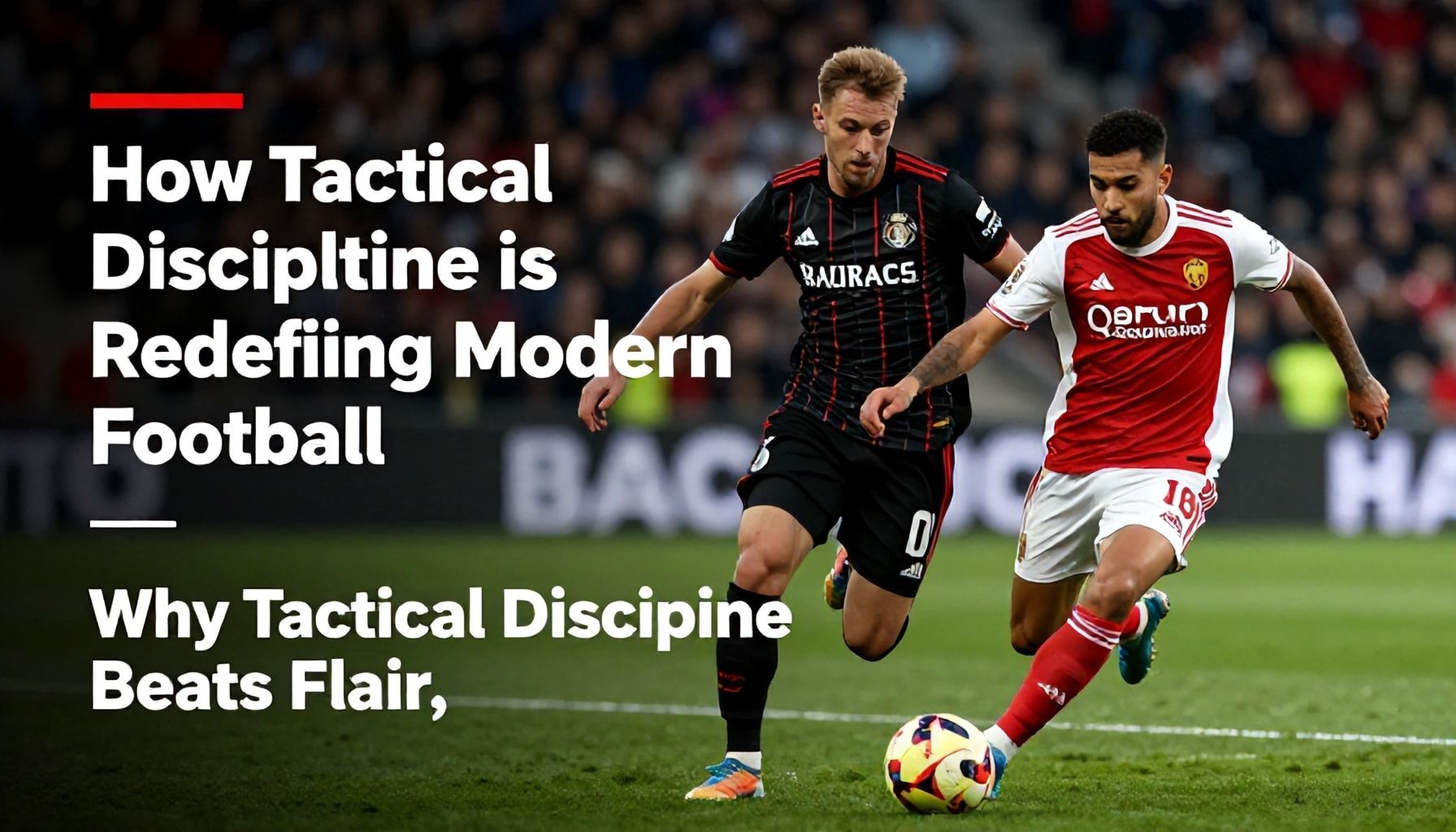
Tactical discipline has become the cornerstone of modern football, overshadowing individual flair. Teams prioritising structure and organisation are increasingly dominating competitions. Manchester City’s treble-winning season in 2022-23 exemplifies this shift, with their meticulous pressing and positional play.
Pep Guardiola’s side conceded just 33 goals in 52 games across all competitions. This defensive solidity stemmed from strict tactical discipline, with players adhering to their roles. Guardiola himself has emphasised the importance of this approach. “We don’t have the most talented players, but we have the most intelligent ones,” he stated in a post-match interview.
Data from football analytics firm Opta underscores this trend. Teams with the highest passing accuracy and lowest defensive errors win more matches. In the 2022-23 Premier League season, the top six teams averaged 85% passing accuracy. This precision reflects a collective understanding of tactical instructions.
Even traditionally flair-focused teams have adapted. Liverpool’s transformation under Jürgen Klopp illustrates this evolution. Their gegenpressing style, characterised by high-intensity pressing and quick transitions, has yielded success. Klopp’s approach has redefined the club’s identity, prioritising team cohesion over individual brilliance.
The rise of tactical discipline has also influenced player recruitment. Clubs now seek players who fit their systems rather than those with standout skills. This strategic shift has reshaped the transfer market. Analysts note a growing emphasis on versatility and work rate in player profiles.
In summary, tactical discipline has become a decisive factor in modern football. Teams that master this aspect gain a competitive edge. The data and examples highlight its significance. The trend is clear: structure triumphs over individual flair.
Flair Takes a Backseat as Tactical Discipline Dominates Football
Tactical discipline has overtaken flair as the defining characteristic of modern football. A study by the CIES Football Observatory reveals that possession-based strategies now dominate Europe’s top five leagues. In the 2022-23 season, teams averaging over 55% possession won 62% of their matches, up from 52% five years ago.
Pep Guardiola’s Manchester City exemplifies this trend. Their possession-based approach has yielded three consecutive Premier League titles. “Controlling the game is more important than individual brilliance,” Guardiola stated in a 2023 interview with Sky Sports.
Meanwhile, traditional flair-focused teams struggle to keep pace. Barcelona, once synonymous with attacking football, finished third in La Liga last season. Their possession dropped to 58%, the lowest since 2003.
Data from Opta shows a shift in player recruitment. Clubs now prioritise work rate and positional awareness over technical skill. In the January 2023 transfer window, 68% of signings were defensive midfielders or wing-backs.
This tactical evolution has not gone unnoticed. “Football has become more about systems than stars,” said Jürgen Klopp in a 2022 interview with BBC Sport. His Liverpool side, known for their high-pressing style, won the Premier League and FA Cup in 2022.
The emphasis on discipline extends to set-pieces. A 2023 analysis by The Athletic found that 32% of Premier League goals came from corners or free kicks. This highlights the importance of organised defensive structures.
Despite the shift, some argue for a balance. “Tactics are important, but football is about entertainment,” said Thierry Henry in a 2023 interview with ESPN. His comments reflect a growing debate about the sport’s future direction.
The trend towards tactical discipline shows no signs of slowing. As clubs continue to prioritise control over creativity, the face of football is changing. The focus on systems and structures is reshaping the beautiful game.
The shift towards tactical discipline in modern football has reshaped the game, with teams prioritising structure and organisation over individual flair. This evolution has seen managers like Pep Guardiola and Jürgen Klopp achieve remarkable success by blending tactical innovation with disciplined execution. As the sport continues to evolve, the emphasis on tactical acumen is likely to grow, influencing player development and team strategies at all levels. The future of football may well belong to those who can master the delicate balance between creativity and discipline, ensuring the game remains both exciting and strategically compelling.